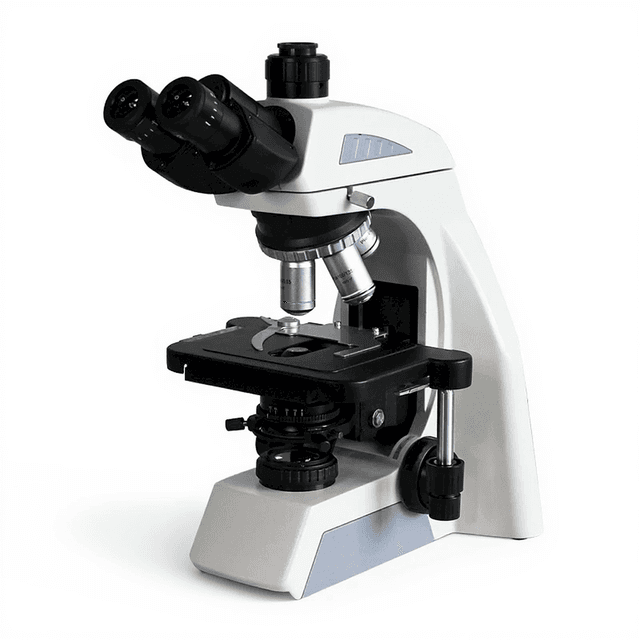
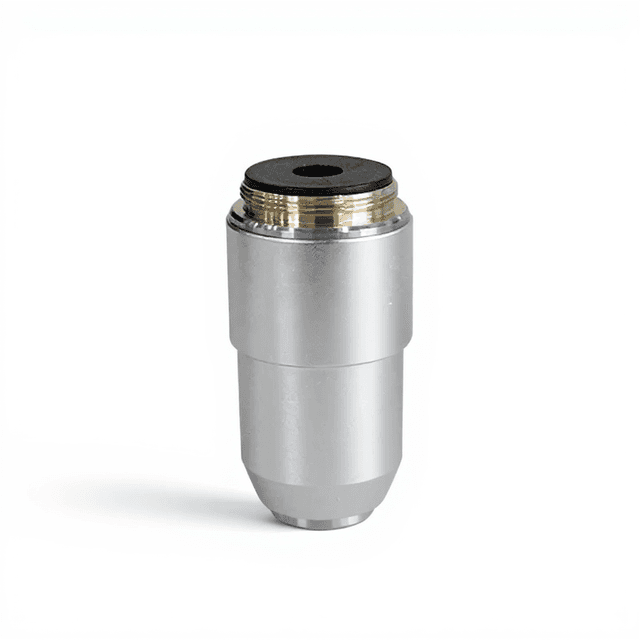
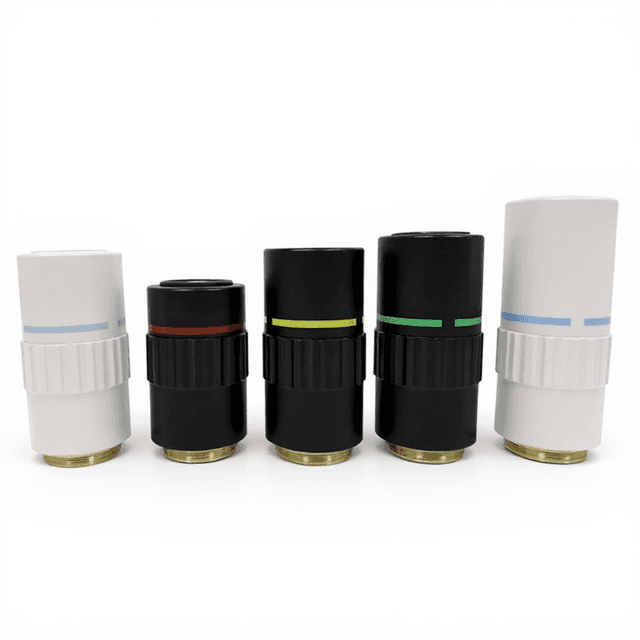
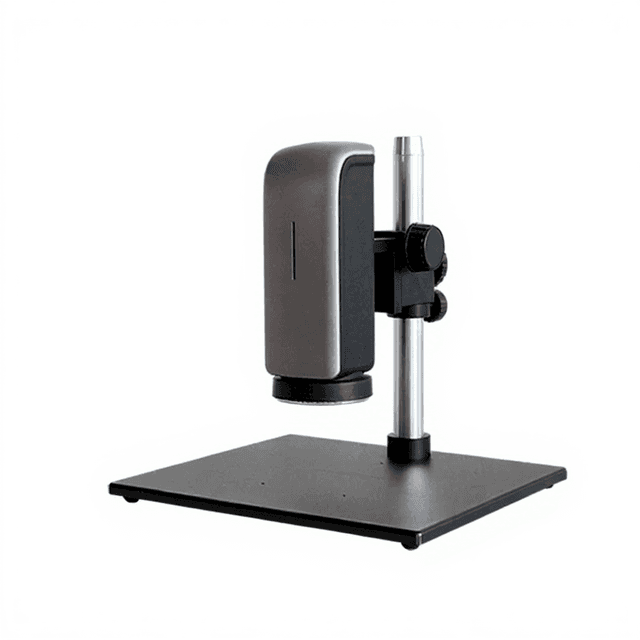
3D Manual Monocular Digital Video Stereo Microscope with HDMI 1080P Camera
Variable magnification stereo microscope (11X-95X) with integrated 1080P HDMI camera for digital imaging and documentation of specimens requiring moderate magnification analysis.

Louise Corscadden, PhD
Director of Science · ConductScience
Ask Louise about 3D Manual Monocular Digital Video Stereo Microscope with HDMI 1080P Camera fit, setup, configuration, or quote prep.
Already working with us? Sign in to connect this with My Scientist.
Key Specifications
Full details →- Model fit
- Configured during quote
- SKU family
- MCX-0041
- Shipping box
- 4.9 x 6.6 x 6.6 cm
- Ordering
- Online checkout and quote request available
- Category
- Microscopy
- Build notes
- Confirm accessories, station layout, and support needs before purchase
The 3D Manual Monocular Digital Video Stereo Microscope with HDMI 1080P Camera provides high-resolution optical imaging with variable magnification from 11X to 95X when used with a 21.5-inch display screen. The system features manual 2D/3D switching capability and incorporates a 1920x1080 resolution digital camera with 3.75μm pixel size for detailed image capture and documentation.
The instrument offers a working distance range of 35-110mm with an 8.3:1 zoom ratio, providing flexible sample positioning and observation angles. The standard C-mount interface ensures compatibility with additional optical accessories, while HDMI output enables direct connection to external displays for real-time viewing and recording.
How It Works
The stereo microscope employs dual optical pathways to create three-dimensional visualization of specimens through binocular vision principles. Light reflected from the specimen surface enters the objective lenses, which provide variable magnification through a zoom mechanism with 8.3:1 ratio. The optical system maintains stereoscopic depth perception by presenting slightly different viewing angles to create dimensional awareness of specimen topography.
The integrated 1920x1080 HDMI camera captures digital images through a standard C-mount interface, converting optical information to electronic signals. The 3.75μm pixel size provides sufficient resolution for documentation at the available magnification range. Manual switching between 2D and 3D observation modes allows operators to optimize viewing conditions based on specimen requirements and analysis objectives.
Features & Benefits
Automation Level
- manual
Product Type
- Microscope
Microscope Type
- Stereo / Dissecting
Viewing Head
- Monocular
Application
- Assembly & Rework
- Sample Preparation
Skill Level
- Intermediate
Brand
- ConductScience
Research Domain
- Analytical Chemistry
- Environmental Monitoring
- Food Science
- Industrial Hygiene
- Materials Science
- Pharmaceutical QC
Shipping weight
- 1.9 lb
Shipping box
- L: 4.9 cm
- W: 6.6 cm
- H: 6.6 cm
| Feature | This Product | Typical Alternative | Advantage |
|---|---|---|---|
| Magnification Range | 11X-95X continuous zoom with 8.3:1 ratio | Fixed objectives requiring manual changes for different magnifications | Enables smooth transitions between magnifications without interrupting specimen observation or losing focus |
| Working Distance | 35-110mm variable working distance | Fixed working distances typically 60-100mm | Accommodates specimens of varying thickness and allows tool access during manipulation |
| Camera Resolution | 1920×1080 with 3.75μm pixel size | Lower resolution cameras or analog output only | Provides high-definition digital documentation suitable for publications and presentations |
| Viewing Modes | Manual 2D/3D switching capability | Fixed binocular viewing only | Optimizes observation approach based on specimen characteristics and analysis requirements |
| Output Interface | HDMI output with USB recording | Analog video output or no digital recording | Enables direct connection to modern displays and immediate digital documentation |
This stereo microscope combines continuous zoom magnification, variable working distance, and integrated digital imaging in a manual system suitable for routine inspection and documentation applications. The HDMI connectivity and USB recording provide modern digital workflow integration at an accessible price point.
Practical Tips
Use a stage micrometer to verify magnification accuracy at multiple zoom positions before critical measurements.
Why: Zoom mechanisms can introduce slight magnification variations that affect measurement precision.
Clean optical surfaces only with lens tissue and appropriate solvents, avoiding circular motions that can create scratches.
Why: Proper cleaning techniques maintain optical quality and prevent permanent damage to coated surfaces.
Adjust lighting angle and intensity to minimize glare and optimize contrast for your specific specimen characteristics.
Why: Proper illumination is critical for stereo microscopy since contrast depends heavily on surface reflection patterns.
Use manual white balance settings for specimens with unusual color characteristics rather than relying on automatic adjustment.
Why: Automatic white balance can shift when specimen colors are not neutral, affecting color accuracy in documentation.
If focus drifts during magnification changes, check that the zoom mechanism is properly lubricated and not binding.
Why: Mechanical issues in zoom systems can cause focus shift and reduce measurement repeatability.
Ensure adequate clearance when adjusting working distance to prevent collision between objectives and specimens.
Why: Contact between optics and specimens can damage both the specimen and expensive optical components.
Setup Guide
What’s in the Box
- 3D stereo microscope main unit
- HDMI camera with C-mount adapter
- Power adapter and cables
- HDMI cable
- USB storage device (typical)
- Dust covers for optics (typical)
- User manual and software documentation
- Calibration reference standards (typical)
Warranty
ConductScience provides a standard one-year manufacturer warranty covering defects in materials and workmanship, with technical support available for setup, operation, and maintenance guidance.
Compliance
References
Background reading relevant to this product:
What is the effective magnification range and how does the zoom system work?
The system provides 11X-95X magnification with a 21.5-inch display using an 8.3:1 zoom ratio. This allows continuous magnification adjustment without changing objectives, maintaining focus stability during examination.
What camera specifications are important for documentation quality?
The 1920×1080 camera has 3.75μm pixel size providing sufficient resolution for the magnification range. HDMI output ensures high-quality digital transfer with minimal compression artifacts.
How much working distance is available for specimen manipulation?
Working distance ranges from 35-110mm, providing ample clearance for measurement tools, probes, and specimen manipulation while maintaining optimal optical performance.
What file formats are supported for image capture and storage?
The system records directly to USB storage in JPG and BMP formats, enabling immediate documentation without requiring external recording software or computer connection.
How does the 2D/3D switching function operate?
Manual switching between 2D and 3D observation modes allows optimization for different analysis requirements. 3D mode enhances depth perception for topographical analysis while 2D mode may provide clearer imaging for documentation.
What is the field of view range across the magnification settings?
Field of view spans 24×13.5mm at minimum magnification (11X) to 2.88×1.62mm at maximum magnification (95X), enabling examination from large specimens to fine detail work.
Can the camera settings be adjusted for different specimen types?
Yes, both white balance and exposure offer automatic and manual modes, allowing optimization for specimens with varying reflectivity, color, and contrast characteristics.
Have a question about this product?
Have a question? Just ask.
Send it over and we'll email you a personalized answer — no call, no scheduling.
Prefer to talk it through?
Accessories
Enhance your setup with compatible accessories
Frequently Bought Together
Upgrade Options
Related Products