-86℃ Freezer (Inverter Type)
Ultra-low temperature freezer maintaining -86°C for long-term storage of biological samples, cell lines, and temperature-sensitive research materials.

Louise Corscadden, PhD
Director of Science · ConductScience
Ask Louise about -86℃ Freezer (Inverter Type) fit, setup, configuration, or quote prep.
Already working with us? Sign in to connect this with My Scientist.
Key Specifications
Full details →- Model fit
- 2 selectable configurations
- SKU family
- BIO-0099
- Shipping box
- 82.0 x 46.5 x 45.5 cm
- Ordering
- Online checkout and quote request available
- Category
- Lab Equipment
- Build notes
- Confirm accessories, station layout, and support needs before purchase
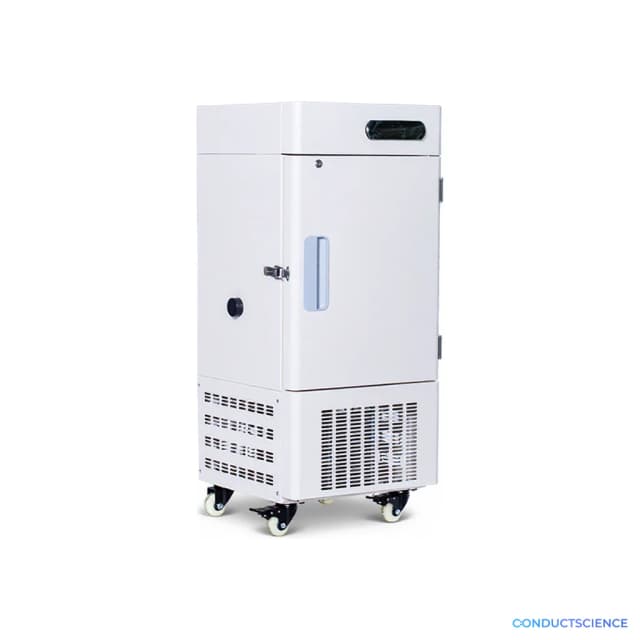
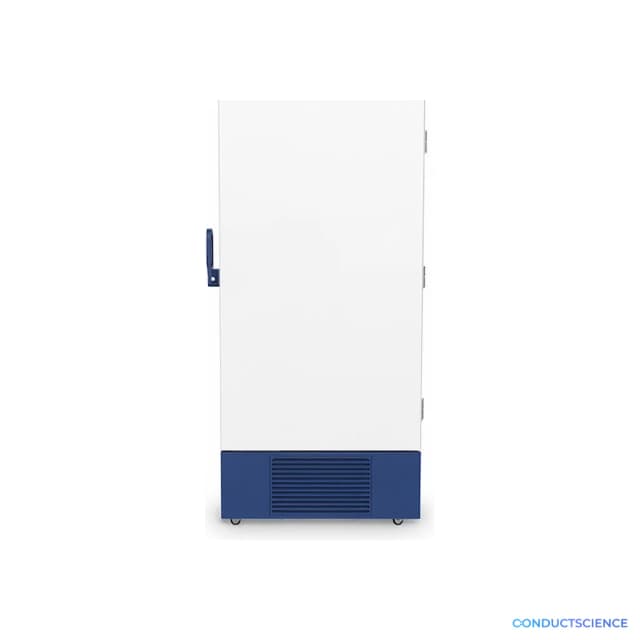
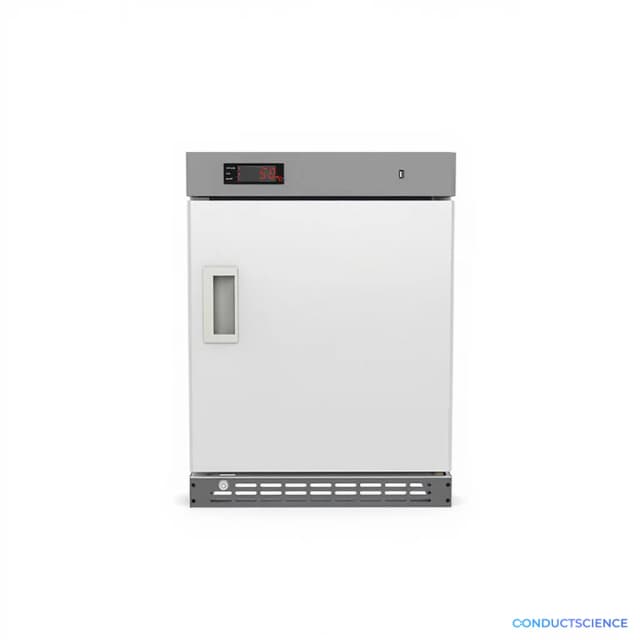
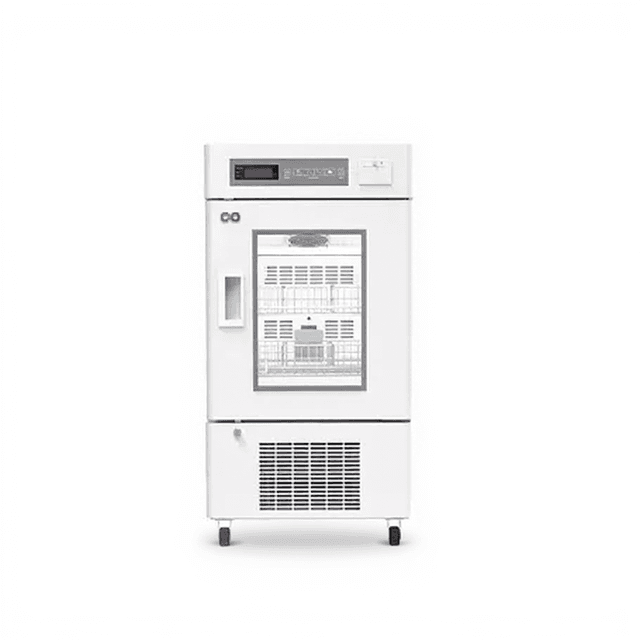
The 86°C Freezer provides ultra-low temperature storage for biological samples, reagents, and temperature-sensitive materials requiring preservation at subzero temperatures. This upright freezer unit maintains consistent -86°C operation for long-term storage of proteins, enzymes, cell lines, tissue samples, and other biological specimens that require preservation below standard freezer temperatures.
The compact design with 82.0 cm length, 46.5 cm width, and 45.5 cm height provides laboratory-grade freezing capacity while maintaining a manageable footprint for research facilities. The unit supports biobanking protocols, sample archival workflows, and research applications requiring stable ultra-low temperature conditions for specimen integrity maintenance.
How It Works
Ultra-low temperature freezers operate using cascade refrigeration systems that achieve temperatures significantly below conventional freezing. The primary cooling cycle uses a standard refrigerant to pre-cool the system, while a secondary refrigeration circuit employs specialized refrigerants capable of reaching -86°C operating temperatures. This two-stage approach allows efficient heat removal from the storage chamber while maintaining temperature uniformity.
Temperature control systems monitor chamber conditions continuously, adjusting compressor operation to maintain setpoint stability. Insulation systems minimize heat transfer from ambient conditions, while door seals and cabinet construction prevent temperature fluctuations during access cycles. The freezer maintains consistent ultra-low temperatures necessary for preserving biological sample integrity over extended storage periods.
Features & Benefits
Research Domain
- Analytical Chemistry
- Cell Biology
- Clinical Diagnostics
- Microbiology
- Pharmaceutical QC
Shipping weight
- 196.0 lb
Shipping box
- L: 82.0 cm
- W: 46.5 cm
- H: 45.5 cm
| Feature | This Product | Typical Alternative | Advantage |
|---|---|---|---|
| Operating Temperature | -86°C ultra-low temperature capability | Entry-level models may offer -80°C operation | Lower operating temperature provides enhanced sample preservation for long-term storage applications |
| Physical Footprint | Compact 82 x 46.5 x 45.5 cm dimensions | Larger units require significantly more floor space | Space-efficient design allows installation in smaller laboratories without compromising storage capability |
| Construction Quality | 196 kg robust construction | Lighter units may have reduced insulation efficiency | Substantial build quality supports temperature stability and long-term reliability in continuous-use environments |
| Installation Requirements | Upright design for standard laboratory placement | Chest-style freezers require more access clearance | Upright configuration enables easier sample organization and access in standard laboratory workflows |
This ultra-low freezer combines -86°C operating capability with compact dimensions and robust construction. The space-efficient design provides laboratory-grade performance while accommodating facilities with floor space limitations or moderate storage requirements.
| Model | SKU | Listed price | Status | Shipping box |
|---|---|---|---|---|
| BDF-86V348B | BIO-BDF-86V348B | $6,279.00 | Available | 82.0 x 46.5 x 45.5 cm |
| BDF-86V168B | BIO-BDF-86V168B | $5,799.00 | Available | 82.0 x 46.5 x 45.5 cm |
Practical Tips
Verify temperature accuracy using calibrated external monitoring devices at multiple chamber locations before loading valuable samples.
Why: Temperature uniformity confirmation ensures consistent storage conditions throughout the chamber volume.
Clean condenser coils monthly and inspect door seals regularly for proper closure and insulation integrity.
Why: Regular maintenance prevents temperature fluctuations and reduces energy consumption while extending equipment lifespan.
Pre-cool sample containers and organize loading procedures to minimize door opening duration during sample placement.
Why: Reduced thermal cycling protects sample integrity and maintains chamber temperature stability.
Use insulated gloves and safety equipment when handling materials at ultra-low temperatures to prevent cold injury.
Why: Direct contact with -86°C surfaces or samples can cause immediate tissue damage and cold burns.
Maintain continuous temperature logging and establish alarm systems for temperature excursion detection.
Why: Documentation of storage conditions supports sample integrity verification and regulatory compliance requirements.
Monitor frost accumulation patterns and address excessive ice buildup through proper door seal maintenance.
Why: Ice accumulation indicates air infiltration that compromises temperature stability and increases energy consumption.
Setup Guide
What’s in the Box
- 86°C Freezer main unit
- Power cable (typical)
- User manual and documentation (typical)
- Temperature monitoring accessories (typical)
- Calibration certificate (typical)
Warranty
ConductScience provides standard one-year manufacturer warranty covering defects in materials and workmanship. Technical support and service documentation are included for operational guidance and troubleshooting assistance.
Compliance
References
Background reading relevant to this product:
What is the temperature uniformity throughout the storage chamber?
Temperature uniformity specifications should be verified through the product datasheet, as this critical parameter affects sample storage consistency across different chamber locations.
How long does initial pulldown to -86°C typically require?
Pulldown time depends on ambient conditions and initial loading, but specific timing should be confirmed through manufacturer specifications for proper experimental planning.
What backup power or alarm systems are available for temperature monitoring?
Alarm and monitoring capabilities should be confirmed through product documentation, as these features are essential for protecting valuable biological samples during power interruptions.
What is the storage capacity in terms of sample boxes or vials?
Internal storage capacity and organization options should be verified through dimensional specifications and accessory availability from the manufacturer.
How does this unit compare to larger ultra-low freezers in terms of energy consumption?
The compact design typically offers reduced energy consumption compared to larger units while providing appropriate storage capacity for smaller laboratories or specialized applications.
What maintenance schedule is recommended for optimal performance?
Regular maintenance including condenser cleaning, door seal inspection, and temperature calibration verification is essential, with specific intervals detailed in the user manual.
Have a question about this product?
Have a question? Just ask.
Send it over and we'll email you a personalized answer — no call, no scheduling.
Prefer to talk it through?
Upgrade Options