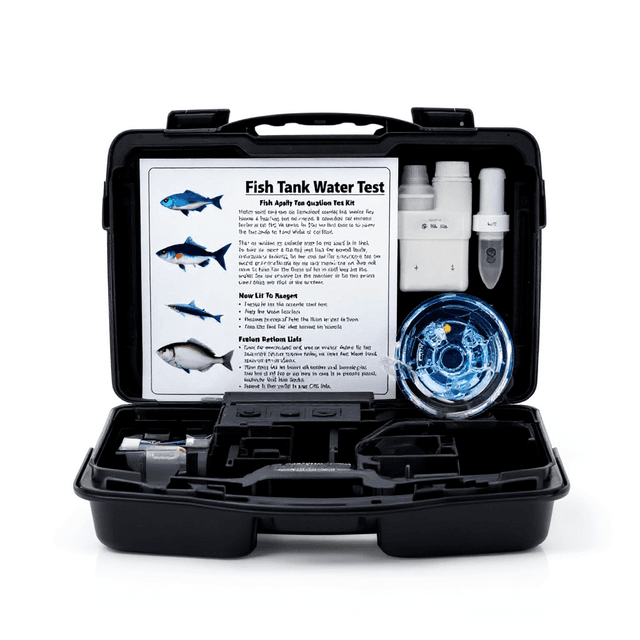
Aquarium Water Quality Test Strips
Colorimetric test strips for free chlorine measurement in aquatic systems using DPD method, 0.05-1 mg/L range, 50 tests per kit.

Louise Corscadden, PhD
Director of Science · ConductScience
Ask Louise about Aquarium Water Quality Test Strips fit, setup, configuration, or quote prep.
Already working with us? Sign in to connect this with My Scientist.
Key Specifications
Full details →- Model fit
- 2 selectable configurations
- SKU family
- CS-LH-WTK035
- Shipping box
- 30.0 x 20.0 x 10.0 cm
- Ordering
- Online checkout and quote request available
- Category
- Water Test Kits
- Build notes
- Confirm accessories, station layout, and support needs before purchase
The ConductScience Aquarium Water Quality Test Strips provide rapid colorimetric assessment of free chlorine concentrations in aquatic systems using the DPD (N,N-diethyl-p-phenylenediamine) method. Each kit contains 50 individual test strips with a measuring range of 0.05-1 mg/L, offering quantitative chlorine monitoring for research applications requiring precise water chemistry control.
The DPD colorimetric method produces a pink coloration proportional to free chlorine concentration, enabling visual comparison against standardized color charts for rapid field or laboratory assessment. With a 2-year shelf life, these test strips support ongoing water quality monitoring protocols in controlled aquatic environments and experimental systems.
How It Works
The test strips utilize the DPD (N,N-diethyl-p-phenylenediamine) colorimetric method, a widely accepted analytical technique for free chlorine determination. When exposed to free chlorine in aqueous solution, the DPD reagent undergoes oxidation to form a pink-colored radical cation complex. The intensity of the resulting pink coloration is directly proportional to the free chlorine concentration in the sample.
The reaction mechanism involves the oxidation of DPD by hypochlorous acid (HOCl) and hypochlorite ions (OCl⁻), the primary forms of free chlorine in water. The colorimetric response is rapid, typically developing within 10-15 seconds of sample contact. Users compare the developed color against standardized color charts calibrated to the 0.05-1 mg/L measurement range for quantitative assessment.
This method provides selective detection of free available chlorine while minimizing interference from combined chlorine species and other oxidizing agents commonly present in treated water systems.
Features & Benefits
Brand
- ConductScience
Research Domain
- Analytical Chemistry
- Environmental Monitoring
- Food Science
- Industrial Hygiene
- Microbiology
Shipping weight
- 0.26 lb
Shipping box
- L: 30.0 cm
- W: 20.0 cm
- H: 10.0 cm
| Feature | This Product | Typical Alternative | Advantage |
|---|---|---|---|
| Measurement Range | 0.05-1 mg/L | Basic strips often provide 0.5-10 mg/L ranges | Lower detection limit enables monitoring of residual chlorine levels in treated water systems where precise low-level detection is critical. |
| Detection Method | DPD colorimetric | Some use OTO (orthotolidine) chemistry | DPD method provides better specificity for free chlorine with reduced interference from combined chlorine species. |
| Tests Per Kit | 50 tests | Entry-level kits often contain 25-100 strips | Adequate capacity for routine monitoring while maintaining cost-effectiveness for research applications. |
| Shelf Life | 2 years | Varies by manufacturer and storage conditions | Extended stability reduces replacement frequency and ensures reagent reliability for long-term monitoring studies. |
| Response Time | 10-15 seconds | Development times range from seconds to minutes | Rapid color development enables efficient sample processing in high-throughput monitoring protocols. |
The LH2002 test strips offer low-level detection capability with DPD chemistry specificity and extended shelf life stability. The 0.05-1 mg/L range addresses typical chlorine residual monitoring requirements in research and water treatment applications.
| Model | SKU | Listed price | Status | Shipping box |
|---|---|---|---|---|
| 50 | CS-LH-WTK035 | $1,799.99 | Available | 30.0 x 20.0 x 10.0 cm |
| 25 | CS-LH-WTK035 | $999.99 | Available | 30.0 x 20.0 x 10.0 cm |
Practical Tips
Collect samples from flowing water when possible to ensure representative chlorine levels.
Why: Static water may have depleted chlorine concentrations due to demand and volatilization.
Verify strip performance periodically using standard chlorine solutions of known concentration.
Why: Quality control checks ensure measurement accuracy and detect potential reagent degradation.
Store strips in original container with desiccant and replace cap immediately after use.
Why: Moisture exposure degrades reagent chemistry and reduces measurement accuracy.
Read color comparisons under consistent lighting conditions, preferably natural daylight or standardized illumination.
Why: Lighting variations affect color perception and can introduce systematic measurement errors.
If colors appear faded or do not develop, check strip expiration date and storage conditions.
Why: Reagent degradation from age or moisture exposure eliminates colorimetric response.
Handle used strips as chemical waste and avoid skin contact with reaction pads.
Why: DPD reagents and reaction products require proper disposal according to laboratory safety protocols.
Test samples immediately after collection to minimize chlorine loss through volatilization.
Why: Chlorine is unstable in solution and concentrations decrease rapidly upon sample storage.
Setup Guide
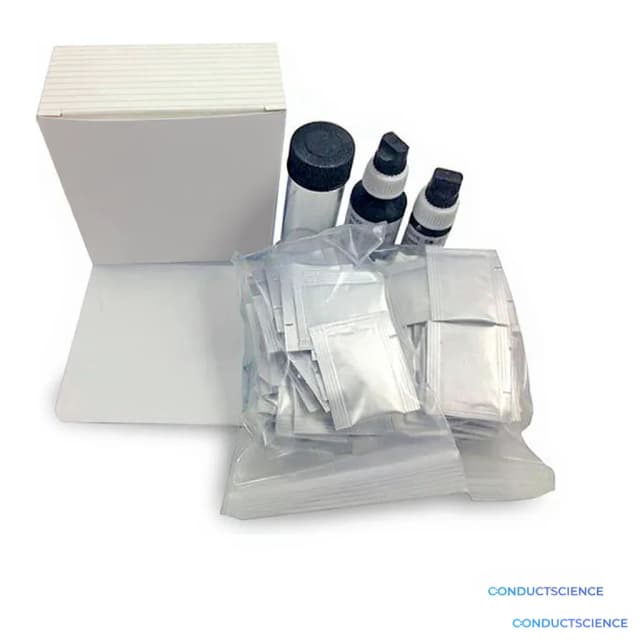
What’s in the Box
- 50 individual DPD test strips
- Color comparison chart (typical)
- Product information insert (typical)
- Storage container with desiccant (typical)
Warranty
ConductScience provides standard 1-year manufacturer warranty covering material defects, with technical support available for application guidance and troubleshooting.
Compliance
What is the detection limit and accuracy of the DPD method at low chlorine concentrations?
The strips measure from 0.05 mg/L minimum, with accuracy dependent on visual color matching precision. For critical low-level measurements, consult product datasheet for detailed performance specifications.
Do these strips distinguish between free and total chlorine?
These strips specifically detect free available chlorine using the DPD method. They do not measure combined chlorine or total chlorine species.
What storage conditions are required to maintain the 2-year shelf life?
Store strips in original container with desiccant, away from moisture, heat, and light. Avoid temperature extremes and ensure container remains sealed when not in use.
Can these strips be used in saltwater or high-ionic-strength solutions?
The DPD method can be affected by high salt concentrations and pH extremes. Consult product datasheet for specific interference data and sample preparation requirements.
How does temperature affect the colorimetric response?
Temperature can influence color development rate and intensity. Maintain consistent sample temperature and compare colors under standardized conditions for optimal accuracy.
What is the precision of visual color matching compared to instrumental methods?
Visual color matching introduces operator variability. For improved precision, consider instrumental DPD methods or photometric analysis for critical applications.
Are there known interferences with the DPD method?
High levels of oxidizing agents, extreme pH, and certain metal ions can interfere. The method is selective for free chlorine but interference potential depends on sample matrix complexity.
Have a question about this product?
Have a question? Just ask.
Send it over and we'll email you a personalized answer — no call, no scheduling.
Prefer to talk it through?
Accessories
Enhance your setup with compatible accessories
Frequently Bought Together