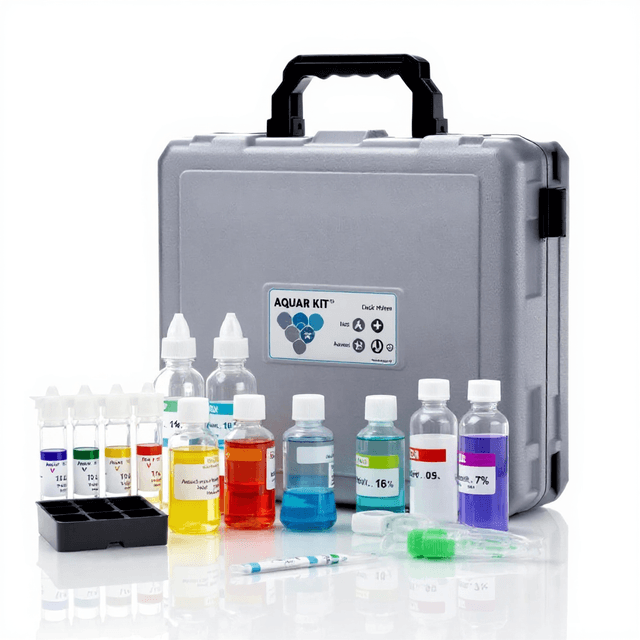
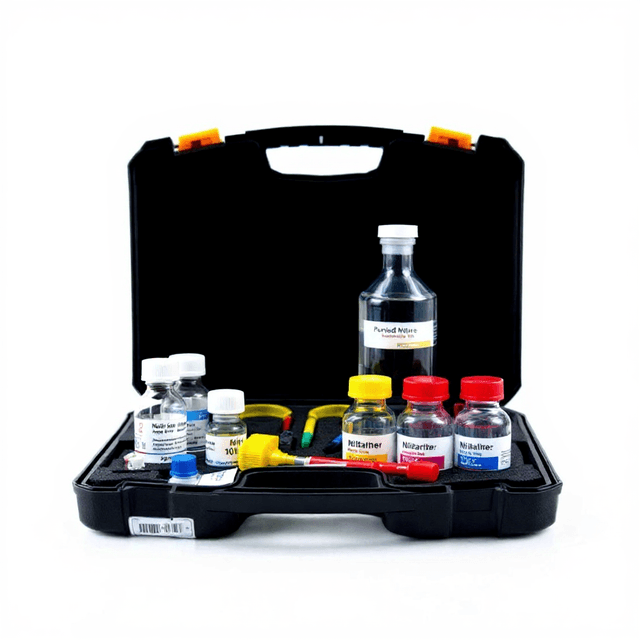
Free Chlorine Test Kit
Portable colorimetric test kit for quantitative measurement of free chlorine residuals in water samples, designed for field and laboratory applications.

Louise Corscadden, PhD
Director of Science · ConductScience
Ask Louise about Free Chlorine Test Kit fit, setup, configuration, or quote prep.
Already working with us? Sign in to connect this with My Scientist.
Key Specifications
Full details →- Model fit
- 2 selectable configurations
- SKU family
- CS-LH-WTK034
- Shipping box
- 30.0 x 20.0 x 10.0 cm
- Ordering
- Online checkout and quote request available
- Category
- Water Test Kits
- Build notes
- Confirm accessories, station layout, and support needs before purchase
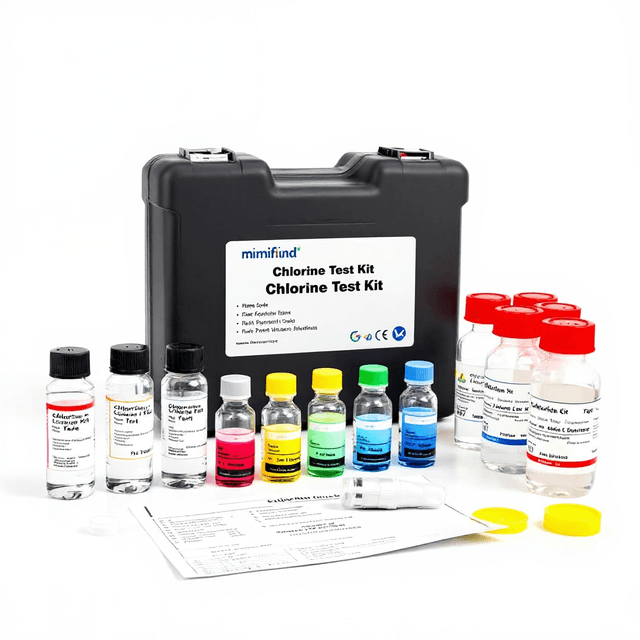
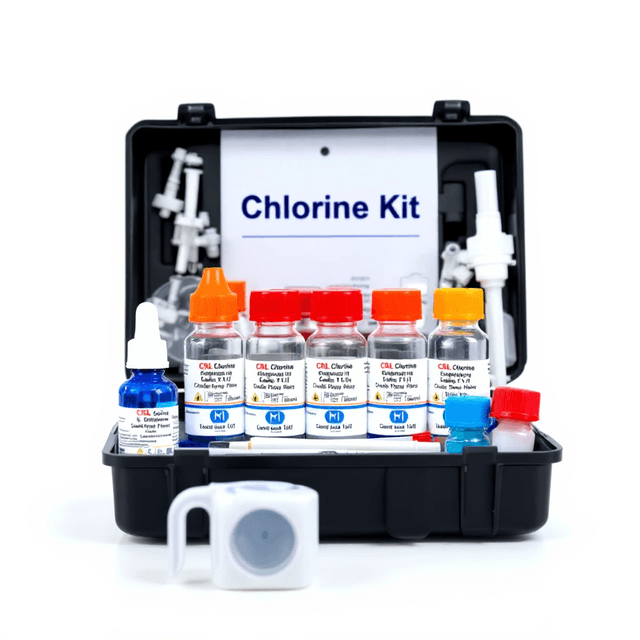
The Free Chlorine Test Kit (Model LH2002) is a portable field testing solution designed for quantitative measurement of free chlorine residuals in aqueous solutions. This kit enables rapid on-site determination of chlorine concentrations in water systems, providing essential data for water quality assessment and treatment monitoring protocols.
The kit employs standard colorimetric methodology for chlorine detection, offering researchers and technicians a reliable field-portable alternative to laboratory-based analytical methods. Applications span environmental monitoring, water treatment verification, and industrial process control where real-time chlorine measurement is required for operational decision-making.
How It Works
The Free Chlorine Test Kit operates on the principle of colorimetric analysis, utilizing the reaction between free chlorine and a chromogenic reagent to produce a measurable color change proportional to chlorine concentration. Free chlorine (hypochlorous acid and hypochlorite ion) reacts with the indicator chemistry to form a colored complex that can be quantified through visual comparison or spectrophotometric measurement.
The test methodology typically employs N,N-diethyl-p-phenylenediamine (DPD) or similar indicator systems that demonstrate high selectivity for free chlorine over combined chlorine species. The intensity of the resulting color development correlates directly with free chlorine concentration, enabling quantitative determination within the kit's specified detection range.
Sample pH and temperature can influence the equilibrium between hypochlorous acid and hypochlorite ion, affecting both the chemical reactivity of free chlorine and the stability of the color complex. Proper sample handling and temperature compensation protocols ensure accurate measurements across varying field conditions.
Features & Benefits
Brand
- ConductScience
Research Domain
- Analytical Chemistry
- Environmental Monitoring
- Food Science
- Industrial Hygiene
- Microbiology
- Pharmaceutical QC
Shipping weight
- 0.26 lb
Shipping box
- L: 30.0 cm
- W: 20.0 cm
- H: 10.0 cm
| Feature | This Product | Typical Alternative | Advantage |
|---|---|---|---|
| Test Methodology | Colorimetric analysis with visual comparison system | Entry-level models often use test strips with limited precision | Provides quantitative results with better accuracy than simple strip tests for research applications. |
| Portability | Self-contained kit format with carrying case | Digital instruments require battery management and calibration solutions | Enables immediate field testing without power requirements or electronic component maintenance. |
| Reagent System | Model LH2002 standardized protocol | Varies by manufacturer with different detection ranges | Follows established analytical procedures for consistent results across testing locations. |
| Operation Requirements | Visual color comparison without instrumentation | Digital meters require regular calibration and maintenance | Reduces operational complexity and eliminates electronic component failure risks in field conditions. |
The Free Chlorine Test Kit Model LH2002 offers field-portable colorimetric analysis with standardized protocols for quantitative chlorine measurement. The self-contained format provides reliable testing capability without electronic instrumentation requirements.
| Model | SKU | Listed price | Status | Shipping box |
|---|---|---|---|---|
| 50 | CS-LH-WTK034 | $999.99 | Available | 30.0 x 20.0 x 10.0 cm |
| 25 | CS-LH-WTK034 | $549.99 | Available | 30.0 x 20.0 x 10.0 cm |
Practical Tips
Collect samples in clean containers and test immediately to minimize chlorine loss through volatilization and degradation.
Why: Free chlorine is unstable and can dissipate rapidly, affecting measurement accuracy.
Test a chlorine-free blank sample before each testing session to verify reagent performance and zero baseline.
Why: Reagent degradation or contamination can produce false positive results that compromise data quality.
Store reagent bottles in cool, dark conditions and replace when expiration dates are reached or color changes occur.
Why: Reagent stability directly affects measurement accuracy and detection range performance.
Record sample temperature and pH when possible, as these parameters affect chlorine speciation and color development.
Why: Temperature and pH influence the equilibrium between hypochlorous acid and hypochlorite ion, affecting test results.
If color development appears weak or inconsistent, check reagent mixing thoroughness and reaction time compliance.
Why: Incomplete reagent mixing or improper timing can result in reduced color intensity and measurement errors.
Avoid skin contact with reagents and dispose of test solutions according to local chemical waste guidelines.
Why: Test reagents may contain chemicals that require proper handling and disposal protocols.
Setup Guide
What’s in the Box
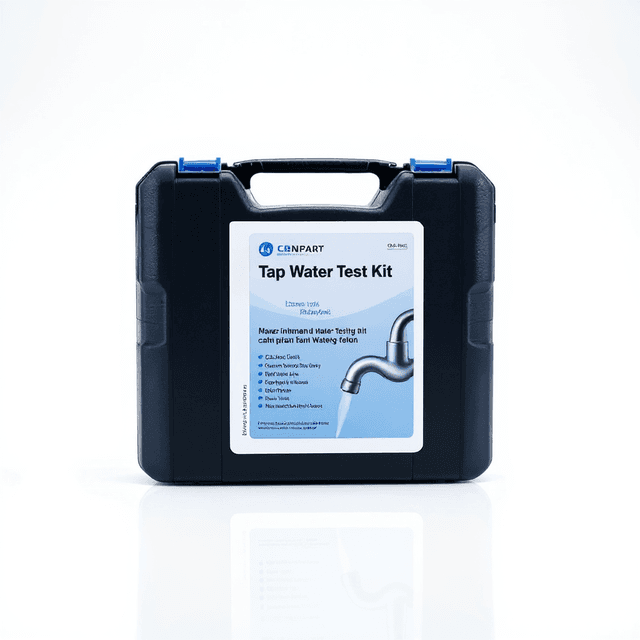
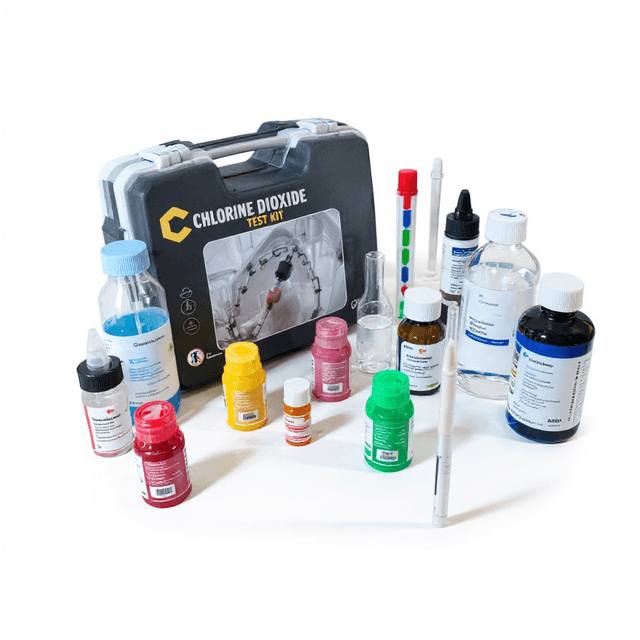
- Test reagent bottles (typical)
- Sample collection vials (typical)
- Color comparison chart (typical)
- Sampling accessories (typical)
- Carrying case (typical)
- User manual and protocol guide (typical)
Warranty
ConductScience provides standard one-year manufacturer warranty covering reagent stability and kit component integrity, with technical support for analytical protocol optimization.
Compliance
References
Background reading relevant to this product:
What is the detection range and precision of this chlorine test kit?
Specific detection range and precision values should be consulted in the product datasheet, as these parameters depend on the reagent formulation and color comparison system included with Model LH2002.
How long are the reagents stable and what storage conditions are required?
Reagent stability and storage requirements vary by chemical composition. Store reagents according to kit instructions, typically in cool, dark conditions away from contamination sources.
Can this kit differentiate between free and total chlorine?
This kit is specifically designed for free chlorine measurement. Total chlorine determination typically requires separate analytical procedures or combined chlorine calculations.
What sample volume is required for each test?
Sample volume requirements are specified in the kit protocol documentation and depend on the reagent system and detection methodology employed.
Are there known interferences that affect chlorine measurement accuracy?
Common interferences include high pH, temperature extremes, and oxidizing agents. Consult the analytical protocol for specific interference mitigation strategies.
How does this compare to digital chlorine meters or laboratory methods?
Colorimetric test kits offer field portability and simplicity compared to electronic instruments, while laboratory methods typically provide higher precision and automated data logging capabilities.
Have a question about this product?
Have a question? Just ask.
Send it over and we'll email you a personalized answer — no call, no scheduling.
Prefer to talk it through?
Accessories
Enhance your setup with compatible accessories
Frequently Bought Together