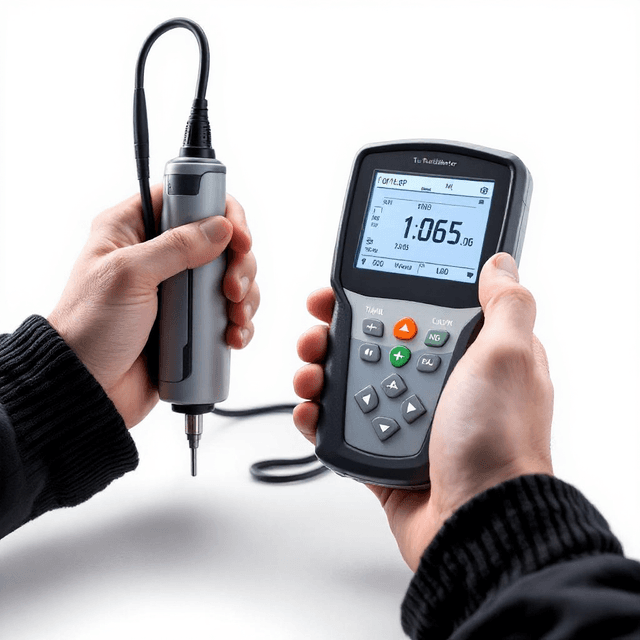
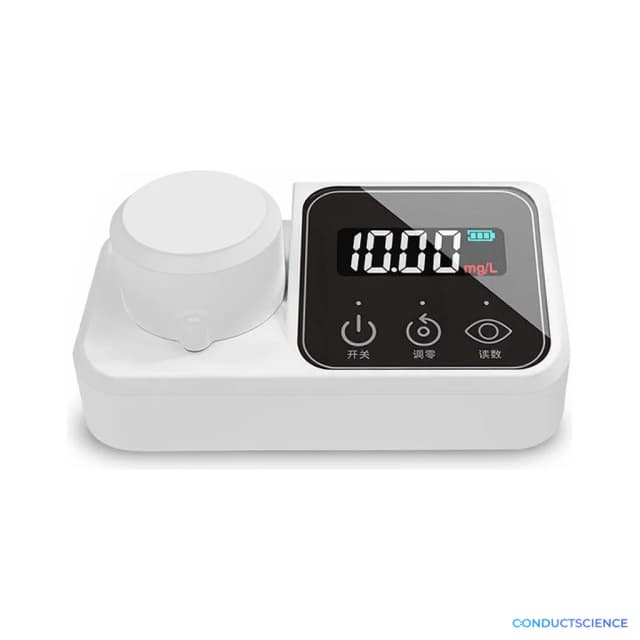
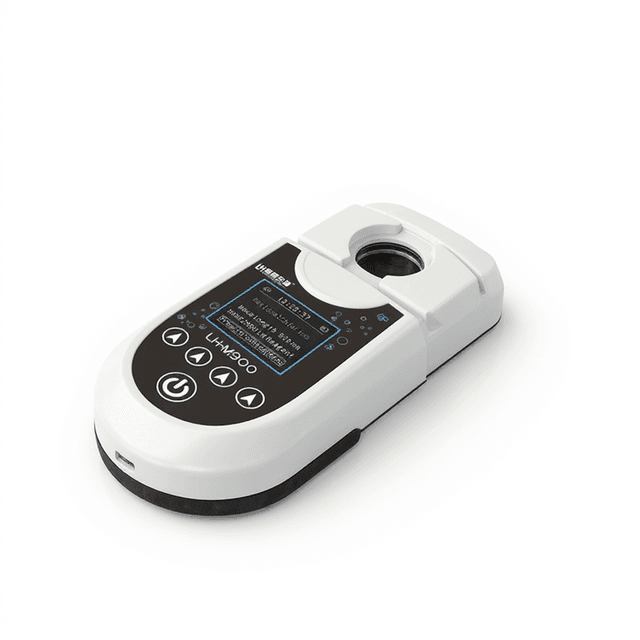
Benchtop Water Analyzer
UV-Visible spectrophotometer for water quality analysis with 190-1100nm range, 0.3nm accuracy, and integrated data storage supporting 200 calibration curves.

Louise Corscadden, PhD
Director of Science · ConductScience
Ask Louise about Benchtop Water Analyzer fit, setup, configuration, or quote prep.
Already working with us? Sign in to connect this with My Scientist.
Key Specifications
Full details →- Model fit
- Configured during quote
- SKU family
- BIO-0464
- Shipping box
- 42.0 x 43.6 x 38.0 cm
- Ordering
- Online checkout and quote request available
- Category
- Portable Analyzers
- Build notes
- Confirm accessories, station layout, and support needs before purchase
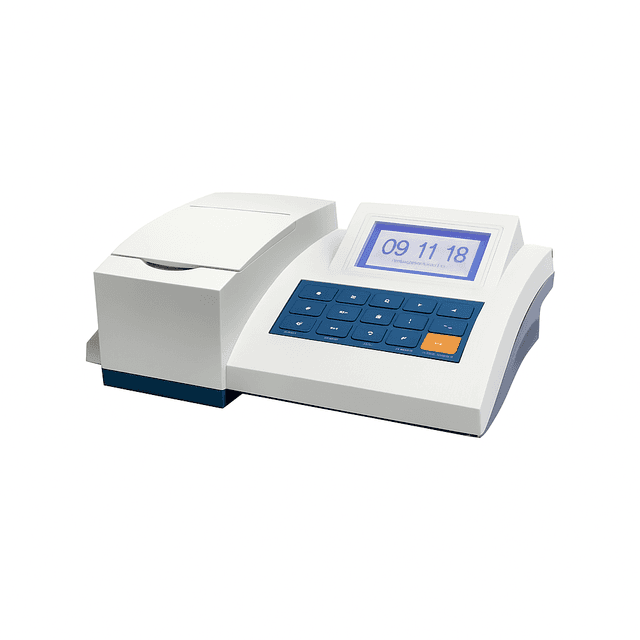
The Benchtop Water Analyzer is a UV-Visible spectrophotometer designed for quantitative analysis of water quality parameters in laboratory and field applications. Operating across a wavelength range of 190-1100nm with 0.3nm accuracy, this dual-lamp system combines tungsten and deuterium light sources to provide comprehensive spectral coverage for both visible and ultraviolet measurements. The analyzer features a 7-inch color touchscreen interface and built-in thermal printer for immediate documentation of results.
With measurement capabilities supporting up to 200 calibration curves and storage for 5000 data points, this instrument accommodates diverse analytical protocols while maintaining optical stability of ≤0.001A/10min. The system accepts standard cuvettes and colorimetric tubes, enabling compatibility with established analytical methods. Measurement repeatability of ≤±3% and display error ≤8% provide reliable quantitative data for research and monitoring applications requiring spectrophotometric analysis of aqueous samples.
How It Works
The analyzer employs UV-Visible absorption spectrophotometry to quantify analytes in aqueous samples. Light from dual sources—a tungsten lamp for visible wavelengths (typically 320-1100nm) and a deuterium lamp for ultraviolet range (190-400nm)—passes through the sample contained in a cuvette or colorimetric tube. When molecules in solution absorb light at specific wavelengths characteristic of their electronic transitions, the transmitted light intensity decreases proportionally to analyte concentration according to Beer-Lambert law.
The optical system maintains wavelength accuracy to 0.3nm across the 190-1100nm range, with stray light levels below 0.05%T to minimize interference. Transmitted light is detected and converted to absorbance values, which are compared against pre-stored calibration curves to determine analyte concentrations. The system can store up to 200 different calibration curves, enabling multi-parameter analysis of water samples with automated calculation and data logging capabilities.
Features & Benefits
Automation Level
- semi-automated
Wavelength Range
- 190~1100nm
Wavelength Accuracy
- 0.3nm
Stray Light
- 0.05%T
Display Error
- ≤8%
Repeatability
- ≤±3%
Light Source
- Tungsten lamp(visible area) and deuterium lamp (ultraviolet area)
Optical Stability
- ≤0.001A/10min
Light Source Life
- 100,000 hours
Measurement Time
- 5 minutes
Number of Curves
- 200 can be set
Data Storage
- 5000 pieces can be stored
Reading Cuvette
- Cuvette /colorimetric tube
Printer
- Built-in thermal printer
Brand
- ConductScience
Research Domain
- Analytical Chemistry
- Environmental Monitoring
- Food Science
- Industrial Hygiene
- Materials Science
- Pharmaceutical QC
Display Type
- 7 inch color touch screen
Shipping weight
- 11.5 lb
Shipping box
- L: 42.0 cm
- W: 43.6 cm
- H: 38.0 cm
| Feature | This Product | Typical Alternative | Advantage |
|---|---|---|---|
| Wavelength Range | 190-1100nm with dual-lamp system | Many benchtop analyzers offer narrower ranges or single-lamp systems | Enables analysis of both UV-absorbing organics and visible-range parameters in a single instrument |
| Wavelength Accuracy | 0.3nm across full range | Entry-level models often specify 1-2nm accuracy | Provides precise peak identification for compound-specific analysis and reduced spectral interference |
| Data Storage Capacity | 200 calibration curves and 5000 measurements | Basic models typically store fewer curves and data points | Supports multi-parameter protocols and extensive data logging without external storage requirements |
| Optical Stability | ≤0.001A/10min drift specification | Standard instruments may have higher drift rates | Enables extended analysis sessions and long-term studies without frequent recalibration |
| Integrated Documentation | Built-in thermal printer with touchscreen | Many instruments require external computers for data management | Provides immediate result documentation and simplified operation for routine analysis workflows |
| Lamp Life Specification | 100,000 hours rated life | Varies by model and lamp technology | Reduces maintenance costs and operational downtime over the instrument lifecycle |
This analyzer combines broad spectral coverage with high accuracy and integrated data management features. The dual-lamp design provides comprehensive UV-Visible capabilities while the touchscreen interface and thermal printer support independent operation without external computer requirements.
Practical Tips
Use certified reference materials that cover the expected concentration range of your samples and verify linearity across the full calibration range.
Why: Ensures accurate quantification and validates the measurement range for your specific application.
Clean optical surfaces monthly with appropriate solvents and lint-free wipes, avoiding harsh chemicals that could damage lens coatings.
Why: Maintains the 0.05%T stray light specification and prevents measurement drift from contaminated optics.
Allow samples to equilibrate to room temperature before measurement and use matched cuvettes for quantitative analysis.
Why: Temperature variations affect absorbance values and cuvette matching eliminates systematic errors from path length differences.
If repeatability exceeds ±3%, check for air bubbles in samples, contaminated cuvettes, or unstable lamp performance.
Why: These are the most common sources of measurement variability that can be easily corrected through proper sample handling.
Run blank measurements before each sample set and monitor baseline stability using the optical stability specification as a guide.
Why: Baseline drift can introduce systematic errors that affect all subsequent measurements in an analysis sequence.
Handle UV-transparent cuvettes with care and avoid looking directly at the deuterium lamp output during operation.
Why: UV radiation can cause eye damage and quartz cuvettes are fragile and expensive to replace.
Store frequently used calibration curves in the 200-curve memory and backup critical methods to prevent data loss.
Why: Method backup prevents loss of validated protocols and reduces setup time for routine analyses.
Replace thermal printer paper before it runs out completely to avoid interrupting documentation workflows.
Why: Continuous documentation is essential for quality records and regulatory compliance in many applications.
Setup Guide
What’s in the Box
- Benchtop Water Analyzer main unit
- Power adapter and cord
- Sample cuvette set (typical)
- Colorimetric tube holder (typical)
- USB data cable (typical)
- User manual and quick start guide
- Calibration certificate (typical)
- Thermal printer paper roll
Warranty
ConductScience provides a standard one-year manufacturer warranty covering defects in materials and workmanship, with technical support available for method development and troubleshooting assistance. Extended service plans and calibration services are available for long-term operational support.
Compliance
What is the optimal sample volume required for measurement?
Consult product datasheet for specific volume requirements, which will depend on the cuvette or colorimetric tube format being used. Standard 1cm path length cuvettes typically require 2-4ml sample volume.
Can the analyzer handle turbid or colored water samples?
The system can analyze colored samples within its 190-1100nm range, but turbid samples may require filtration or dilution to stay within the linear range and avoid light scattering interference.
How frequently does the system require wavelength calibration?
Wavelength calibration frequency depends on usage and environmental conditions, but the 0.3nm accuracy specification suggests monthly verification is typically sufficient for most applications.
What data export formats are supported for integration with LIMS?
Consult product datasheet for specific data connectivity options. Many spectrophotometers offer USB or serial communication for integration with laboratory information management systems.
Can multiple users store separate method libraries?
The system stores up to 200 calibration curves and 5000 data points, but consult product documentation regarding user account management and method organization capabilities.
What maintenance is required beyond lamp replacement?
Regular optical system cleaning, wavelength verification, and replacement of consumables like thermal printer paper. The 100,000-hour lamp life minimizes replacement frequency.
How does measurement time vary with different analytical methods?
The system specifies 5-minute measurement time, though this may vary depending on the specific analytical protocol, number of wavelengths measured, and data processing requirements.
What is the detection limit for typical water quality parameters?
Detection limits depend on the specific analyte, measurement wavelength, and calibration method used. Consult product datasheet for sensitivity specifications relevant to your target compounds.
Have a question about this product?
Have a question? Just ask.
Send it over and we'll email you a personalized answer — no call, no scheduling.
Prefer to talk it through?