Biological Microscope — Achromatic, 4X-100X Oil Immersion
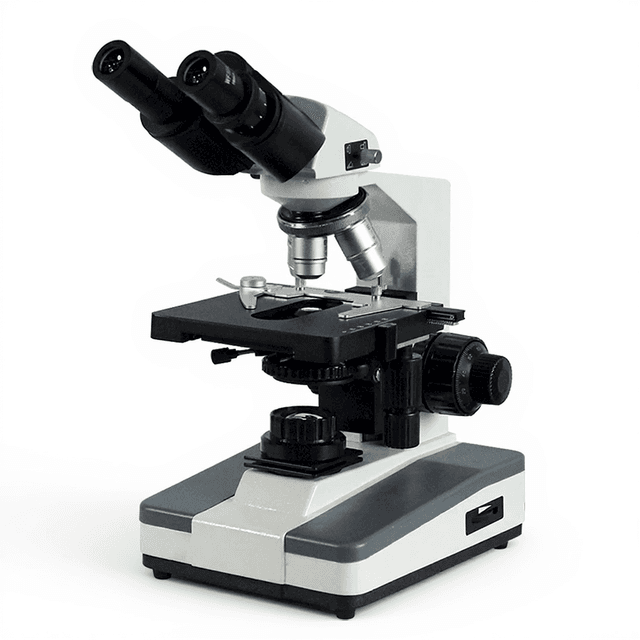
Compound biological microscope with binocular viewing head, achromatic objectives (4X-100X oil), and mechanical stage for routine histological and cellular observation applications.

Louise Corscadden, PhD
Director of Science · ConductScience
Ask Louise about Biological Microscope — Achromatic, 4X-100X Oil Immersion fit, setup, configuration, or quote prep.
Already working with us? Sign in to connect this with My Scientist.
Key Specifications
Full details →- Model fit
- Configured during quote
- SKU family
- MCX-0080
- Shipping box
- 42.0 x 32.0 x 28.0 cm
- Ordering
- Online checkout and quote request available
- Category
- Microscopy
- Build notes
- Confirm accessories, station layout, and support needs before purchase
The ConductScience Biological Microscope (BIO-0531) is a versatile compound microscope designed for routine biological observation and educational applications. This system features a compensation-free binocular head inclined at 30° for comfortable viewing, paired with wide field WF10X eyepieces and a complete set of achromatic objectives (4X, 10X, 40X spring-loaded, 100X spring-loaded oil immersion). The quadruple nosepiece provides quick magnification changes, while the double-layer mechanical stage (132×140mm) with 75×45mm movement range enables precise specimen positioning.
The microscope's achromatic optical system delivers clear, color-corrected images suitable for brightfield microscopy applications across multiple research domains. With its robust mechanical construction and standard biological microscope configuration, this instrument supports routine histological examination, cellular morphology studies, and basic research applications requiring magnifications from 40X to 1000X.
How It Works
The biological microscope operates on the principle of compound magnification, where light passes through the specimen and is magnified by a series of lenses to produce an enlarged image. The system uses Köhler illumination principles, where light from the source is focused by the condenser onto the specimen plane. The objective lens collects light transmitted through or reflected from the specimen and forms a real, inverted, magnified intermediate image.
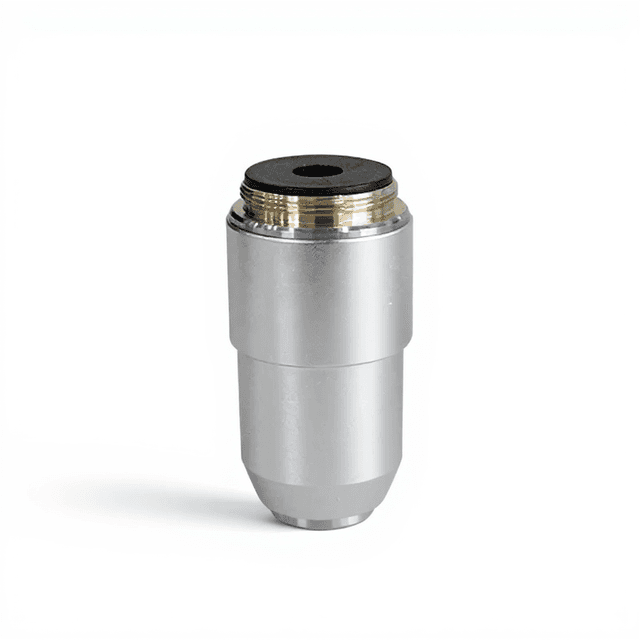
The achromatic objectives are corrected for chromatic aberration at two wavelengths (typically red and blue), reducing color fringing and improving image quality. The 4X objective provides low-magnification overview, 10X enables detailed observation, 40X spring-loaded objective offers high-resolution cellular detail while protecting against slide damage, and the 100X oil immersion objective achieves maximum resolution by eliminating air gaps between the lens and specimen using immersion oil with matched refractive index.
The binocular viewing head splits the light path, allowing comfortable observation with both eyes while maintaining the full numerical aperture of the objectives. The mechanical stage provides precise X-Y positioning through rack-and-pinion mechanisms, enabling systematic specimen examination and accurate repositioning of regions of interest.
Features & Benefits
Shipping weight
- 29.98 lb
Shipping box
- L: 42.0 cm
- W: 32.0 cm
- H: 28.0 cm
| Feature | This Product | Typical Alternative | Advantage |
|---|---|---|---|
| Objective Configuration | Complete 4-objective set (4X, 10X, 40X, 100X) with spring protection on high-power lenses | Entry-level models often include only 3 objectives or lack spring-loaded protection | Provides full magnification range from overview to high-resolution with damage protection for routine laboratory use. |
| Viewing Head Design | Compensation-free binocular head at 30° with multiple configuration options | Basic models may offer fixed monocular or simple binocular heads | Reduces eye strain during extended observation periods and accommodates different user preferences with optional configurations. |
| Stage System | Double-layer mechanical stage (132×140mm) with 75×45mm movement range | Simple fixed stages or smaller mechanical stages with limited travel | Enables precise specimen positioning and systematic examination of large specimens or multiple areas of interest. |
| Eyepiece Options | Wide field WF10X standard with WF16X optional for increased magnification | Standard eyepieces with limited field of view or magnification options | Larger observation field improves efficiency when screening specimens or teaching multiple observers. |
| Build Quality | Professional-grade construction with quadruple nosepiece and decorative base panel | Educational models may use lighter construction or fewer refinements | Ensures long-term reliability and professional appearance suitable for research and clinical environments. |
This biological microscope provides a complete professional-grade optical system with comprehensive objective set, ergonomic binocular viewing, and precision mechanical stage. The combination of achromatic correction, spring-loaded objective protection, and wide field eyepieces delivers reliable performance for routine biological observation applications.
Practical Tips
Verify objective parfocality by focusing with one objective and checking that other objectives require minimal focus adjustment when rotated into position.
Why: Proper parfocal alignment saves time during specimen examination and prevents focus drift when changing magnifications.
Clean objective front lenses with lens paper and appropriate solvents, removing immersion oil immediately after use of 100X objective.
Why: Oil residue can damage optical coatings and attract debris, degrading image quality and potentially damaging expensive objectives.
Always start observation with the lowest magnification (4X) to locate areas of interest before progressing to higher power objectives.
Why: Lower magnification provides larger field of view for initial specimen survey and reduces risk of damage when focusing on thick specimens.
Use spring-loaded objectives properly by allowing them to retract when resistance is felt, never forcing focus through hard contact.
Why: Spring mechanisms protect both specimen and expensive objectives from damage during focusing operations.
Adjust interpupillary distance and individual eyepiece diopters for each user to ensure optimal image quality and reduce eye strain.
Why: Proper optical alignment maximizes resolution and prevents focusing errors that can affect observation accuracy.
If image appears dim or has poor contrast, check that objectives are properly seated in nosepiece and condenser is correctly aligned.
Why: Mechanical misalignment reduces light transmission and optical performance, leading to suboptimal imaging conditions.
When using oil immersion, place small drop of oil directly on specimen before rotating 100X objective into position.
Why: Proper oil immersion technique prevents air bubbles that scatter light and reduce the high resolution capabilities of the 100X objective.
Store microscope with lowest power objective in position and cover with dust protection when not in use.
Why: Protects high-magnification objectives from accidental damage and keeps optical surfaces clean for consistent performance.
Setup Guide
What’s in the Box
- Biological microscope with binocular head
- WF10X wide field eyepieces (pair)
- 4X achromatic objective
- 10X achromatic objective
- 40X achromatic objective (spring-loaded)
- 100X achromatic objective (spring-loaded, oil immersion)
- Quadruple nosepiece (pre-installed)
- Double-layer mechanical stage
- Black decorative base panel
- Power cord (typical)
- Dust cover (typical)
- User manual and warranty documentation (typical)
- Immersion oil sample (typical)
Warranty
ConductScience provides a standard one-year manufacturer warranty covering defects in materials and workmanship, with technical support available for setup assistance and operational guidance throughout the warranty period.
Compliance
References
Background reading relevant to this product:
What is the numerical aperture range of the objective set?
Consult product datasheet for specific numerical aperture values of each achromatic objective. Typical achromatic objectives range from 0.1 NA (4X) to 1.25 NA (100X oil immersion).
Can this microscope accommodate phase contrast or differential interference contrast?
The base model is configured for brightfield microscopy. Consult product datasheet for available contrast enhancement options or condenser upgrades.
What type of illumination system is included?
Specific illumination details are not provided in the standard configuration. Contact technical support for information on light source type, intensity control, and condenser specifications.
Is the trinocular head compatible with standard C-mount cameras?
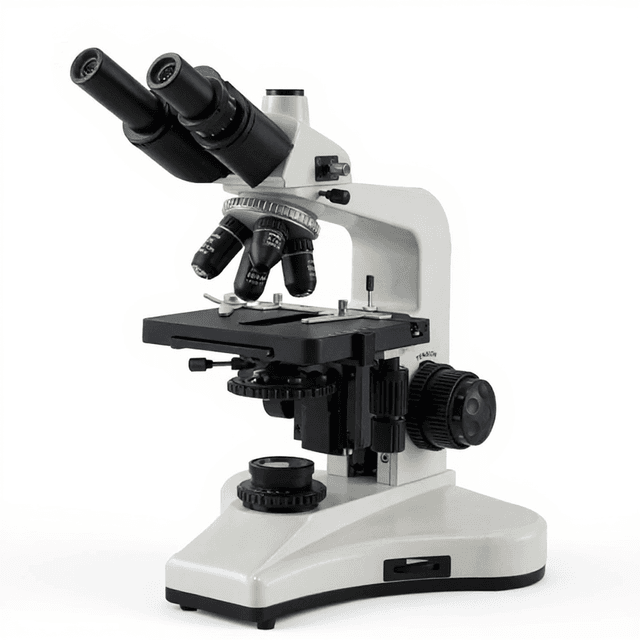
The trinocular head option is available for this model. Camera mounting specifications and compatibility should be confirmed through product datasheet or technical specifications.
What is the maximum thickness specimen this stage can accommodate?
The double-layer mechanical stage is designed for standard microscope slides. Maximum specimen thickness capacity should be confirmed in the technical specifications.
Are higher magnification eyepieces available beyond WF16X?
WF16X eyepieces are listed as optional. For higher magnification eyepiece options or specialty eyepieces, consult the complete accessories catalog.
How does this compare to infinity-corrected optical systems?
This microscope uses a finite tube length optical system with achromatic correction. Infinity-corrected systems offer advantages for specialized applications but require compatible objectives and tubes.
What maintenance is required for the mechanical stage?
Regular cleaning of slide contact surfaces and periodic lubrication of rack-and-pinion mechanisms maintains smooth operation. Avoid over-tightening adjustment knobs to prevent wear.
Have a question about this product?
Have a question? Just ask.
Send it over and we'll email you a personalized answer — no call, no scheduling.
Prefer to talk it through?
Related Products