Bowman Restrainer
Adjustable cylindrical cage restrainer for rodents 250-750g, featuring 18 stainless steel rods and rear access port for precision research procedures.

Louise Corscadden, PhD
Director of Science · ConductScience
Ask Louise about Bowman Restrainer fit, setup, configuration, or quote prep.
Already working with us? Sign in to connect this with My Scientist.
Key Specifications
Full details →- Model fit
- Mouse, Rat
- SKU family
- PL-530-POR
- Shipping box
- 26.3 x 22.0 x 17.6 cm
- Ordering
- Online checkout and quote request available
- Category
- Restrainers
- Build notes
- Confirm accessories, station layout, and support needs before purchase
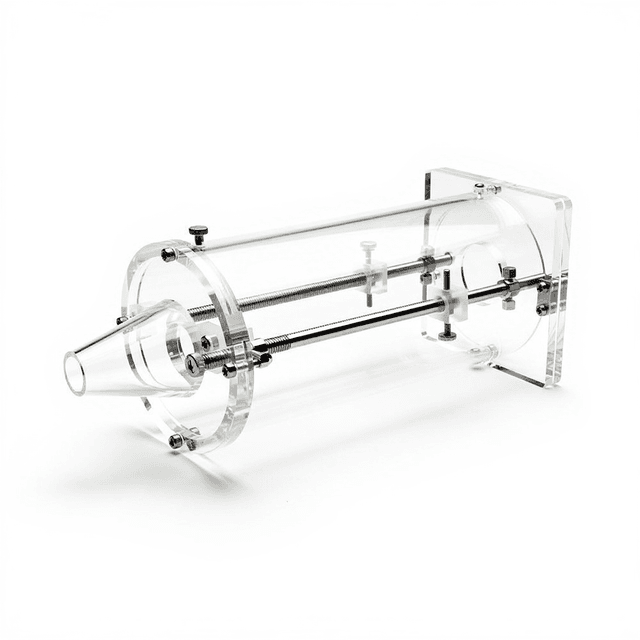
The Bowman restrainer is a cylindrical cage-based restraint system designed for immobilizing rodents during research procedures requiring animal stabilization. The apparatus features 18 adjustable stainless steel rods that accommodate animals weighing 250-750 grams, with diameter adjustability up to 8.9cm to provide proper fit across a range of animal sizes. The cylindrical cage design enables access to multiple body sites while maintaining adequate heat dissipation during procedures.
This restraint system facilitates precision-based procedures including blood collection, drug administration, surgical interventions, and physiological monitoring where animal movement could compromise experimental outcomes. The rear access port (5.08cm wide) provides additional procedural access, while the open cage structure allows for continuous visual monitoring of the animal's condition throughout the restraint period.
How It Works
The Bowman restrainer operates through mechanical confinement using an adjustable cylindrical cage design. The 18 stainless steel rods create a circumferential barrier that prevents forward, backward, and rotational movement while allowing the animal to maintain a natural posture. The rod spacing permits adequate ventilation and heat dissipation while restricting gross body movement that could interfere with experimental procedures.
Animal placement involves introducing the subject head-first into the cylinder, with the diameter adjusted via the rod positioning system to provide snug but not constricting fit. The rear access port enables tail-based procedures or additional restraint points, while the open cage design allows researchers to access various anatomical sites for injection, sampling, or monitoring. The clear acrylic body provides continuous visual assessment of animal welfare throughout the restraint period.
Features & Benefits
Automation Level
- manual
Research Domain
- Behavioral Pharmacology
- Cardiovascular
- Metabolic Research
- Neuroscience
- Pain Research
- Toxicology
Species
- Mouse
- Rat
Shipping weight
- 7.0 lb
Shipping box
- L: 26.3 cm
- W: 22.0 cm
- H: 17.6 cm
| Feature | This Product | Typical Alternative | Advantage |
|---|---|---|---|
| Size Range Accommodation | 250-750 gram range with adjustable diameter system | Fixed-size restrainers often require multiple units for different animal weights | Single device reduces equipment costs and standardizes restraint protocols across varying animal sizes |
| Body Access Points | 360-degree access through cage design plus 5.08cm rear port | Enclosed tubes typically limit access to head/tail regions only | Enables lateral injections, multiple sampling sites, and comprehensive physiological monitoring |
| Thermal Management | Open rod structure promotes air circulation | Solid-wall restrainers may trap body heat during procedures | Reduces thermal stress that could confound temperature-sensitive experimental measurements |
| Visual Monitoring | Clear acrylic body with open cage design | Opaque restrainers limit welfare assessment capability | Enables continuous observation of breathing patterns and stress indicators throughout procedures |
| Diameter Adjustability | 18 adjustable rods expanding to 8.9cm | Most restrainers offer 2-3 fixed sizes requiring multiple units | Fine-tunes fit for individual animals, optimizing restraint effectiveness while minimizing compression |
The Bowman restrainer distinguishes itself through size flexibility and comprehensive access design. The adjustable rod system accommodates a broad weight range while the cylindrical cage structure enables multi-site procedures with continuous welfare monitoring.
Practical Tips
Allow animals to acclimate to the restrainer for 5-10 minutes before beginning procedures to reduce acute stress responses.
Why: Initial restraint stress can elevate physiological parameters that may confound experimental measurements.
Monitor respiratory rate continuously and ensure chest expansion is not restricted by rod positioning.
Why: Over-tight restraint can compromise breathing and lead to animal welfare concerns or experimental artifacts.
Inspect acrylic body for stress cracks regularly, especially around rod mounting points.
Why: Repeated use can cause material fatigue that compromises structural integrity and animal safety.
Pre-warm the restrainer to room temperature before use to avoid thermal shock.
Why: Cold surfaces can trigger additional stress responses that may interfere with baseline measurements.
If an animal becomes unresponsive, immediately widen rod spacing and check for adequate ventilation.
Why: Loss of responsiveness may indicate excessive restraint pressure or compromised breathing.
Record restraint duration and any behavioral observations for each experimental session.
Why: Restraint-related variables can influence experimental outcomes and should be documented for data interpretation.
Test rod adjustment mechanisms before each use to ensure smooth operation and proper spacing.
Why: Mechanical binding can lead to uneven restraint pressure or difficulty in emergency animal removal.
Use consistent rod positioning protocols to standardize restraint pressure across experimental sessions.
Why: Variable restraint intensity can introduce experimental confounds affecting physiological measurements.
Setup Guide
What’s in the Box
- Bowman restrainer main unit with acrylic body
- 18 adjustable stainless steel rods
- User instruction manual (typical)
- Cleaning protocol guidelines (typical)
Warranty
ConductScience provides a standard one-year manufacturer warranty covering defects in materials and workmanship. Technical support includes restraint protocol consultation and replacement part availability.
Compliance
What is the optimal restraint duration to minimize stress responses?
Restraint duration should be minimized to essential procedure time, typically not exceeding 15-30 minutes for most applications. Monitor respiratory rate and responsiveness indicators throughout restraint period.
How do I determine proper rod spacing for different animal sizes?
Adjust rods to create snug fit that prevents rotation while allowing normal chest expansion during breathing. Animal should not be able to turn around but should not show signs of respiratory compromise.
Can the restrainer be used for repeated procedures on the same animal?
Yes, but allow adequate recovery time between sessions and monitor for signs of increased stress response or conditioned fear to the apparatus in subsequent uses.
What cleaning protocols are recommended between animals?
Clean all surfaces with appropriate disinfectant between subjects. Stainless steel rods can be autoclaved if required by institutional protocols, while acrylic body requires chemical disinfection.
How does restraint stress affect experimental outcomes?
Acute restraint elevates corticosterone and affects cardiovascular parameters. Allow 15-30 minute acclimation period when restraint stress could confound experimental measurements.
Is the restrainer suitable for anesthetized animals?
The restrainer can accommodate anesthetized subjects but provides less benefit since movement is already controlled. Consider temperature regulation needs for anesthetized animals in the open cage design.
What are the size limitations for young or old animals?
Minimum 250g weight ensures adequate body mass for safe restraint. Very young animals below this threshold may require alternative restraint methods designed for smaller subjects.
Have a question about this product?
Have a question? Just ask.
Send it over and we'll email you a personalized answer — no call, no scheduling.
Prefer to talk it through?
Accessories
Enhance your setup with compatible accessories
Frequently Bought Together