Concentration Gradient Drug Screening Chip
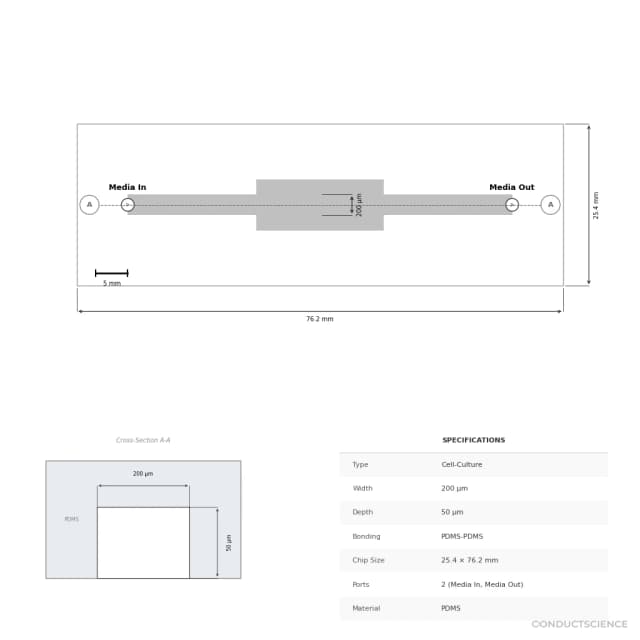
PDMS microfluidic chip with integrated concentration gradient generation for drug screening and dose-response studies in 100 x 100 μm channels.
Reusable chip — designed for multiple experimental runs. Compatible with standard microfluidic tubing: steel pins (0.7 mm ID / 1.0 mm OD) and silicone tubing (0.8 mm ID / 1.9 mm OD). Available in bulk packs (5‑, 10‑, and 25‑unit) for lab-scale and consumable workflows.

Louise Corscadden, PhD
Director of Science · ConductScience
Ask Louise about Concentration Gradient Drug Screening Chip fit, setup, configuration, or quote prep.
Already working with us? Sign in to connect this with My Scientist.
Key Specifications
Full details →- Model fit
- 3 selectable configurations
- SKU family
- WHM-0087
- Shipping box
- 181.8 x 136.3 x 90.9 cm
- Ordering
- Online checkout and quote request available
- Category
- Drug Screening Chips
- Build notes
- Confirm accessories, station layout, and support needs before purchase
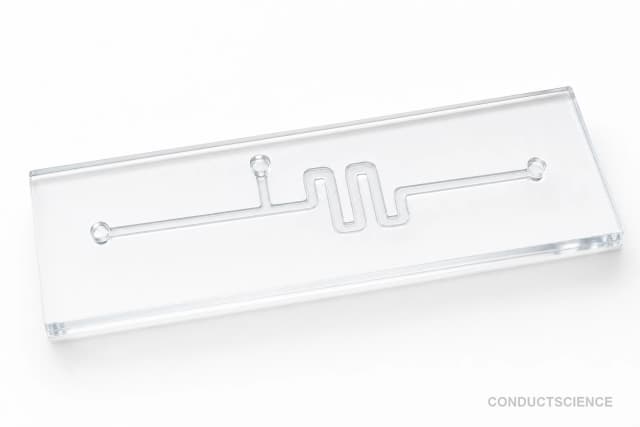
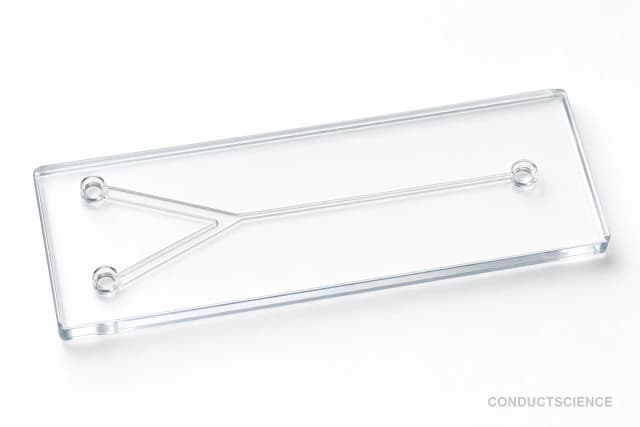
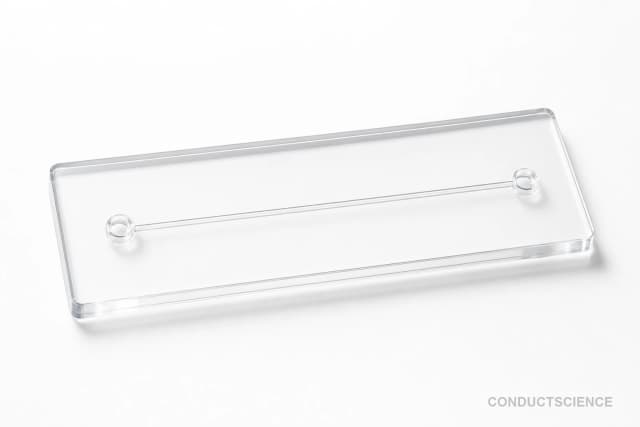
The Concentration Gradient Drug Screening Chip is a PDMS-based microfluidic device designed for dose-response studies and IC50 determinations in pharmaceutical research. The chip features integrated concentration gradient generation within 100 x 100 μm channels, enabling systematic drug dilution studies across multiple concentrations in a single device. This microfluidic platform facilitates cell-based drug screening assays by providing controlled chemical gradients for pharmacological evaluation.
The chip's microfluidic architecture supports parallel testing of drug concentrations, reducing reagent consumption and experimental time compared to traditional well-plate methods. Researchers can perform dose-response characterization, IC50 calculations, and drug efficacy assessments using this specialized microfluidic format.
How It Works
The chip operates through passive diffusion-based concentration gradient generation within its microfluidic channel network. A concentrated drug solution and buffer are introduced at separate inlets, creating a stable concentration gradient through lateral diffusion across the 100 x 100 μm channel dimensions. The PDMS substrate provides optical transparency for microscopic observation while maintaining chemical compatibility with most pharmaceutical compounds.
Concentration profiles develop according to diffusion coefficients and channel geometry, establishing predictable drug concentrations across the channel width. Cells cultured within the device experience varying drug concentrations simultaneously, enabling dose-response measurements from a single experimental run. The microfluidic format reduces dead volume and provides precise control over concentration profiles compared to traditional serial dilution methods.
Features & Benefits
Shipping weight
- 3.3 lb
Shipping box
- L: 181.8 cm
- W: 136.3 cm
- H: 90.9 cm
| Feature | This Product | Typical Alternative | Advantage |
|---|---|---|---|
| Channel dimensions | 100 x 100 μm | Varies by design, often larger channels | Optimized scale for single-cell analysis while maintaining stable gradients. |
| Gradient generation | Integrated concentration gradient | External mixing or manual dilution | Eliminates preparation steps and provides continuous profiles. |
| Material construction | PDMS | Various polymers or glass | Combines optical transparency with proven biocompatibility for cell studies. |
| Application focus | Drug screening, IC50, dose-response | General-purpose microfluidics | Specifically designed for pharmaceutical screening workflows and concentration studies. |
This chip provides integrated concentration gradient generation in optimized channel dimensions specifically designed for drug screening applications. The PDMS construction offers established biocompatibility with optical transparency for microscopic analysis.
| Model | SKU | Listed price | Status | Shipping box |
|---|---|---|---|---|
| 25-Pack | WHM-0087-25PK | Quote | Available | 181.8 x 136.3 x 90.9 cm |
| 10-Pack | WHM-0087-10PK | $1,490.00 | Available | 181.8 x 136.3 x 90.9 cm |
| 5-Pack | WHM-0087-5PK | Quote | Available | 181.8 x 136.3 x 90.9 cm |
Practical Tips
Establish baseline gradient profiles with fluorescent tracers before drug experiments.
Why: Verifies concentration distribution and identifies any flow irregularities.
Store chips in sealed containers at room temperature away from direct light.
Why: Prevents PDMS degradation and maintains surface properties.
Use known drug standards to validate concentration profiles across channel width.
Why: Confirms expected dose-response relationships and gradient accuracy.
Image multiple fields across gradient zones to capture concentration-dependent responses.
Why: Provides statistical power for IC50 calculations and dose-response curves.
Check for air bubbles if gradient profiles appear irregular or unstable.
Why: Air bubbles disrupt diffusion patterns and create concentration anomalies.
Follow appropriate chemical handling protocols for drug compounds and disposal.
Why: Ensures safe handling of potentially toxic pharmaceutical compounds.
Setup Guide
What’s in the Box
- Concentration gradient drug screening chip
- User documentation (typical)
- Storage container (typical)
Warranty
ConductScience provides standard manufacturer warranty coverage with technical support for microfluidic device applications and troubleshooting assistance.
Compliance
References
Background reading relevant to this product:
What drug concentrations can be achieved with this gradient system?
Concentration ranges depend on inlet solutions and channel geometry. Consult product datasheet for specific gradient profiles achievable with your compound of interest.
Is the chip compatible with live cell imaging protocols?
Yes, PDMS construction provides optical transparency suitable for phase contrast and fluorescence microscopy during cell-based assays.
How many experimental replicates can be performed per chip?
Single-use design provides one gradient experiment per chip. Multiple chips required for biological replicates.
What cell types have been validated with this platform?
PDMS biocompatibility supports most mammalian cell lines. Specific cell type validation should be confirmed for your application.
Can the chip be used with organic solvents?
PDMS may swell in certain organic solvents. Test compatibility with your specific drug formulation before experimental use.
How long does gradient stabilization require?
Gradient equilibration time depends on molecular diffusion coefficients and flow rates. Typically ranges from minutes to hours for small molecules.
What microscope compatibility is required?
Standard inverted microscope with appropriate stage dimensions and working distance for microfluidic device imaging.
Have a question about this product?
Have a question? Just ask.
Send it over and we'll email you a personalized answer — no call, no scheduling.
Prefer to talk it through?