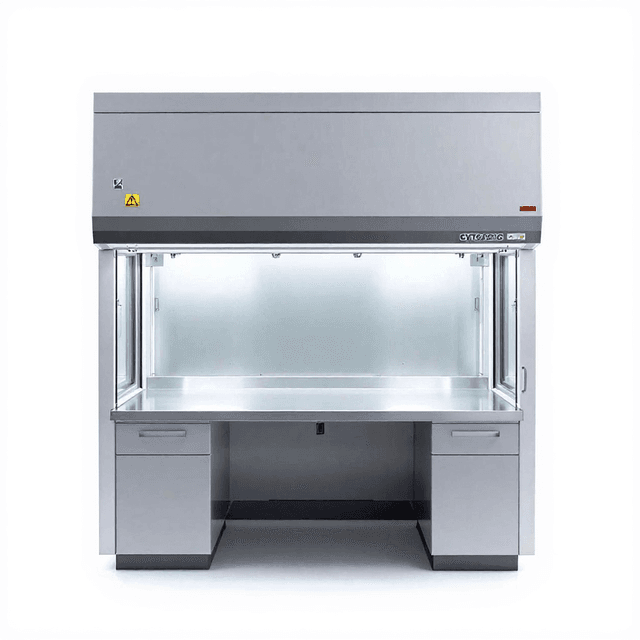
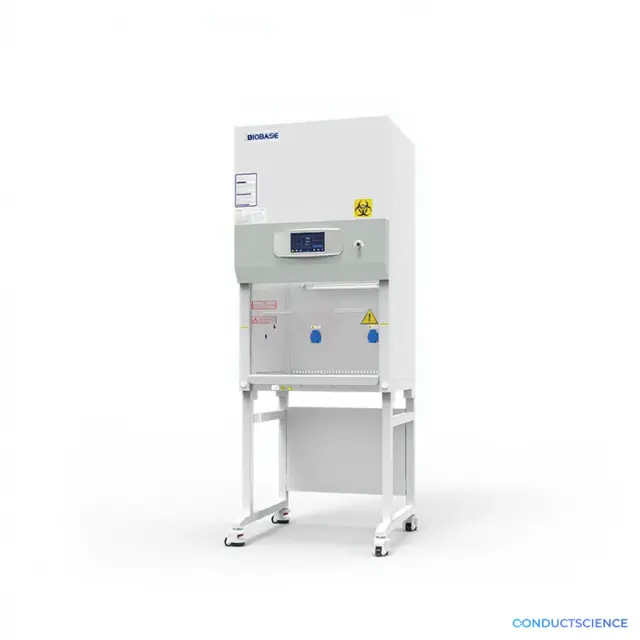
EN Certified Biological Safety Cabinet BSC-4FA2-HA(Customized)
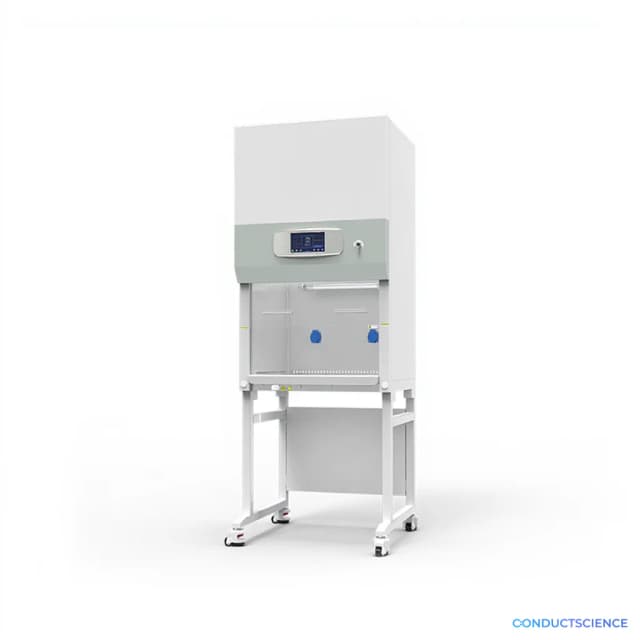
Class II Type A2 biological safety cabinet with dual ULPA filtration, balanced airflow system, and touch screen controls for microbiological containment and sterile processing applications.

Louise Corscadden, PhD
Director of Science · ConductScience
Ask Louise about EN Certified Biological Safety Cabinet BSC-4FA2-HA(Customized) fit, setup, configuration, or quote prep.
Already working with us? Sign in to connect this with My Scientist.
Key Specifications
Full details →- Model fit
- Configured during quote
- SKU family
- BIO-0895
- Shipping box
- 226.0 x 138.3 x 80.0 cm
- Ordering
- Online checkout and quote request available
- Category
- Clean Benches & Fume Hoods
- Build notes
- Confirm accessories, station layout, and support needs before purchase
The EN Certified Biological Safety Cabinet BSC-4FA2-HA represents a Class II Type A2 containment workstation designed for microbiological research and sterile processing applications. This customized unit features a 1280×600×650mm work chamber with laminar downflow protection, providing researcher safety through controlled airflow patterns and ULPA filtration. The cabinet incorporates both manual and electric front window operation with anti-ultraviolet glass protection, enabling flexible workflow management while maintaining containment integrity.
Primary containment is achieved through balanced inflow and exhaust systems operating at 490 m³/h (289 CFM) with 70% recirculation through dual ULPA filters demonstrating ≥99.9995% efficiency for 0.12 μm particles. The color touch screen interface provides real-time monitoring of airflow parameters, filter status, and operational conditions. Work surface height of 750mm accommodates standard laboratory postures while maintaining ergonomic access through the 500mm maximum opening window.
How It Works
The biological safety cabinet operates on the principle of directional airflow containment, utilizing a combination of downflow and inflow air patterns to provide product, personnel, and environmental protection. Room air enters through the front opening at 490 m³/h, creating an inward airflow barrier that prevents escape of aerosols generated within the work chamber. This contaminated air mixes with the downflow stream and is directed through the rear plenum to the exhaust system.
Dual ULPA filters positioned in the supply plenum remove particles ≥0.12 μm with 99.9995% efficiency, generating sterile downflow air at 1145 m³/h across the work surface. Seventy percent of this filtered air recirculates through the downflow system while thirty percent exhausts to atmosphere after secondary ULPA filtration. The balanced pressure relationship between inflow, downflow, and exhaust maintains containment integrity while providing ISO Class 5 clean air over the work surface.
The front window sash operates in both manual and electric modes, allowing precise control of opening height to optimize airflow characteristics. Anti-ultraviolet glass protection prevents photodegradation of light-sensitive materials while maintaining visual access to work procedures. Real-time monitoring through the color touch screen interface displays airflow velocities, filter differential pressures, and alarm conditions to ensure continued containment performance.
Features & Benefits
Automation Level
- semi-automated
External Size(W*D*H)
- 1383*800*2260mm
Internal Size(W*D*H)
- 1280*600*650mm
Work Surface Height
- 750mm
Max Opening
- 500mm
Tested Opening
- 200mm
Inflow
- 490m³/h(289cfm)
Down Flow
- 70%: 1145m³/h(673cfm)
Exhaust
- 30%: 490m³/h(289cfm)
Front Window
- Manual and electric, glass thickness≥6mm, anti-ultraviolet
ULPA Filter
- 2pcs, filtration efficiency for 0.12μm, particles≥99.9995%
Illumination
- ≥1000Lux
Noise
- EN12469≤63dB
European Standard Socket
- 230V, 3A
Brand
- ConductScience
Research Domain
- Cancer Research
- Cell Biology
- Clinical Diagnostics
- Immunology
- Microbiology
- Pharmaceutical QC
Display Type
- Color touch screen
Shipping weight
- 345.0 lb
Shipping box
- L: 226.0 cm
- W: 138.3 cm
- H: 80.0 cm
| Feature | This Product | Typical Alternative | Advantage |
|---|---|---|---|
| ULPA Filter Efficiency | 99.9995% efficiency for 0.12 μm particles with dual filter design | Entry-level models often provide HEPA filtration with 99.97% efficiency for 0.3 μm particles | Superior submicron particle removal provides enhanced protection for both product sterility and personnel safety. |
| Window Operation | Both manual and electric operation with anti-UV glass ≥6mm thickness | Basic models typically offer manual operation only with standard glass | Electric operation reduces contamination risk from hand contact while UV protection prevents photodegradation of samples. |
| User Interface | Color touch screen display with real-time parameter monitoring | Analog gauges and basic LED indicators | Intuitive interface provides immediate feedback on airflow conditions and system status for improved operational confidence. |
| Work Surface Dimensions | 1280×600mm work area with 650mm height clearance | Compact models often provide 900×400mm or smaller work areas | Larger work surface accommodates multiple procedures simultaneously and larger equipment configurations. |
| Airflow Monitoring | Continuous digital monitoring of inflow, downflow, and exhaust parameters | Basic models may lack continuous monitoring capabilities | Real-time verification ensures maintained containment performance throughout extended work sessions. |
| Noise Levels | ≤63dB per EN12469 standards | Varies by model, some exceed 65-70dB | Lower noise levels reduce operator fatigue and enable clear communication during collaborative work. |
The BSC-4FA2-HA combines EN certification standards with advanced monitoring capabilities through its color touch screen interface and dual ULPA filtration system. The larger work chamber and dual-mode window operation provide enhanced workflow flexibility while maintaining superior containment performance through balanced airflow design.
Practical Tips
Verify airflow velocities using calibrated anemometer at designated test points during initial installation and annual certification.
Why: Proper airflow verification ensures containment integrity and validates manufacturer specifications.
Monitor filter differential pressure readings weekly through the touch screen interface and document trends over time.
Why: Early detection of filter loading prevents sudden containment failure and optimizes filter replacement scheduling.
Position materials toward the rear of the work surface and avoid rapid arm movements that could disrupt laminar flow patterns.
Why: Maintaining proper airflow characteristics prevents contamination of sterile materials and ensures personnel protection.
Verify sash position and airflow indicators before beginning work with each new biological agent or procedure.
Why: Consistent pre-work verification prevents exposure incidents and ensures optimal containment performance.
If airflow alarms activate, check for obstructed grilles or improperly positioned equipment before continuing work procedures.
Why: Immediate response to airflow disruption prevents containment breach and maintains safety protocols.
Record daily operational parameters from the touch screen display to establish baseline performance trends.
Why: Historical data facilitates troubleshooting and supports maintenance scheduling decisions.
Clean work surface and interior walls with appropriate disinfectant at the end of each work session.
Why: Regular decontamination prevents cross-contamination between experiments and maintains sterile conditions.
Allow cabinet to operate for 15-30 minutes before beginning critical work to ensure thermal and airflow stabilization.
Why: Stabilization time ensures optimal performance conditions and prevents temperature-induced airflow variations.
Setup Guide
What’s in the Box
- BSC-4FA2-HA biological safety cabinet main unit
- Color touch screen control interface
- Dual ULPA filter assemblies (pre-installed)
- Anti-UV front window with manual/electric operation
- LED illumination system
- European standard power cord
- Installation and operation manual
- Performance certification documentation (typical)
- Maintenance schedule and procedures guide (typical)
Warranty
ConductScience provides a standard one-year manufacturer warranty covering defects in materials and workmanship, with technical support available for installation guidance and operational troubleshooting. Extended service contracts and on-site maintenance programs are available for continued performance verification.
Compliance
What is the minimum sash height for proper containment during normal operations?
The cabinet is tested at 200mm sash opening height, which represents the optimal balance between containment performance and work access. The maximum opening of 500mm should only be used for equipment introduction or cleaning procedures.
How frequently should ULPA filters be replaced and what are the indicators?
ULPA filter replacement depends on usage and environmental conditions, typically 12-24 months. The touch screen interface monitors filter differential pressure and will indicate when replacement is needed. Consult product datasheet for specific pressure thresholds.
Can this cabinet be connected to building exhaust systems?
The unit exhausts 30% of total airflow (490 m³/h) and can be connected to building exhaust with proper balancing to maintain cabinet performance. Exhaust connection requires professional installation and airflow verification.
What is the recovery time after opening the sash for equipment introduction?
Allow 3-5 minutes for airflow stabilization after closing the sash to operational height. The touch screen interface indicates when proper airflow conditions are restored before resuming work.
Are there restrictions on equipment placement within the work chamber?
Equipment should be positioned to maintain unobstructed downflow patterns. Avoid placing tall items or dense equipment arrays that could disrupt laminar flow across the work surface. Maintain clear zones at front and rear grilles.
What decontamination procedures are recommended between different biological agents?
Use appropriate chemical disinfectants for surface decontamination followed by UV treatment if available. Allow complete air changes (typically 5-10 minutes) between different agents. Consult institutional biosafety guidelines for specific protocols.
How does this model compare to ducted biological safety cabinets?
This recirculating model (Type A2) returns 70% of filtered air to the room, making it suitable for non-volatile agents. Ducted cabinets exhaust 100% outside and are required for volatile chemicals or radionuclides.
Can this biological safety cabinet be used on a benchtop?
Yes. The BSC-4FA series cabinet is delivered as a benchtop unit with optional legs available separately. Ensure your workbench has a load-bearing capacity of at least 250 kg before installation.
What workbench load-bearing capacity is required for benchtop installation?
The minimum workbench load-bearing capacity required for the BSC-4FA series is 250 kg.
Have a question about this product?
Have a question? Just ask.
Send it over and we'll email you a personalized answer — no call, no scheduling.
Prefer to talk it through?
Accessories
Enhance your setup with compatible accessories