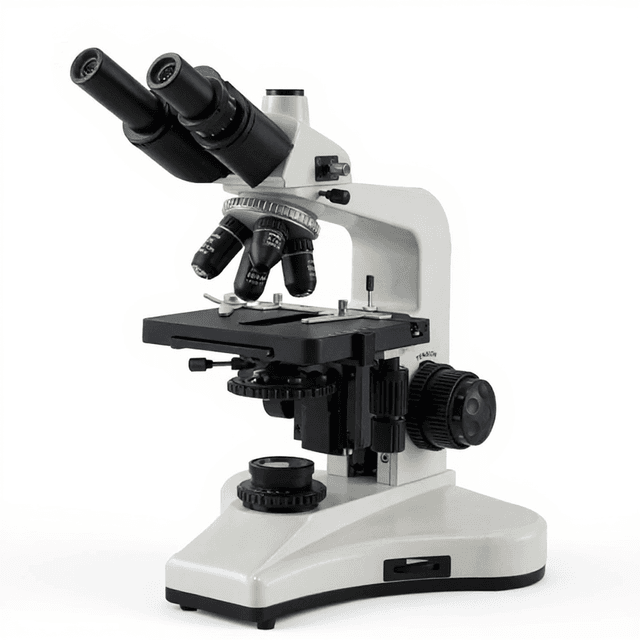
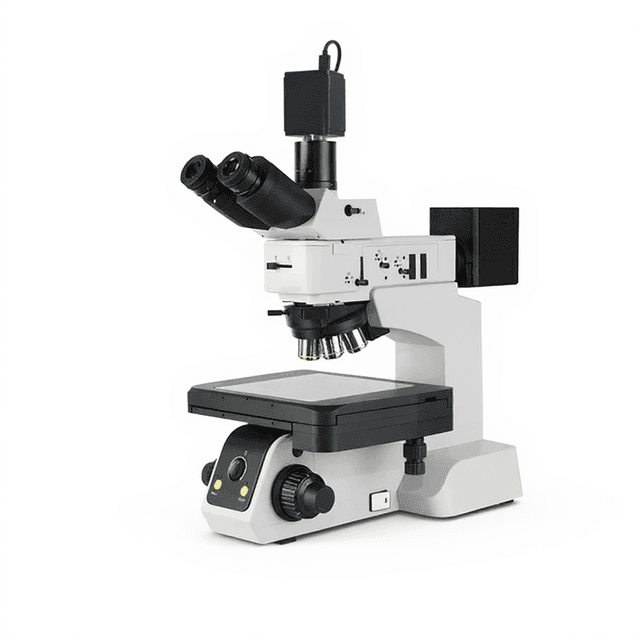
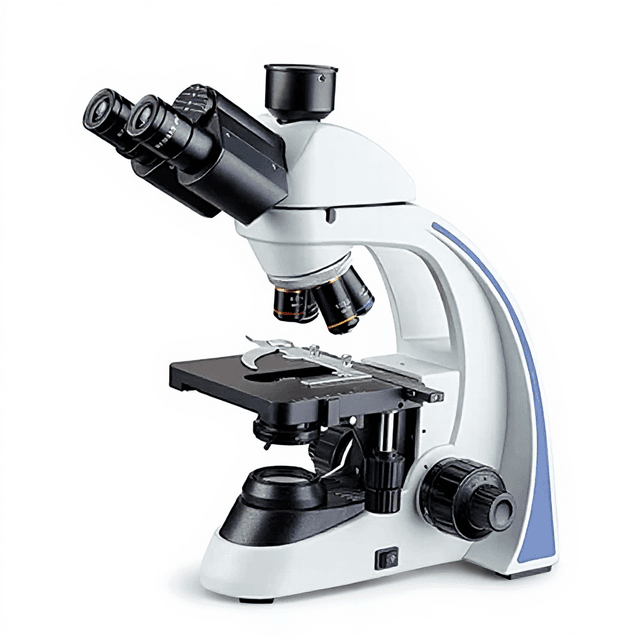
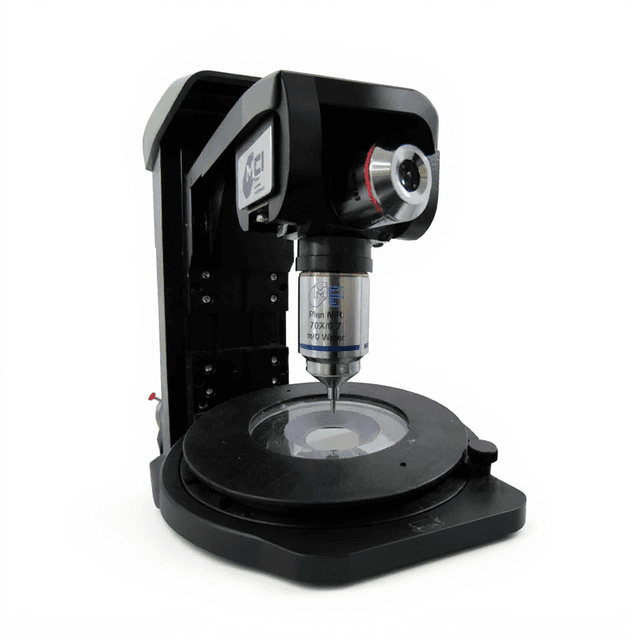
Finity Plan Achromatic Metallurgical Microscope Objective Lens for 5X 10X 20X 40X 50X 60X 80X 100X
Plan achromatic metallurgical microscope objective lens with 0.75 numerical aperture and 1.34mm working distance, designed for reflected light microscopy of opaque materials and metallic specimens.

Louise Corscadden, PhD
Director of Science · ConductScience
Ask Louise about Finity Plan Achromatic Metallurgical Microscope Objective Lens for 5X 10X 20X 40X 50X 60X 80X 100X fit, setup, configuration, or quote prep.
Already working with us? Sign in to connect this with My Scientist.
Key Specifications
Full details →- Model fit
- Configured during quote
- SKU family
- MCX-0058
- Shipping box
- 4.9 x 6.6 x 6.6 cm
- Ordering
- Online checkout and quote request available
- Category
- Microscopy
- Build notes
- Confirm accessories, station layout, and support needs before purchase
The Finity Plan Achromatic Metallurgical Microscope Objective Lens is designed for reflected light microscopy of opaque specimens in materials science and industrial applications. This achromatic objective features a numerical aperture of 0.75 and working distance of 1.34mm, optimized for high-resolution imaging of metallic surfaces, minerals, and other non-transparent materials. The plan achromatic design provides flat field correction across the entire field of view, minimizing spherical and chromatic aberrations for accurate microstructural analysis.
Available in multiple magnifications (5X, 10X, 20X, 40X, 50X, 60X, 80X, 100X), this objective lens enables researchers to examine material microstructures at various scales. The metallurgical configuration utilizes reflected illumination rather than transmitted light, making it suitable for analyzing opaque specimens that cannot be examined with traditional biological microscope objectives. The corrected optics ensure consistent image quality for quantitative measurements and documentation of material properties.
How It Works
Metallurgical microscope objectives operate using reflected light illumination to image opaque specimens. Light from the microscope's illuminator passes through the objective lens and strikes the specimen surface. The reflected light returns through the same objective, which collects and focuses the reflected rays to form an image. This epi-illumination configuration allows examination of materials that would be opaque to transmitted light.
The plan achromatic design incorporates multiple lens elements to correct for spherical and chromatic aberrations while maintaining a flat field of view. The numerical aperture of 0.75 determines the light-gathering ability and resolving power, enabling fine detail resolution in metallic microstructures. The 1.34mm working distance provides sufficient clearance for specimen manipulation while maintaining optimal optical performance for materials analysis applications.
Features & Benefits
Product Type
- Microscope
Microscope Type
- Metallurgical
Application
- Materials Science
- Quality Control
Skill Level
- Intermediate
Brand
- ConductScience
Research Domain
- Analytical Chemistry
- Industrial Hygiene
- Materials Science
Shipping weight
- 1.9 lb
Shipping box
- L: 4.9 cm
- W: 6.6 cm
- H: 6.6 cm
| Feature | This Product | Typical Alternative | Advantage |
|---|---|---|---|
| Numerical Aperture | 0.75 NA | Entry-level metallurgical objectives often offer 0.25-0.50 NA | Higher numerical aperture provides better resolution and light collection for detailed microstructural analysis. |
| Working Distance | 1.34mm | Standard objectives may have shorter working distances | Adequate working distance allows for specimen manipulation and measurement probe access during examination. |
| Optical Correction | Plan achromatic design | Basic objectives may have standard achromatic correction only | Plan correction provides flat field imaging essential for accurate measurements across the entire field of view. |
| Magnification Range | Multiple options available (5X-100X) | Individual objectives sold separately | Complete magnification series enables comprehensive analysis from overview to high-magnification examination. |
This objective provides high numerical aperture performance with plan achromatic correction, offering superior resolution and field flatness for demanding metallurgical applications. The practical working distance and multiple magnification options support comprehensive materials analysis workflows.
Practical Tips
Verify parfocal alignment when switching between objectives to maintain focus when changing magnifications.
Why: Proper parfocal adjustment saves time and prevents specimen damage during multi-magnification examinations.
Clean lens surfaces immediately after use and store in protective cases to prevent dust accumulation and coating damage.
Why: Contaminated optics degrade image quality and can cause permanent damage to expensive lens coatings.
Use appropriate illumination intensity to avoid thermal damage to specimens while maintaining adequate contrast.
Why: Excessive illumination can alter specimen microstructure and create artifacts in temperature-sensitive materials.
Match objective numerical aperture to condenser numerical aperture for optimal resolution and contrast.
Why: Proper aperture matching maximizes the optical performance and image quality of the microscopy system.
Check for oil or immersion media contamination if image quality degrades during dry objective use.
Why: Cross-contamination from immersion objectives can create optical aberrations and focus problems.
Ensure adequate working distance to prevent objective contact with specimen during focusing operations.
Why: Objective contact can damage both the lens and specimen, potentially creating safety hazards from glass fragments.
Setup Guide
What’s in the Box
- Metallurgical microscope objective lens
- Protective storage case (typical)
- Lens cleaning cloth (typical)
- Installation instructions (typical)
Warranty
ConductScience provides a standard one-year manufacturer warranty covering defects in materials and workmanship, with technical support for optimal performance in metallurgical microscopy applications.
Compliance
References
Background reading relevant to this product:
What is the resolving power at the 0.75 numerical aperture?
The theoretical resolving power depends on illumination wavelength; consult product datasheet for specific resolution values at different wavelengths used in metallurgical microscopy.
Is this objective compatible with polarized light techniques?
Yes, metallurgical objectives are typically designed for use with polarized reflected light illumination systems for enhanced contrast in crystalline materials.
What is the maximum specimen thickness that can be accommodated?
The 1.34mm working distance determines the maximum specimen thickness, allowing examination of standard metallographic mounts and polished sections.
Can this objective be used for fluorescence applications?
Metallurgical objectives can be used for reflected fluorescence microscopy if the lens coatings are appropriate for the excitation wavelengths being used.
What cleaning procedures are recommended for maintenance?
Use lens tissue and appropriate cleaning solutions; avoid touching lens surfaces directly and store in protective case when not in use to prevent contamination.
Have a question about this product?
Have a question? Just ask.
Send it over and we'll email you a personalized answer — no call, no scheduling.
Prefer to talk it through?
Frequently Bought Together
Related Products