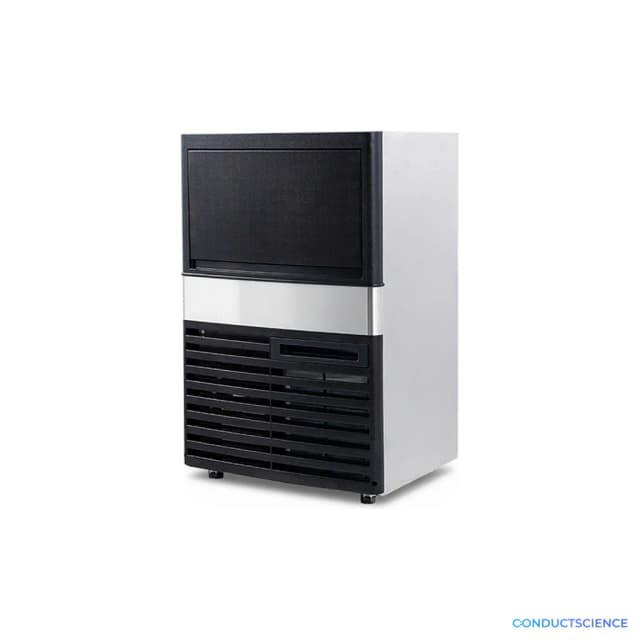
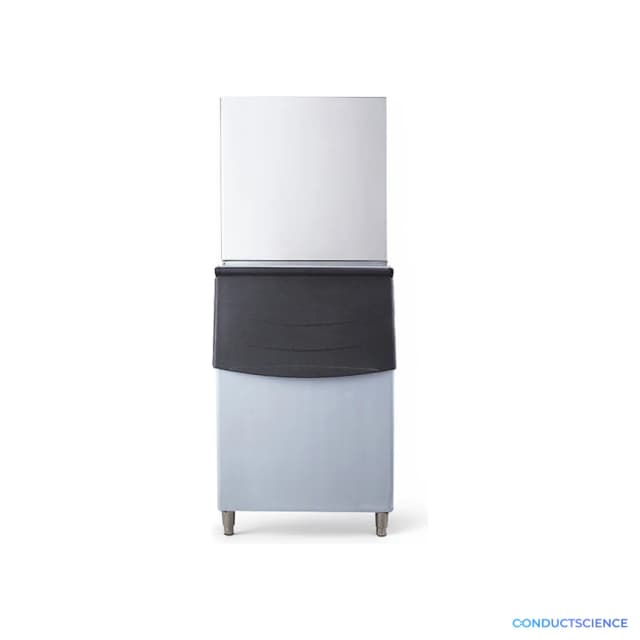
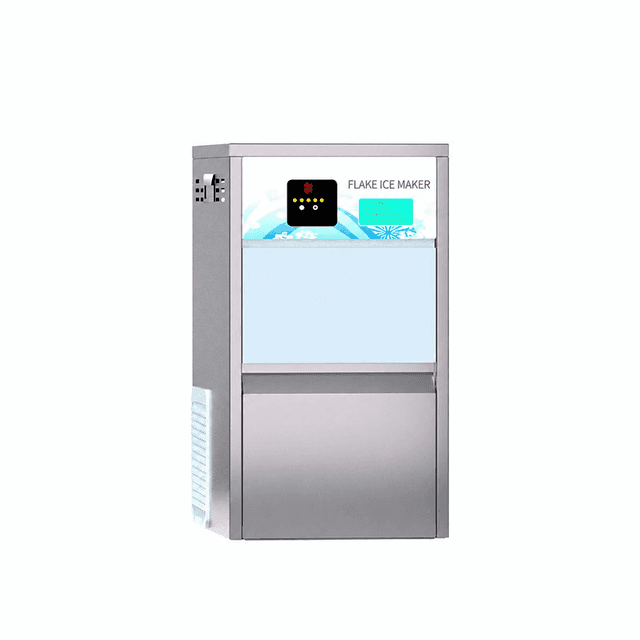
Flake Ice Maker FIM
Laboratory flake ice maker producing 20-200 kg of contamination-free ice daily for sample preservation and temperature control applications in research environments.

Louise Corscadden, PhD
Director of Science · ConductScience
Ask Louise about Flake Ice Maker FIM fit, setup, configuration, or quote prep.
Already working with us? Sign in to connect this with My Scientist.
Key Specifications
Full details →- Model fit
- 12 selectable configurations
- SKU family
- BIO-0127
- Shipping box
- 60.5 x 33.0 x 47.0 cm
- Ordering
- Online checkout and quote request available
- Category
- Ice Makers
- Build notes
- Confirm accessories, station layout, and support needs before purchase
The Flake Ice Maker FIM is a laboratory-grade ice production system designed for research environments requiring consistent, contamination-free ice supply. This unit produces flake ice through direct evaporation cooling, delivering dry, sub-cooled ice flakes suitable for sample preservation, temperature control applications, and laboratory cooling protocols.
Available in multiple capacity configurations ranging from 20 kg to 200 kg daily production, the FIM series accommodates laboratories of varying scales. The compact footprint and integrated storage bin design optimize laboratory space utilization while maintaining reliable ice availability for continuous research operations. The flake ice format provides rapid cooling due to increased surface area contact, making it particularly effective for biological sample preservation and temperature-sensitive experimental protocols.
How It Works
The Flake Ice Maker FIM operates through direct evaporation cooling technology, where refrigerant circulates through an evaporator cylinder. Water is continuously supplied to the inner surface of the evaporator drum, where it freezes upon contact with the sub-zero surface. A rotating auger scrapes the frozen water from the cylinder wall, creating thin ice flakes that fall into the integrated storage bin.
The flake ice formation process produces ice with high surface area-to-volume ratio, enabling rapid heat transfer when applied to samples or experimental setups. The system maintains consistent ice production through automatic water level control and integrated temperature monitoring, ensuring uniform ice quality throughout the production cycle. The storage bin incorporates insulation to minimize ice melt while maintaining accessibility for laboratory use.
Features & Benefits
Shipping weight
- 26.0 lb
Shipping box
- L: 60.5 cm
- W: 33.0 cm
- H: 47.0 cm
| Feature | This Product | Typical Alternative | Advantage |
|---|---|---|---|
| Daily Ice Production Range | 20-200 kg/24h across multiple models | Entry-level models often limited to 20-50 kg daily capacity | Scalable capacity selection allows laboratories to match production to actual research demands without oversizing equipment. |
| Storage Bin Integration | 10-60 kg integrated insulated storage | Many units require separate storage bins or have minimal storage capacity | Integrated storage eliminates external storage requirements and optimizes laboratory space utilization. |
| Footprint Efficiency | 60.5 × 33.0 cm compact design | Comparable capacity units often require larger floor space | Compact design fits standard laboratory benches while maintaining substantial production capacity. |
| Ice Format | Flake ice with high surface area | Some models produce cube or nugget ice with lower surface area | Flake format provides superior heat transfer efficiency for rapid sample cooling applications. |
| Model Range | Multiple capacity configurations available | Limited model selection with fewer capacity options | Allows precise capacity matching to laboratory requirements without significant over or under-sizing. |
The FIM series provides scalable ice production with integrated storage in a laboratory-optimized design. The flake ice format and compact footprint address specific research environment requirements while offering capacity flexibility across multiple model configurations.
| Model | SKU | Listed price | Status | Shipping box |
|---|---|---|---|---|
| FIM250 | FIM250 | $4,999.00 | Available | 60.5 x 33.0 x 47.0 cm |
| FIM200 | FIM200 | $4,599.00 | Available | 60.5 x 33.0 x 47.0 cm |
| FIM150 | FIM150 | $4,199.00 | Available | 60.5 x 33.0 x 47.0 cm |
| FIM120 | FIM120 | $3,899.00 | Available | 60.5 x 33.0 x 47.0 cm |
| FIM100 | FIM100 | $3,599.00 | Available | 60.5 x 33.0 x 47.0 cm |
| FIM85 | FIM85 | $3,299.00 | Available | 60.5 x 33.0 x 47.0 cm |
| FIM70 | FIM70 | $2,999.00 | Available | 60.5 x 33.0 x 47.0 cm |
| FIM60 | FIM60 | $2,799.00 | Available | 60.5 x 33.0 x 47.0 cm |
| FIM50 | FIM50 | $2,599.00 | Available | 60.5 x 33.0 x 47.0 cm |
| FIM40 | FIM40 | $2,399.00 | Available | 60.5 x 33.0 x 47.0 cm |
| FIM30 | FIM30 | $1,899.00 | Available | 60.5 x 33.0 x 47.0 cm |
| FIM20 | FIM20 | $1,599.00 | Available | 60.5 x 33.0 x 47.0 cm |
Practical Tips
Monitor initial ice production rates for 24 hours to verify actual capacity matches specifications under laboratory conditions.
Why: Ambient temperature and water quality affect production efficiency and may require operational adjustments.
Establish weekly cleaning cycles using laboratory-grade sanitizing solutions to prevent bacterial growth and mineral buildup.
Why: Regular cleaning maintains ice quality and prevents system efficiency degradation over time.
Use laboratory-grade deionized water for ice production when direct sample contact is required.
Why: Water quality directly affects ice purity and prevents contamination of temperature-sensitive research materials.
Check water supply pressure and temperature if ice production rates decrease below specifications.
Why: Inadequate water supply conditions are common causes of reduced production efficiency.
Document ice production rates and storage times to establish consistent cooling protocols for experimental reproducibility.
Why: Standardized ice handling procedures improve experimental consistency and temperature control reliability.
Ensure proper ventilation around the unit to prevent heat buildup and maintain optimal cooling efficiency.
Why: Adequate airflow prevents overheating and extends equipment lifespan while maintaining production capacity.
Empty and refill storage bin regularly during high-usage periods to maintain ice quality and prevent clumping.
Why: Fresh ice provides better cooling performance and prevents quality degradation from extended storage.
Setup Guide
What’s in the Box
- Flake Ice Maker FIM main unit
- Water supply connection fittings (typical)
- Drainage accessories (typical)
- User manual and installation guide (typical)
- Cleaning and maintenance kit (typical)
Warranty
ConductScience provides a standard one-year manufacturer warranty covering parts and technical support. Extended warranty options and on-site service contracts are available for institutional installations requiring enhanced coverage.
Compliance
What water quality requirements are needed for optimal ice production?
Consult product datasheet for specific water quality parameters. Generally, laboratory-grade deionized or distilled water is recommended to prevent mineral buildup and ensure ice purity for research applications.
How does flake ice compare to cube ice for sample cooling applications?
Flake ice provides greater surface area contact, enabling faster heat transfer and more uniform cooling of samples compared to cube ice. The thin flake format conforms better to irregular sample containers.
What is the power consumption for continuous operation?
Consult product datasheet for specific electrical requirements. Power consumption varies by model capacity and ambient conditions, with energy-efficient operation designed for continuous laboratory use.
Can the unit operate in temperature-controlled laboratory environments?
Yes, the unit is designed for standard laboratory conditions. Optimal performance occurs within typical laboratory temperature ranges, with efficiency decreasing at elevated ambient temperatures.
What maintenance schedule is required for consistent operation?
Regular cleaning cycles and filter replacements are necessary to maintain ice quality and production efficiency. Specific maintenance intervals depend on usage frequency and water quality conditions.
How quickly does ice production resume after storage bin emptying?
Production resumes immediately upon storage capacity availability. The continuous production cycle maintains consistent output as long as water supply and power remain available.
Is the ice suitable for direct contact with biological samples?
Ice quality depends on water source and system cleanliness. For direct sample contact, use laboratory-grade water and follow appropriate sanitization protocols to ensure contamination-free ice production.
Have a question about this product?
Have a question? Just ask.
Send it over and we'll email you a personalized answer — no call, no scheduling.
Prefer to talk it through?
Upgrade Options