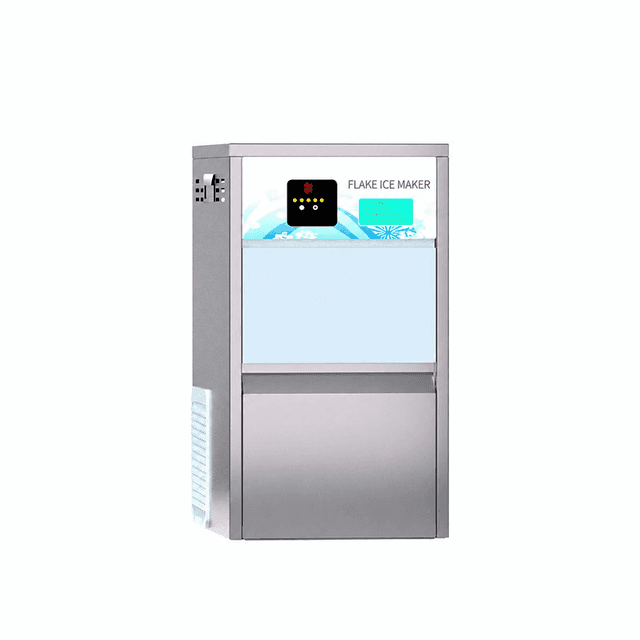
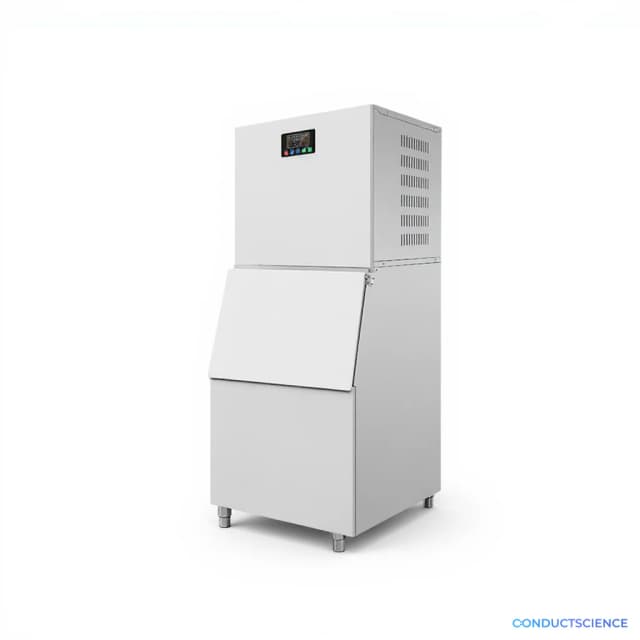
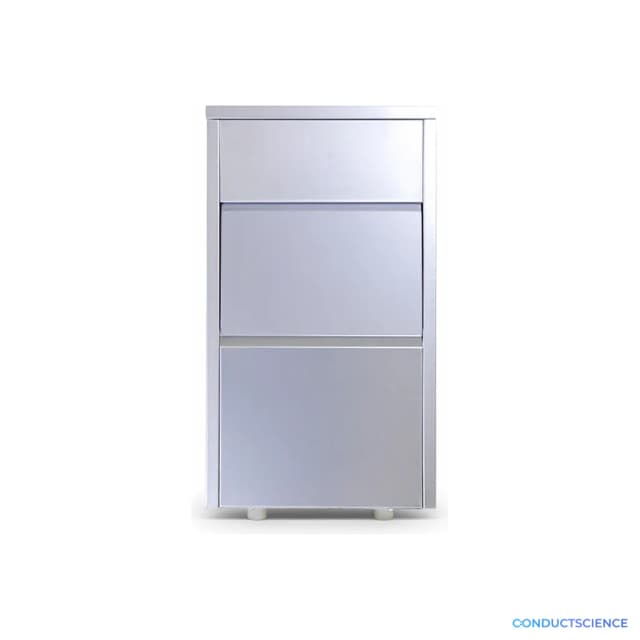
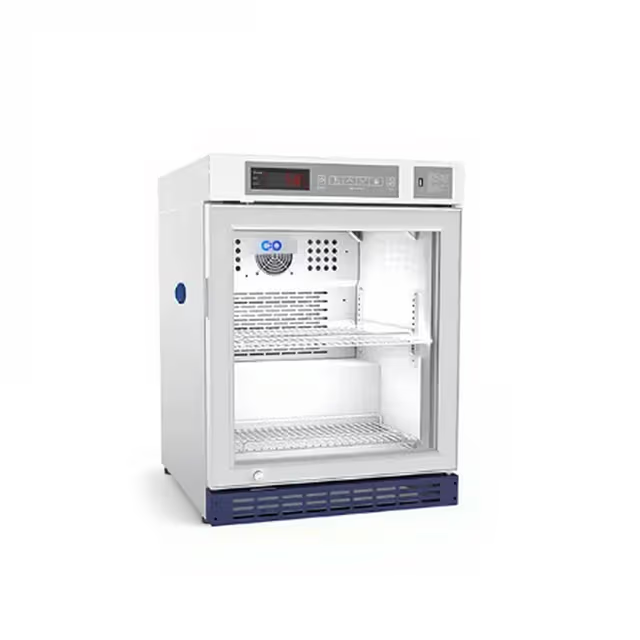
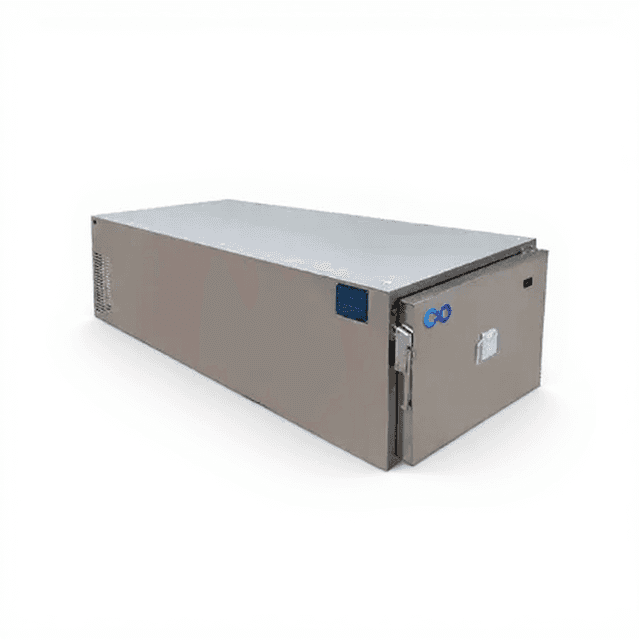
Split-Type Flake lce Maker FIM300 FIM500
Split-type flake ice makers producing small-particle irregular snow ice for laboratories, hospitals, and research facilities.
FIM300: 300 kg/24h capacity, 200 kg storage, 1360W; FIM500: 500 kg/24h capacity, 300 kg storage, 1650W. Air-cooling condensation; R404a refrigerant; stainless steel tank; AC220V standard.

Louise Corscadden, PhD
Director of Science · ConductScience
Ask Louise about Split-Type Flake lce Maker FIM300 FIM500 fit, setup, configuration, or quote prep.
Already working with us? Sign in to connect this with My Scientist.
Key Specifications
Full details →- Model fit
- 2 selectable configurations
- SKU family
- BIO-0125
- Shipping box
- 92.0 x 60.0 x 83.5 cm
- Ordering
- Online checkout and quote request available
- Category
- Ice Makers
- Build notes
- Confirm accessories, station layout, and support needs before purchase
The Split-Type Flake Ice Maker FIM300/FIM500 is a large-capacity laboratory ice production system for research institutions, hospitals, schools, and clinical environments requiring a consistent supply of small-particle irregular snow ice. The split-type design separates the ice-making head from the storage tank for flexible installation in space-constrained facilities. Air-cooling condensation and a stainless steel tank construction ensure reliable, hygienic ice production throughout a wide ambient temperature range.
Applications
Laboratories, hospitals, schools, medical and chemical research facilities, supermarkets, hotels, and seafood storage operations.
Key Features
- Split-type architecture: ice-making head and storage tank are separate units for flexible siting
- Produces small-particle irregular snow ice — high surface area for rapid sample cooling
- Air-cooling condensation system; operates across 10–35°C ambient temperature range
- Stainless steel ice tank for chemical resistance and easy sanitization
- Standard accessories: water inlet pipe, drainage pipe, ice spoon; optional filter available
- Power supply: AC 220V, 50/60 Hz standard; 110V, 60 Hz optional
Technical Specifications
| Parameter | FIM300 | FIM500 |
|---|---|---|
| Ice Making Capacity | 300 kg/24h | 500 kg/24h |
| Ice Storage Capacity | 200 kg | 300 kg |
| Ice Shape | Small particle irregular snow ice | |
| Input Power | 1360 W | 1650 W |
| Condensation | Air cooling | |
| Ambient Temperature | 10–35°C | |
| Water Temperature | 2–15°C | |
| Tank Shell | Stainless steel | |
| Compressor | SECOP | Embraco |
| Refrigerant | R404a, 420 g | R404a, 600 g |
| Power Supply | AC 220V, 50/60 Hz (standard); 110V, 60 Hz (optional) | |
| Head Size (W×D×H) | 565×575×570 mm | 600×760×740 mm |
| Ice Tank Size (W×D×H) | 570×800×1020 mm | 760×840×1120 mm |
| Net Weight | 95 kg | 125 kg |
| Gross Weight | 143 kg | 175 kg |
| Standard Accessories | Water inlet pipe ×1, Drainage pipe ×1, Ice spoon ×1 | |
| Optional Accessories | Filter | |
How It Works
The flake ice production system operates through a refrigeration cycle using R404a refrigerant and air-cooling condensation. Water enters the evaporator chamber where it contacts a cooled cylindrical surface maintained below freezing by the refrigeration system. As water flows over this surface, it forms thin ice layers that are continuously scraped off by rotating blades, creating small irregular flake particles.
The SECOP compressor circulates refrigerant through the evaporator coils while ambient air provides heat removal through the air-cooling condenser. The split-type configuration allows the ice-making head to be positioned separately from the storage bin, enabling installation flexibility while maintaining efficient ice transport. Produced ice accumulates in the insulated stainless steel storage compartment until retrieved.
Features & Benefits
Shipping weight
- 95.0 lb
Shipping box
- L: 92.0 cm
- W: 60.0 cm
- H: 83.5 cm
| Feature | This Product | Typical Alternative | Advantage |
|---|---|---|---|
| Daily Ice Production | 300 kg per 24 hours | Entry-level models typically produce 50-150 kg daily | Higher capacity supports continuous laboratory operations without production bottlenecks. |
| Storage Capacity | 200 kg integrated storage | Smaller units often provide 25-100 kg storage | Reduced refilling frequency maintains workflow continuity during peak demand periods. |
| Installation Flexibility | Split-type design with separate components | Most units use integrated design | Enables installation in space-constrained laboratories with component separation options. |
| Tank Construction | Stainless steel construction | Various materials depending on model | Chemical resistance and easy sanitization for laboratory hygiene requirements. |
| Power Requirements | 1360W with dual voltage options | Power consumption varies widely | Accommodates different laboratory electrical systems with voltage flexibility. |
| Cooling Method | Air cooling condensation | Varies by model and capacity | Eliminates water cooling infrastructure requirements reducing installation complexity. |
The FIM300 FIM500 provides high-capacity ice production with flexible installation options and laboratory-appropriate construction materials. The system's 300 kg daily output and substantial storage capacity support demanding research workflows requiring continuous ice availability.
| Model | SKU | Listed price | Status | Shipping box |
|---|---|---|---|---|
| FIM500 | BIO-FIM500 | $6,579.00 | Available | 92.0 x 60.0 x 83.5 cm |
| FIM300 | BIO-FIM300 | $4,679.00 | Available | 92.0 x 60.0 x 83.5 cm |
Practical Tips
Clean stainless steel surfaces weekly with appropriate laboratory-grade sanitizing solutions to prevent mineral buildup and maintain hygiene standards.
Why: Regular cleaning prevents contamination and maintains optimal ice quality for laboratory applications.
Monitor ambient temperature and ensure adequate ventilation around the air-cooled condensing unit for optimal performance.
Why: Proper air circulation maintains compressor efficiency and prevents overheating in enclosed laboratory spaces.
Check water inlet temperature regularly and verify it remains within the 2-15°C range for consistent ice production.
Why: Water temperature outside specifications reduces ice formation efficiency and affects production rates.
Ensure proper electrical grounding and use appropriate circuit protection for the 1360W power requirement.
Why: Electrical safety prevents equipment damage and maintains laboratory safety standards.
Record ice production rates and storage levels to identify performance trends and plan maintenance schedules.
Why: Production monitoring helps predict maintenance needs and ensures consistent ice availability.
Verify drainage system function regularly to prevent water accumulation and ice quality issues.
Why: Proper drainage prevents contamination and maintains optimal ice formation conditions.
Install optional filtration when water quality is variable to extend equipment life and improve ice clarity.
Why: Water filtration reduces mineral deposits and maintains consistent ice production quality.
Setup Guide
What’s in the Box
- Ice making head unit
- Storage bin compartment
- Water inlet pipe
- Drainage pipe
- Ice spoon
- User manual (typical)
- Installation hardware (typical)
Warranty
ConductScience provides a standard one-year manufacturer warranty covering defects in materials and workmanship, with technical support available for installation and operational guidance.
Compliance
What is the typical ice particle size produced by this system?
The system produces small particle irregular snow ice, though specific particle size distribution should be confirmed from the product datasheet for applications requiring precise size specifications.
How does the split-type design affect installation requirements?
The split configuration allows flexible positioning of the ice-making head separate from storage, requiring connection lines between components but enabling installation in laboratories with space constraints.
What water quality specifications are recommended for optimal operation?
Water temperature should be maintained at 2-15°C for optimal ice formation, with optional filtration available to enhance water quality and reduce mineral buildup.
How frequently does the storage bin require emptying during continuous operation?
With 200 kg storage capacity and 300 kg daily production, the bin reaches capacity approximately every 16 hours of continuous operation, requiring regular monitoring in high-demand applications.
What maintenance procedures are required for sustained performance?
Regular cleaning of the stainless steel components, drainage system inspection, and periodic refrigerant system maintenance are essential, with specific intervals detailed in the operational manual.
Can the system operate effectively in varying ambient laboratory temperatures?
The unit operates within 10-35°C ambient temperature range, with ice production efficiency potentially affected at temperature extremes requiring environmental control consideration.
What are the electrical installation requirements for laboratory settings?
Standard installation requires AC220V 50/60Hz power supply with adequate circuit capacity for 1360W load, with optional 110V 60Hz configuration available for different electrical systems.
Have a question about this product?
Have a question? Just ask.
Send it over and we'll email you a personalized answer — no call, no scheduling.
Prefer to talk it through?