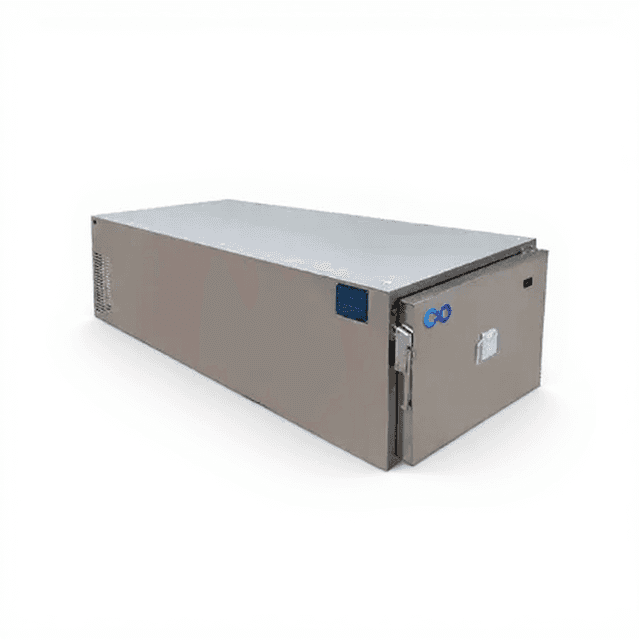
Cube Ice Machine
Laboratory ice machine producing standardized 22×22×22mm cube ice with capacities from 30-100 kg/24h for consistent cooling and sample preparation in research applications.

Louise Corscadden, PhD
Director of Science · ConductScience
Ask Louise about Cube Ice Machine fit, setup, configuration, or quote prep.
Already working with us? Sign in to connect this with My Scientist.
Key Specifications
Full details →- Model fit
- 5 selectable configurations
- SKU family
- BIO-0124
- Shipping box
- 80.0 x 50.0 x 45.0 cm
- Ordering
- Online checkout and quote request available
- Category
- Ice Makers
- Build notes
- Confirm accessories, station layout, and support needs before purchase
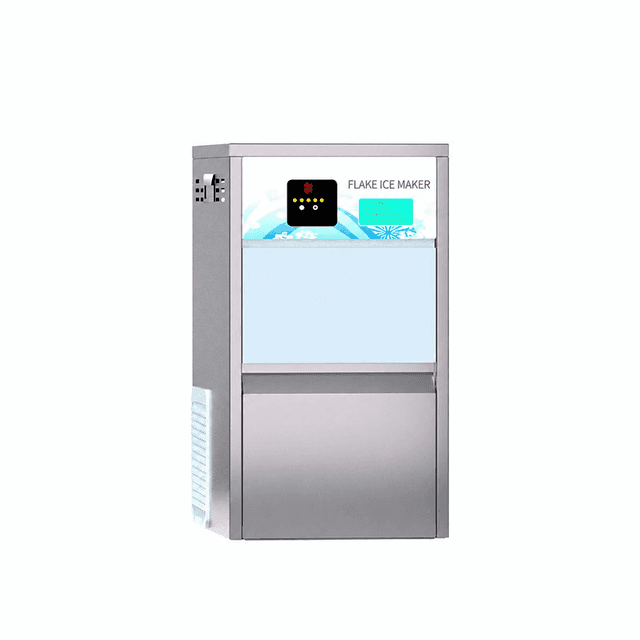
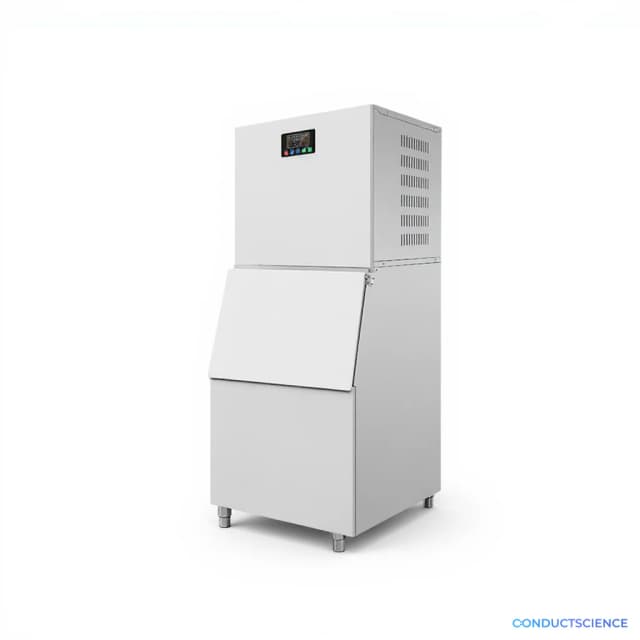
The ConductScience Cube Ice Machine provides consistent, laboratory-grade ice production for research and analytical applications. This air-cooled ice maker produces 22×22×22mm cube ice with standardized dimensions and weight (10g per cube), ensuring reproducible cooling and sample preparation conditions across experimental protocols.
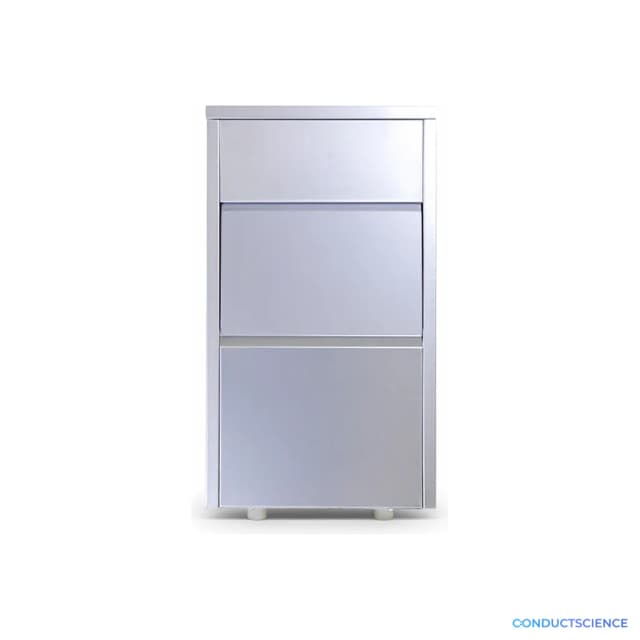
Available in multiple capacity configurations ranging from 30-100 kg/24h production rates, the system features dedicated ice storage compartments and modular grid configurations from 4×9 to 5×18 arrangements. The compact design integrates into laboratory workflows while maintaining reliable ice supply for temperature-sensitive procedures, sample preservation, and analytical instrumentation cooling requirements.
How It Works
The ice machine operates through a refrigeration cycle where water is frozen on evaporator plates arranged in a grid configuration. The system uses air-cooling condensation to remove heat from the refrigerant, allowing continuous ice production without requiring water cooling infrastructure. Water is distributed across the evaporator surface where it freezes into standardized cube shapes measuring 22×22×22mm.
The production cycle involves water filling, freezing, and harvesting phases. During the harvest cycle, hot gas is diverted through the evaporator to release formed ice cubes, which drop into the storage compartment. The system automatically monitors ice levels and production cycles to maintain consistent output while preventing overproduction.
Air-cooled condensation eliminates the need for water cooling systems, using ambient air circulation to remove heat from the condenser coils. This design provides reliable operation in laboratory environments while minimizing utility connections and maintenance requirements.
Features & Benefits
Shipping weight
- 34.0 lb
Shipping box
- L: 80.0 cm
- W: 50.0 cm
- H: 45.0 cm
| Feature | This Product | Typical Alternative | Advantage |
|---|---|---|---|
| Ice Cube Standardization | 22×22×22mm cubes, 10g weight specification | Variable cube sizes without weight specifications | Enables precise cooling calculations and reproducible experimental conditions across different procedures. |
| Production Capacity Range | 30-100 kg/24h across multiple models | Limited capacity options in laboratory-sized units | Allows selection of appropriate output for different laboratory sizes and usage patterns. |
| Grid Configuration Options | 4×9 to 5×18 modular arrangements | Fixed grid configurations | Accommodates different production requirements while maintaining consistent cube specifications. |
| Condensation Method | Air-cooled system | Water-cooled systems requiring additional plumbing | Simplifies installation and reduces utility connections needed for laboratory environments. |
| Compact Design | 80×50×45cm footprint, 34 kg weight | Larger units with higher space requirements | Integrates into existing laboratory layouts without extensive space modification. |
This ice machine provides standardized cube production with multiple capacity options and simplified air-cooled operation. The consistent 22×22×22mm cube dimensions and 10-gram weight specification enable precise temperature control calculations for laboratory applications.
| Model | SKU | Listed price | Status | Shipping box |
|---|---|---|---|---|
| CIM-260 | CIM-260 | $3,819.00 | Available | 80.0 x 50.0 x 45.0 cm |
| CIM-210 | CIM-210 | $3,279.00 | Available | 80.0 x 50.0 x 45.0 cm |
| CIM-180 | CIM-180 | $2,589.00 | Available | 80.0 x 50.0 x 45.0 cm |
| CIM-120 | CIM-120 | $1,989.00 | Available | 80.0 x 50.0 x 45.0 cm |
| CIM-65 | CIM-65 | $1,379.00 | Available | 80.0 x 50.0 x 45.0 cm |
Practical Tips
Verify ice cube dimensions and weight periodically using calipers and analytical balance to ensure production consistency.
Why: Maintaining dimensional accuracy ensures reproducible cooling performance in experimental protocols.
Clean air intake filters monthly and ensure adequate ventilation clearance around condensing coils.
Why: Proper airflow maintains optimal cooling efficiency and prevents overheating that reduces production capacity.
Use ice within 24 hours of production and avoid storing biological samples directly in ice storage compartment.
Why: Fresh ice provides optimal cooling performance and prevents cross-contamination between different sample types.
If production rate decreases, check for ice bridging in storage compartment and verify proper water flow to evaporator.
Why: Ice accumulation can block harvest cycles and reduce overall production efficiency.
Record ice production rates and ambient temperature conditions for consistent experimental documentation.
Why: Production variations can affect cooling rates and should be documented for experimental reproducibility.
Allow newly produced ice to stabilize for 10-15 minutes before use in temperature-sensitive procedures.
Why: Fresh ice may have temperature gradients that could affect precise temperature control requirements.
Descale water system monthly or as needed based on local water hardness to maintain ice clarity.
Why: Mineral buildup affects ice quality and can reduce heat transfer efficiency in the evaporator system.
Setup Guide
What’s in the Box
- Cube ice machine main unit
- Power cable
- Water supply connection kit (typical)
- Drain line assembly (typical)
- User manual and installation guide
- Cleaning and sanitization instructions
- Warranty documentation
Warranty
ConductScience provides a standard one-year manufacturer warranty covering parts and labor for defects in materials and workmanship. Technical support and service documentation are included with purchase.
Compliance
What is the ice production rate consistency across different ambient temperatures?
Production rates are specified for standard ambient conditions. Consult product datasheet for performance curves at different operating temperatures as production may vary with ambient conditions.
How does the 22×22×22mm cube size affect cooling efficiency compared to other ice shapes?
The standardized cube geometry provides predictable surface area to volume ratio for consistent heat transfer rates. The 10-gram weight allows precise calculations for cooling requirements in experimental protocols.
What water quality requirements are needed for optimal ice production?
Use potable water meeting local drinking water standards. Water filtration may be recommended depending on local water quality to prevent mineral buildup and ensure ice clarity.
How frequently does the ice storage compartment require cleaning for laboratory use?
Laboratory applications typically require daily cleaning and weekly sanitization cycles. Higher frequency may be needed for applications involving biological samples or sterile procedures.
Can the unit maintain ice production during continuous high-demand periods?
The system can operate continuously within its rated capacity. Production rate may be affected by frequency of ice removal and ambient operating conditions.
What are the electrical requirements for installation?
Power consumption ranges from 280W to 600W depending on model configuration. Consult product specifications for exact voltage and current requirements for your selected capacity model.
How does air-cooling performance compare to water-cooled ice machines?
Air-cooling eliminates water cooling utility requirements and is more suitable for laboratory environments. Performance is dependent on ambient temperature and adequate ventilation around the unit.
Have a question about this product?
Have a question? Just ask.
Send it over and we'll email you a personalized answer — no call, no scheduling.
Prefer to talk it through?