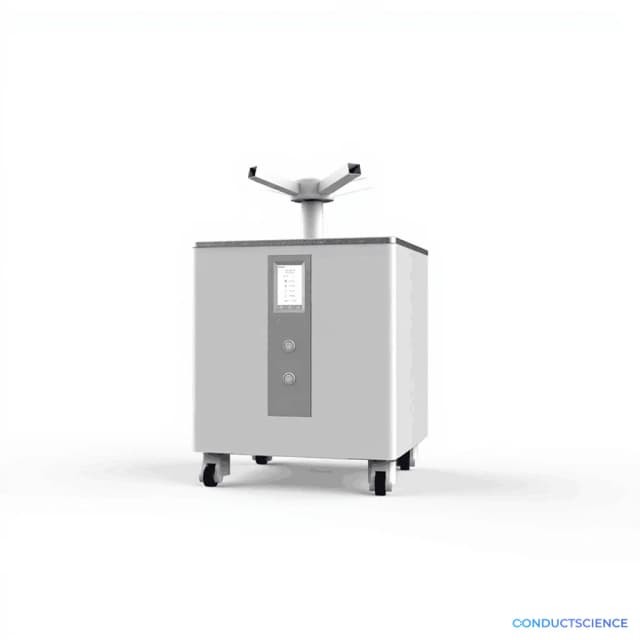
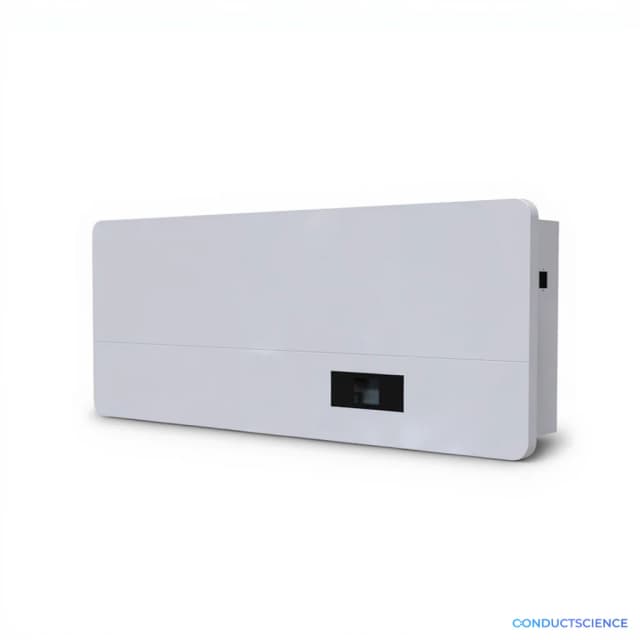
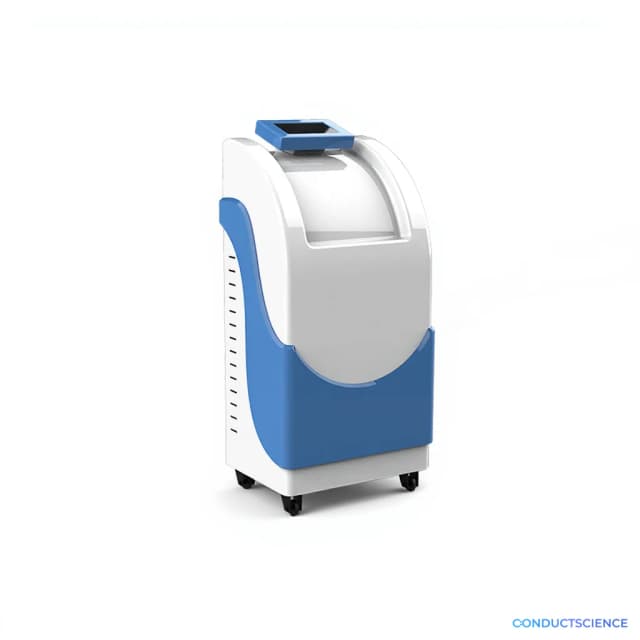
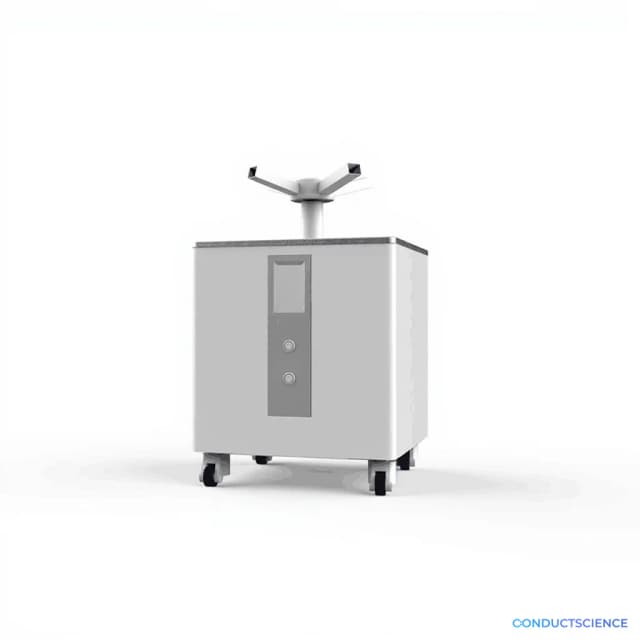
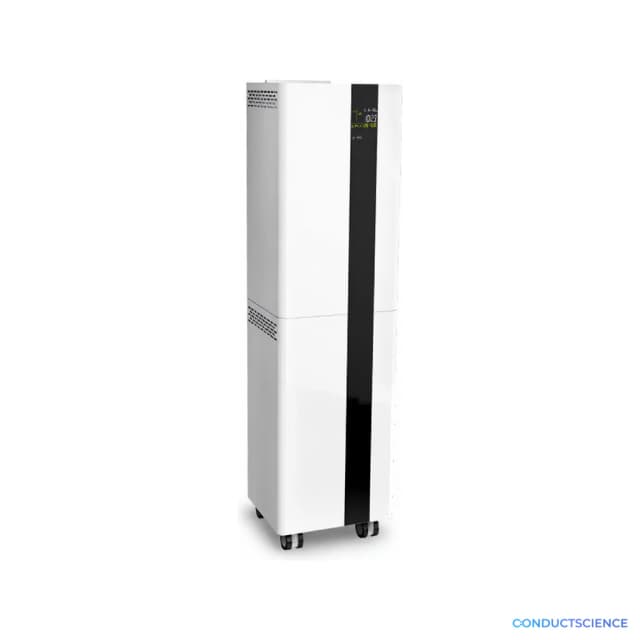
H₂O₂ Nebulizer Sterilizer
H₂O₂ aerosol nebulizer sterilizer (Model BKX-G100) for laboratory spaces up to 100m³, featuring 4L capacity, 1100W consumption, full-color touch screen, and nano-micron droplet technology for 6-log sporicidal efficacy.
Automatic room size calculation and programmable timer scheduling. Uses fine mist nebulization — protect exposed electrical components before running cycles.

Louise Corscadden, PhD
Director of Science · ConductScience
Ask Louise about H₂O₂ Nebulizer Sterilizer fit, setup, configuration, or quote prep.
Already working with us? Sign in to connect this with My Scientist.
Key Specifications
Full details →- Model fit
- Configured during quote
- SKU family
- BIO-0158
- Shipping box
- 76.0 x 53.0 x 53.0 cm
- Ordering
- Online checkout and quote request available
- Category
- Sterilizers
- Build notes
- Confirm accessories, station layout, and support needs before purchase
The H₂O₂ Nebulizer Sterilizer (Model BKX-G100) provides automated hydrogen peroxide vapor sterilization for laboratory spaces up to 100 cubic meters. This system generates fine hydrogen peroxide aerosol particles that penetrate surfaces and equipment to achieve broad-spectrum microbial decontamination. The 4-liter liquid capacity supports extended sterilization cycles without refilling, while the 1100W consumption ensures efficient aerosol nebulization and distribution.
The unit's 48kg construction provides stable operation during nebulization cycles, with external dimensions of 530×530×760mm allowing placement in standard laboratory environments. This sterilization method offers an alternative to traditional heat-based or chemical surface treatments, particularly useful for temperature-sensitive equipment and complex instrumentation that cannot be autoclaved.
How It Works
The H₂O₂ Nebulizer Sterilizer operates by converting liquid hydrogen peroxide into fine aerosol particles through ultrasonic or pressure nebulization. The system draws hydrogen peroxide solution from the 4-liter reservoir and generates vapor droplets with optimal size distribution for suspension and penetration. The 1100W power system drives both the nebulization mechanism and circulation fans to ensure even distribution throughout the target space.
Hydrogen peroxide vapor achieves sterilization through oxidative damage to microbial cell walls, proteins, and nucleic acids. The vapor penetrates into crevices, equipment interiors, and surface irregularities that liquid disinfectants cannot reach effectively. The automated system maintains appropriate vapor concentration and contact time to achieve log reduction of bacteria, fungi, viruses, and spores.
After the sterilization cycle, the system may include a catalytic decomposition phase to break down residual hydrogen peroxide into water vapor and oxygen, leaving no chemical residue on treated surfaces or equipment.
Features & Benefits
Automation Level
- fully-automated
Liquid Capacity
- 4L
Suitable Space
- 100m³
Consumption
- 1100W
External Size(W*D*H)
- 530*530*760mm
Package Size(W*D*H)
- 640*640*885mm
Brand
- ConductScience
Research Domain
- Cell Biology
- Clinical Diagnostics
- Environmental Monitoring
- Food Science
- Microbiology
- Pharmaceutical QC
Weight
- 55kg
Net Weight
- 48 kg / 106 lbs
Gross Weight
- 55 kg
Power Supply
- AC220V, 50/60Hz (Standard); AC110V, 50/60Hz (Optional, external transformer)
Model
- BKX-G100
Shipping weight
- 48.0 lb
Shipping box
- L: 76.0 cm
- W: 53.0 cm
- H: 53.0 cm
| Feature | This Product | Typical Alternative | Advantage |
|---|---|---|---|
| Space Coverage Capacity | 100m³ | Entry-level units often cover 20-50m³ | Enables sterilization of larger laboratory spaces or multiple rooms in a single cycle, reducing operational complexity |
| Liquid Reservoir Capacity | 4 liters | Smaller units typically offer 1-2 liter capacity | Supports extended operation without refilling, critical for large space treatment or consecutive cycles |
| Power Consumption | 1100W | Basic models often operate at 300-600W | Higher power enables faster vapor generation and more effective circulation for reduced total cycle time |
| Unit Weight and Stability | 48kg net weight | Portable models typically weigh 10-25kg | Heavy construction provides operational stability and reduces vibration that could affect vapor distribution patterns |
| Physical Footprint | 530×530×760mm | Desktop units often smaller but with reduced capacity | Balances substantial capacity with reasonable space requirements for laboratory placement |
This system provides high-capacity sterilization with 100m³ coverage and 4-liter reservoir capacity, supported by 1100W power for efficient vapor generation. The substantial 48kg construction ensures stable operation during extended cycles.
Practical Tips
Verify vapor distribution patterns using chemical indicators placed at multiple locations throughout the treatment space before first use.
Why: Ensures even coverage and identifies any dead zones that might require repositioning or additional circulation.
Clean the nebulization chamber and reservoir after every 10-15 cycles or when switching between different peroxide concentrations.
Why: Prevents buildup of residues that could affect vapor generation efficiency and particle size distribution.
Document ambient temperature and humidity conditions before each sterilization cycle.
Why: Environmental conditions affect vapor behavior and sterilization efficacy, providing data for cycle optimization and validation.
Install hydrogen peroxide vapor detection if operating in areas adjacent to occupied spaces.
Why: Provides early warning of any vapor leakage that could pose respiratory hazards to personnel in nearby areas.
Use biological indicators with known resistance levels appropriate for your target organisms.
Why: Provides quantitative verification of sterilization efficacy rather than relying solely on cycle completion indicators.
Check for adequate power supply stability if vapor generation appears inconsistent.
Why: Voltage fluctuations can affect nebulization performance and result in variable particle size distribution.
Remove or cover items sensitive to oxidation before sterilization cycles.
Why: Protects valuable equipment and samples from potential oxidative damage while allowing sterilization of the general workspace.
Setup Guide
What’s in the Box
- H₂O₂ Nebulizer Sterilizer main unit
- Power cable (typical)
- Hydrogen peroxide reservoir with fill indicators (typical)
- User manual and safety guidelines
- Vapor distribution accessories (typical)
- Control interface documentation (typical)
Warranty
ConductScience provides a one-year manufacturer warranty covering defects in materials and workmanship, with technical support for operation and troubleshooting assistance.
Compliance
What hydrogen peroxide concentration is required for effective sterilization?
Consult product datasheet for specific concentration requirements, which typically vary based on target organisms, space volume, and environmental conditions such as temperature and humidity.
How long does a complete sterilization cycle take for a 100m³ space?
Cycle time depends on space configuration, contamination level, and decomposition requirements. Consult product documentation for specific timing parameters and space-volume calculations.
Can this system sterilize electronic equipment and sensitive instruments?
Hydrogen peroxide vapor is generally compatible with electronic equipment, but verify compatibility with specific instrument manufacturers, particularly for devices with exposed sensors or reactive materials.
What safety precautions are required during operation?
Complete personnel evacuation is required during sterilization cycles. Appropriate ventilation and vapor detection may be needed depending on facility safety protocols and local regulations.
How is sterilization efficacy verified and documented?
Biological indicators and chemical indicators can be placed throughout the treatment area to verify vapor penetration and sterilization efficacy, with documentation requirements varying by facility standards.
What maintenance is required for reliable operation?
Regular cleaning of the nebulization system, reservoir inspection, and verification of vapor distribution patterns are typically required, with specific intervals provided in the user manual.
Can the system handle spaces with complex equipment layouts?
The 1100W circulation system is designed to distribute vapor around obstacles, but complex geometries may require strategic unit positioning or multiple placement locations for uniform coverage.
What concentration of H₂O₂ should be used?
Use 8% food-grade hydrogen peroxide only. Concentrations of 30–35% will significantly damage the atomizer and are strongly discouraged.
Does the unit have a sensor to detect H₂O₂ air concentration?
No.
Does the unit include a catalytic breakdown unit for post-decontamination aeration?
No. Adequate ventilation of the treated space is required after the decontamination cycle.
Have a question about this product?
Have a question? Just ask.
Send it over and we'll email you a personalized answer — no call, no scheduling.
Prefer to talk it through?
Accessories
Enhance your setup with compatible accessories
Frequently Bought Together