ConductVision
$1,490 per year for one computerA 5-year license is $3,990 in total.
The same license also scores standard tests such as the open field, the elevated plus maze, the Y-maze and the Morris water maze. Results export as CSV files.
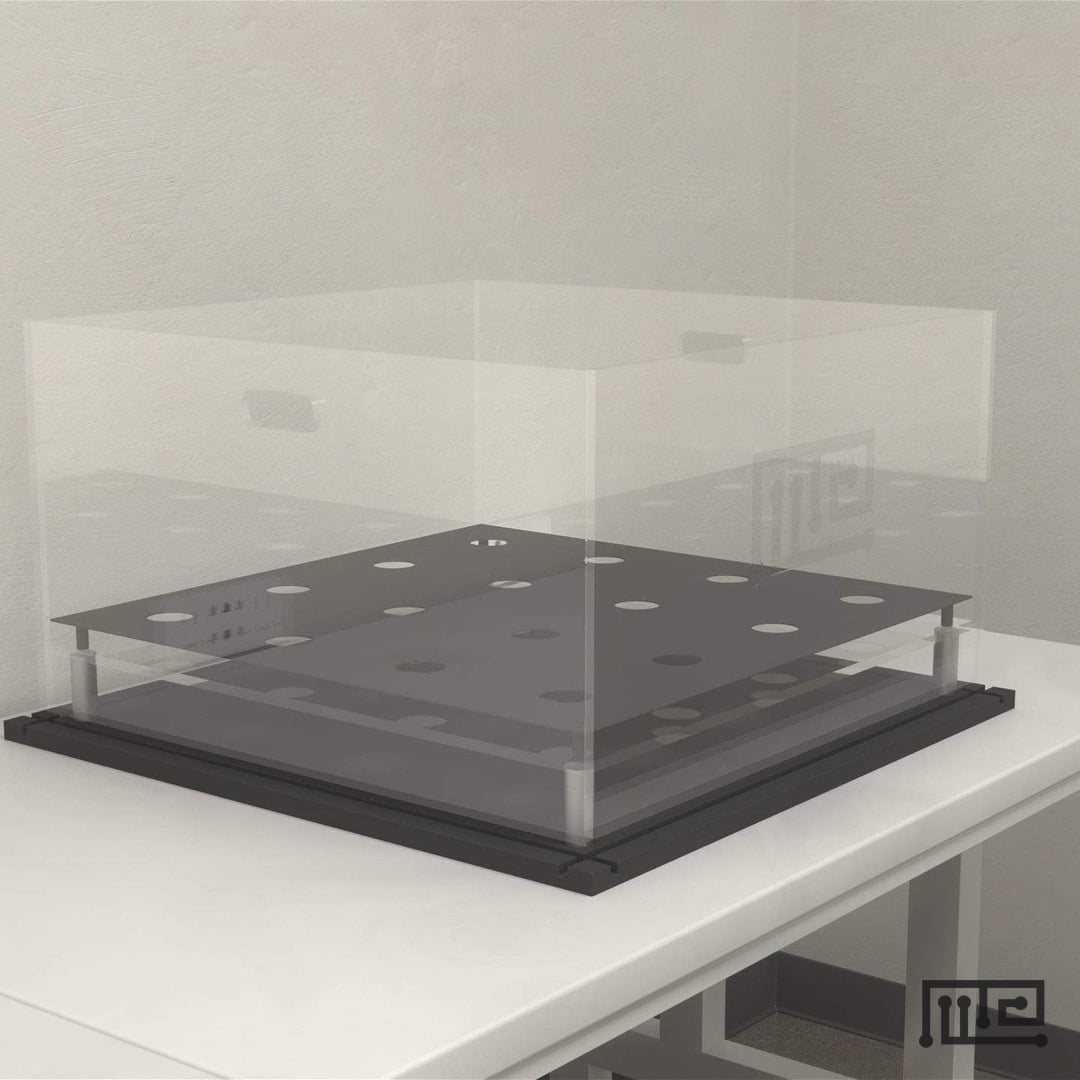
Standardized behavioral testing apparatus for assessing exploratory behavior, neophobia, and anxiety responses in mice and rats through quantification of head-dipping activity.

Director of Science · ConductScience
Ask Louise about Hole Board fit, setup, configuration, or quote prep.
Already working with us? Sign in to connect this with My Scientist.
“Can the Hole-Board Test Predict a Rat's Exploratory Behavior in a Free-Exploration Test?”
...used a square hole–board arena measuring 600 × 600 × 450 mm (Hole–board for rats, manufactured by MazeEngineers, Skokie, IL, USA) (Figure 1).
Maze Engineers, the maker named in the paper, is part of ConductScience.
As of , this is the only study we’ve found that used this product.
From 2021 to 2025, 202 animal research papers mentioned the hole-board. The count covers the test on any apparatus, not only this one.
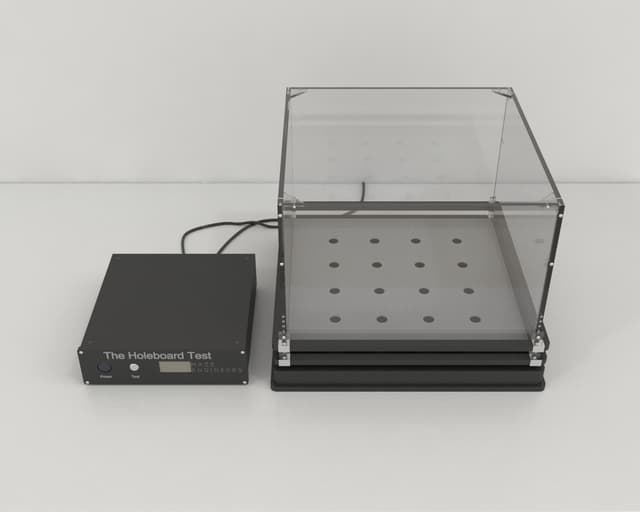
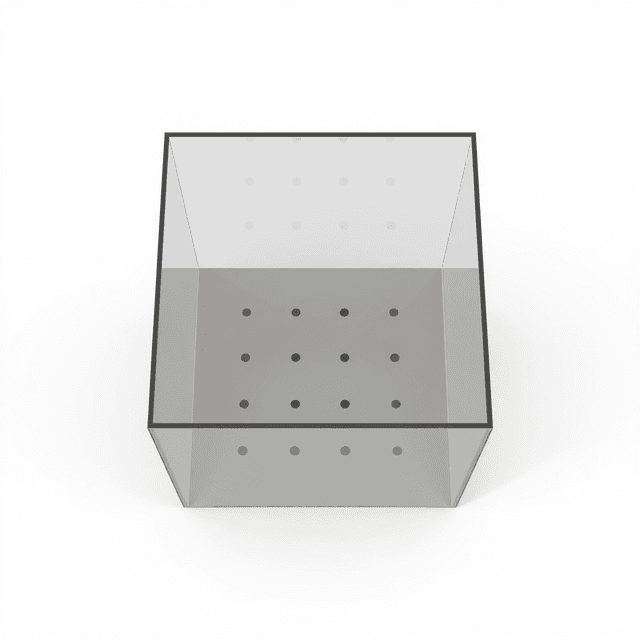
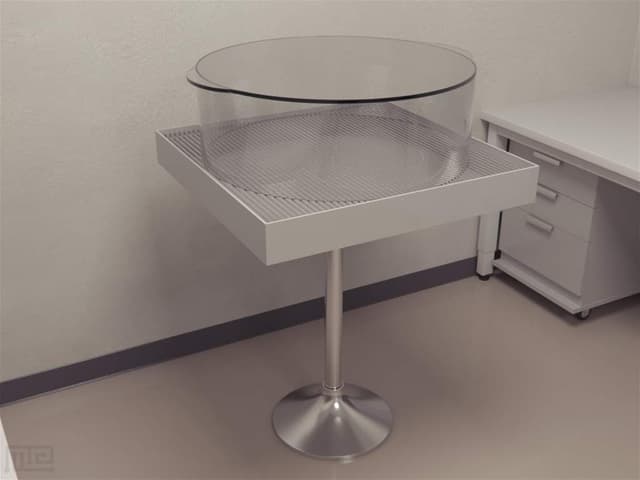
The Hole Board test apparatus is a standardized behavioral assessment tool used to evaluate exploratory behavior, neophobia, and anxiety-related responses in rodents. This apparatus consists of a testing chamber with multiple holes in the floor, allowing researchers to quantify head-dipping behavior as a measure of exploratory activity and emotional state.
Available in species-specific configurations with 3cm diameter holes for mice and 5cm diameter holes for rats, the apparatus features removable walls for flexible testing protocols and easy subject handling. The odor-free construction material enables reliable inter-session testing by preventing olfactory cues that could confound behavioral measurements. The design facilitates standard ethanol-based decontamination procedures between subjects to maintain experimental hygiene.
The hole-board test relies on the natural exploratory tendencies of rodents to investigate novel environments and openings. When placed on the apparatus, subjects exhibit head-dipping behavior into the holes, which represents a conflict between approach motivation (exploration) and avoidance motivation (fear of the unknown). The frequency, duration, and pattern of head-dipping events provide quantitative measures of the subject's emotional state and exploratory drive.
Head-dipping behavior is operationally defined as the insertion of the head and shoulders into a hole to a depth where both eyes are below the plane of the board surface. This stereotyped behavior can be reliably scored either through direct observation or automated video analysis systems. The apparatus design standardizes the stimulus conditions, ensuring reproducible measurements across different laboratories and experimental sessions.
The removable wall configuration allows researchers to modify the testing environment complexity and implement various protocol modifications, such as partial barrier placement or multi-session habituation paradigms. The species-specific hole diameters ensure appropriate scaling for the natural head size and exploratory postures of mice versus rats.
These IDs come from the Measurement Method Ontology (MMO) and NCBI Taxonomy. Use them in data records and methods sections.
MMO:0000595NCBITaxon:10090 NCBITaxon:10116 | Measurement | Mouse | Rat |
|---|---|---|
| Diameter holes | 3 cm | 5 cm |
Ready for RO-Crate, the open standard for sharing data.
| Feature | This Product | Typical Alternative | Advantage |
|---|---|---|---|
| Hole Diameter Options | Species-specific sizing with 3cm holes for mice and 5cm holes for rats | Generic sizing that may not optimize for species-specific behaviors | Ensures appropriate scaling for natural head-dipping postures and reliable behavioral quantification across species. |
| Wall Configuration | Removable walls for flexible protocol modifications | Fixed wall designs limit experimental versatility | Enables custom protocol development and simplified subject handling procedures. |
| Material Properties | Odor-free construction compatible with 70% ethanol cleaning | Materials may retain odors or require specialized cleaning agents | Prevents olfactory confounds and supports standard laboratory decontamination protocols. |
| Storage Solution | Integrated storage components included | Basic apparatus without organization system | Protects equipment integrity and facilitates efficient laboratory space management. |
This hole board apparatus provides species-optimized hole dimensions, removable wall flexibility, and odor-free construction with integrated storage. The design prioritizes experimental reliability through standardized dimensions and decontamination compatibility while offering protocol flexibility through modular wall configuration.
| Model | Size | SKU | Listed price | Status | Shipping box |
|---|---|---|---|---|---|
| Mouse | Diameter holes 3 cm | CS-958386-01-CLEAR (+5) | $1,695.00 | Available | 65.0 × 36.0 × 27.0 cm |
| Rat | Diameter holes 5 cm | CS-958386-02-CLEAR (+5) | $1,990.00 | Available | 65.0 × 36.0 × 27.0 cm |
Establish inter-rater reliability by having multiple observers score the same video recordings until achieving >90% agreement on head-dipping events.
Why: Consistent scoring criteria are essential for reproducible behavioral measurements across different experimenters and sessions.
Inspect hole edges regularly for chips or rough spots that could influence exploratory behavior or cause injury to subjects.
Why: Damaged holes can create inconsistent tactile stimuli that may bias behavioral responses or pose safety risks.
Allow subjects to acclimate to the testing room for 30-60 minutes before behavioral assessment to minimize handling stress effects.
Why: Acute stress from transport and handling can suppress exploratory behavior and confound anxiety-related measurements.
If subjects show excessive freezing behavior, verify that lighting levels are appropriate and external noise sources are minimized.
Why: Overly bright lighting or acoustic distractions can induce defensive behaviors that override normal exploratory responses.
Record both the total number of head dips and the number of different holes explored to capture both activity level and spatial distribution of exploration.
Why: These complementary measures provide richer behavioral profiles than simple dip counts and can reveal different aspects of exploratory strategies.
Ensure complete ethanol evaporation before introducing subjects to prevent respiratory irritation or altered behavior from residual vapors.
Why: Ethanol vapors can cause respiratory distress and may alter behavioral responses, compromising both animal welfare and data validity.
Consider counterbalancing hole positions in your experimental design if testing multiple groups to control for potential spatial preferences.
Why: Some hole locations may be inherently more or less attractive due to proximity to walls or corners, which could bias group comparisons.
Establish minimum head-dipping duration criteria (typically 1-2 seconds) to distinguish genuine exploratory behavior from brief head movements.
Why: Brief head orientations toward holes may not represent true investigative behavior and can inflate exploration scores artificially.
ConductScience provides a comprehensive one-year manufacturer warranty covering defects in materials and workmanship, with technical support available for setup and protocol optimization questions.
Background reading relevant to this product:
Specifications, models, materials, and operating envelopes
What is the operational definition of head-dipping behavior for scoring?
Head-dipping is typically defined as insertion of the head and shoulders into a hole to a depth where both eyes are below the plane of the board surface. Duration, frequency, and latency to first dip are commonly measured parameters.
How do I determine the appropriate testing duration for my experimental protocol?
Standard testing sessions range from 5-15 minutes, with 10 minutes being most common. Pilot studies should establish when exploratory activity plateaus in your specific animal population and housing conditions.
Can the apparatus accommodate both automated and manual behavioral scoring?
Yes, the open design allows for both direct observation scoring and overhead video recording for automated analysis. Ensure adequate lighting and camera positioning for reliable automated detection of head-dipping events.
What cleaning protocol is recommended between subjects?
Clean all surfaces with 70% ethanol between subjects and allow complete air drying. This eliminates olfactory cues that could influence subsequent subjects' exploratory behavior patterns.
How does hole-board data correlate with other anxiety measures?
Head-dipping frequency typically correlates negatively with anxiety measures from elevated plus maze and open field tests. Reduced exploration in the hole board often parallels increased anxiety-like behavior in other assays.
What environmental factors should be controlled during testing?
Maintain consistent lighting (typically 30-40 lux), temperature (20-22°C), humidity, and minimize external noise. Test at the same time of day to control for circadian effects on exploratory behavior.
Can the apparatus be used for repeated testing of the same subjects?
Yes, but be aware that repeated exposure reduces novelty and may alter exploratory responses. Consider habituation protocols and inter-session intervals based on your research questions and expected memory effects.
What statistical considerations apply to hole-board data analysis?
Data often requires transformation due to non-normal distributions. Consider Poisson regression for count data, and account for multiple comparisons if analyzing individual holes. Include sufficient sample sizes for adequate statistical power.
Each paper below used this product. Under each title is the paper’s own sentence naming the equipment it used.
...used a square hole–board arena measuring 600 × 600 × 450 mm (Hole–board for rats, manufactured by MazeEngineers, Skokie, IL, USA) (Figure 1).
Research data
202 animal research papers in PubMed from 2021 to 2025 mention the hole-board test
13% fewer than the 232 papers from 2011 to 2015
These counts are for the test, whoever made the apparatus, not for this product.
The lists below cover 2021 to 2025, the years in the band.
Hover over a bar to see its year. Click or tap a bar to show only that year in the lists below, or drag across the bars to show a span of years. On a keyboard, use the arrow keys on the chart to read each year, and the menus below it to pick the years.
A paper can mention more than one species, test or condition, so the percentages can add up to more than 100%.
To put a whole battery on one quote, open the test battery tool and start from the hole-board test. Pick the other tests your study will run, then add the apparatus we sell for each.
By papers from 2021 to 2025, the hole-board test ranks 41st of the 90 tests we track.
Of the 202 papers from 2021 to 2025, 32 name head dips in the title or abstract.
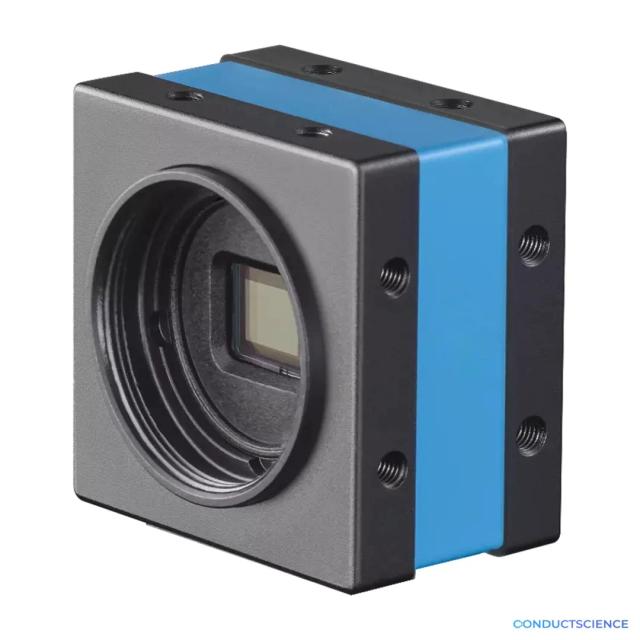
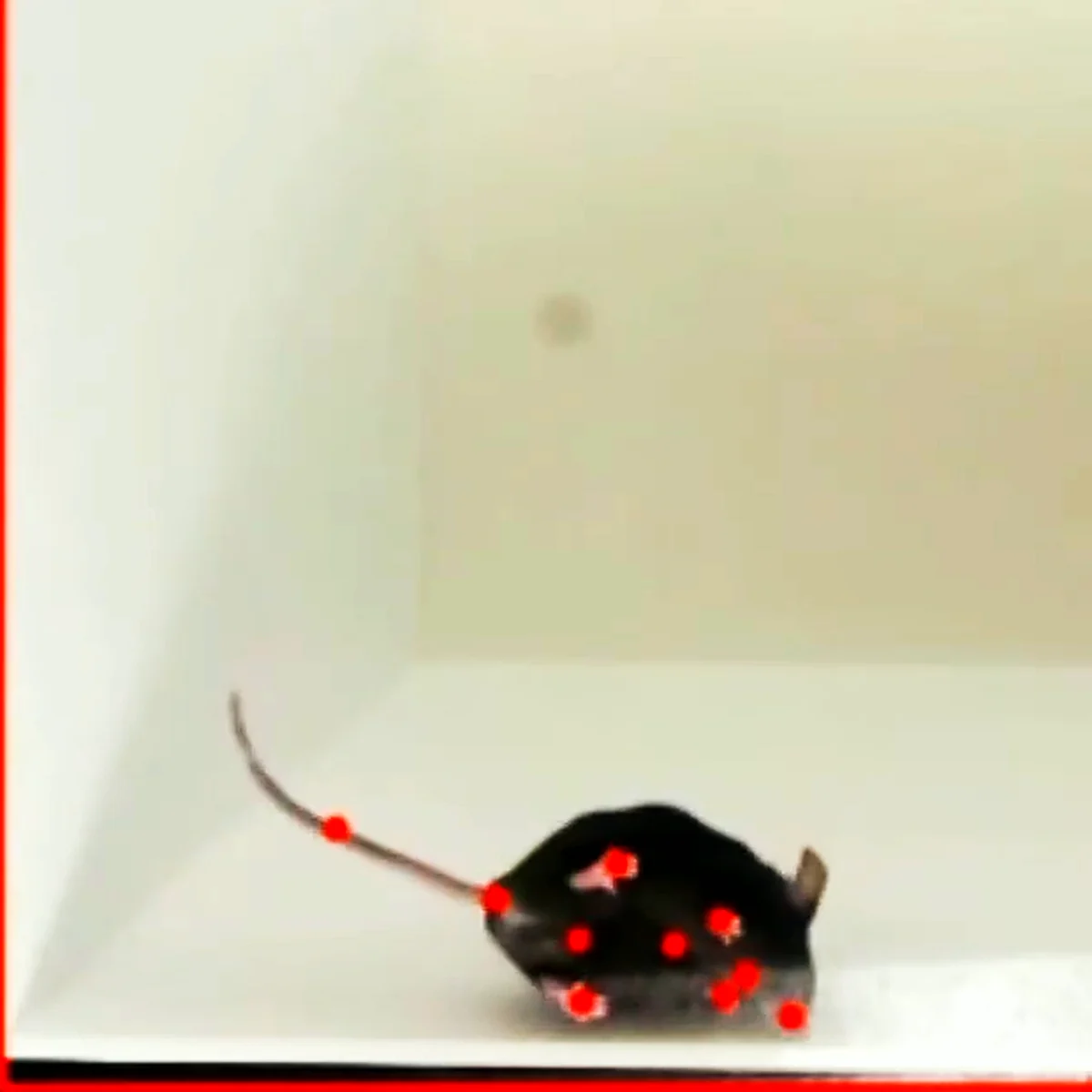
ConductVision reports head dips from video.
ConductVision is our video-tracking software. Record your sessions on video, and it reports the measures listed below.
A 5-year license is $3,990 in total.
The same license also scores standard tests such as the open field, the elevated plus maze, the Y-maze and the Morris water maze. Results export as CSV files.
Send it over and we'll email you a personalized answer, with no call or scheduling.
Prefer to talk it through?
Enhance your setup with compatible accessories
Use this apparatus with
§ 1
The Hole Board is a choice and decision assay built around head-dip exploration, neophobia, directed search, and habituation profiling. Interpretable data depend on matching the apparatus geometry, subject species, trial structure, and scoring rules to the behavioral construct under study. 1
Exploratory head-dip protocols depend on stable geometry, consistent trial timing, and pre-defined scoring rules. Without those controls, head dips can be shifted by motivation, locomotion, light level, odor, cue salience, or handling rather than the intended behavioral construct. 1
This methods section summarizes setup, endpoint definitions, common confounds, sample output, adjacent assays, and reporting details needed to evaluate Hole Board results alongside the product specifications. 1
§ 2
Exploratory head-dip with standardized setup, trial timing, and endpoint extraction.
Critical methodological constraints
Core Hole Board endpoints for behavioral interpretation and apparatus quality control.
Head dips
Exploration endpoint
First-dip latency
Latency and initiation
Hole sequence
Spatial or zone strategy
Rearing count
Engagement control
Missed hole detections
Quality-control flag
+ Additional metrics: trial duration, zone dwell, event count, path efficiency, tracking confidence, exclusions, and session-level notes.
A compact percentage summary for Hole Board output.
§ 3
Representative Hole Board output for methods review and endpoint interpretation.
§ 4
Limitations of the paradigm, methodological caveats, and current directions.
Variables that can shift Hole Board results apart from the effect under study.
Hole odor can change apparent Hole Board performance without reflecting the intended behavioral construct.
Illumination can change apparent Hole Board performance without reflecting the intended behavioral construct.
Anxiety-like suppression can change apparent Hole Board performance without reflecting the intended behavioral construct.
Locomotor activity can change apparent Hole Board performance without reflecting the intended behavioral construct.
Camera angle can change apparent Hole Board performance without reflecting the intended behavioral construct.
Hole Board is strongest when endpoint definitions, apparatus settings, and exclusion rules are specified before testing. Treat a single summary metric as a screening signal, then confirm interpretation with latency, engagement, comparator assays, and quality-control review. 1
Choose Hole Board when the research question matches head-dip exploration, neophobia, directed search, and habituation profiling. and the lab can control hole odor, illumination, and trial timing.
Specify species, cohort size, apparatus dimensions, lighting, tracking method, automation level, cleaning workflow, endpoint definitions, and exclusion criteria before data collection begins.
Interpretation is strongest when the apparatus configuration, trial timing, scoring thresholds, confound controls, and comparator assays are documented together with the primary endpoint.
Quarterly editorial review of emerging Hole Board methodology. Q2 2026
Define head dips, latency, exclusions, and engagement flags before comparing cohorts.
Camera and event-log workflows can reduce observer burden and improve consistency when zone definitions and event thresholds are validated.
Hole Board should link to adjacent maze, motor, or motivation assays when interpretation depends on controls.
Apparatus dimensions, protocol fit, tracking compatibility, and endpoint definitions should be reported together so results are easier to reproduce.
§ 5
10 selected methods and validation studies of the Hole Board, from any lab.