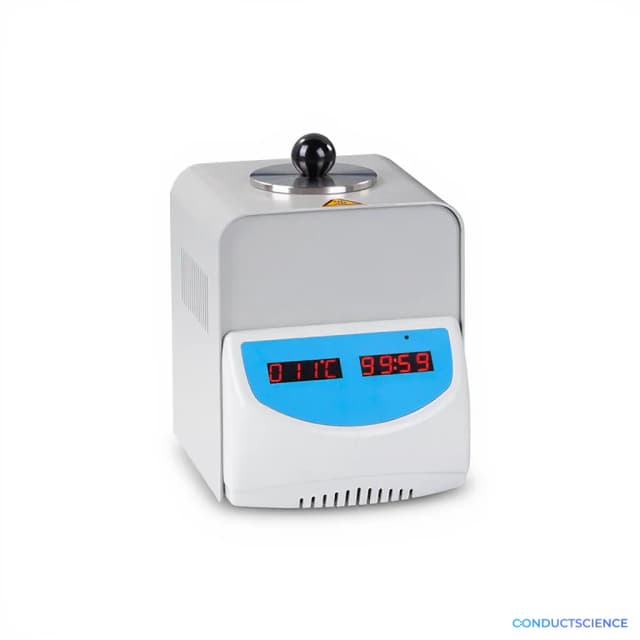
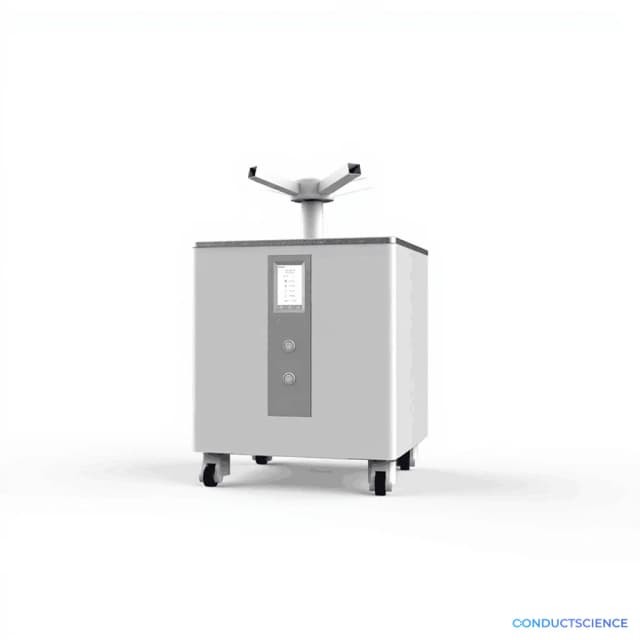
Hot Air Sterilizer HAS Series
Microprocessor-controlled hot air sterilizer providing dry heat sterilization up to 250°C with precise temperature control for laboratory glassware and instruments.

Louise Corscadden, PhD
Director of Science · ConductScience
Ask Louise about Hot Air Sterilizer HAS Series fit, setup, configuration, or quote prep.
Already working with us? Sign in to connect this with My Scientist.
Key Specifications
Full details →- Model fit
- Configured during quote
- SKU family
- BIO-0156
- Shipping box
- 16.5 x 13.7 x 13.07 cm
- Ordering
- Online checkout and quote request available
- Category
- Sterilizers
- Build notes
- Confirm accessories, station layout, and support needs before purchase
The Hot Air Sterilizer HAS Series provides controlled dry heat sterilization for laboratory glassware, instruments, and heat-stable materials. This forced-air circulation system achieves temperatures up to 250°C with ±1°C fluctuation control and 0.1°C precision for reproducible sterilization cycles. The microprocessor-controlled unit features programmable timing up to 9999 minutes and dual-shelf configuration for efficient batch processing.
Available in three capacity configurations (48L, 80L, 105L) with stainless steel chambers designed for uniform heat distribution. Digital temperature control and timing systems enable standardized protocols for depyrogenation, glassware sterilization, and thermal treatment of laboratory materials requiring dry heat exposure.
How It Works
Hot air sterilization operates through forced convection heating where heated air circulates throughout the chamber to achieve uniform temperature distribution. The system uses resistance heating elements controlled by a microprocessor to maintain precise temperature setpoints between ambient +10°C and 250°C. Internal fans ensure consistent air circulation, eliminating hot spots and temperature gradients that could compromise sterilization efficacy.
The sterilization mechanism relies on dry heat to denature proteins and disrupt cellular structures in microorganisms. Unlike moist heat sterilization, dry heat requires higher temperatures and longer exposure times but is suitable for materials that cannot tolerate steam or moisture. The programmable timer system allows for standardized exposure protocols based on load type and sterilization requirements.
Features & Benefits
Automation Level
- semi-automated
HAS-T70I
- HAS-T105I
80L
- 105L
Temp.Range
- RT+10~250℃
Temp.Precision
- 0.1℃
Temp.Fluctuation
- ±1℃
Timing Range
- 0~9999min
Shelves No.
- 2 pcs
Consumption
- 1000w
1500W
- 1600W
Internal Size(W*D*H) mm
- 419*332*348
450*397*450
- 550*348*550
External Size(W*DH)mm
- 728*595*532
Brand
- ConductScience
Research Domain
- Analytical Chemistry
- Cell Biology
- Clinical Diagnostics
- Materials Science
- Microbiology
- Pharmaceutical QC
Capacity
- 48L
Power/Voltage
- AC220V 50Hz(Standard); 110V 60Hz(Optional)
Shipping weight
- 150.8 lb
Shipping box
- L: 16.5 cm
- W: 13.7 cm
- H: 13.07 cm
| Feature | This Product | Typical Alternative | Advantage |
|---|---|---|---|
| Temperature Range | RT+10°C to 250°C | Entry-level models often limited to 200°C maximum | Higher temperature capability enables depyrogenation protocols and broader sterilization applications. |
| Temperature Control Precision | 0.1°C precision with ±1°C fluctuation | Basic units typically offer ±2-3°C control | Precise temperature control ensures reproducible sterilization conditions for critical applications. |
| Timer Range | 0-9999 minutes programmable | Standard timers often limited to 999 minutes or less | Extended timing capability accommodates lengthy depyrogenation cycles and diverse sterilization protocols. |
| Chamber Capacity Options | Three sizes: 48L, 80L, 105L | Single capacity models common in this price range | Multiple capacity options allow selection based on specific laboratory throughput requirements. |
| Air Circulation System | Forced air circulation with microprocessor control | Natural convection systems in budget models | Uniform heat distribution eliminates temperature gradients that compromise sterilization efficacy. |
| Control Interface | Digital microprocessor control system | Mechanical controls with analog displays | Digital control provides precise parameter setting and monitoring for standardized protocols. |
The HAS Series combines precise temperature control with extended timing capability and forced air circulation for reliable dry heat sterilization. Multiple capacity options and microprocessor control make it suitable for diverse laboratory sterilization requirements.
Practical Tips
Verify temperature accuracy quarterly using a certified reference thermometer placed at multiple chamber positions.
Why: Temperature accuracy is critical for sterilization efficacy and regulatory compliance.
Clean chamber interior monthly with mild detergent and inspect heating elements for signs of oxidation or damage.
Why: Regular cleaning prevents contamination buildup and maintains heat transfer efficiency.
Allow adequate spacing between items on shelves to ensure proper air circulation throughout the load.
Why: Poor air circulation creates temperature gradients that compromise sterilization uniformity.
Preheat empty chamber for 15-20 minutes before loading to stabilize temperature conditions.
Why: Preheating reduces temperature recovery time and ensures consistent cycle start conditions.
If temperature overshoots target setpoint, check for blocked air circulation vents or failed temperature sensor.
Why: Temperature control issues often stem from airflow restrictions or sensor malfunctions.
Record chamber loading patterns and cycle parameters to ensure reproducible sterilization protocols.
Why: Documentation supports process validation and troubleshooting of sterilization failures.
Always wear heat-resistant gloves when handling items immediately after sterilization cycles.
Why: Items retain high temperatures after cycles complete and can cause severe thermal burns.
Check door seals monthly for proper alignment and replace if gaps or damage allow heat loss.
Why: Compromised door seals reduce temperature uniformity and increase energy consumption.
Setup Guide
What’s in the Box
- Hot air sterilizer main unit
- Two adjustable interior shelves
- Power cord
- User manual and documentation
- Temperature calibration certificate (typical)
Warranty
ConductScience provides a one-year manufacturer warranty covering parts and labor with technical support for installation and operational guidance.
Compliance
What is the temperature uniformity throughout the chamber?
The forced air circulation system maintains ±1°C temperature fluctuation control throughout the chamber volume, ensuring consistent sterilization conditions across all shelf positions.
Can this unit be used for depyrogenation protocols?
Yes, the 250°C maximum temperature capability supports depyrogenation protocols typically requiring 180-250°C exposure for endotoxin destruction.
What types of materials are suitable for dry heat sterilization?
Suitable for glassware, metal instruments, ceramic items, and other heat-stable materials that cannot tolerate steam sterilization. Not suitable for plastics, rubber, or heat-sensitive items.
How long does it take to reach sterilization temperature?
Heat-up time varies by target temperature and load size. Consult product datasheet for specific heat-up curves and cycle time calculations.
Is temperature calibration required and how often?
Regular temperature calibration verification is recommended, typically annually or per institutional protocols, using certified reference thermometers.
Can the shelves be removed for cleaning large items?
Yes, the two interior shelves are removable and adjustable to accommodate items of various sizes and allow thorough chamber cleaning.
What power requirements are needed for installation?
Standard configuration requires AC220V 50Hz power supply, with optional 110V 60Hz available. Power consumption ranges from 1000W to 1600W depending on model.
Have a question about this product?
Have a question? Just ask.
Send it over and we'll email you a personalized answer — no call, no scheduling.
Prefer to talk it through?