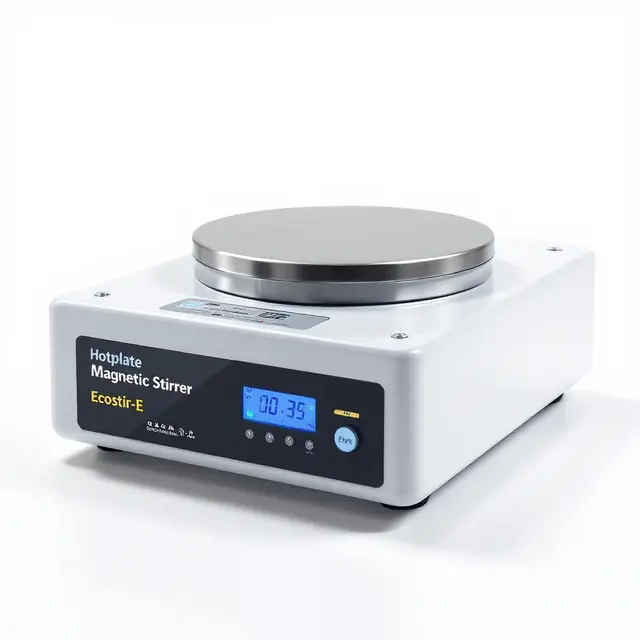
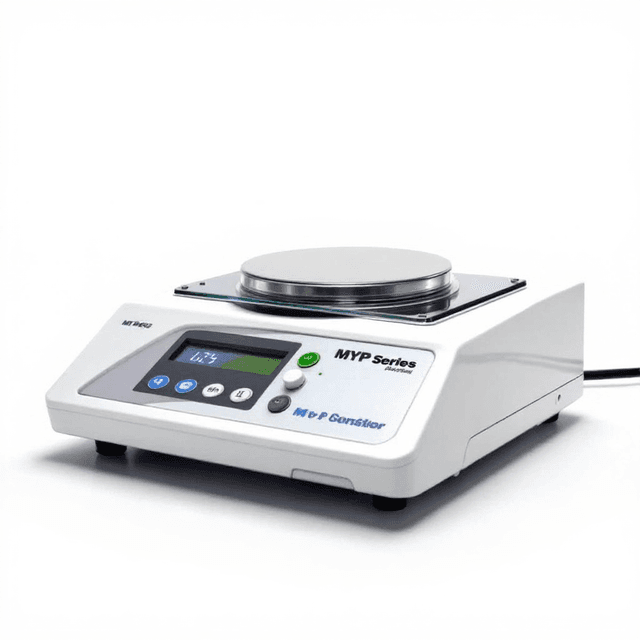
Hotplate Magnetic Stirrer MS7-H380-E
Precision benchtop hotplate with magnetic stirring, LCD display, and external temperature probe for accurate heating and mixing of liquid samples up to 1500 rpm.

Louise Corscadden, PhD
Director of Science · ConductScience
Ask Louise about Hotplate Magnetic Stirrer MS7-H380-E fit, setup, configuration, or quote prep.
Already working with us? Sign in to connect this with My Scientist.
Key Specifications
Full details →- Model fit
- Configured during quote
- SKU family
- BIO-0788
- Shipping box
- 12.6 x 36.6 x 24.0 cm
- Ordering
- Online checkout and quote request available
- Category
- Benchtop Instruments
- Build notes
- Aluminum cover with ceramic coating
The Hotplate Magnetic Stirrer MS7-H380-E is a precision benchtop instrument designed for simultaneous heating and magnetic stirring of liquid samples in research and analytical applications. Featuring a 184×184mm aluminum work plate with ceramic coating, the unit provides uniform heat distribution and chemical resistance for demanding laboratory environments. The integrated LCD display provides real-time monitoring of temperature and stirring speed parameters.
This instrument combines magnetic stirring capabilities (80-1500 rpm) with precise temperature control using both internal heating and external PT1000 temperature sensing. The external probe provides ±0.2°C accuracy for direct liquid temperature measurement, enabling precise thermal control for temperature-sensitive reactions, sample preparation, and analytical procedures. Overheating protection at 410°C and IP21 protection class ensure safe operation in laboratory environments.
How It Works
The MS7-H380-E operates on the principle of electromagnetic induction for stirring and resistive heating for temperature control. A rotating magnetic field generated beneath the ceramic-coated aluminum work plate induces rotation in magnetic stir bars placed within sample containers. The variable speed control (80-1500 rpm) allows precise adjustment of mixing intensity to accommodate different viscosities and sample volumes up to 80×10mm stir bar capacity.
Temperature regulation employs dual control systems: internal heating elements within the work plate provide base heating capacity up to 410°C with ±1°C control accuracy below 100°C, while the external PT1000 temperature sensor enables direct liquid temperature measurement with ±0.2°C precision. This external sensing capability bypasses thermal lag inherent in plate-only temperature control, ensuring accurate thermal management of the actual sample rather than just the heating surface.
The LCD display provides real-time feedback of both temperature and stirring parameters, while integrated safety systems including overheating protection and IP21 moisture resistance ensure reliable operation in demanding laboratory environments.
Features & Benefits
Automation Level
- semi-automated
Item No.
- 8010122115
Work Plate Size
- 184*184mm
Work Plate Material
- Aluminum cover with ceramic coating
Speed Range
- 80~1500rpm
Max. Magnetic Bar(Length)
- 80*10mm
Heating Liquid Temperature Control
- ±1℃(<100℃)
Overheating Temperature Protection
- 410℃
External Temperature Sensor
- PT1000(accuracy±0.2℃ )
Standard Accessories
- PT1000-A, temperature sensor(18901898); Support clamp of PT1000(18902044)
Consumption
- 900W
Protection Class
- IP21
Brand
- ConductScience
Research Domain
- Analytical Chemistry
- Environmental Monitoring
- Food Science
- Materials Science
- Microbiology
- Pharmaceutical QC
Display Type
- LCD
Accuracy
- ±1%(>100℃)
Power/Voltage
- AC110V±10%, 60Hz or AC220V±10, 50Hz
Shipping weight
- 3.5 lb
Shipping box
- L: 12.6 cm
- W: 36.6 cm
- H: 24.0 cm
| Feature | This Product | Typical Alternative | Advantage |
|---|---|---|---|
| Temperature Accuracy | ±0.2°C with external PT1000 sensor, ±1°C internal control | Many entry-level units offer only plate temperature sensing with ±2-5°C accuracy | Direct liquid temperature measurement eliminates thermal lag and provides more accurate control for temperature-sensitive reactions. |
| Stirring Speed Range | 80-1500 rpm variable speed control | Basic models typically provide 100-1000 rpm range with limited low-speed stability | Extended low-speed capability enables gentle mixing of shear-sensitive samples while high speeds handle viscous solutions. |
| Work Plate Size and Material | 184×184mm aluminum with ceramic coating | Entry-level units often use smaller plates or basic aluminum without protective coatings | Larger surface accommodates multiple containers simultaneously while ceramic coating provides chemical resistance and easy cleaning. |
| Power and Heating Capacity | 900W heating power with 410°C overheating protection | Budget models commonly offer 300-600W with limited thermal capacity | Higher wattage enables faster temperature ramps and better temperature stability with high thermal mass samples. |
| Temperature Sensing Technology | Dual sensing: internal heating control plus external PT1000 probe | Most basic units rely solely on internal plate temperature sensing | External probe provides true liquid temperature measurement for precise control independent of heating plate thermal dynamics. |
| Display and Interface | LCD display showing real-time temperature and speed parameters | Analog displays or basic LED readouts are common in lower-cost alternatives | Digital display provides precise parameter monitoring and documentation capabilities required for regulated laboratory environments. |
The MS7-H380-E distinguishes itself through dual temperature sensing capability, extended speed range, and robust construction with ceramic-coated work surface. The external PT1000 sensor provides superior temperature accuracy compared to plate-only sensing systems, while the 900W heating capacity and broad RPM range accommodate diverse laboratory applications from gentle mixing to vigorous agitation.
Practical Tips
Verify both internal and external temperature sensors quarterly using NIST-traceable thermometers in stirred water baths at multiple temperature points.
Why: Regular calibration ensures measurement accuracy for documentation and reproducible results in temperature-sensitive procedures.
Clean the ceramic work plate with mild detergent and avoid abrasive materials that could damage the protective coating.
Why: Maintaining the ceramic coating integrity preserves chemical resistance and prevents contamination of subsequent samples.
Position the external PT1000 sensor tip in the center of the liquid volume, avoiding contact with container walls or the magnetic stir bar.
Why: Proper sensor placement ensures accurate temperature measurement representative of the bulk liquid temperature rather than localized hot spots.
If stirring becomes erratic, check for proper stir bar centering and ensure the bar size does not exceed the 80×10mm specification.
Why: Oversized or off-center stir bars can cause coupling loss and irregular mixing that affects sample homogeneity.
Allow 5-10 minutes for thermal equilibration after reaching set temperature before beginning temperature-critical procedures.
Why: Thermal equilibration ensures uniform temperature distribution throughout the sample volume for consistent reaction conditions.
Always use appropriate containment and ventilation when heating volatile solvents, despite the unit's overheating protection.
Why: Chemical safety requires proper engineering controls beyond equipment protection features to prevent exposure and fire hazards.
Start stirring at low speeds and gradually increase to prevent vortex formation that could affect temperature distribution.
Why: Controlled mixing prevents air entrainment and ensures uniform heat transfer throughout the sample volume.
Inspect the external temperature sensor cable regularly for damage and ensure connections remain secure during operation.
Why: Cable integrity is critical for accurate temperature measurement and prevents false readings that could compromise sample quality.
Setup Guide
What’s in the Box
- MS7-H380-E hotplate magnetic stirrer main unit
- PT1000 external temperature sensor (model 18901898)
- Support clamp for PT1000 sensor (model 18902044)
- Power cable
- User manual and operating instructions (typical)
- Magnetic stir bar set (typical)
Warranty
ConductScience provides a standard one-year manufacturer warranty covering defects in materials and workmanship, with comprehensive technical support for setup, calibration, and troubleshooting assistance.
Compliance
References
Background reading relevant to this product:
What is the accuracy difference between internal plate temperature control and the external PT1000 sensor?
The internal heating provides ±1°C accuracy below 100°C and ±1% above 100°C, while the external PT1000 sensor delivers superior ±0.2°C accuracy for direct liquid temperature measurement, eliminating thermal lag between heating plate and sample temperature.
What maximum stir bar size can this unit accommodate effectively?
The unit supports magnetic stir bars up to 80×10mm length and can maintain effective stirring across the full 80-1500 rpm speed range, suitable for beaker volumes from 50ml to several liters depending on viscosity.
How does the ceramic coating affect chemical compatibility?
The ceramic coating on the aluminum work plate provides excellent chemical resistance to most laboratory solvents and corrosive solutions, though compatibility with specific chemicals should be verified through the product datasheet for critical applications.
Can this unit maintain stable temperatures during extended heating operations?
Yes, the 900W heating capacity and thermal mass of the aluminum plate provide stable temperature maintenance, while the external sensor enables feedback control based on actual liquid temperature rather than plate temperature alone.
What calibration procedures are required for accurate temperature measurement?
Both internal and external temperature sensors should be verified against NIST-traceable standards; consult product datasheet for specific calibration intervals and procedures required for your quality system.
How does stirring performance vary with sample viscosity and volume?
The variable speed control allows optimization for different sample conditions - lower speeds (80-200 rpm) for low-viscosity samples to prevent vortexing, higher speeds (800-1500 rpm) for viscous solutions or larger volumes requiring vigorous mixing.
What safety features prevent overheating damage to temperature-sensitive samples?
The unit includes overheating protection at 410°C and the external PT1000 sensor enables direct monitoring of sample temperature, allowing immediate detection and response to thermal excursions that could damage samples.
Is this unit suitable for volatile solvent applications?
While the IP21 protection provides some moisture resistance, applications involving volatile or flammable solvents require additional safety considerations and proper ventilation - consult safety datasheet for specific solvent compatibility guidance.
Have a question about this product?
Have a question? Just ask.
Send it over and we'll email you a personalized answer — no call, no scheduling.
Prefer to talk it through?