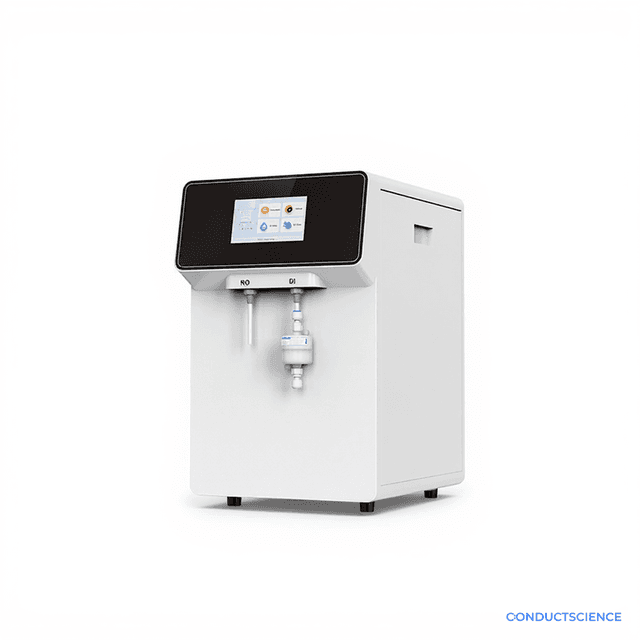
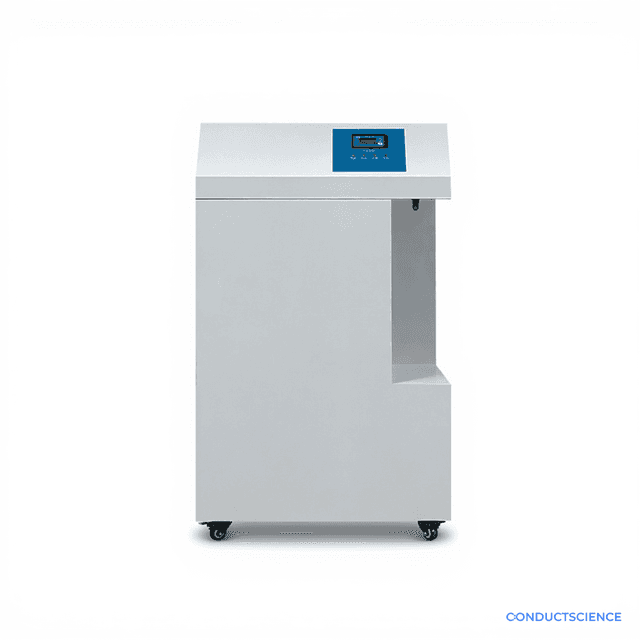
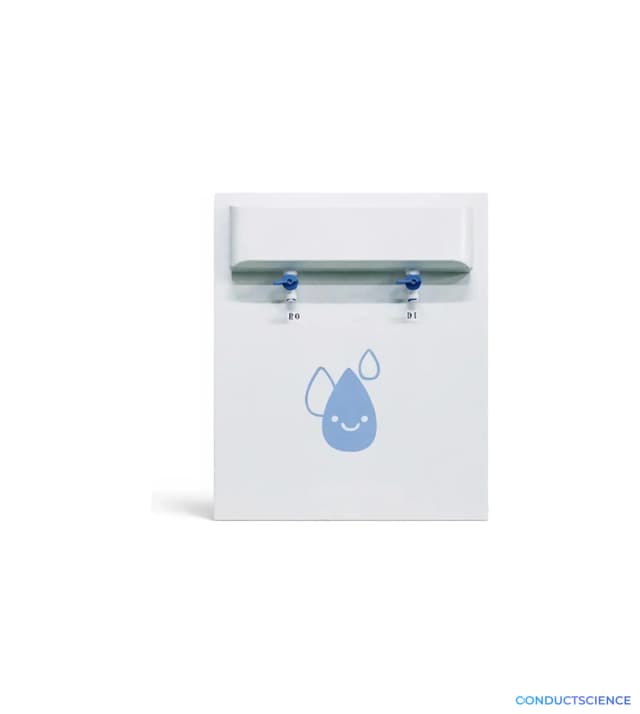
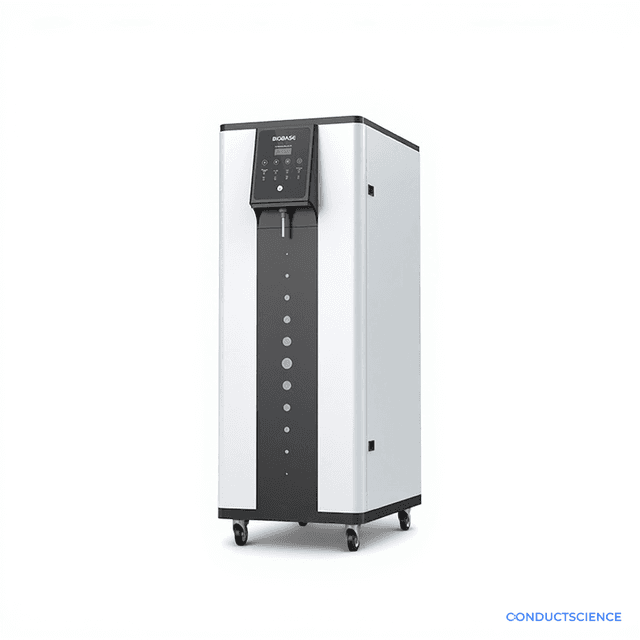
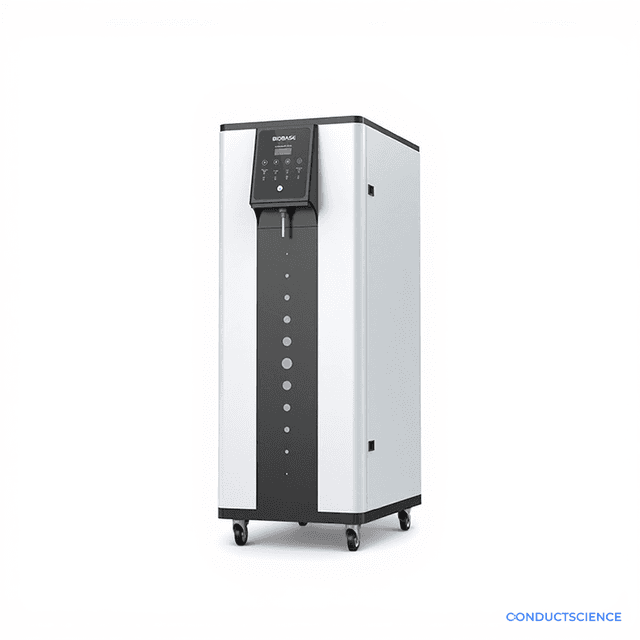
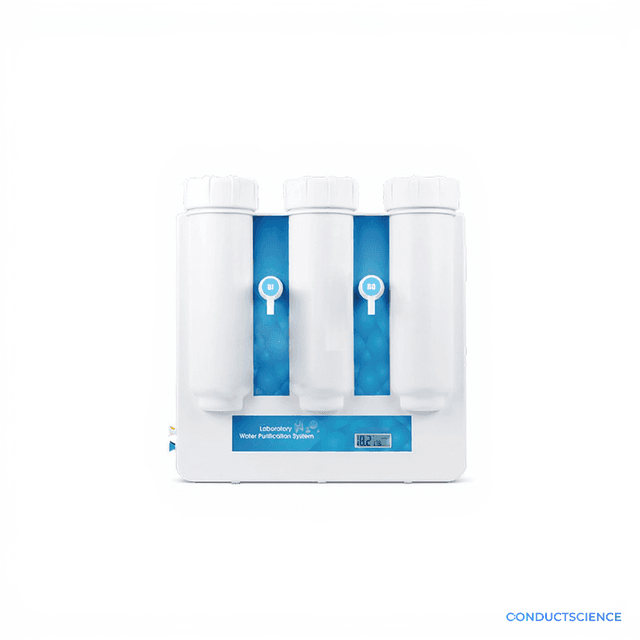
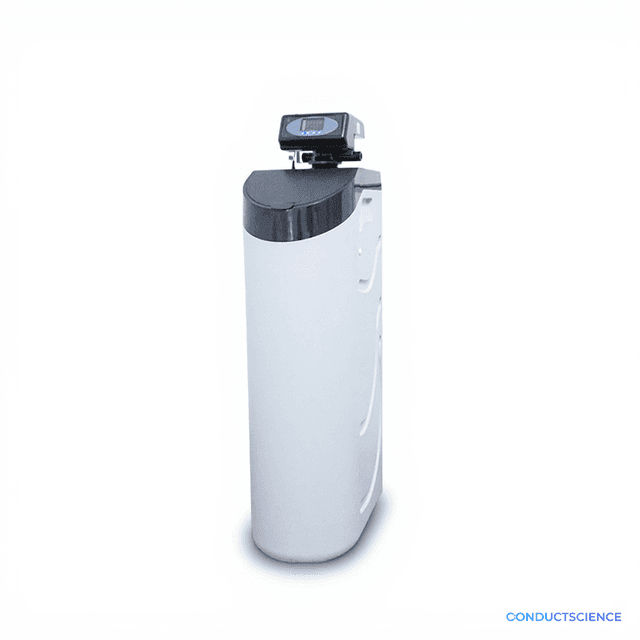
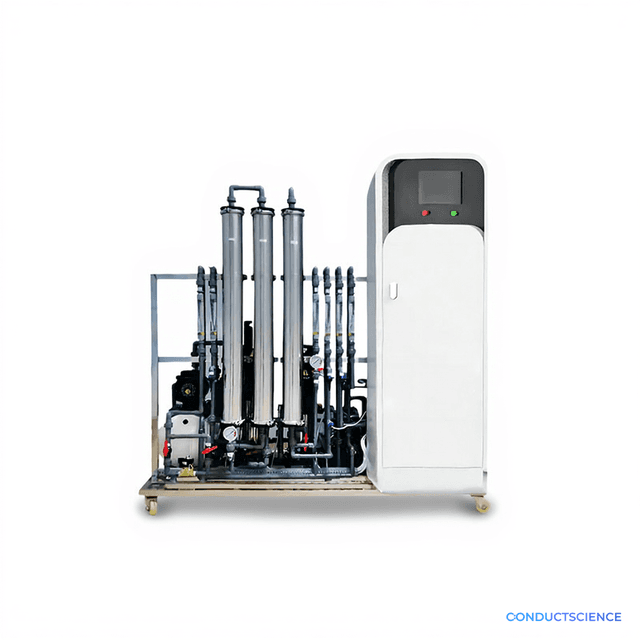
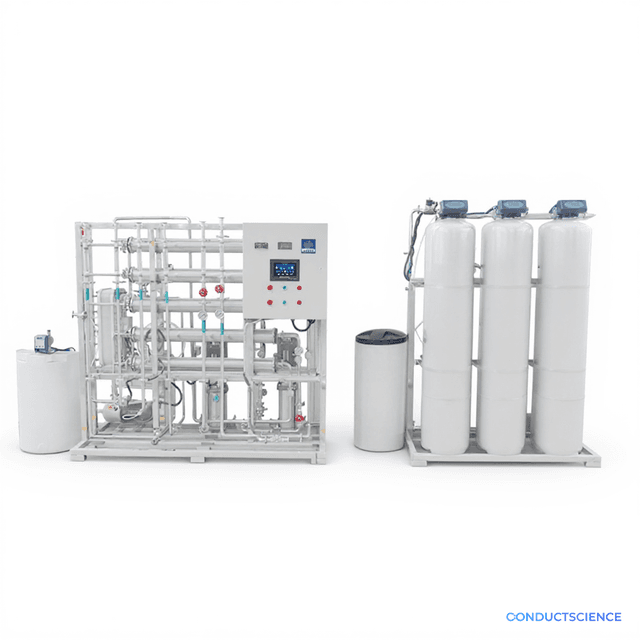
Laboratory Water Purifier 60L/H 80L/H 100L/H
Benchtop water purification system delivering 60-100L/H of laboratory-grade purified water for analytical and research applications.
| Automation Level | semi-automated |
The Laboratory Water Purifier provides consistent, high-quality purified water for critical laboratory applications requiring controlled water purity levels. This benchtop system delivers flow rates of 60L/H, 80L/H, or 100L/H to support varying laboratory throughput requirements. The compact design (100.2 x 40.0 x 39.3 cm) fits standard laboratory benches while providing reliable water purification for analytical, preparative, and research applications.
The system removes contaminants through multi-stage purification processes, producing water suitable for buffer preparation, reagent dilution, equipment rinsing, and other laboratory procedures where water quality directly impacts experimental outcomes. The variable flow rate capability accommodates both high-volume operations and precision applications requiring controlled water delivery.
How It Works
The water purification system employs multi-stage filtration and purification technologies to remove dissolved ions, organic compounds, and particulate matter from feed water. The process typically begins with pre-filtration to remove larger particles and chlorine, followed by ion exchange resins that capture dissolved salts and minerals through reversible chemical binding.
Subsequent stages may include activated carbon adsorption for organic compound removal and additional polishing steps to achieve the target purity level. The system monitors water quality through conductivity measurement, which correlates inversely with ionic purity - lower conductivity indicates fewer dissolved ions and higher water purity.
Flow rate control maintains consistent water delivery across the 60-100L/H range, allowing users to match production capacity to laboratory demand while maintaining purification efficiency throughout the operating range.
Features & Benefits
Automation Level
- semi-automated
Research Domain
- Analytical Chemistry
- Cell Biology
- Clinical Diagnostics
- Environmental Monitoring
- Materials Science
- Microbiology
- Pharmaceutical QC
Weight
- 45.0 kg
Dimensions
- L: 100.2 mm
- W: 40.0 mm
- H: 39.3 mm
Comparison Guide
| Feature | This Product | Typical Alternative | Advantage |
|---|---|---|---|
| Flow Rate Range | 60L/H, 80L/H, or 100L/H selectable rates | Fixed flow rates or limited adjustment range in many models | Allows laboratories to match water production to actual demand without oversizing the system. |
| Footprint | Compact 100.2 x 40.0 x 39.3 cm benchtop design | Larger floor-standing units or smaller capacity systems | Maximizes laboratory bench space utilization while maintaining substantial production capacity. |
| Operational Stability | 45 kg operational weight for stable performance | Lighter units may require additional mounting or stabilization | Provides vibration resistance and stable operation during high flow rate production. |
| Production Capacity | Up to 100L/H continuous production | Entry-level systems often limited to 30-60L/H maximum | Supports multiple simultaneous users and high-volume applications without production bottlenecks. |
This laboratory water purifier combines flexible flow rate control with compact benchtop installation and substantial production capacity. The variable 60-100L/H output accommodates diverse laboratory requirements while the stable platform design ensures consistent performance during continuous operation.
Practical Tips
Verify flow rate accuracy monthly using graduated cylinder timing measurements at your typical operating setting.
Why: Flow rate drift affects downstream applications requiring precise water volumes for reagent preparation.
Monitor conductivity readings daily and establish cartridge replacement schedules based on water quality trends rather than time alone.
Why: Proactive replacement prevents sudden quality deterioration that could compromise ongoing experiments.
Run initial flush procedure after extended shutdown periods or cartridge replacement to ensure stable water quality.
Why: Eliminates air bubbles and conditioning chemicals that can temporarily affect purification performance.
Maintain logbook of conductivity measurements, flow rates, and cartridge change dates for quality trend analysis.
Why: Documentation enables predictive maintenance and provides traceability for experiments requiring water quality records.
If water quality degrades suddenly, check for feed water supply issues before assuming cartridge failure.
Why: Feed water contamination or pressure variations can overwhelm purification capacity even with good cartridges.
Ensure adequate ventilation around the unit and avoid blocking air intake or exhaust ports during operation.
Why: Proper airflow prevents overheating and maintains optimal purification system performance.
Setup Guide
What’s in the Box
- Laboratory water purifier main unit
- Power cable and adapter (typical)
- Water connection fittings and tubing (typical)
- User manual and installation guide (typical)
- Water quality test strips or meter (typical)
- Replacement cartridge information sheet (typical)
Warranty
ConductScience provides a comprehensive 1-year manufacturer warranty covering parts and technical support for normal laboratory use conditions.
Compliance
References
Background reading relevant to this product:
What water quality parameters can this system achieve for analytical applications?
Consult the product datasheet for specific conductivity, resistivity, and total organic carbon specifications. The system is designed for laboratory-grade water meeting analytical testing requirements.
How often do purification cartridges require replacement?
Replacement frequency depends on feed water quality, usage volume, and target purity levels. Monitor water quality indicators and consult manufacturer guidelines for cartridge life estimation based on your specific conditions.
Can the flow rate be adjusted during operation or is it fixed at installation?
The system offers selectable flow rates of 60L/H, 80L/H, and 100L/H. Consult the operating manual for adjustment procedures and whether changes can be made during operation.
What feed water quality is required for optimal performance?
Consult product specifications for acceptable feed water parameters including hardness, chlorine content, and total dissolved solids. Pre-treatment may be required for challenging feed water conditions.
How is water quality monitored during operation?
The system likely includes conductivity monitoring as a standard feature. Consult the user manual for specific quality indicators, alarm functions, and recommended external testing procedures.
What is the startup time from power-on to producing specification water?
Initial flush and stabilization time varies with cartridge condition and system design. Consult operating procedures for recommended startup sequence and quality verification steps.
Have a question about this product?
Upgrade Options