Liquid Densimeter
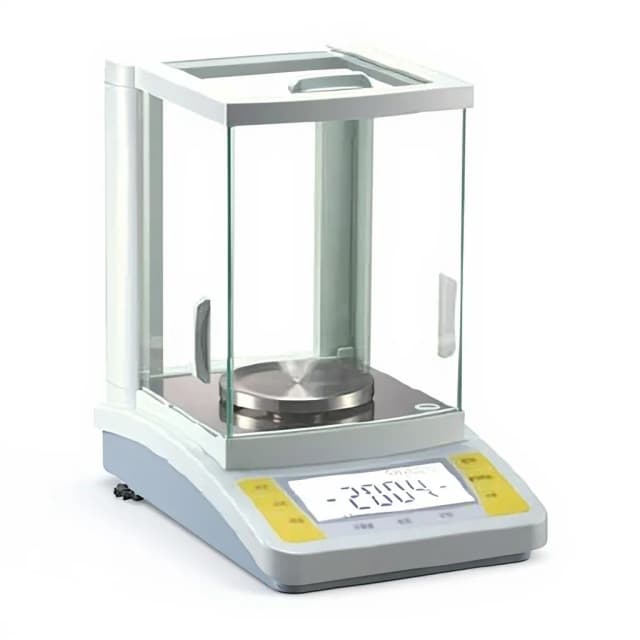
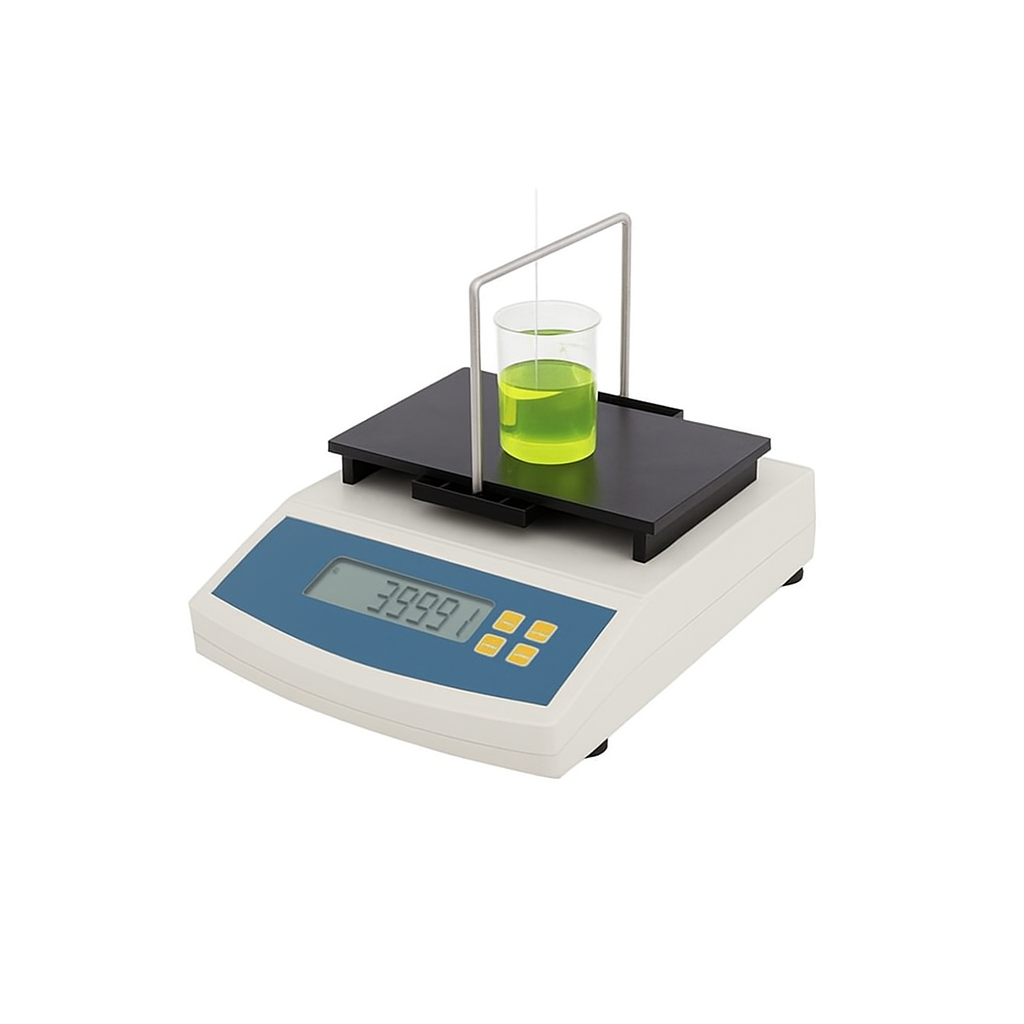
Liquid densimeter for measuring density of any liquid using Archimedes displacement.
304 stainless steel measuring frame; temperature range to 100 °C; auto calibration; LCD display; RS-232C. Optional DE-20B for corrosive, volatile, or acid/alkali liquids.

Louise Corscadden, PhD
Director of Science · ConductScience
Ask Louise about Liquid Densimeter fit, setup, configuration, or quote prep.
Already working with us? Sign in to connect this with My Scientist.
Key Specifications
Full details →- Model fit
- Configured during quote
- SKU family
- BIO-0478
- Shipping box
- 18.5 x 19.5 x 23.0 cm
- Ordering
- Online checkout and quote request available
- Category
- Analytical Instruments
- Build notes
- Confirm accessories, station layout, and support needs before purchase
The BK-DME300L liquid densimeter measures the density of any type of liquid using the Archimedes displacement method. The 304 stainless steel measuring frame and glass components provide broad chemical compatibility. Auto-correction and auto-detection functions maintain accuracy without manual calibration steps. For volatile, corrosive, or strong acid/alkali liquids, the optional DE-20B anti-corrosive measuring assembly is required.
Technical Specifications
| Parameter | BK-DME300L |
|---|---|
| Capacity | 0.005–300 g |
| Density Range | 0.001–99.999 g/cm³ |
| Density Resolution | 0.001 g/cm³ |
| Measuring Time | ~5 seconds |
| Principle | Archimedes displacement |
| Temperature Range | Ambient to 100 °C |
| Calibration | Auto correction, auto detection |
| Display | LCD |
| Data Storage | 1 group |
| Measuring Frame | 304 stainless steel |
| Power Supply | AC 100–240 V, 50/60 Hz |
| External Dimensions (W×D×H) | 195 × 230 × 185 mm |
| Net Weight | 1.47 kg |
| Gross Weight | 4.5 kg |
Standard Accessories
Measuring plate, tweezers, thermometer, 100 g weight, windshield, measuring frame, power transformer, DE-20A standard liquid measuring assembly (stainless steel hooks, glass and stainless steel weights, beakers).
Optional Accessories
DE-40 printer; DE-20B anti-corrosive liquid measuring assembly.
How It Works
The densimeter operates on Archimedes principle, which states that an object immersed in fluid experiences a buoyant force equal to the weight of displaced fluid. The instrument measures the apparent weight loss of a sample when immersed in a reference liquid, typically distilled water. This weight difference, combined with the known density of the reference liquid and the sample volume, allows calculation of sample density.
The displacement method involves suspending the liquid sample in a specialized measuring assembly that records weight changes as the sample displaces the reference medium. Automated correction algorithms account for temperature variations, surface tension effects, and environmental factors that could influence measurement accuracy. The 5-second measurement cycle includes sample stabilization, weight recording, and density calculation phases.
Temperature compensation occurs through integrated thermometer readings, as liquid density varies significantly with temperature. The system's auto-detection capabilities identify measurement completion and trigger result display, while the single data storage group retains the most recent measurement for verification purposes.
Features & Benefits
Automation Level
- Semi-automated
Measuring Time
- About 5s
Measuring Principle
- Archimedes principle displacement method
Calibration Mode
- Auto correction, auto detection
Standard Accessories
- Tweezer, thermometer, 100G weight, windshield, power transformer, measuring plate, measuring frame, DE-20A standard liquid measuring assembly
Optional Accessories
- DE-40 printer, DE-20B anti corrosive liquid measuring assembly
Density Resolution
- 0.001g/cm3
Density Range
- 0.001~99.999g/cm3
Power/Voltage
- AC 100~240V, 50/60Hz
External Size (WxDxH)
- 195x230x197mm
Package Size (WxDxH)
- 440x180x345mm
Brand
- ConductScience
Capacity
- 0.005~300g
Net Weight
- 1.78kg
Gross Weight
- 4.5kg
Research Domain
- Analytical Chemistry
- Environmental Monitoring
- Food Science
- Materials Science
- Microbiology
- Pharmaceutical QC
Shipping weight
- 1.47 lb
Shipping box
- L: 18.5 cm
- W: 19.5 cm
- H: 23.0 cm
| Feature | This Product | Typical Alternative | Advantage |
|---|---|---|---|
| Measurement Time | 5 seconds per measurement | Manual pycnometry requires 30-60 minutes including equilibration | Enables high-throughput testing workflows in quality control laboratories |
| Capacity Range | 0.005-300g measurement range | Entry-level instruments often limited to narrower ranges | Accommodates diverse sample sizes from microvolumes to larger specimens in single instrument |
| Automation Level | Auto correction and detection with temperature compensation | Manual instruments require operator calculations and corrections | Reduces measurement variability and operator training requirements |
| Reference Method | Distilled water testing for result verification | Basic models may lack built-in verification protocols | Provides measurement confidence through standardized reference validation |
| Included Accessories | Complete kit with measuring plate, tweezer, thermometer, calibration weight, windshield | Basic models often require separate accessory purchases | Immediate operation capability without additional equipment procurement |
This densimeter combines rapid Archimedes principle measurement with automated correction protocols and comprehensive accessories for immediate laboratory implementation. The 5-second measurement cycle and 0.005-300g capacity range support diverse analytical requirements while maintaining measurement consistency through integrated temperature compensation.
Practical Tips
Verify calibration daily using the supplied 100g standard weight before beginning sample measurements.
Why: Environmental factors and instrument drift can affect measurement accuracy over time.
Allow samples to equilibrate to room temperature before measurement and avoid introducing air bubbles during sample immersion.
Why: Temperature gradients and entrapped air significantly affect displacement volume calculations.
Clean measuring assemblies with appropriate solvents between samples and replace distilled water reference medium regularly.
Why: Contamination and water quality degradation introduce systematic errors in displacement measurements.
Record thermometer readings with each measurement and maintain consistent measurement timing within the 5-second cycle.
Why: Temperature documentation enables post-measurement corrections and ensures reproducible measurement conditions.
If measurements appear inconsistent, check for air currents affecting the balance and verify windshield positioning.
Why: Environmental disturbances can cause weighing instability during the displacement measurement phase.
Use the provided tweezers for sample handling and ensure proper ventilation when measuring volatile liquids.
Why: Direct handling can introduce contamination while volatile samples may affect measurement stability and operator safety.
Setup Guide
What’s in the Box
- Liquid densimeter main unit
- Measuring plate
- Precision tweezer
- Integrated thermometer
- 100g calibration weight
- Protective windshield
- Measuring frame assembly
- Power transformer (AC100-240V)
- User manual and calibration certificate (typical)
Warranty
ConductScience provides standard one-year manufacturer warranty covering defects in materials and workmanship. Technical support includes calibration guidance, measurement protocol assistance, and troubleshooting for optimal instrument performance.
Compliance
What is the measurement precision and accuracy of the densimeter?
Consult product datasheet for specific precision and accuracy specifications. The system uses automated correction algorithms and calibration verification with supplied 100g standard weight.
Can the instrument measure density of viscous liquids or suspensions?
The 0.005-300g capacity accommodates various liquid types, though measurement accuracy may be affected by high viscosity samples that prevent complete displacement equilibrium within the 5-second cycle.
How does temperature affect measurement results?
The integrated thermometer provides temperature readings for density correction calculations, as liquid density varies significantly with temperature. Allow samples to equilibrate to measurement temperature before testing.
What maintenance is required for consistent performance?
Regular calibration verification using the supplied 100g weight, cleaning of measuring assemblies between samples, and periodic replacement of distilled water reference medium maintain measurement accuracy.
Can results be printed or exported for documentation?
Optional DE-40 printer accessory enables result printing. The instrument stores one measurement group internally; consult specifications for additional data export capabilities.
What sample volume is required for measurement?
Sample volume requirements depend on the measuring assembly configuration. Minimum volume must ensure complete immersion in the displacement measurement zone.
How does this compare to pycnometer methods?
Displacement method provides faster results (5 seconds vs. hours for pycnometry) with automated measurement, though pycnometry may offer higher precision for certain applications requiring gravimetric accuracy.
Have a question about this product?
Have a question? Just ask.
Send it over and we'll email you a personalized answer — no call, no scheduling.
Prefer to talk it through?