Refrigerated and Heating Circulator Bath
Closed-loop refrigerated and heating circulator with +/-0.1 deg C accuracy, -20 to +100 deg C operating range, and internal/external circulation modes. For analytical instruments, electrophoresis, chromatography, and process applications requiring stable temperature-controlled fluid delivery.

Louise Corscadden, PhD
Director of Science · ConductScience
Ask Louise about Refrigerated and Heating Circulator Bath fit, setup, configuration, or quote prep.
Already working with us? Sign in to connect this with My Scientist.
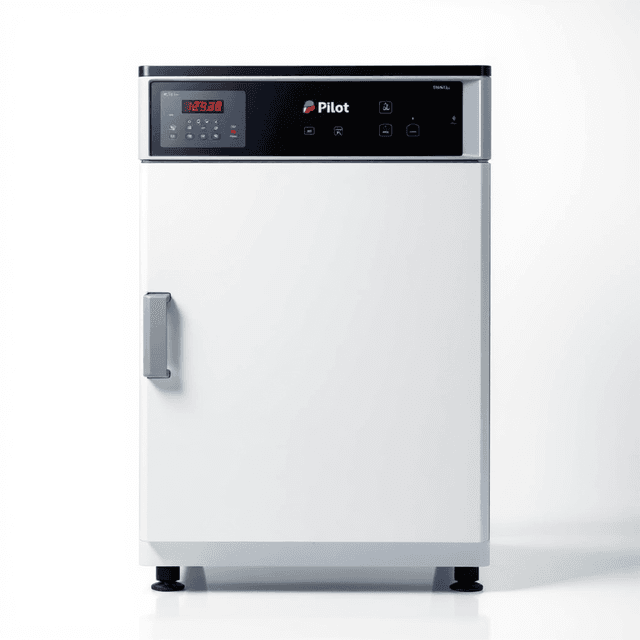
The Refrigerated and Heating Circulator Bath delivers precise closed-loop temperature control from -20 to +100 deg C for analytical and process laboratory applications. The system circulates temperature-controlled fluid through external equipment via an internal pump with up to 20 L/min flow and 6 m maximum lift, eliminating the need for continuous tap water while maintaining +/-0.1 deg C accuracy across the full operating range.
An intelligent PID controller with LCD interface manages both heating and cooling modes, with built-in alarms, timing functions, and system self-tuning. Integrated safety protections cover over-temperature, low liquid level, and system fault conditions. The unit supports both internal bath use and external circuit connection, making it suitable for electrophoresis systems, chromatography columns, viscometers, rotary evaporators, reaction vessels, and other instruments requiring stable temperature-controlled fluid delivery.
Available in 5 L and 10 L bath capacities with minimum operating temperatures of -10 deg C or -20 deg C depending on the model selected.
Key Features
- Internal and external circulation modes
- Intelligent digital PID control with LCD display
- Integrated alarms and multiple safety protections
- Programmable timing and system self-tuning
- R134a refrigerant
- Closed-loop design, no continuous water supply required
Specifications by Model
| Specification | BJPX-DL5/10 | BJPX-DL5/20 | BJPX-DL10/10-L |
|---|---|---|---|
| Temperature Range | -10 to +100 deg C | -20 to +100 deg C | -10 to +100 deg C |
| Temperature Accuracy | +/-0.1 deg C | +/-0.1 deg C | +/-0.1 deg C |
| Bath Capacity | 5 L | 5 L | 10 L |
| Cooling Capacity | 263 W | 263 W | 2733 W |
| Flow Rate | 8 L/min | 8 L/min | 20 L/min |
| Maximum Lift | 2.4 m | 2.4 m | 6 m |
| Circulation Power | 40 W | 40 W | 40 W |
| Power Supply | AC 220V, 50/60Hz | AC 220V, 50/60Hz | AC 220V, 50/60Hz |
| Dimensions (mm) | 360x400x760 | 360x400x760 | 360x520x850 |
| Weight | 38 kg | 38 kg | 50 kg |
| Refrigerant | R134a | R134a | R134a |
How It Works
The Low-Temperature Circulator Bath operates on a closed-loop refrigeration principle combined with precision temperature control. The system uses a compressor-based cooling mechanism to chill an internal water reservoir, while a circulation pump continuously moves the cooled water through external tubing to connected analytical instruments and back to the reservoir.
Temperature control is maintained through electronic monitoring and feedback control systems that adjust cooling capacity based on thermal load and setpoint requirements. The recirculating design eliminates water waste while ensuring consistent temperature delivery to multiple connection points. Heat exchangers within the bath efficiently remove thermal energy from the circulating water, maintaining stable temperatures even under varying load conditions.
The system's thermal management capabilities allow for precise control of analytical instrument temperatures, preventing thermal drift that can affect measurement accuracy and ensuring reproducible results across extended analytical runs.
Features & Benefits
Model
- BJPX-DL5/10
- BJPX-DL5/20
- BJPX-DL10/10-L
Weight
- 335.0 kg
Dimensions
- L: 42.0 mm
- W: 43.6 mm
- H: 38.0 mm
| Feature | This Product | Typical Alternative | Advantage |
|---|---|---|---|
| Circulation Design | Closed-loop recirculating system with internal reservoir | Entry-level models often use single-pass cooling requiring continuous water supply | Eliminates water waste while maintaining consistent temperature control throughout analytical runs |
| Installation Requirements | Benchtop configuration with standard electrical connection | Some systems require dedicated water lines and drainage connections | Simplifies laboratory setup and reduces infrastructure requirements for analytical instrument cooling |
| Multiple Connections | Multiple port configuration for simultaneous instrument cooling | Basic models often provide single instrument connection capability | Supports comprehensive analytical workflows requiring multiple temperature-controlled instruments |
| Temperature Control | Electronic temperature regulation with precision control | Manual systems may lack precision temperature regulation | Ensures consistent thermal conditions critical for analytical measurement reproducibility |
This recirculating cooling bath provides closed-loop temperature control with multiple connection capability and benchtop convenience. The electronic temperature regulation and recirculating design offer operational advantages for analytical laboratories requiring consistent cooling performance without continuous water supply requirements.
| Model | SKU | Listed price | Status | Dimensions |
|---|---|---|---|---|
| BJPX-DL10/10-L | BIO-BJPX-DL10-10-L | $3,790.00 | Available | 42.0 x 43.6 x 38.0 cm |
| BJPX-DL5/20 | BIO-BJPX-DL5-20 | $3,690.00 | Available | 42.0 x 43.6 x 38.0 cm |
| BJPX-DL5/10 | BIO-BJPX-DL5-10 | $3,490.00 | Available | 42.0 x 43.6 x 38.0 cm |
Practical Tips
Verify temperature accuracy using a calibrated thermometer at the instrument connection point rather than relying solely on the circulator display.
Why: Temperature can vary between the reservoir and analytical instrument due to heat gain in connecting tubing.
Replace circulation water monthly or when conductivity increases, and clean heat exchanger surfaces quarterly to maintain optimal thermal performance.
Why: Water quality degradation and heat exchanger fouling reduce cooling efficiency and temperature stability.
Insulate connecting tubing between the circulator and analytical instruments to minimize thermal losses and improve temperature stability.
Why: Uninsulated tubing allows ambient heat gain that compromises cooling effectiveness and increases thermal load on the circulator.
Allow the system to reach thermal equilibrium for 15-20 minutes before starting analytical procedures requiring precise temperature control.
Why: Temperature stabilization time ensures consistent thermal conditions throughout the analytical run and prevents thermal drift in measurements.
If cooling performance decreases, check for air bubbles in the circulation system and purge lines by running the pump at maximum flow rate briefly.
Why: Air bubbles reduce circulation efficiency and create temperature variations that affect analytical instrument performance.
Ensure adequate ventilation around the cooling unit and avoid blocking air intake or exhaust vents during operation.
Why: Proper airflow prevents overheating of the refrigeration system and maintains optimal cooling capacity under continuous operation.
Monitor and log circulation temperature at regular intervals during long analytical runs to document thermal stability for data quality records.
Why: Temperature documentation supports analytical method validation and helps identify thermal-related sources of measurement variability.
Setup Guide
What’s in the Box
- Low-temperature circulator bath main unit (typical)
- Power cord (typical)
- Inlet and outlet connection fittings (typical)
- User manual and operation guide (typical)
- Warranty documentation (typical)
Warranty
ConductScience provides a standard one-year manufacturer warranty covering defects in materials and workmanship, with technical support for installation and operational guidance.
Compliance
What temperature range can this circulator maintain for analytical instrument cooling?
Consult the product datasheet for specific temperature range capabilities. The system is designed for low-temperature operation below ambient conditions with electronic temperature control for analytical applications.
Can this unit cool multiple instruments simultaneously?
Yes, the circulator features multiple connection ports allowing simultaneous cooling of several analytical instruments from a single circulation system, though total cooling capacity will be distributed among connected devices.
What type of water should be used in the circulation system?
Distilled or deionized water is recommended to prevent mineral buildup and ensure optimal heat transfer efficiency. Water quality requirements should be verified in the product specifications.
How do I determine the appropriate flow rate for my analytical instrument?
Flow rate requirements vary by instrument type and thermal load. Consult your analytical instrument manual for cooling specifications and adjust the circulator flow rate accordingly within the unit's operating range.
What maintenance is required for the recirculating cooling system?
Regular maintenance includes water level monitoring, periodic water replacement, cleaning of heat exchangers, and inspection of tubing connections for leaks. Specific maintenance intervals should be followed per the user manual.
Is this circulator compatible with chromatography systems?
The unit is designed for general analytical instrument cooling applications including chromatography systems. Verify temperature range, flow rate, and connection compatibility with your specific chromatography equipment requirements.
How does this compare to continuous water supply cooling?
The recirculating design eliminates continuous water consumption and provides more consistent temperature control than tap water cooling, while avoiding the waste and temperature variability associated with single-pass cooling systems.
Have a question about this product?
Accessories
Enhance your setup with compatible accessories