Microfluidic Chip Fabrication Starter Kit
Complete PDMS microfluidic chip fabrication kit with elastomer components, punchers, tubing, connectors, and substrates for creating custom microfluidic devices.
| Contents | PDMS kit, punchers, tubing, connectors, substrates, guide |
| Automation Level | manual |
| Brand | ConductScience |

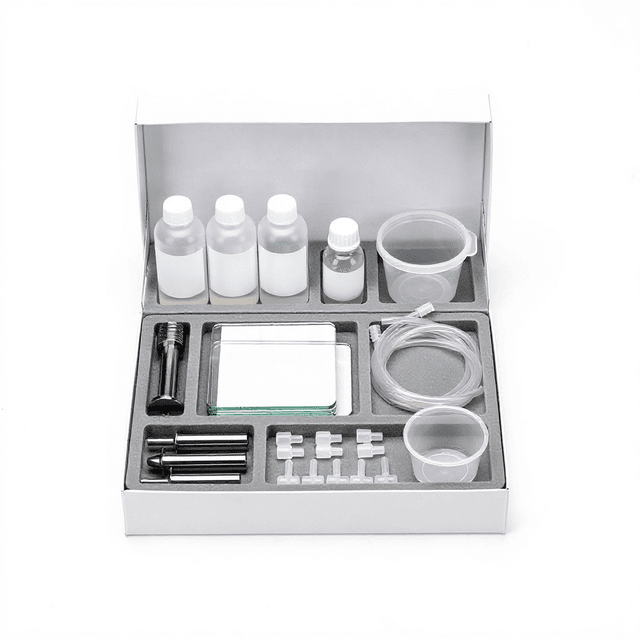
The Microfluidic Chip Fabrication Starter Kit provides researchers with essential materials and tools for creating polydimethylsiloxane (PDMS) microfluidic devices. This comprehensive kit includes PDMS elastomer components, precision punchers for creating inlet and outlet ports, flexible tubing for fluid connections, leak-resistant connectors, and substrate materials for chip assembly. The included fabrication guide provides step-by-step protocols for soft lithography processes.
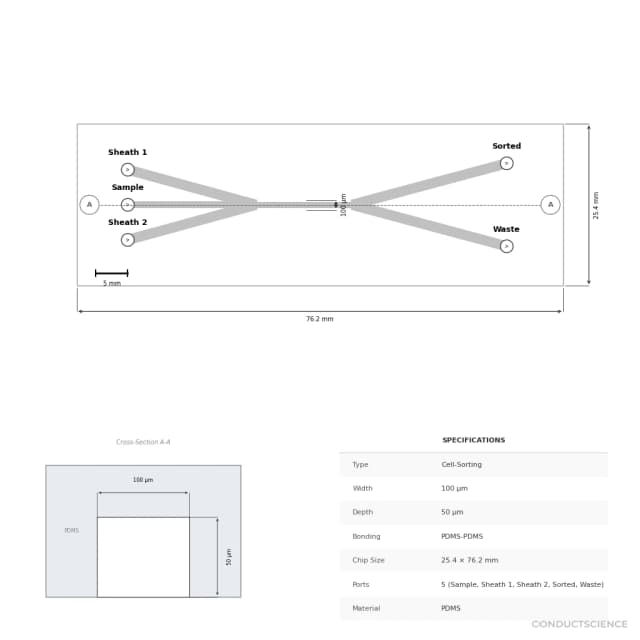
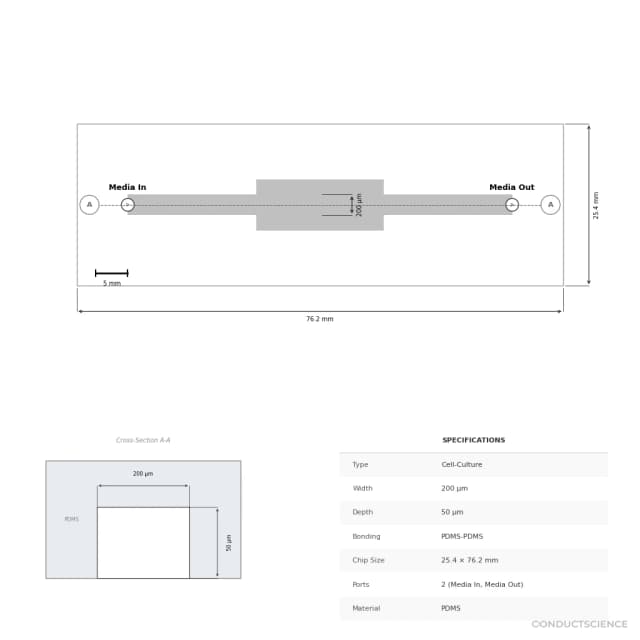
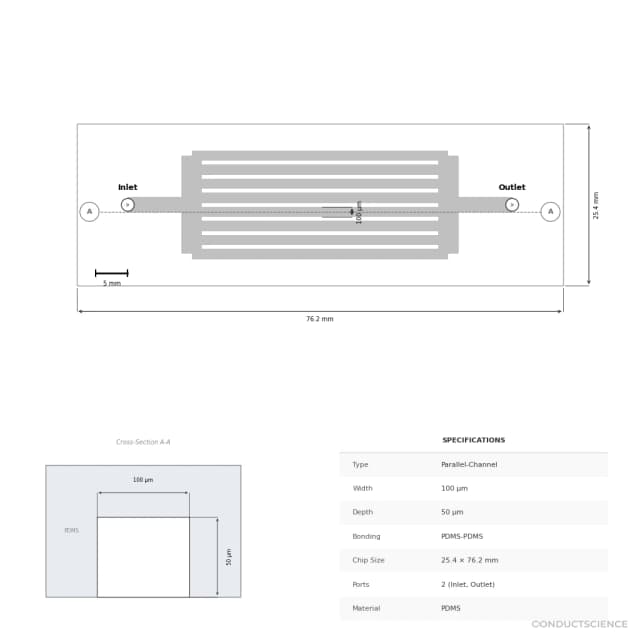
Designed for laboratories beginning microfluidic research or educational programs, the kit enables fabrication of custom channel geometries for applications including cell culture, drug screening, and particle manipulation. The standardized components ensure reproducible chip performance across multiple fabrication runs, supporting quantitative experimental workflows.
How It Works
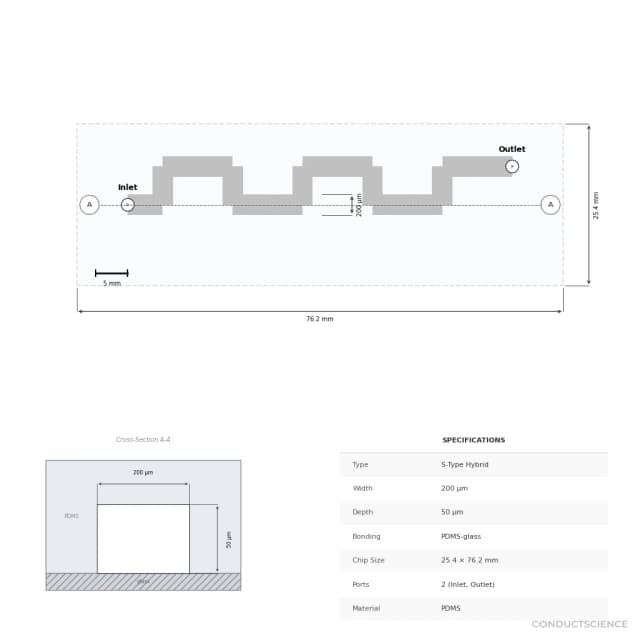
Microfluidic chip fabrication using PDMS employs soft lithography techniques to replicate microscale channel patterns from master templates. The PDMS elastomer is mixed with a curing agent, degassed to remove air bubbles, and poured over a photolithographically patterned silicon wafer or photoresist mold. After thermal curing, the elastomer forms a flexible, optically transparent replica containing the desired channel geometry.
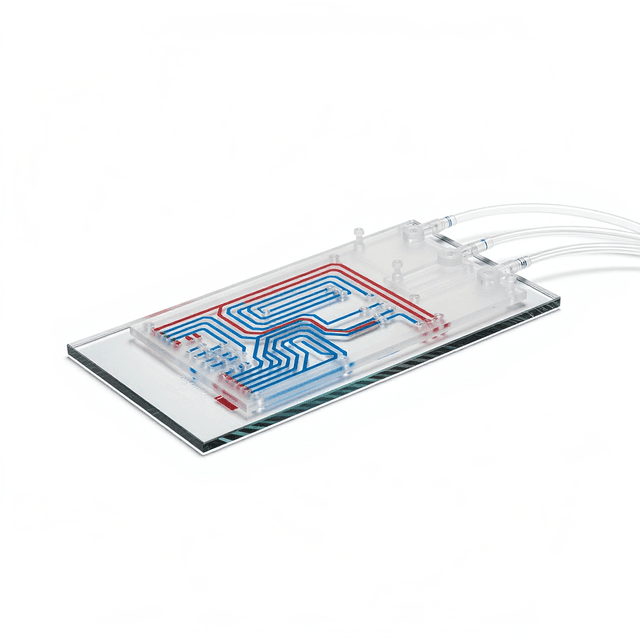
The cured PDMS layer is peeled from the master, and inlet/outlet ports are created using precision punchers included in the kit. The PDMS chip is then irreversibly bonded to a glass substrate or second PDMS layer through oxygen plasma treatment, creating sealed microchannels. Tubing and connectors enable fluidic connections between external pumps or reservoirs and the chip's internal channel network.
The resulting devices leverage laminar flow physics at the microscale, where Reynolds numbers are typically less than 1. This enables predictable fluid behavior, precise control of mixing and reaction conditions, and manipulation of particles or cells through hydrodynamic forces.
Features & Benefits
Contents
- PDMS kit, punchers, tubing, connectors, substrates, guide
Automation Level
- manual
Brand
- ConductScience
Research Domain
- Analytical Chemistry
- Cell Biology
- Materials Science
- Microbiology
- Pharmaceutical QC
Weight
- 2.0 kg
Dimensions
- L: 300.0 mm
- W: 200.0 mm
- H: 100.0 mm
Comparison Guide
| Feature | This Product | Typical Alternative | Advantage |
|---|---|---|---|
| Kit Completeness | Includes PDMS components, punchers, tubing, connectors, substrates, and fabrication guide | Basic kits often provide only PDMS elastomer components without fabrication tools | Eliminates need to source compatible punchers and connectors separately, reducing procurement complexity |
| Documentation Quality | Comprehensive fabrication guide with step-by-step protocols | Many suppliers provide minimal documentation or generic protocols | Reduces learning curve and troubleshooting time for researchers new to microfluidic fabrication |
| Component Integration | Pre-matched tubing and connector sizes for seamless integration | Component compatibility often requires trial-and-error matching | Ensures leak-free connections and eliminates compatibility issues between different manufacturers' components |
| Substrate Options | Multiple substrate materials included for different bonding approaches | Single substrate type limits experimental flexibility | Accommodates both permanent and reversible bonding methods in the same kit |
This starter kit provides comprehensive materials integration with validated protocols, offering researchers a complete fabrication solution rather than requiring separate sourcing of compatible components. The included fabrication guide and pre-matched components reduce setup complexity compared to building a fabrication capability from individual suppliers.
Practical Tips
Verify PDMS mixing ratio accuracy using a precision balance, as volumetric measurements can introduce curing inconsistencies.
Why: Incorrect base-to-curing agent ratios result in incomplete polymerization or altered mechanical properties.
Clean punchers with isopropanol after each use to prevent PDMS buildup that creates rough port edges.
Why: Sharp, clean punchers ensure smooth port surfaces for optimal tubing seals and reduced particle generation.
Degas PDMS mixture until completely bubble-free, extending vacuum time if necessary for thicker mixtures.
Why: Residual bubbles create voids in channels that disrupt flow patterns and compromise experimental reproducibility.
If chips leak at tubing connections, verify port diameter matches tubing outer diameter and check for torn port edges.
Why: Proper port-to-tubing fit creates compression seals that prevent leakage at operating pressures.
Allow completed chips to equilibrate for 24 hours before first use to ensure complete bonding and outgassing.
Why: Incomplete bonding or residual volatiles can affect cell viability and chemical analysis results.
Work in well-ventilated areas during PDMS curing as thermal decomposition can release volatile compounds.
Why: Proper ventilation prevents exposure to potentially harmful vapors during the polymerization process.
Setup Guide
What’s in the Box
- PDMS base elastomer
- PDMS curing agent
- Precision hole punchers (multiple sizes)
- Flexible silicone tubing
- Fluidic connectors
- Glass substrate sheets
- Fabrication protocol guide
Warranty
ConductScience provides a one-year manufacturer warranty covering material defects and fabrication guide accuracy. Technical support includes protocol troubleshooting and replacement component recommendations.
Compliance
What channel dimensions can be fabricated with this kit?
Channel dimensions depend on the master template used. The PDMS can replicate features from 10 micrometers to several millimeters. Minimum feature size is limited by the photolithographic resolution of your master template, not the PDMS casting process.
How many chips can be fabricated from one kit?
Number of devices depends on chip size and PDMS thickness. A typical kit provides sufficient material for 10-20 standard chips (25×75 mm) with 4 mm thickness. Thinner chips or smaller devices increase yield proportionally.
What bonding methods are supported by the included substrates?
Glass substrates support oxygen plasma bonding for irreversible sealing and reversible bonding methods for reusable devices. Additional PDMS sheets enable PDMS-to-PDMS bonding for multilayer device architectures.
Are the PDMS components biocompatible for cell culture applications?
The medical-grade PDMS meets biocompatibility standards for cell culture use. However, uncured oligomers can be cytotoxic, so ensure complete curing and consider coating protocols for sensitive cell lines.
What puncher sizes are included for creating fluidic ports?
Consult product datasheet for specific puncher diameters. Standard kits typically include multiple sizes to accommodate different tubing diameters and flow rate requirements.
How should PDMS components be stored for maximum shelf life?
Store PDMS base and curing agent in sealed containers at room temperature away from direct sunlight. Properly stored components maintain fabrication quality for 12-18 months from manufacture date.
What surface treatments are needed for reliable chip bonding?
Oxygen plasma treatment is required for irreversible PDMS-to-glass or PDMS-to-PDMS bonding. Treatment time and power settings are provided in the fabrication guide for optimal bond strength.
Have a question about this product?
Accessories
Enhance your setup with compatible accessories
Frequently Bought Together
Upgrade Options