Octopus Three-Chambered Social Apparatus
Three-chambered acrylic aquatic apparatus for studying octopus social behavior, territorial interactions, and choice preferences in controlled laboratory conditions.

Louise Corscadden, PhD
Director of Science · ConductScience
Ask Louise about Octopus Three-Chambered Social Apparatus fit, setup, configuration, or quote prep.
Already working with us? Sign in to connect this with My Scientist.
Key Specifications
Full details →- Model fit
- Octopus
- SKU family
- CS-958334
- Shipping box
- 76.0 x 30.0 x 30.0 cm
- Ordering
- Online checkout and quote request available
- Category
- Behavioral Mazes
- Build notes
- Acrylic
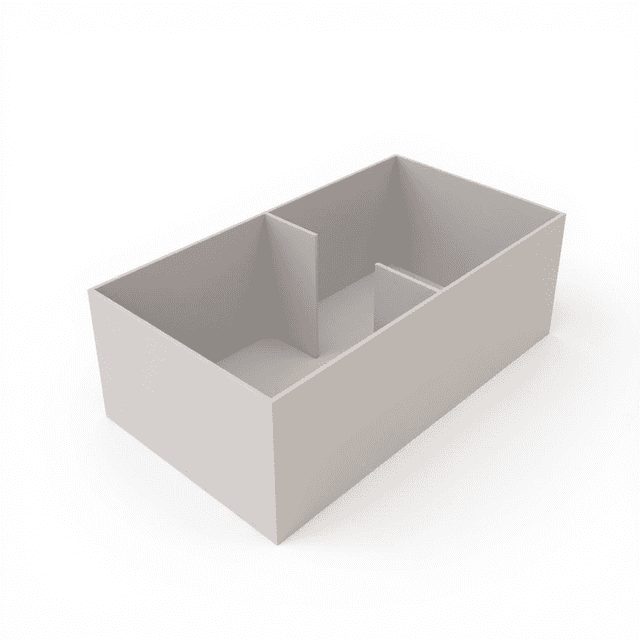
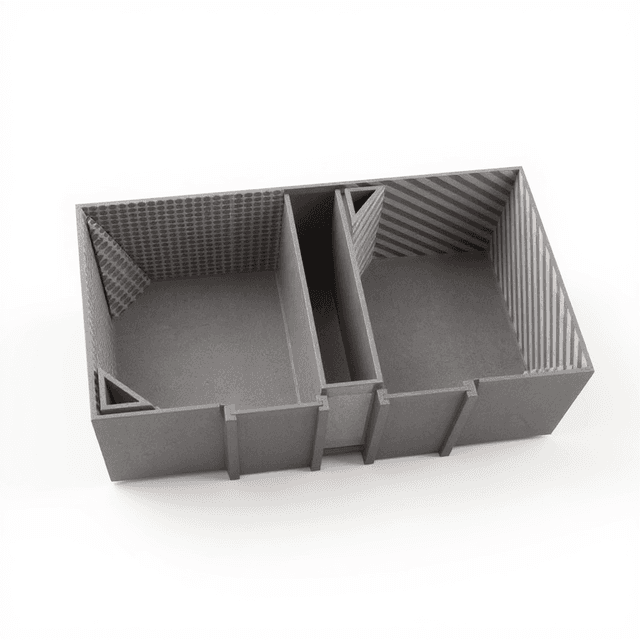
The Octopus Three-Chambered Social Apparatus is a specialized behavioral testing system designed for cephalopod social behavior research. The apparatus consists of a 76 × 30 × 30 cm rectangular acrylic aquarium divided into three equal chambers by black plexiglass partitions, with each chamber connected by 3.5 cm diameter circular entrances. The outer walls are covered with blackout window film to minimize external visual stimuli and control lighting conditions during experiments.
This apparatus enables researchers to study octopus social interactions, territorial behavior, and choice preferences in a controlled aquatic environment. The three-chamber configuration allows for multiple experimental paradigms including social preference testing, territorial establishment studies, and behavioral choice experiments. The 68.4 L capacity provides adequate space for octopus movement while maintaining experimental control through the partitioned chamber design.
How It Works
The apparatus operates on the principle of controlled choice testing in an aquatic environment. The three-chamber design creates distinct spatial zones connected by regulated access points, allowing researchers to observe octopus movement patterns, chamber preferences, and social interactions under controlled conditions. The black plexiglass partitions provide visual isolation between chambers while maintaining water circulation through the connecting entrances.
The blackout film covering eliminates external visual cues that could influence octopus behavior, ensuring that behavioral responses are driven by experimental variables rather than environmental distractions. The 3.5 cm entrance diameter allows free movement for most octopus species while creating a measurable decision point for behavioral analysis. Water depth and environmental parameters can be maintained consistently across all three chambers, providing standardized conditions for comparative behavioral studies.
Features & Benefits
Add-ons and modifications
| Add-on | Price | Details |
|---|---|---|
| Octopus | $1,690 | Rectangular aquarium that measures 76 × 30 × 30 cm, Depth of 68.4 L. Black plexiglass walls divide the apparatus into three equal-sized chambers. Each chamber h |
Add any of these to your quote request.
Chamber Entrance Diameter
- 3.5 cm
Number of Chambers
- 3
Chamber Configuration
- three equal-sized chambers
Lead Flask Ring Weight
- 450 g
Outer Wall Covering
- blackout window film
Container Type
- perforated screw top plastic cylindrical bottle
Epoxy Type
- Wet-Surface & Underwater Setting Epoxy
Behavioral Construct
- social preference
- territorial behavior
- spatial choice
- social interaction
- decision-making
Automation Level
- manual
Material
- Acrylic
Color
- Black
Capacity
- 68.4 L
Species
- Octopus
Dimensions
- 76 cm x 30 cm x 30 cm
Research Domain
- Behavioral Pharmacology
- Developmental Biology
- Learning and Memory
- Neuroscience
- Social Behavior
Compatible Tracking Software
- ConductVision
Shipping weight
- 6.06 lb
Shipping box
- L: 76.0 cm
- W: 30.0 cm
- H: 30.0 cm
| Feature | This Product | Typical Alternative | Advantage |
|---|---|---|---|
| Chamber Configuration | Three equal-sized chambers with controlled access points | Two-chamber designs are more common in choice preference studies | Enables more complex social dynamics and multi-option choice paradigms in behavioral experiments |
| Entrance Diameter | 3.5 cm standardized circular entrances | Variable opening sizes without standardization | Provides consistent decision points and controlled movement between chambers for quantitative analysis |
| Visual Isolation | Black plexiglass partitions with blackout film covering | Basic transparent or opaque barriers | Eliminates visual confounds while maintaining water circulation for controlled behavioral studies |
| Water Capacity | 68.4 L total capacity across three chambers | Smaller volumes typically used in choice apparatus | Accommodates natural octopus movement patterns while maintaining experimental control |
This apparatus combines standardized three-chamber design with controlled visual environments and adequate water volume for comprehensive octopus behavioral studies. The specialized entrance dimensions and partition materials are optimized for cephalopod research protocols requiring systematic choice and social interaction analysis.
Practical Tips
Allow octopus subjects to acclimate in the apparatus for 15-30 minutes before beginning behavioral trials to establish baseline movement patterns.
Why: Acclimation reduces stress-related artifacts that could confound experimental behavioral measurements.
Clean acrylic surfaces with marine-safe cleaning solutions and inspect connecting entrances for algae buildup between experimental sessions.
Why: Optical clarity is essential for behavioral observation and entrance blockages can alter movement patterns.
Record environmental parameters (temperature, salinity, lighting) alongside behavioral data to identify potential confounding variables.
Why: Environmental consistency is crucial for reproducible behavioral results across experimental sessions.
Monitor water quality parameters regularly and maintain appropriate filtration to prevent ammonia accumulation in the closed system.
Why: Poor water quality can induce stress behaviors that interfere with natural behavioral responses.
If octopus subjects avoid chamber transitions, verify entrance diameters are clear and water flow is unobstructed between compartments.
Why: Physical barriers or flow disruptions can prevent normal movement and invalidate choice behavior data.
Establish baseline chamber preference data for each individual subject before introducing experimental variables or social stimuli.
Why: Individual preferences must be accounted for to detect experimental effects on chamber choice behavior.
Setup Guide
What’s in the Box
- Three-chambered acrylic apparatus with partitions
- Blackout window film covering (pre-applied)
- Setup and maintenance instructions (typical)
- Water quality monitoring guidelines (typical)
Warranty
ConductScience provides a one-year manufacturer warranty covering structural defects and materials. Technical support is available for setup guidance and experimental protocol recommendations.
Compliance
Protocol and background
Introduction
Octopuses perform many of the daily tasks as vertebrates do and exhibit many of the same skills, particularly in learning and memory. This has made them a crucial species for research on comparative neurobiology and cognition. These comparative methods use both the similarities and the differences to learn more about the brain processes that underlie behavior. A significant difference between octopus and human behavior lies in their social behavior since several octopus’ species are usually described as solitary animals (Edsinger & Dölen, 2018). Therefore, studying octopus social behavior can be used to provide further insights for comparative studies. The octopus three-chambered social apparatus can readily observe social behavior and social preference in octopuses. One lateral chamber serves as the novel chamber used to place novel objects while the other serves as the social chamber used to place a social object. During the task, the subject is placed in the central chamber and is allowed to freely explore all three chambers for a predefined length of time. Therefore, experimenters can easily observe the subject’s social behaviors and preferences towards male and female conspecifics versus novel objects.
Apparatus and Equipment
The octopus three-chambered social apparatus consists of a rectangular acrylic aquarium that measures 76 × 30 × 30 cm with a depth of 68.4 L. Black acrylic walls divide the apparatus into three equal-sized chambers. Each chamber has a small circular entrance with a diameter of 3.5 cm that allows access between them. The apparatus's outer walls are covered with blackout window film.
The subject to be tested can be placed in the center chamber of the apparatus by placing it inside a perforated screw top plastic cylindrical bottle weighted down using a 450 g C-shaped lead flask ring secured with Wet-Surface & Underwater Setting Epoxy. The other two lateral chambers are used as choice chambers. A novel object can be placed in one chamber and a conspecific can be placed in the other.
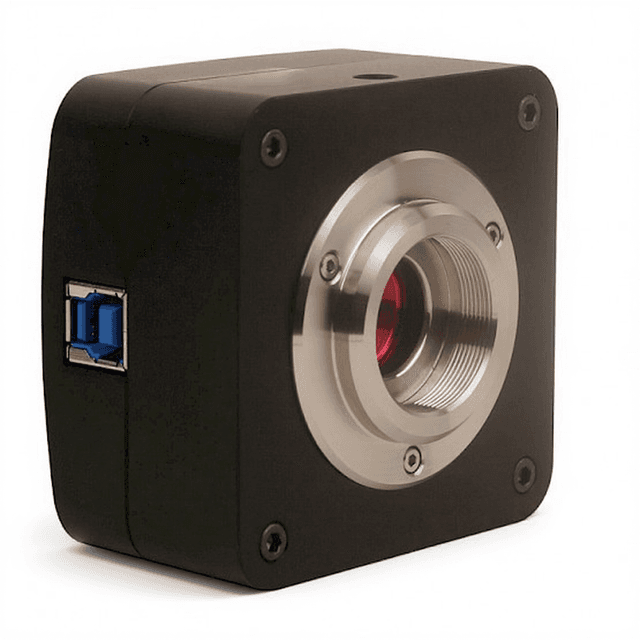
Octopus location can be tracked using a video tracking software package such as Noldus EthoVision, ANY-Maze, or BehaviorCloud.
Training Protocol
Appropriately light the apparatus. Prepare fresh seawater for each experiment. Scrub the apparatus in deionized water per seawater change. Place the apparatus in a quiet laboratory space during testing.
Octopus three chambered social apparatus task
Place an unfamiliar octopus in a screw-top plastic bottle or weighted orchid pot. Place the container with the octopus in one of the apparatus’s side chambers to act as a social object. The container allows the subject to have contact with the unfamiliar octopus but prevents fighting. Moreover, the container allows bidirectional access to visual, chemosensory, and tactile cues, which are used to provide social information.
Place one of the four novel objects in the other side chamber: a plastic orchid pot with red weight, a plastic bottle with green weight, a figurine, and a figurine of the same size as the previous one but of another color. Place the figurines in the orchid pot or the bottle to keep the size of the objects constant across all trials.
Place the subject in a perforated screw-top plastic cylindrical bottle, weighted down with a 450 g C-shaped lead flask ring secured with Wet-Surface & Underwater Setting Epoxy. Place the bottle in the center chamber of the apparatus. Allow the subject to remain inside the cylindrical bottle for two minutes for habituation.
Release the subject from the bottle and allow it to explore the apparatus for 30 minutes.
Data Analysis
The following parameters can be observed using the Octopus three-chambered social apparatus:
- The number of entries into each chamber of the apparatus defined as the presence of both eyes and mantle in one chamber.
- The amount of time spent in each chamber.
Strengths
The Octopus three-chambered social apparatus can be used to study social behaviors in octopuses by examining the time the subject spends near a social object versus a novel object. The black plexiglass walls prevent the subject from viewing the inside of the lateral chambers; therefore, the subject needs to enter the chambers to view the objects. This allows the apparatus to also be used for two-choice experiments. The apparatus is large enough to place adult animals.
Summary
The Octopus three-chambered social apparatus is used to study social behaviors in octopus.
- It consists of a glass aquarium divided into three equal chambers (one central chamber and two lateral chambers) using black plexiglass walls.
- The subject can move between the chambers through small circular entrances present at the bottom of each partition.
- One lateral chamber serves as the novel chamber used to place novel objects while the other serves as the social chamber used to place a social object.
- The time the subject spends in the social chamber compared to the others is used to indicate its preference toward the social object.
- The apparatus can also be used to study the effects of treatment with drugs or stimulants on social behaviors.
- The apparatus is large enough to place adult animals.
References
Edsinger, E., & Dölen, G. (2018). A Conserved Role for Serotonergic Neurotransmission in Mediating Social Behavior in Octopus. Current biology : CB, 28(19), 3136–3142.e4. https://doi.org/10.1016/j.cub.2018.07.061
Are you an academic scientist and creator?
Learn how your lab can tech transfer this and similar devices from your lab to industry.
From the Maze Engineers documentation for this apparatus.
What octopus species can be tested in this apparatus?
The 3.5 cm entrance diameter accommodates most laboratory-suitable octopus species including Octopus vulgaris and O. bimaculoides, though researchers should verify compatibility with their specific species size ranges.
How is water circulation maintained between chambers?
Water circulates naturally through the 3.5 cm connecting entrances, though researchers may need to supplement with gentle filtration systems to maintain water quality across all chambers.
Can the apparatus be modified for different experimental protocols?
The fixed partition design limits modifications, but researchers can introduce experimental stimuli within individual chambers or modify entrance configurations with appropriate materials.
What behavioral parameters can be quantified?
Researchers can measure chamber occupancy time, transition frequencies, spatial preferences, social proximity behaviors, and movement patterns between chambers.
How should water parameters be maintained?
Maintain species-appropriate temperature, salinity, and pH levels across all chambers, with regular monitoring to ensure environmental consistency throughout experiments.
What recording equipment is compatible?
The transparent acrylic construction allows use of overhead cameras, underwater cameras, and tracking software for automated behavioral analysis.
How long can behavioral trials be conducted?
Trial duration depends on water quality maintenance and species tolerance, with typical sessions ranging from 30 minutes to several hours with appropriate environmental monitoring.
Have a question about this product?
Have a question? Just ask.
Send it over and we'll email you a personalized answer — no call, no scheduling.
Prefer to talk it through?