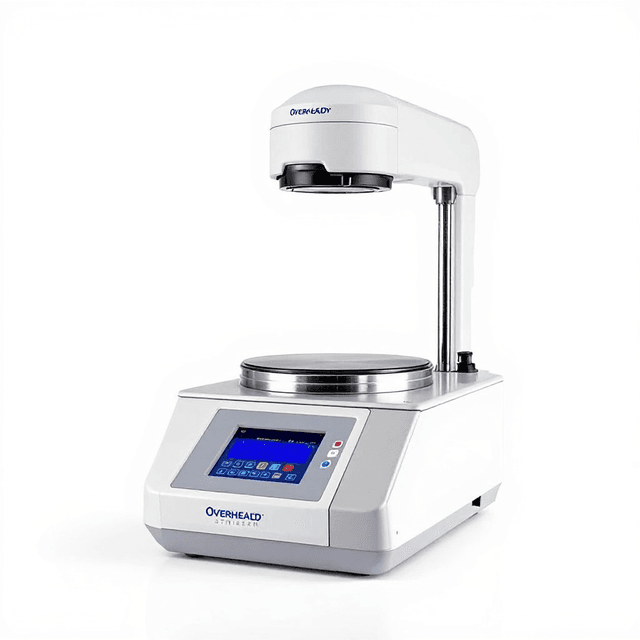
Overhead Stirrer OS40-H OS60-H OS100-H
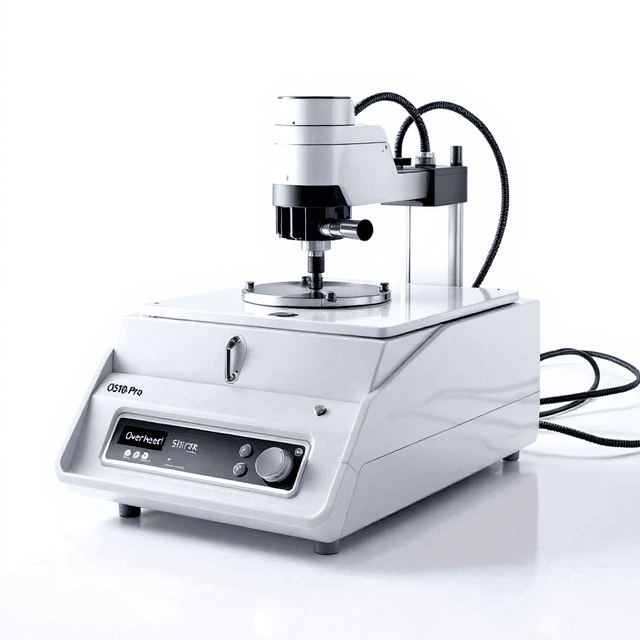
Variable-speed overhead stirrers for 40L, 60L, and 100L vessel capacities with LCD speed display and torque capability for viscous media mixing.

Louise Corscadden, PhD
Director of Science · ConductScience
Ask Louise about Overhead Stirrer OS40-H OS60-H OS100-H fit, setup, configuration, or quote prep.
Already working with us? Sign in to connect this with My Scientist.
Key Specifications
Full details →- Model fit
- Configured during quote
- SKU family
- BIO-0786
- Shipping box
- 42.0 x 43.6 x 38.0 cm
- Ordering
- Online checkout and quote request available
- Category
- Benchtop Instruments
- Build notes
- Confirm accessories, station layout, and support needs before purchase
The Overhead Stirrer OS40-H/OS60-H/OS100-H series provides precise mechanical agitation for laboratory applications requiring controlled mixing of solutions, suspensions, and viscous media. These stirrers feature variable speed control from 30-2200 rpm (OS40-H/OS60-H) or 30-1600 rpm (OS100-H) with LCD display for accurate speed monitoring. The series accommodates vessel capacities of 40L, 60L, and 100L respectively, making them suitable for both routine analytical work and larger-scale preparations.
Each unit operates on universal input voltage (100-240V AC, 50-60 Hz) with 24V or 36V output, providing consistent torque across the speed range. The overhead design allows for efficient mixing of high-viscosity materials and temperature-sensitive samples without the heat generation associated with magnetic stirring. Digital speed control and display ensure reproducible mixing conditions for quantitative applications.
How It Works
Overhead stirrers operate through direct mechanical coupling between a variable-speed motor and stirring shaft, providing controlled torque transfer to the mixing element. The motor speed is electronically regulated through pulse-width modulation or similar control circuitry, allowing precise adjustment of rotational velocity. Unlike magnetic stirring systems, overhead stirrers can maintain consistent mixing action regardless of solution viscosity or magnetic interference.
The vertical shaft configuration allows the stirring element to be positioned at optimal depth within the vessel, creating controlled flow patterns that promote efficient mass transfer. The mechanical coupling provides sufficient torque to handle viscous media and maintain mixing action even when dealing with suspensions containing settleable solids. Speed feedback systems ensure the displayed RPM accurately reflects actual shaft rotation, enabling reproducible mixing protocols.
Features & Benefits
Automation Level
- manual
OS60-H
- OS100-H
Set No
- 1003002002
1003003002
- 1003014005
100~240
- 100~240
Output Voltage(V)
- 24
24
- 36
Frequency(Hz)
- 50~60
50~60
- 50~60
Capacity(L)
- 40
60
- 100
Speed Range(rpm)
- 30~2200
30~2200
- 30~1600
Speed Display
- LCD
Brand
- ConductScience
Research Domain
- Analytical Chemistry
- Environmental Monitoring
- Food Science
- Materials Science
- Microbiology
- Pharmaceutical QC
Power/Voltage
- 100~240
Shipping weight
- 29.98 lb
Shipping box
- L: 42.0 cm
- W: 43.6 cm
- H: 38.0 cm
| Feature | This Product | Typical Alternative | Advantage |
|---|---|---|---|
| Speed Range | 30-2200 rpm (OS40-H/OS60-H) or 30-1600 rpm (OS100-H) | Entry-level models often limited to 50-1500 rpm range | Extended low-speed capability enables gentle mixing of shear-sensitive materials while high-speed operation supports vigorous emulsification. |
| Capacity Range | 40L, 60L, and 100L options | Many competitors focus on smaller volumes under 20L | Accommodates pilot-scale preparations and large batch synthesis without requiring multiple mixing cycles. |
| Power Input | Universal 100-240V AC, 50-60 Hz | Some models require specific voltage configurations | Simplifies procurement and installation in international laboratories without voltage conversion requirements. |
| Speed Display | LCD digital display | Analog displays or basic LED readouts | Provides precise speed monitoring and documentation for regulatory compliance and protocol reproducibility. |
| Output Voltage | 24V or 36V DC output | Direct AC motor drive in basic models | Enhanced safety and more precise speed control through DC motor technology with electronic speed regulation. |
The OS series combines wide speed ranges with large capacity options and universal power compatibility. The LCD display and DC motor design provide precise control and documentation capabilities for regulated laboratory environments.
Practical Tips
Verify displayed speed against a tachometer periodically, especially for quantitative applications requiring documented mixing conditions.
Why: Speed accuracy can drift over time and may be critical for reproducible protocols.
Inspect chuck tightness before each use and clean shaft threads regularly to prevent seizure.
Why: Loose chucks can cause shaft wobble and safety hazards while dirty threads prevent proper tightening.
Start at low speed and gradually increase to avoid splashing and ensure proper impeller positioning before reaching target speed.
Why: Sudden acceleration can cause sample loss and may not achieve optimal mixing patterns.
Ensure adequate clearance around rotating shaft and use appropriate guards when mixing hazardous materials.
Why: Exposed rotating equipment poses entanglement risks and chemical splash hazards during operation.
Document mixing speed, time, and impeller type for each preparation to ensure protocol reproducibility.
Why: Mixing conditions significantly affect dissolution, extraction efficiency, and particle size distribution.
If speed fluctuates under load, check for proper shaft alignment and verify the vessel is adequately secured to prevent movement.
Why: Misalignment creates variable resistance that affects speed stability and can damage motor bearings.
Match impeller diameter to vessel size (typically 1/3 to 1/2 vessel diameter) for optimal fluid circulation.
Why: Proper impeller sizing ensures efficient mixing while minimizing dead zones and power consumption.
Setup Guide
What’s in the Box
- Overhead stirrer motor unit
- Power cord
- Basic stirring shaft (typical)
- Chuck key (typical)
- User manual
- Warranty documentation (typical)
Warranty
ConductScience provides a standard one-year manufacturer warranty covering defects in materials and workmanship, with technical support available for setup and operational guidance.
Compliance
References
Background reading relevant to this product:
What is the maximum viscosity this stirrer can handle effectively?
Consult product datasheet for specific torque specifications. The overhead design provides greater torque capability than magnetic stirrers, typically handling viscosities up to several thousand centipoise depending on impeller design and speed setting.
Can I use this stirrer for temperature-controlled reactions?
Yes, the mechanical drive system generates minimal heat compared to magnetic stirring, making it suitable for temperature-sensitive applications when combined with external heating or cooling systems.
What types of impellers are compatible with these stirrers?
Standard laboratory impellers with appropriate shaft diameters can be used, including propeller, paddle, and turbine designs. Impeller selection should match your application requirements for flow pattern and shear rate.
How accurate is the speed display and control?
The LCD display provides digital readout of set speed. For critical applications requiring certified accuracy, verify displayed speed against a calibrated tachometer and consult product specifications for control tolerance.
Can multiple stirrers be operated simultaneously in the same lab?
Yes, each unit operates independently and the mechanical drive system avoids electromagnetic interference that can affect multiple magnetic stirrers operating in proximity.
What maintenance is required for reliable operation?
Regular inspection of shaft alignment, chuck tightness, and motor housing cleanliness. Lubrication requirements and service intervals should be followed according to the user manual.
How does this compare to magnetic stirring for my application?
Overhead stirrers provide superior torque for viscous media, larger volumes, and applications requiring high shear mixing. Magnetic stirrers are better for smaller volumes, sealed systems, and applications requiring minimal mechanical contact.
Have a question about this product?
Have a question? Just ask.
Send it over and we'll email you a personalized answer — no call, no scheduling.
Prefer to talk it through?
Accessories
Enhance your setup with compatible accessories
Frequently Bought Together