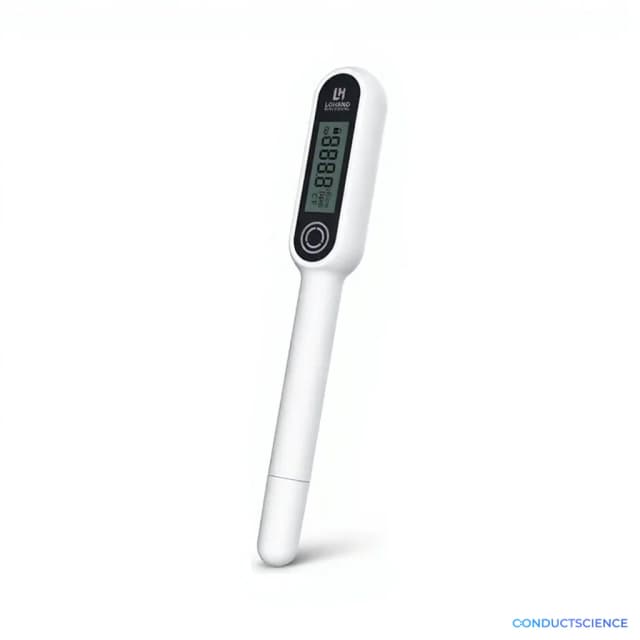
Pen Type TDS Meter
Portable dual-parameter water quality analyzer measuring TDS (0-9999 ppm) and conductivity (0-9999 μS/cm) with temperature compensation for rapid field and laboratory assessment.

Louise Corscadden, PhD
Director of Science · ConductScience
Ask Louise about Pen Type TDS Meter fit, setup, configuration, or quote prep.
Already working with us? Sign in to connect this with My Scientist.
Key Specifications
Full details →- Model fit
- Configured during quote
- SKU family
- CS-LH-TDS006
- Shipping box
- 6.46 x 0.98 x 0.63 cm
- Ordering
- Online checkout and quote request available
- Category
- Portable Analyzers
- Build notes
- Confirm accessories, station layout, and support needs before purchase
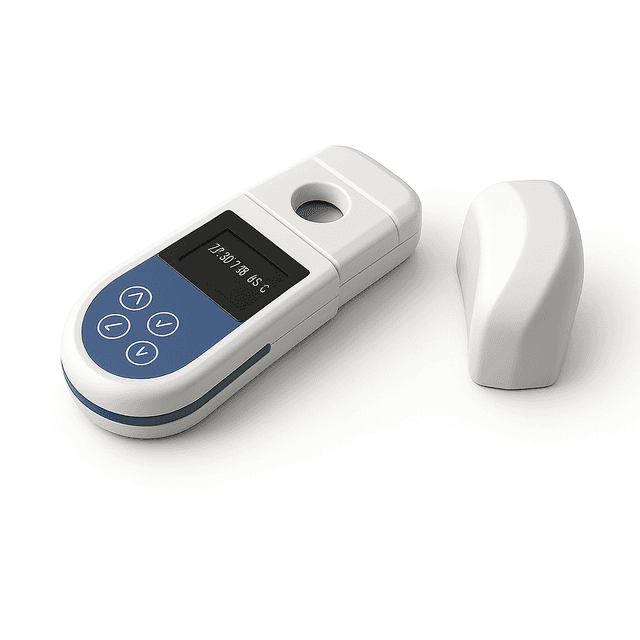
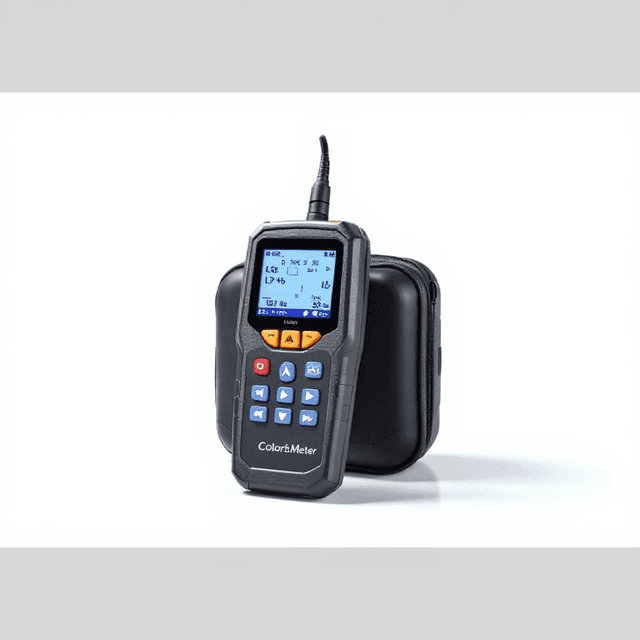
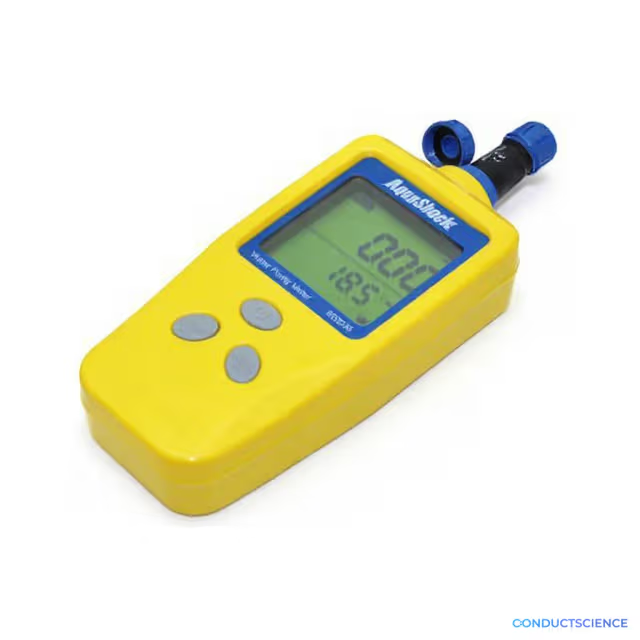
The Pen Type TDS Meter (CS-LH-TDS006) is a portable water quality analyzer designed for rapid assessment of total dissolved solids (TDS) and electrical conductivity in aqueous solutions. This compact instrument measures TDS from 0-9999 ppm (mg/L) and conductivity from 0-9999 μS/cm, providing dual-parameter analysis in a single handheld device weighing only 26.5 g.
The meter incorporates temperature compensation capabilities, measuring both water temperature and environmental temperature across a range of 0°C to 80°C (32-176°F). Powered by two AG13 button batteries, this instrument offers field-portable operation for applications requiring immediate water quality assessment in laboratory, industrial, and field environments.
How It Works
TDS measurement operates on the principle that dissolved ionic compounds increase the electrical conductivity of water proportionally to their concentration. The instrument applies a controlled voltage across electrodes immersed in the sample and measures the resulting current flow. The microprocessor converts conductivity measurements to TDS values using a standard conversion factor, typically assuming that dissolved solids contribute approximately 0.5-0.7 times the conductivity value.
Temperature compensation is achieved through integrated thermistors that measure sample temperature and apply correction algorithms to account for the temperature dependence of ionic mobility. This ensures accurate readings across the operational temperature range of 0-80°C, as conductivity typically increases 2-3% per degree Celsius in most aqueous solutions.
The dual-display system provides simultaneous readout of both TDS and conductivity parameters, allowing users to assess water quality from multiple perspectives and verify measurement consistency through the established relationship between these parameters.
Features & Benefits
Name
- tds water tester
Type
- Water quality analyzer
Measuring range
- TDS: 0-9999ppm (mg/L),Conductivity:0-9999us/cm
Accessories
- 1 TDS meter1 manual
Applied range
- TDS meter is a easy tool for testing the level of water quality, popular in water deal industry, household, travlling, and etc.
Usage Situation
- drinking water, water filters, hydroponics, aquariums, food & coffee, pools & spas.
Product Name
- Quantity Sold
Residual Chlorine Test Strip 0-10ppm
- 3000+
Residual Chlorine Analyzer 0-10ppm
- 500+
Residual Chlorine Kit
- 2000+
Automation Level
- manual
Brand
- ConductScience
Accuracy
- TDS: ±2%(F.S)
Weight
- 26.5g
Dimensions
- 164mmx25mmx16mm
Temperature Range
- 0°C~80°C,32~176â
Power/Voltage
- 2*1.5V ( AG13 button battery)
Research Domain
- Analytical Chemistry
- Environmental Monitoring
- Food Science
- Industrial Hygiene
- Microbiology
- Pharmaceutical QC
Shipping weight
- 0.02 lb
Shipping box
- L: 6.46 cm
- W: 0.98 cm
- H: 0.63 cm
| Feature | This Product | Typical Alternative | Advantage |
|---|---|---|---|
| Measurement Parameters | Dual measurement: TDS (0-9999 ppm) and conductivity (0-9999 μS/cm) | Entry-level models often measure TDS only or require separate instruments for dual parameters | Eliminates the need for multiple instruments and provides cross-verification of water quality measurements. |
| Temperature Compensation | Automatic compensation across 0-80°C range with dual temperature sensing | Basic models may lack temperature compensation or offer limited temperature range | Maintains accuracy in varying environmental conditions without manual corrections. |
| Measurement Range | Wide range covering 0-9999 ppm TDS and 0-9999 μS/cm conductivity | Lower-end meters typically offer narrower ranges requiring multiple instruments | Accommodates everything from ultra-pure water to concentrated solutions in a single instrument. |
| Physical Design | Compact pen format (164×25×16 mm, 26.5 g) | Similar form factor is standard for portable meters | Enables easy field transport and single-handed operation for efficient sampling workflows. |
| Accuracy Specification | ±2% full-scale accuracy for TDS measurement | Varies by model, with some offering higher or lower precision | Provides reliable quantitative data suitable for most water quality monitoring applications. |
This TDS meter combines dual-parameter measurement capability with wide measurement ranges and automatic temperature compensation in a compact, portable format. The instrument offers practical accuracy for field and routine laboratory applications while maintaining the convenience of battery-powered operation.
Practical Tips
Verify calibration daily using distilled water, which should read <10 ppm TDS and <20 μS/cm conductivity.
Why: Daily verification ensures measurement accuracy and identifies electrode fouling or drift before critical measurements.
Store the meter with the electrode cap on and avoid prolonged exposure to direct sunlight or extreme temperatures.
Why: Proper storage prevents electrode dehydration and protects electronic components from thermal stress.
Allow sample and meter to reach thermal equilibrium before measurement, especially when moving between different temperature environments.
Why: Temperature equilibration ensures accurate temperature compensation and prevents measurement drift during reading.
Take multiple readings and average the results, especially for critical quality control applications.
Why: Statistical averaging reduces random measurement error and improves data reliability for documentation and reporting.
If readings become unstable or erratic, rinse the electrode thoroughly and check for air bubbles on the sensor surface.
Why: Contamination or air bubbles can interfere with electrical conductivity measurement and cause measurement artifacts.
Avoid measuring solutions with pH <2 or >12, as extreme pH can damage the electrode permanently.
Why: Strong acids and bases can corrode electrode materials and compromise measurement accuracy and instrument lifespan.
Record environmental temperature alongside measurements when documenting results for traceability.
Why: Temperature data supports measurement validation and helps identify potential sources of variation in longitudinal studies.
Setup Guide
What’s in the Box
- TDS meter (main unit)
- User manual
- Protective electrode cap (typical)
- AG13 button batteries (typical)
Warranty
ConductScience provides a standard 1-year manufacturer warranty covering defects in materials and workmanship, with technical support available for calibration and operational guidance.
Compliance
References
Background reading relevant to this product:
What is the relationship between TDS and conductivity readings on this meter?
The meter calculates TDS from conductivity measurements using a standard conversion factor, typically assuming TDS ≈ 0.5-0.7 × conductivity. This relationship varies with solution composition, so cross-referencing both parameters helps verify measurement validity.
How frequently should the meter be calibrated?
Calibration verification using distilled water (<10 ppm) should be performed daily or before each use session. Formal calibration with certified reference standards should be conducted monthly or according to laboratory QA protocols.
Can this meter measure samples with high organic content?
The meter measures electrical conductivity contributed by dissolved ions. Organic compounds contribute minimally to conductivity, so TDS readings primarily reflect inorganic dissolved solids. High organic content samples may show lower TDS/conductivity ratios.
What is the minimum sample volume required for accurate measurement?
The electrode must be fully immersed without touching container walls. Consult product datasheet for specific immersion depth requirements, but typically 20-50 mL is sufficient for accurate measurement in most sample containers.
How does temperature affect the accuracy of measurements?
The meter includes automatic temperature compensation from 0-80°C. Manual temperature correction may be required for extreme conditions or when measuring samples with unusual ionic compositions that deviate from standard temperature coefficients.
What maintenance is required for the electrode?
Rinse electrode with distilled water after each use and store with protective cap. Avoid contact with abrasive materials. If readings become erratic, gentle cleaning with mild detergent solution may restore electrode performance.
How does this compare to laboratory-grade conductivity meters?
This portable meter offers convenience and adequate accuracy (±2% F.S.) for field screening and routine monitoring. Laboratory-grade instruments typically provide higher precision (±0.5-1%) and additional features like data logging and multiple measurement modes.
Have a question about this product?
Have a question? Just ask.
Send it over and we'll email you a personalized answer — no call, no scheduling.
Prefer to talk it through?
Accessories
Enhance your setup with compatible accessories