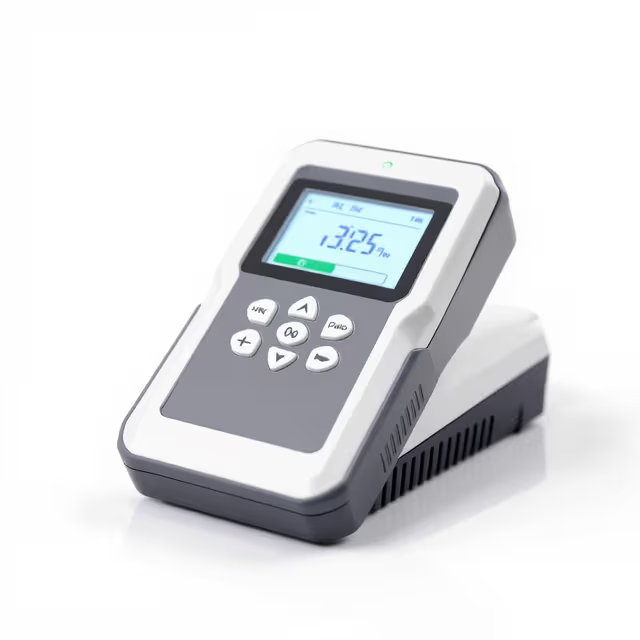
Pocket pH Tester PH-P1 PH-P1+
Compact battery-operated pH meter with 1-3 point calibration and automatic temperature compensation for portable field and laboratory pH measurements.

Louise Corscadden, PhD
Director of Science · ConductScience
Ask Louise about Pocket pH Tester PH-P1 PH-P1+ fit, setup, configuration, or quote prep.
Already working with us? Sign in to connect this with My Scientist.
Key Specifications
Full details →- Model fit
- 1 selectable configurations
- SKU family
- BIO-0364
- Shipping box
- 19.5 x 3.8 x 3.6 cm
- Ordering
- Online checkout and quote request available
- Category
- pH Meters
- Build notes
- Confirm accessories, station layout, and support needs before purchase
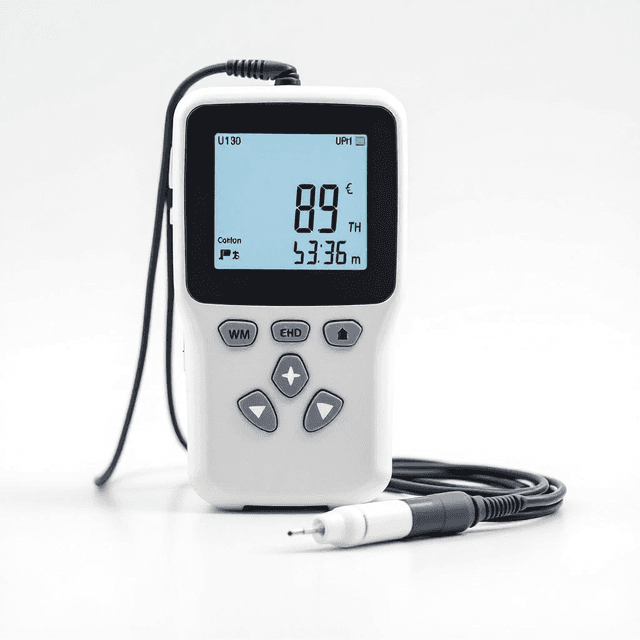
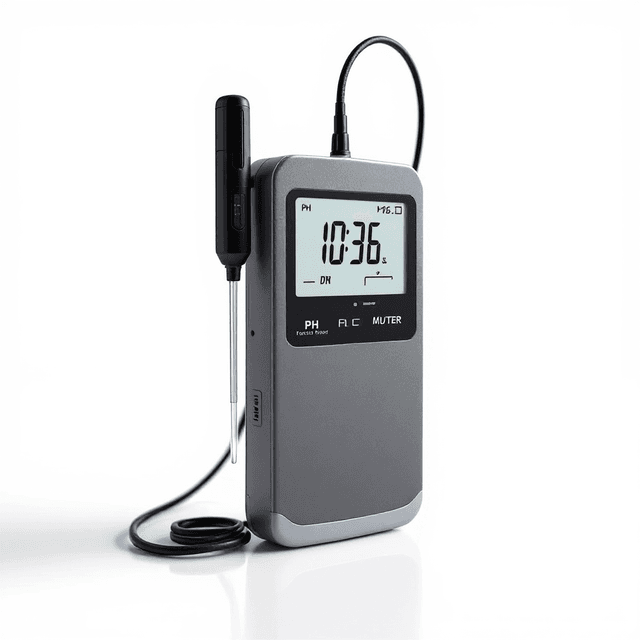
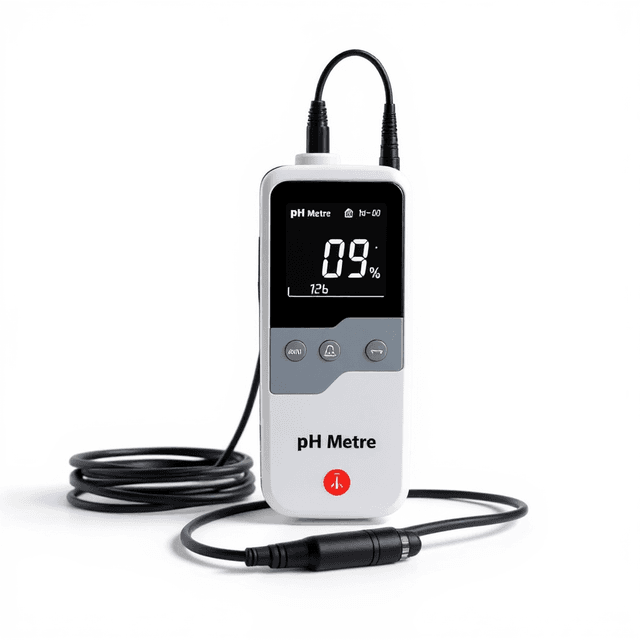
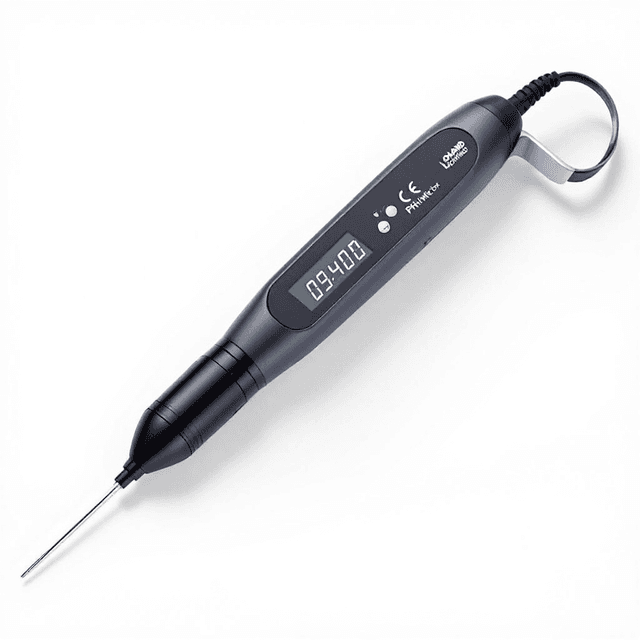
The Pocket pH Tester PH-P1/PH-P1+ is a compact, battery-operated pH measurement instrument designed for field and laboratory applications requiring portable pH monitoring. The device features 1-3 point calibration capability with automatic temperature compensation across 0-60°C, enabling accurate pH measurements in varying environmental conditions.
The instrument measures 38×36×195mm and weighs 147g, making it suitable for mobile sampling protocols and space-constrained laboratory benches. The device operates on four AAA alkaline batteries and includes optional ORP measurement capability when equipped with the appropriate probe. Temperature compensation ensures measurement reliability across the specified operating range.
How It Works
The pH measurement principle relies on potentiometric detection using a glass electrode sensitive to hydrogen ion activity. The glass membrane develops an electrical potential proportional to the pH difference between the sample and internal reference solution. This potential, measured in millivolts, is converted to pH units through calibration with standard buffer solutions of known pH values.
Automatic temperature compensation adjusts the pH reading based on the Nernst equation, which describes the temperature dependence of electrode response. The instrument measures solution temperature and applies correction factors to account for the theoretical 59.16 mV per pH unit response at 25°C, which varies with temperature. The 1-3 point calibration allows users to establish accurate measurement across their working pH range using certified buffer standards.
Features & Benefits
Shipping weight
- 1.0 lb
Shipping box
- L: 19.5 cm
- W: 3.8 cm
- H: 3.6 cm
| Feature | This Product | Typical Alternative | Advantage |
|---|---|---|---|
| Calibration Points | 1-3 point calibration capability | Entry-level portable meters often provide only 1-point calibration | Multi-point calibration enables higher accuracy across wider pH ranges and better compensation for electrode aging |
| Temperature Compensation Range | Automatic compensation from 0-60°C | Basic models may offer limited temperature ranges or manual compensation | Wide temperature range supports field measurements in varying environmental conditions without accuracy loss |
| Resolution and Accuracy | ±0.1 pH resolution with ±1mV precision | Lower-cost meters typically offer ±0.1-0.2 pH resolution | High resolution enables detection of small pH changes important in quality control and research applications |
| Multi-Parameter Capability | pH, mV/ORP, and temperature measurement | Single-parameter meters require separate instruments for different measurements | Combined measurement capability reduces equipment requirements and provides comprehensive solution characterization |
| Portability | 147g weight with 38×36×195mm dimensions | Handheld meters vary in size and weight | Compact design facilitates extended field use and reduces fatigue during mobile sampling campaigns |
The PH-P1/PH-P1+ combines multi-point calibration flexibility with comprehensive temperature compensation in a compact, battery-operated design. The multi-parameter capability and wide temperature range make it suitable for diverse field and laboratory pH measurement requirements.
Practical Tips
Calibrate with fresh buffer solutions monthly or after 100 measurements, whichever occurs first.
Why: Buffer solutions can deteriorate over time, leading to calibration drift and measurement errors.
Store the electrode in 3M KCl solution between uses and never allow the electrode to dry completely.
Why: Proper hydration maintains the glass membrane and reference junction performance for stable measurements.
Allow 30-60 seconds for reading stabilization in each sample before recording the measurement.
Why: Electrode equilibration time ensures accurate readings, especially in solutions with different ionic strengths.
If readings drift excessively, check electrode condition and recalibrate with fresh buffer solutions.
Why: Electrode aging or contamination can cause unstable readings that calibration may not fully correct.
Record solution temperature along with pH measurements for documentation and quality assurance.
Why: Temperature affects sample chemistry and electrode response, providing context for measurement interpretation.
Rinse electrodes thoroughly between measurements to prevent cross-contamination, especially with hazardous samples.
Why: Sample carryover can affect subsequent measurements and potentially create safety hazards with incompatible chemicals.
Use separate electrodes for samples with extreme pH values (below 2 or above 12) when possible.
Why: Extreme pH conditions can accelerate electrode deterioration and affect measurement accuracy in normal pH ranges.
Perform 3-point calibration when measuring across wide pH ranges or when maximum accuracy is required.
Why: Multiple calibration points compensate for electrode non-linearity and provide better accuracy across the full measurement range.
Setup Guide
What’s in the Box
- PH-P1/PH-P1+ pH meter main unit
- pH electrode with cable (typical)
- 4×AAA alkaline batteries (typical)
- pH buffer solutions for calibration (typical)
- Electrode storage solution (typical)
- User manual and calibration certificate (typical)
- Carrying case (typical)
Warranty
ConductScience provides a one-year manufacturer warranty covering defects in materials and workmanship, with technical support for calibration and operational guidance throughout the warranty period.
Compliance
What calibration solutions are recommended for accurate pH measurements?
Use NIST-traceable pH buffer standards at pH 4.01, 7.00, and 10.01 for 3-point calibration. Single-point calibration with pH 7.00 buffer is acceptable for narrow-range measurements, while 2-point calibration with pH 4.01 and 10.01 covers wider analytical ranges.
How does temperature compensation affect measurement accuracy?
The automatic temperature compensation adjusts readings based on the Nernst equation temperature dependence, with ±0.2°C accuracy from 0-60°C. This eliminates the need for manual temperature correction calculations and ensures consistent results across varying sample temperatures.
What electrode maintenance is required for optimal performance?
Rinse the electrode with distilled water between measurements, store in appropriate storage solution (typically 3M KCl), and recalibrate regularly based on usage frequency. Replace electrodes when response time exceeds specifications or calibration drift becomes excessive.
Can this meter measure ORP in addition to pH?
Yes, the instrument supports ORP measurement when equipped with an appropriate redox probe (sold separately). The mV measurement capability enables oxidation-reduction potential determination in suitable solutions.
What is the expected battery life during field use?
Battery life depends on measurement frequency and temperature conditions. Four AAA alkaline batteries typically provide hundreds of measurements under normal operating conditions. Consider carrying spare batteries for extended field campaigns.
How does this compare to benchtop pH meters?
The portable design trades some analytical precision for field portability. While benchtop meters may offer higher resolution and more calibration options, this instrument provides sufficient accuracy for most field and QC applications where portability is essential.
What sample volume is required for accurate measurement?
Ensure sufficient sample volume to fully immerse the electrode bulb and reference junction. Typically 10-20 mL minimum volume prevents electrode contact with container bottom and allows proper ionic contact for stable readings.
Have a question about this product?
Have a question? Just ask.
Send it over and we'll email you a personalized answer — no call, no scheduling.
Prefer to talk it through?