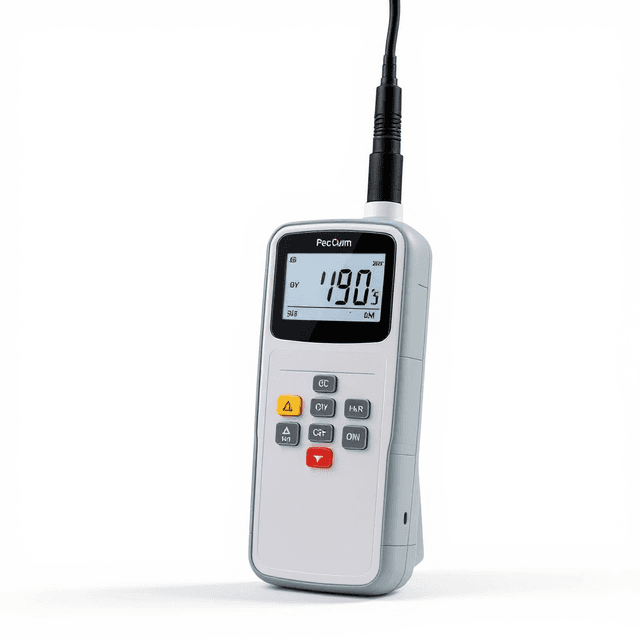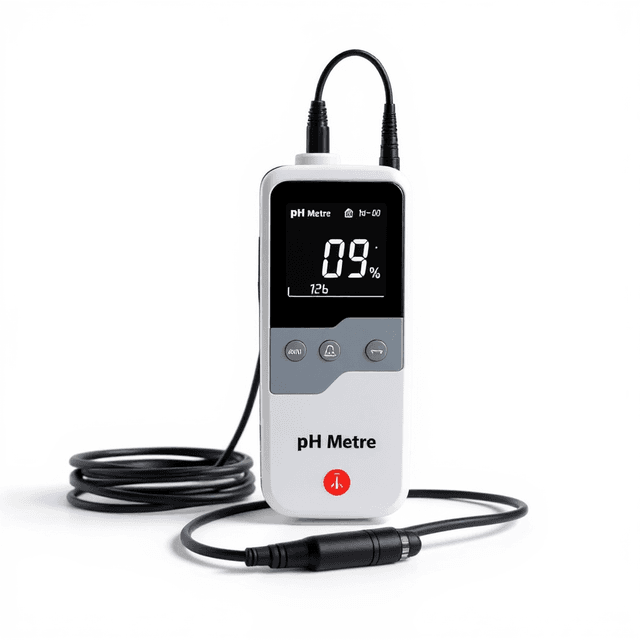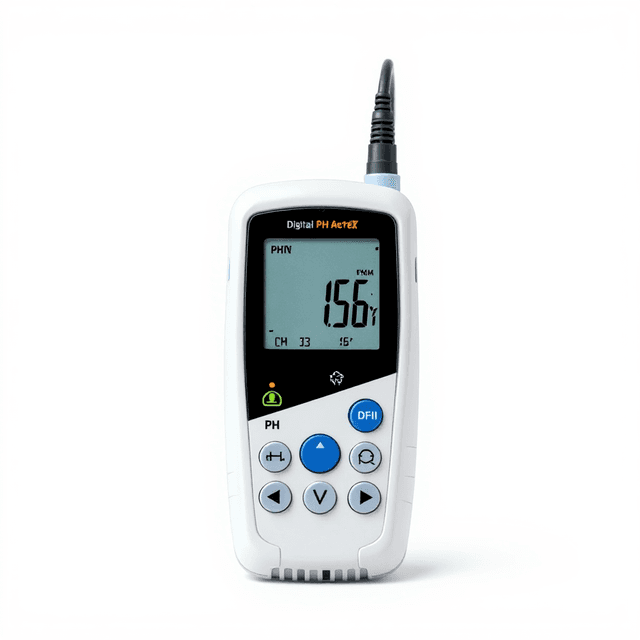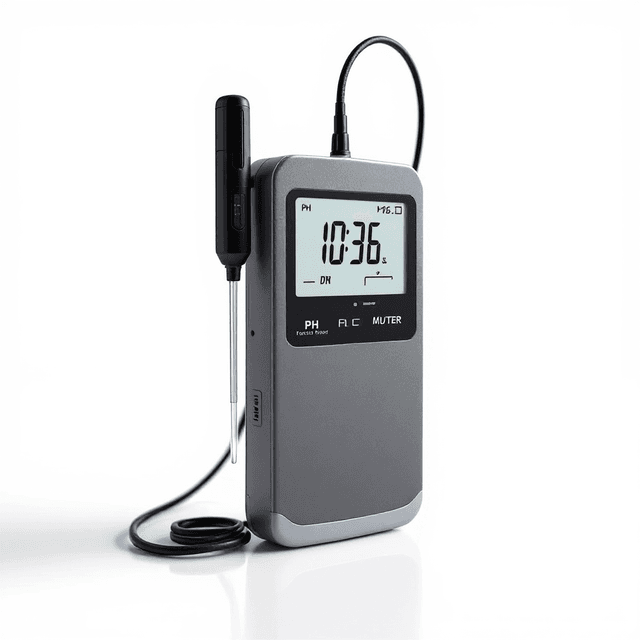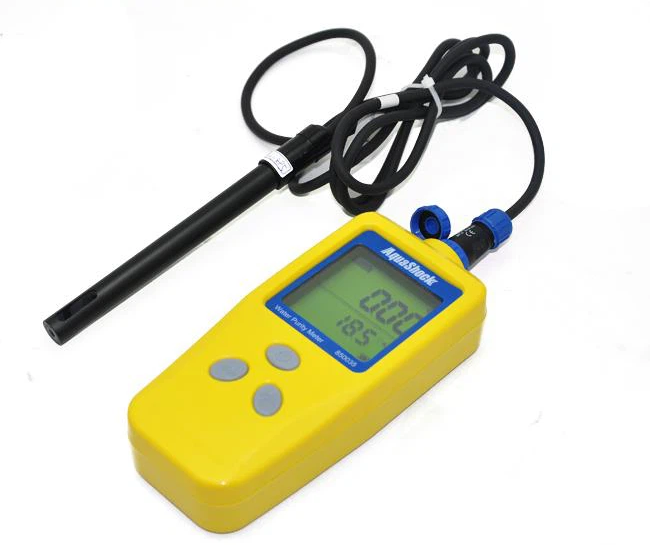
Portable Conductivity Meter
Waterproof pen-style conductivity meter measuring conductivity, TDS, and temperature with automatic temperature compensation and IP67-rated housing.

Louise Corscadden, PhD
Director of Science · ConductScience
Ask Louise about Portable Conductivity Meter fit, setup, configuration, or quote prep.
Already working with us? Sign in to connect this with My Scientist.
Key Specifications
Full details →- Model fit
- 1 selectable configurations
- SKU family
- BIO-0366
- Sizing
- 4.0 x 19.5 x 13.5 cm
- Ordering
- Online checkout and quote request available
- Category
- pH Meters
- Build notes
- Confirm accessories, station layout, and support needs before purchase
This portable conductivity meter is a waterproof, shockproof pen-style instrument designed for field and laboratory measurement of conductivity, total dissolved solids (TDS), and temperature. The IP67-rated housing and durable construction make it suitable for use in wet environments, while the compact pen form factor allows single-handed operation.
The meter offers automatic temperature compensation (ATC), 2-point calibration, a HOLD function for stable readings, auto power-off, and factory default restoration. It is powered by AAA batteries and displays readings on an LCD with multiple unit indicators, covering a conductivity range from 0–19.99µS up to 20.0–100.0mS.
Key Features
- IP67 waterproof rating
- Shockproof pen-style design
- 2-point calibration
- Automatic Temperature Compensation (ATC)
- Rapid response time (20 seconds for conductivity/TDS)
- HOLD function for stable readings
- Auto power-off
- Factory default restoration
Technical Specifications
| Conductivity Range | 0–19.99µS, 20.00–199.9µS, 200.0–1999µS, 2.00–19.99mS, 20.0–100.0mS |
| TDS Range | 0.0–9.99ppm, 10.0–99.9ppm, 100–999ppm, 1.0–9.99ppt, 10.0–100.0ppt |
| Temperature Range | 0–50°C (32–122°F) |
| Resolution | 0.1 (conductivity/TDS); 0.1°C/°F (temperature) |
| Accuracy | ±2% FS (conductivity/TDS); ±0.5°C/±0.9°F (temperature) |
| Response Time | 20 seconds (conductivity/TDS); 30 seconds (temperature) |
| Operating Temperature | 0–50°C (32–122°F) |
| Calibration | Up to 2 points |
| Temperature Compensation | Automatic (ATC), 0–50°C or 32–122°F |
| Probe Material | Plastic electrode |
| Battery | 2×AAA |
| Display | LCD with multiple unit indicators |
Ordering Information
| ConductScience SKU | BIO-0366 |
| Warranty | 12 months from receipt date |
How It Works
Conductivity measurement operates on the principle of electrical conductance through ionic solutions. The meter applies an alternating current between two electrodes immersed in the sample solution. Dissolved ions facilitate current flow, with conductivity directly proportional to the concentration of ionic species present. The instrument measures the resistance between electrodes and calculates conductivity as the reciprocal, expressed in siemens per unit length.
Temperature compensation algorithms correct conductivity values to a standard reference temperature, accounting for the temperature dependence of ionic mobility. The meter simultaneously calculates derived parameters including total dissolved solids (TDS) using established conversion factors, salinity through empirical relationships, and resistivity as the inverse of conductivity. The 7-inch touchscreen provides real-time display of all measured parameters with temperature-corrected values.
Features & Benefits
Weight
- 4.5 kg
Dimensions
- L: 4.0 mm
- W: 19.5 mm
- H: 13.5 mm
| Feature | This Product | Typical Alternative | Advantage |
|---|---|---|---|
| Display Interface | 7-inch touchscreen with intuitive navigation | Smaller LCD displays with button-based navigation | Larger touchscreen improves data visualization and enables easier parameter selection in field conditions |
| Data Storage Capacity | 500 measurement groups with organized storage | Limited memory capacity in basic models | Extended storage enables comprehensive field campaigns without data loss |
| Connectivity Options | USB 2.0 with optional Bluetooth module | Basic models often lack wireless connectivity | Multiple connectivity options support diverse data management workflows |
| Multi-parameter Capability | Measures conductivity, resistivity, TDS, salinity, and temperature | Entry-level meters typically measure fewer parameters | Comprehensive water characterization reduces need for multiple instruments |
| Temperature Accuracy | ±0.5°C accuracy (5-60°C range) | Lower-cost models may have reduced temperature accuracy | Precise temperature measurement ensures reliable conductivity compensation calculations |
| Battery System | Rechargeable 3.7V/1800mA lithium battery | Disposable battery systems in basic models | Rechargeable system reduces operating costs and environmental impact for frequent field use |
This meter offers advanced touchscreen interface, comprehensive multi-parameter measurement, and flexible connectivity in a portable form factor. The combination of 500-group data storage, precision temperature compensation, and rechargeable battery system provides research-grade capabilities for field applications.
Practical Tips
Calibrate using standards that bracket your expected measurement range and perform multi-point calibration for optimal accuracy.
Why: Bracketing calibration ensures accurate interpolation across your working range.
Store the conductivity probe in appropriate conditioning solution between measurements and avoid prolonged exposure to air.
Why: Proper storage prevents electrode fouling and maintains stable measurement response.
Allow temperature equilibration between probe and sample before taking measurements, especially when moving between different temperature environments.
Why: Temperature equilibration ensures accurate temperature compensation and stable conductivity readings.
Rinse the probe with distilled water between samples of different conductivity levels to prevent cross-contamination.
Why: Cross-contamination can introduce measurement errors, particularly when moving from high to low conductivity samples.
If readings appear unstable, check for air bubbles around the probe electrodes and ensure adequate sample volume for complete probe immersion.
Why: Air bubbles and insufficient sample volume can cause erratic conductivity measurements.
Avoid measurements in corrosive solutions beyond the probe's chemical compatibility specifications.
Why: Chemical incompatibility can damage the probe and compromise measurement accuracy and safety.
Use the data storage feature to record measurement conditions and sample information along with conductivity values.
Why: Complete documentation enables traceability and facilitates data interpretation during analysis.
Verify calibration periodically using certified reference standards, especially when measurement accuracy is critical.
Why: Regular calibration verification ensures continued measurement reliability over time.
Setup Guide
What’s in the Box
- Portable conductivity meter main unit
- Conductivity probe with cable (typical)
- USB charging cable
- Protective carrying case (typical)
- User manual and quick start guide
- Calibration certificate (typical)
- Probe storage solution (typical)
Warranty
ConductScience provides a standard one-year manufacturer warranty covering defects in materials and workmanship, with technical support for calibration and operational guidance.
Compliance
What is the measurement range for conductivity and can it handle both low and high conductivity samples?
The conductivity measurement range is specified in the technical documentation. For specific numerical ranges for conductivity, resistivity, TDS, and salinity measurements, consult the product datasheet.
How often does the conductivity probe require calibration and what standards are recommended?
Calibration frequency depends on measurement accuracy requirements and sample conditions. Use certified conductivity standards bracketing your measurement range, typically requiring multi-point calibration for optimal accuracy.
Can the meter store measurement protocols and automatically apply temperature compensation?
Yes, the meter provides automatic temperature compensation with 0.1°C resolution and can store up to 500 measurement groups. Temperature correction algorithms are applied in real-time to conductivity calculations.
What data formats are supported for export via USB or Bluetooth connectivity?
The meter supports USB 2.0 data transfer with optional Bluetooth module. For specific supported file formats and data export protocols, consult the product datasheet.
How does this meter compare to benchtop conductivity analyzers in terms of accuracy?
This portable meter provides field-grade accuracy with temperature compensation. While benchtop analyzers may offer higher precision for critical applications, this meter balances measurement accuracy with portability for field and routine laboratory use.
What is the typical battery life and can measurements be taken while charging?
The 3.7V/1800mA lithium battery provides extended operation time depending on usage patterns. Consult the product datasheet for specific battery life specifications and charging operation capabilities.
Is the probe user-replaceable and what maintenance is required?
Conductivity probes typically require periodic replacement depending on sample conditions and measurement frequency. Regular cleaning with appropriate solutions and proper storage in conditioning solution extends probe life.
Have a question about this product?
Have a question? Just ask.
Send it over and we'll email you a personalized answer — no call, no scheduling.
Prefer to talk it through?