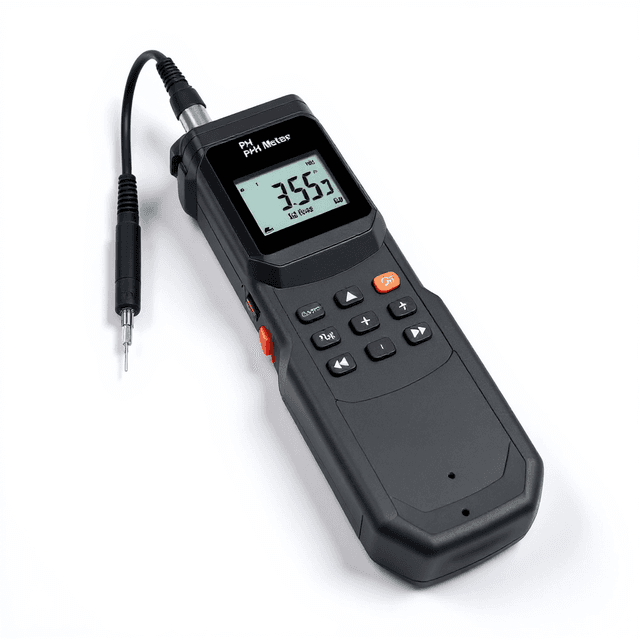
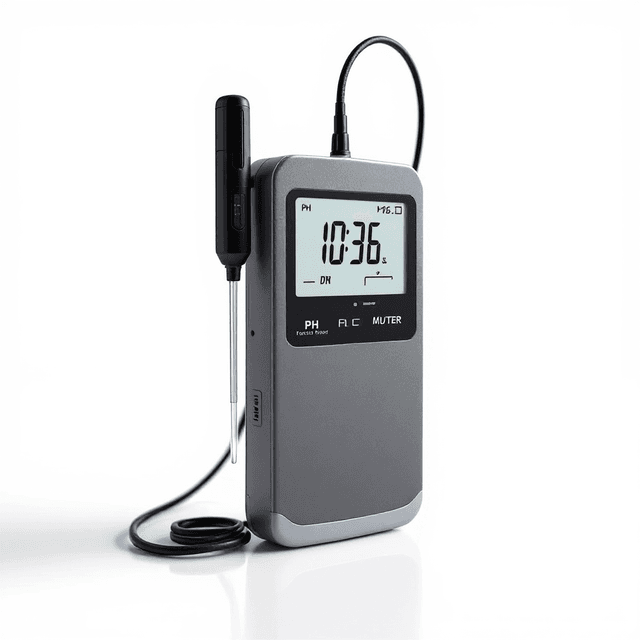
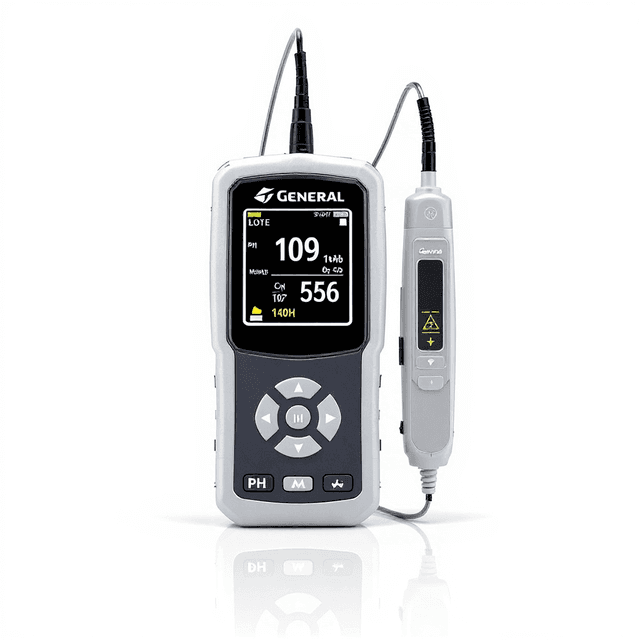
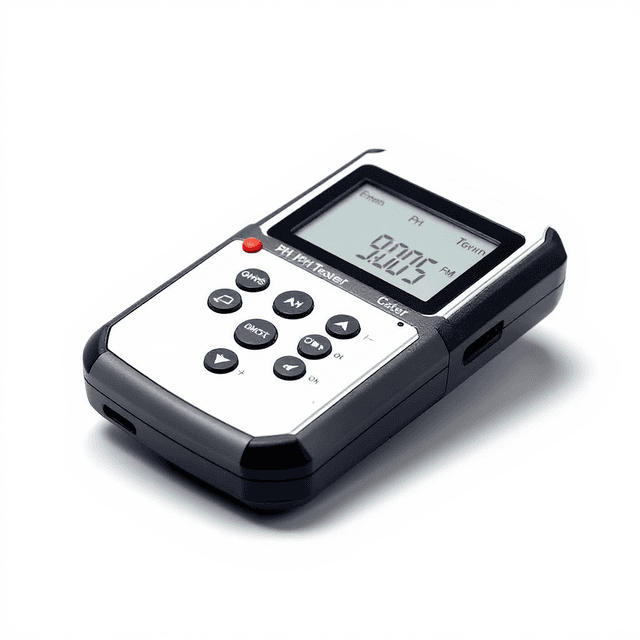
Portable pH/Ion Meter
Multi-parameter portable meter for high-accuracy pH, ORP, ion concentration, and temperature measurements with research-grade precision (±0.002 pH) and flexible calibration options.

Louise Corscadden, PhD
Director of Science · ConductScience
Ask Louise about Portable pH/Ion Meter fit, setup, configuration, or quote prep.
Already working with us? Sign in to connect this with My Scientist.
Key Specifications
Full details →- Model fit
- Configured during quote
- SKU family
- BIO-0374
- Shipping box
- 3.0 x 17.0 x 8.5 cm
- Ordering
- Online checkout and quote request available
- Category
- pH Meters
- Build notes
- Confirm accessories, station layout, and support needs before purchase
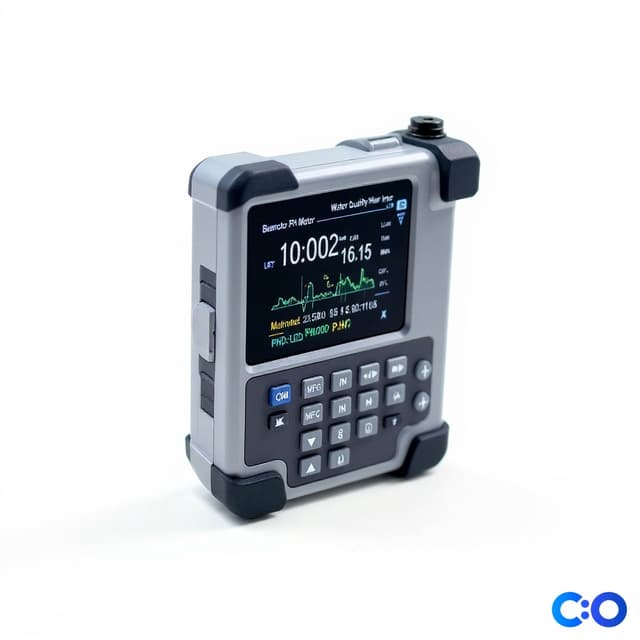
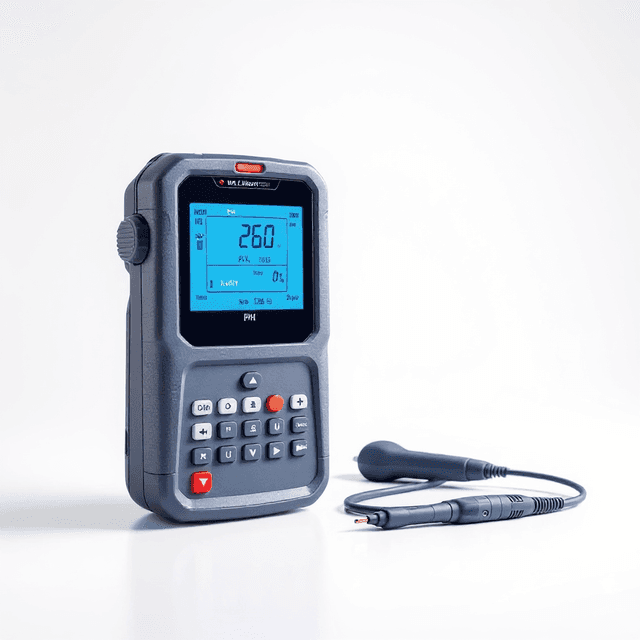
The Portable pH/Ion Meter is a multi-parameter analytical instrument designed for accurate measurement of pH, oxidation-reduction potential (ORP), ion concentration, and temperature in laboratory and field applications. This handheld device provides research-grade accuracy with pH measurements to ±0.002 pH units across a range of -2.000 to 20.000 pH, supporting both routine monitoring and critical analytical protocols.
The instrument features comprehensive ion measurement capabilities with concentration accuracy of ±0.5% full scale for monovalent ions and ±1% full scale for divalent ions. Multiple calibration point options (2-5 points for pH) and pre-programmed calibration solutions spanning six orders of magnitude (0.001 to 10,000 ppm/mg/L/mol/L/mmol/L) enable precise measurements across diverse sample matrices. Temperature compensation and offset calibration ensure measurement reliability under varying environmental conditions.
How It Works
The pH measurement system employs a glass electrode with internal reference to detect hydrogen ion activity through potential difference measurement. The glass membrane selectively responds to pH changes, generating a voltage proportional to the logarithm of hydrogen ion concentration according to the Nernst equation. Temperature compensation algorithms correct for the theoretical -2.3 RT/F slope variation with temperature.
Ion concentration measurements utilize ion-selective electrodes (ISEs) that respond selectively to specific ionic species. The electrode potential follows the Nernst relationship, with the instrument converting measured millivolt values to concentration units through calibrated slope and intercept parameters. The system supports both direct potentiometry and standard addition methods for accurate ion quantification.
ORP measurements employ a platinum or gold electrode against a reference electrode to determine the oxidation-reduction potential of the solution. The millivolt reading indicates the electron activity and oxidizing or reducing nature of the sample, with positive values indicating oxidizing conditions and negative values indicating reducing conditions.
Features & Benefits
Automation Level
- manual
pH
- pH Range
-2.000~20.000pH
- /
pH Accuracy
- ±0.002pH
Calibration Points
- 2~5 points
ORP
- mV Range
Relative mV Range
- -1999.9~1999.9mV
mV Accuracy
- ±0.2mV
Ion
- Ion Concentration Range
Ion Concentration Accuracy
- ±0.5% F.S(Monovalent), ±1% F.S(Divalent)
Calibration Solutions
- 0.001, 0.01, 0.1, 1, 10, 100, 1000, 10000(ppm, mg/L, mol/L, mmol/L)
Temperature Accuracy
- ±0.5°C/±0.9°F
Offset Calibration
- 1 point, reading ±10°C
Brand
- ConductScience
Research Domain
- Analytical Chemistry
- Environmental Monitoring
- Food Science
- Materials Science
- Microbiology
- Pharmaceutical QC
Accuracy
- 0.1°C/0.1°F
Temperature Range
- Temperature Range
Shipping weight
- 2.0 lb
Shipping box
- L: 3.0 cm
- W: 17.0 cm
- H: 8.5 cm
| Feature | This Product | Typical Alternative | Advantage |
|---|---|---|---|
| pH Accuracy | ±0.002 pH units | Entry-level portable meters typically offer ±0.01 to ±0.1 pH accuracy | Enables high-precision measurements for analytical applications requiring research-grade accuracy and regulatory documentation. |
| pH Range | -2.000 to 20.000 pH | Standard portable meters often limited to 0-14 pH range | Accommodates highly acidic or basic solutions beyond typical measurement ranges for specialized analytical applications. |
| Ion Measurement Capability | ±0.5% F.S (monovalent), ±1% F.S (divalent) | Many portable meters lack ion measurement functionality | Provides multi-parameter analysis capability reducing the need for separate ion-selective electrode systems. |
| Calibration Points | 2-5 point calibration | Basic models often limited to 1-2 point calibration | Enables optimization of accuracy across different pH ranges through customizable calibration protocols. |
| ORP Range | ±1999.9 mV with ±0.2 mV accuracy | Varies by model, some lack ORP measurement entirely | Covers full oxidation-reduction spectrum for environmental monitoring and process control applications. |
| Temperature Accuracy | ±0.5°C/±0.9°F with offset calibration | Basic temperature compensation without offset adjustment | Provides precise temperature measurement and compensation customizable for specific sample conditions. |
This multi-parameter instrument combines research-grade pH accuracy with comprehensive ion and ORP measurement capabilities in a portable format. The extended measurement ranges and flexible calibration options provide analytical laboratory functionality for field and point-of-use applications.
Practical Tips
Use fresh buffer solutions and perform multi-point calibration spanning your expected sample pH range rather than defaulting to standard 2-point calibration.
Why: This optimizes accuracy across your specific measurement range and accounts for electrode non-linearity effects.
Store pH electrodes in appropriate filling solution, never in distilled water, and replace electrode filling solution monthly for optimal response time.
Why: Proper hydration of the glass membrane maintains electrode sensitivity and prevents measurement drift.
Allow samples to equilibrate to measurement temperature and stir gently during measurement to ensure representative readings.
Why: Temperature equilibration ensures accurate compensation while gentle stirring eliminates stratification effects in the sample.
If readings drift or response is slow, clean electrodes with appropriate cleaning solutions and verify reference electrode junction is not blocked.
Why: Contaminated electrodes or blocked reference junctions are the most common causes of measurement instability and poor response time.
Record calibration slope values and verify they fall within acceptable ranges (typically 90-105% of theoretical for pH electrodes).
Why: Slope monitoring indicates electrode condition and helps identify when electrode replacement is necessary for maintaining accuracy.
Rinse electrodes thoroughly between samples, especially when measuring caustic or acidic solutions, and use appropriate personal protective equipment.
Why: Cross-contamination affects measurement accuracy while proper safety procedures prevent exposure to hazardous sample materials.
For ion measurements, prepare calibration standards fresh daily and use appropriate ionic strength adjusters when measuring low-concentration samples.
Why: Fresh standards ensure calibration accuracy while ionic strength adjustment minimizes activity coefficient variations in dilute solutions.
Document measurement conditions including temperature, sample preparation method, and calibration standards used for quality assurance records.
Why: Comprehensive documentation enables measurement traceability and supports analytical method validation requirements.
Setup Guide
What’s in the Box
- Portable pH/Ion meter main unit (typical)
- pH electrode with BNC connector (typical)
- Temperature probe (typical)
- Reference electrode (typical)
- Calibration buffer solutions set (typical)
- Electrode storage solutions (typical)
- Power adapter/battery charger (typical)
- USB cable for data transfer (typical)
- Carrying case (typical)
- User manual and calibration certificate (typical)
Warranty
ConductScience provides a standard one-year manufacturer warranty covering defects in materials and workmanship, with technical support for calibration procedures and measurement troubleshooting. Extended warranty options and calibration services are available for laboratory quality assurance programs.
Compliance
What is the recommended calibration frequency for maintaining ±0.002 pH accuracy?
Daily calibration with fresh buffer solutions is recommended for critical applications. The multi-point calibration capability (2-5 points) allows optimization based on sample pH range and accuracy requirements.
Can the instrument measure ion concentrations in complex matrices with interfering ions?
The instrument supports ion-selective electrode measurements with calibration solutions from 0.001 to 10,000 ppm. For complex matrices, standard addition methods and appropriate ISE selection are recommended to minimize interference effects.
How does temperature compensation affect measurement accuracy across different sample types?
Automatic temperature compensation corrects for theoretical Nernst slope changes with ±0.5°C accuracy. The offset calibration feature (±10°C range) allows fine-tuning for specific sample matrices or measurement conditions.
What electrode maintenance is required for sustained measurement performance?
pH electrodes require conditioning in pH 4 buffer before first use and proper storage in electrode filling solution. Regular cleaning and periodic slope verification ensure measurement reliability and electrode longevity.
Is the instrument suitable for continuous monitoring applications?
The portable design is optimized for discrete measurements and field applications. For continuous monitoring, consider measurement frequency requirements and electrode maintenance schedules based on sample characteristics.
How does this compare to benchtop pH meters in terms of accuracy and functionality?
The ±0.002 pH accuracy matches many benchtop instruments while providing field portability. The 2-5 point calibration and extended range (-2 to 20 pH) offer research-grade functionality in a portable format.
What data logging and connectivity options are available?
Consult product datasheet for specific data storage capacity and connectivity features. The portable design typically includes basic data logging functionality for measurement documentation and quality records.
Have a question about this product?
Have a question? Just ask.
Send it over and we'll email you a personalized answer — no call, no scheduling.
Prefer to talk it through?
Accessories
Enhance your setup with compatible accessories
Frequently Bought Together