Precious Metal Tester
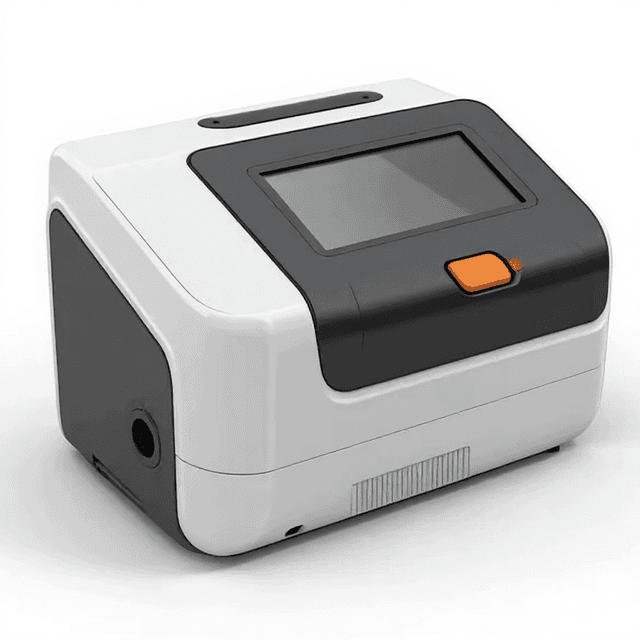
Multi-mode benchtop precious metal tester using Archimedes principle to determine gold karat (9K-24K), platinum purity (Pt600-Pt1000), and density of precious metal samples in 10-15 seconds.
Available in 300g, 600g, 900g, 1200g, and 2000g capacities.

Louise Corscadden, PhD
Director of Science · ConductScience
Ask Louise about Precious Metal Tester fit, setup, configuration, or quote prep.
Already working with us? Sign in to connect this with My Scientist.
Key Specifications
Full details →- Model fit
- Configured during quote
- SKU family
- BIO-0476
- Shipping box
- 19.7 x 19.5 x 23.0 cm
- Ordering
- Online checkout and quote request available
- Category
- Analytical Instruments
- Build notes
- Confirm accessories, station layout, and support needs before purchase
The Precious Metal Tester (BK-DMG Series) is a professional-grade benchtop instrument for rapid, non-destructive determination of precious metal purity, karat value, and density using the Archimedes principle. Designed for pawning houses, banks, jewelry shops, precious-metals recovery operations, jewelry factories, and gemstone testing centers, the BK-DMG series delivers accurate gold and platinum analysis without damaging the sample.
Gold Mode
The gold mode displays the K value (9K-24K) and purity percentage of gold mixed with silver and copper, gold and copper, or gold and silver. The copper-to-silver proportion is user-configurable (default 7:3). Top and bottom K value limits can be set with automatic alarm for out-of-range samples.
Platinum Mode
The platinum mode displays PT percentage, density value, and volume across the full Pt600-Pt1000 range.
Key Features
- Multi-mode operation: gold, platinum, and other precious metals modes
- Non-destructive testing — no damage to samples
- Can also function as a precision balance
- Automatic zero tracking, buzzer warning, and overload warning
- Automatic alarm for K value, purity, and density out-of-range conditions
- Solution compensation for non-water measurement media
- RS-232C interface included
- Auto correction and auto detection calibration
Note: Unable to measure samples that are hollow or contain inserted gems.
Available Models
- BK-DMG300K — 0.005~300g capacity
- BK-DMG600K — 0.005~600g capacity
- BK-DMG900K — 0.01~900g capacity
- BK-DMG1200K — 0.01~1200g capacity
- BK-DMG2000K — 0.01~2000g capacity
How It Works
The instrument operates on Archimedes principle, which states that the buoyant force on a submerged object equals the weight of displaced fluid. By measuring a sample's weight in air and in water, the system calculates density using the formula: density = (weight in air) / (weight in air - weight in water). Since precious metals have characteristic densities, the measured density directly correlates to purity and composition.
For gold alloys, the instrument compares measured density against known values for different karat compositions. Pure gold (24K) has a density of 19.32 g/cm³, while lower karat values have proportionally lower densities due to alloying metals. The system's algorithms account for common alloying combinations including gold-silver-copper mixtures and gold-copper alloys.
The automatic correction and detection calibration modes ensure measurement accuracy by compensating for temperature variations and water density changes. The 5-20 second measurement time reflects the settling period required for accurate buoyancy measurements and density calculations.
Features & Benefits
Measuring Time
- 10~15s
Measuring Principle
- Archimedes principle
Testing Board
- Unibody high-capacity plastic testing board
Calibration Mode
- Auto correction, auto detection
Automation Level
- Semi-automated
Capacity
- 0.005~300g (BK-DMG300K)
- 0.005~600g (BK-DMG600K)
- 0.01~900g (BK-DMG900K)
- 0.01~1200g (BK-DMG1200K)
- 0.01~2000g (BK-DMG2000K)
Density Resolution
- 0.001g/cm³
Gold Mode - K Value Range
- 9K~24K
Gold Mode - Display K Value
- Mixture of gold/silver/copper; mixture of gold/copper; mixture of gold/silver
Gold Mode - Display Purity
- Purity content of gold/silver/copper mixtures, gold/copper mixtures, and gold/silver mixtures
Gold Mode - Cu/Ag Proportion Setting
- Cycle setting, user-configurable (default 7:3)
Platinum Mode - Display
- PT percentage, density value, volume
Platinum Mode - PT Value Range
- Pt600~Pt1000
Measuring Tank
- Unibody injection forming transparent professional measurement tank; Size: 169×98×83mm (L×W×H)
Standard Accessories
- Tank, testing board, tweezer, thermometer, weight, windshield, power transformer, gold particle measuring assembly
Optional Accessories
- DE-40 printer
Power/Voltage
- AC 100~240V, 50/60Hz
External Size (W×D×H)
- 195×230×197mm
Package Size (W×D×H)
- 440×180×345mm
Net Weight
- 1.78kg (300K) / 1.79kg (600K) / 1.8kg (900K, 1200K) / 1.82kg (2000K)
Gross Weight
- 4.5kg (300K, 600K) / 4.9kg (900K) / 4.8kg (1200K) / 5.3kg (2000K)
Brand
- ConductScience
Research Domain
- Analytical Chemistry
- Industrial Hygiene
- Materials Science
- Pharmaceutical QC
Shipping weight
- 1.78 lb
Shipping box
- L: 19.7 cm
- W: 19.5 cm
- H: 23.0 cm
| Feature | This Product | Typical Alternative | Advantage |
|---|---|---|---|
| Measurement Range | 0.005-300g capacity with extended models up to 2000g | Entry-level models often limited to smaller weight ranges | Accommodates diverse sample sizes from small jewelry pieces to larger precious metal specimens in research applications. |
| Karat Analysis Range | 9K-24K gold purity determination with alloy composition display | Basic models may offer limited karat range coverage | Provides comprehensive coverage of commercial gold purities for complete material characterization. |
| Measurement Time | 5-20 second analysis with automatic correction | Manual systems may require longer stabilization periods | Enables efficient sample throughput for quality control workflows without sacrificing accuracy. |
| Calibration System | Auto correction and auto detection modes | Manual calibration procedures common in basic instruments | Reduces operator error and maintains consistent accuracy across varying environmental conditions. |
| Multi-Metal Analysis | Gold, platinum (S600-S1000), and silver display capabilities | Single-metal focused instruments require separate analyzers | Consolidates precious metal analysis requirements in one instrument for laboratory efficiency. |
The instrument combines automated calibration with broad sample capacity and multi-metal analysis capabilities. The Archimedes principle measurement approach provides non-destructive analysis with rapid results across comprehensive precious metal purity ranges.
Practical Tips
Verify auto correction function daily before beginning sample analysis, especially after environmental changes.
Why: Environmental factors like temperature and humidity can affect density measurements and system accuracy.
Replace distilled water in the testing board weekly or when cloudiness appears.
Why: Water purity directly affects the reference density used in Archimedes principle calculations.
Clean samples thoroughly with alcohol before measurement to remove oils and surface contaminants.
Why: Surface residues can trap air bubbles or add mass that skews density calculations.
If readings appear inconsistent, check for air bubbles on the sample surface during submersion.
Why: Air bubbles reduce the effective sample volume and cause artificially low density readings.
Allow samples to reach room temperature before measurement to minimize thermal effects.
Why: Temperature differences between sample and water can cause convection currents that affect weighing stability.
Ensure the testing board is securely positioned to prevent water spillage during sample handling.
Why: Water spillage can damage electronic components and create electrical safety hazards.
Record ambient temperature and humidity when documenting results for quality control protocols.
Why: Environmental documentation supports measurement traceability and validation of auto correction performance.
Setup Guide
What’s in the Box
- Precious Metal Tester main unit
- Unibody plastic testing board
- Power adapter
- User manual and calibration instructions
- Calibration certificate (typical)
Warranty
ConductScience provides a standard one-year manufacturer warranty covering defects in materials and workmanship, with technical support for calibration and operational guidance.
Compliance
What is the measurement accuracy for different karat values?
Measurement accuracy depends on the auto correction system compensating for environmental factors. Consult product datasheet for specific accuracy specifications at different karat ranges.
Can the instrument distinguish between different gold alloy compositions?
Yes, the instrument displays K values for gold-silver-copper mixtures, gold-copper alloys, and can identify different precious metal combinations based on density measurements.
What water purity requirements are needed for accurate measurements?
Distilled water is recommended to ensure consistent density reference. Water temperature should be stable during measurement cycles for optimal accuracy.
How does sample size affect measurement precision?
The instrument accommodates samples from 0.005g to 300g, with larger samples generally providing better precision due to reduced weighing errors in the density calculation.
What maintenance is required for the testing board?
The unibody plastic testing board requires regular cleaning to remove residues and periodic water replacement to maintain measurement accuracy.
Can the instrument analyze platinum and silver simultaneously?
The instrument provides separate display values for platinum (S600-S1000 range) and silver, but analysis is performed on individual samples rather than mixtures.
How often does the auto correction system need recalibration?
The auto correction and detection system operates continuously during measurements. Formal recalibration intervals depend on usage frequency and environmental stability.
Can the precious metal tester measure hollow samples or jewelry with inserted gems?
No. The tester can only analyze melted-down solid metal. Hollow samples and pieces with inserted gems cannot be accurately measured.
What is the measuring principle used by the precious metal tester?
The tester uses the Archimedes principle (liquid displacement) to determine the density of the metal sample, from which purity is calculated.
Have a question about this product?
Have a question? Just ask.
Send it over and we'll email you a personalized answer — no call, no scheduling.
Prefer to talk it through?