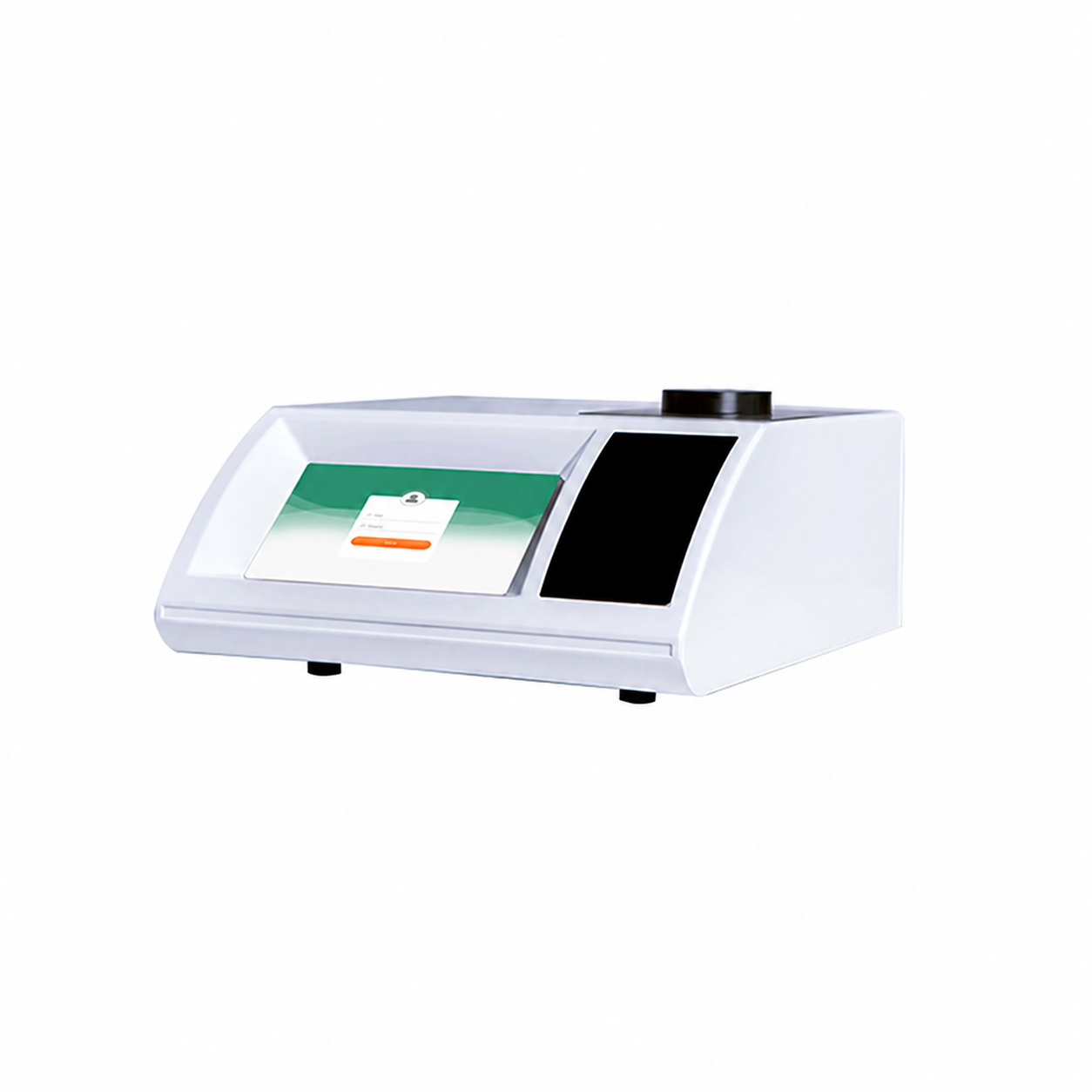
Refractometer
Laboratory refractometer with temperature control (5-75°C), 7-inch touchscreen interface, and comprehensive data storage and connectivity options for refractive index measurements.

Louise Corscadden, PhD
Director of Science · ConductScience
Ask Louise about Refractometer fit, setup, configuration, or quote prep.
Already working with us? Sign in to connect this with My Scientist.
Key Specifications
Full details →- Model fit
- Configured during quote
- SKU family
- BIO-0475
- Shipping box
- 42.0 x 43.6 x 38.0 cm
- Ordering
- Online checkout and quote request available
- Category
- Refractometers
- Build notes
- Confirm accessories, station layout, and support needs before purchase
Refractometer BK-R30 Description
Description
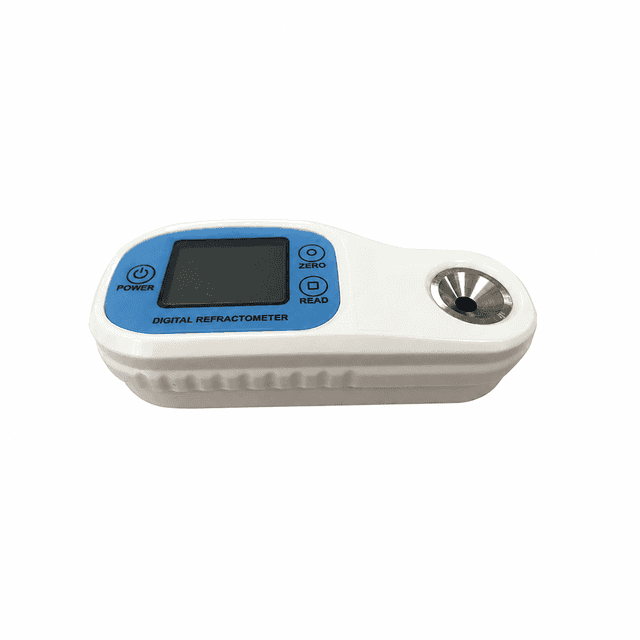
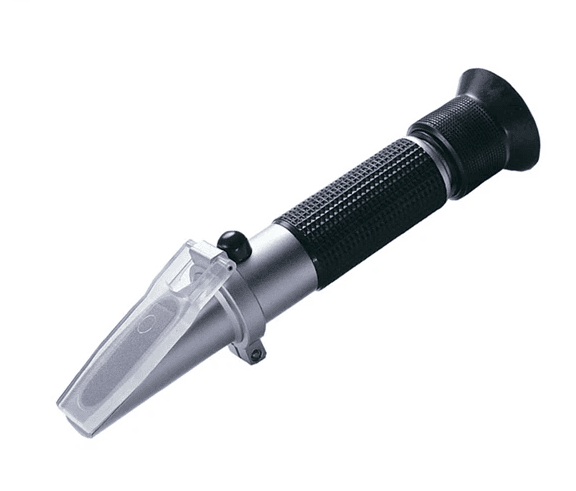
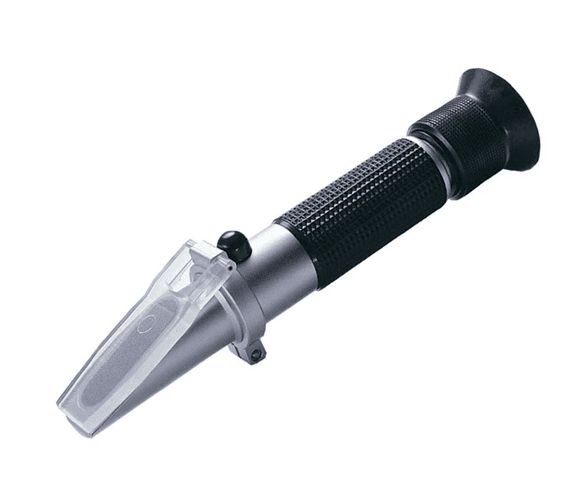
The BK-R30 Refractometer is a precision optical instrument designed for accurate measurement of refractive index across a wide range of liquids and solutions. This portable handheld refractometer features high optical quality and wide measurement range, making it ideal for quality control, research applications, and field testing in pharmaceutical, chemical, food, and beverage industries.
Specifications
| Specification | Value |
|---|---|
| Model | BK-R30 |
| Measurement Range (Refractive Index) | 1.3300-1.7000 nD |
| Accuracy | ±0.0002 |
| Resolution | 0.0001 |
| Temperature Compensation Range | 0-100°C |
| Operating Temperature | 5-40°C |
| Sample Volume | 1.0-2.0 mL |
| Measurement Time | Less than 30 seconds |
| Optical System | Abbe-type optical design |
| Display | Digital LCD display with backlight |
| Power Supply | 4 AA batteries or USB charging |
| Material | ABS plastic housing with optical glass |
| Dimensions | Approximately 180 × 85 × 95 mm |
| Weight | Approximately 300-350 g |
Key Features
- Wide measurement range for diverse applications
- High accuracy and repeatability for reliable results
- Temperature compensation for precise measurements across temperature variations
- Quick measurement time for efficient workflow
- Portable design suitable for field and laboratory use
- User-friendly digital display with easy-to-read results
- Durable construction for long-term reliability
- Multiple power options for flexibility
Comparison Guide
Handheld vs Laboratory Refractometers
- Handheld (BK-R30): Portable, suitable for field measurements, moderate accuracy, quick sampling
- Laboratory: Higher precision, requires bench installation, specialized applications
Digital vs Analog Refractometers
- Digital (BK-R30): Automatic temperature compensation, easier reading, faster results, lower maintenance
- Analog: Manual operation, requires eyepiece reading, maintenance intensive
Model Comparison
BK-R30 (Featured Model)
- Digital handheld design for portability
- Measurement range: 1.3300-1.7000 nD
- Accuracy: ±0.0002
- Integrated temperature compensation
- LCD display with backlight
- Ideal for field and laboratory applications
- Price: $8,990
Applications
- Pharmaceutical: Quality control of active pharmaceutical ingredients and formulations
- Chemical Industry: Concentration measurement and purity verification of chemical solutions
- Food & Beverage: Sugar content analysis (Brix measurement), juice and syrup quality testing
- Cosmetics: Product formulation verification and quality assurance
- Research: Optical property measurement and material characterization
- Field Testing: On-site analysis without laboratory infrastructure
- Petroleum Industry: Oil and lubricant quality assessment
- Environmental Monitoring: Water quality analysis
Setup & Support
Initial Setup
- Install batteries (4 AA) or charge via USB
- Calibrate with distilled water before first use
- Clean glass surfaces with soft cloth
- Verify display functionality
Operating Procedure
- Apply 1.0-2.0 mL sample to measurement surface
- Close the cover slide gently
- Wait 5-10 seconds for stabilization
- Press measurement button
- Read result on digital display
- Clean surfaces between measurements
Environmental Conditions
- Operating temperature: 5-40°C
- Storage temperature: -10 to 50°C
- Humidity: Non-condensing environment
- Protect from direct sunlight
- Avoid extreme temperature fluctuations
Maintenance
- Clean optical surfaces after each use with soft lens cloth
- Calibrate weekly with distilled water
- Store in protective case when not in use
- Replace batteries as needed
- Perform annual service calibration
Documentation
Included with Refractometer
- User manual with operating instructions
- Quick reference guide
- Calibration certificate
- Protective carrying case
- Cleaning cloth and lens paper
- Sample cuvettes
Optional Resources
- Advanced calibration and maintenance manual
- Video training for operation and maintenance
- Data logging software (if available)
- Extended calibration procedures for specific applications
Q&A
Q: What is the difference between refractive index and Brix measurement?
A: Refractive index is an optical property that measures how light bends through a substance, while Brix is a specific measurement of sugar content using the refractive index principle. Many refractometers can display both values.
Q: How often should I calibrate my refractometer?
A: Calibrate daily with distilled water before use. Perform a full calibration weekly. For high-precision work, professional calibration annually is recommended.
Q: What samples can be measured with the BK-R30?
A: Any transparent liquid or solution can be measured, including oils, juices, syrups, acids, bases, alcohols, and chemical solutions within the 1.3300-1.7000 nD range.
Q: Does the BK-R30 have automatic temperature compensation?
A: Yes, the BK-R30 features built-in temperature compensation from 0-100°C, allowing accurate measurements across temperature variations without manual adjustment.
Q: How long does a measurement take?
A: Measurements are typically complete in less than 30 seconds from sample application to result display.
Q: What is the minimum sample volume required?
A: The refractometer requires 1.0-2.0 mL of sample for accurate measurement.
Q: Can the BK-R30 be used in field conditions?
A: Yes, the portable handheld design makes it ideal for field testing. However, keep the operating temperature between 5-40°C for accurate results.
Q: What is the warranty period?
A: Standard warranty is typically 2 years from the date of purchase, including repair and calibration services. Extended warranty options may be available.
How It Works
Refractometry measures the refractive index by determining the critical angle at which total internal reflection occurs when light passes from a sample into a reference medium. The instrument directs light through the sample-reference interface and measures the angle at which the light ray is refracted, which directly correlates to the sample's refractive index.
Temperature control is essential for accurate measurements as refractive index varies with temperature. The integrated temperature control system maintains the measurement cell at a constant temperature from 5-75°C, while accommodating samples across the full 0-100°C range. The optical measurement system converts the refracted light angle into digital signals, which are processed and displayed on the touchscreen interface with real-time temperature compensation.
Data acquisition occurs continuously during measurement cycles, with results stored in the 32GB internal memory and available for export through multiple interface options including USB, network connectivity, and removable storage devices.
Features & Benefits
Automation Level
- semi-automated
Temp. Control Range
- 5~75℃
Interface
- USB, RS232, RJ 45, SD card, U disk
Data Storage
- 32G
Brand
- ConductScience
Research Domain
- Analytical Chemistry
- Environmental Monitoring
- Food Science
- Industrial Hygiene
- Materials Science
- Pharmaceutical QC
Temperature Range
- 0~100℃
Display Type
- 7 inch color touch screen
Power/Voltage
- 220V, 50Hz
Weight
- 6kg
Shipping weight
- 6.0 lb
Shipping box
- L: 42.0 cm
- W: 43.6 cm
- H: 38.0 cm
| Feature | This Product | Typical Alternative | Advantage |
|---|---|---|---|
| Temperature Control Range | 5-75°C controlled range with 0-100°C sample compatibility | Many models offer limited or no active temperature control | Enables accurate measurements across wider range of sample conditions without external temperature regulation. |
| Data Storage Capacity | 32GB internal storage | Entry-level models often provide minimal internal memory | Stores extensive measurement datasets locally without requiring continuous computer connection. |
| Interface Options | USB, RS232, RJ45, SD card, U disk connectivity | Basic models typically offer single interface type | Provides flexible integration options for diverse laboratory IT infrastructure and data management requirements. |
| Display System | 7-inch color touchscreen | Many instruments use small LCD displays or require external computer | Offers intuitive operation and real-time data visualization without additional hardware requirements. |
| Sample Temperature Range | 0-100°C sample compatibility | Standard models often limited to room temperature samples | Accommodates hot samples and temperature-sensitive materials without pre-conditioning steps. |
This refractometer combines precise temperature control with comprehensive data management capabilities and flexible connectivity options. The integrated touchscreen interface and large storage capacity support high-throughput laboratory workflows requiring consistent measurement conditions and automated data logging.
Practical Tips
Perform calibration checks with reference standards at the same temperature as your samples when possible.
Why: Temperature-matched calibration minimizes measurement errors from thermal expansion effects.
Clean the measurement cell with appropriate solvents immediately after each sample type change.
Why: Prevents cross-contamination and maintains optical surface quality for consistent measurements.
Allow 15-20 minutes equilibration time when changing measurement temperatures.
Why: Ensures thermal stability throughout the measurement system for accurate temperature control.
Take multiple readings and monitor measurement stability before accepting results.
Why: Identifies sample homogeneity issues and confirms thermal equilibration is complete.
Check for air bubbles in the sample chamber if readings appear inconsistent.
Why: Air bubbles create optical interfaces that interfere with accurate refractive index measurements.
Verify sample compatibility with temperature range before heating corrosive or volatile materials.
Why: Prevents instrument damage and ensures safe operation with potentially hazardous samples.
Use the appropriate data export format for your downstream analysis software.
Why: Reduces data processing time and minimizes transcription errors in analytical workflows.
Setup Guide
What’s in the Box
- Refractometer main unit
- Power cord (220V)
- Calibration reference standards (typical)
- Sample transfer pipette (typical)
- User manual and software
- USB cable (typical)
- Cleaning accessories (typical)
Warranty
ConductScience provides a standard one-year manufacturer warranty covering defects in materials and workmanship. Technical support includes calibration guidance and troubleshooting assistance throughout the warranty period.
Compliance
What calibration standards are recommended for maintaining measurement accuracy?
Use certified refractive index standards covering your measurement range, typically distilled water (nD = 1.3330) and sucrose solutions. Perform daily calibration checks and full recalibration monthly or per laboratory SOP requirements.
How does temperature control affect measurement precision?
The 5-75°C control range maintains sample temperature within ±0.1°C (consult product datasheet for exact specifications). Temperature stability is critical as refractive index changes approximately 0.0001-0.0005 units per degree Celsius for most liquids.
What sample volume is required for measurements?
Consult product datasheet for exact sample volume requirements. Typical refractometer measurements require 0.1-1.0 mL depending on measurement cell design, with complete coverage of the optical interface being essential.
Can the instrument interface with laboratory information management systems?
Yes, multiple connectivity options (USB, RS232, RJ45) support integration with LIMS. Data export formats and communication protocols should be verified with your specific LIMS requirements.
What maintenance procedures are required for optimal performance?
Daily cleaning of measurement cell with appropriate solvents, weekly verification with reference standards, and periodic professional calibration. Temperature control system requires annual service verification.
How does this compare to traditional Abbe refractometers?
Digital measurement eliminates subjective visual readings, integrated temperature control provides better thermal stability, and automated data logging reduces transcription errors compared to manual Abbe-type instruments.
What measurement range and resolution can be expected?
Consult product datasheet for specific refractive index range and resolution specifications. Performance varies with sample type, temperature, and measurement conditions.
Have a question about this product?
Have a question? Just ask.
Send it over and we'll email you a personalized answer — no call, no scheduling.
Prefer to talk it through?