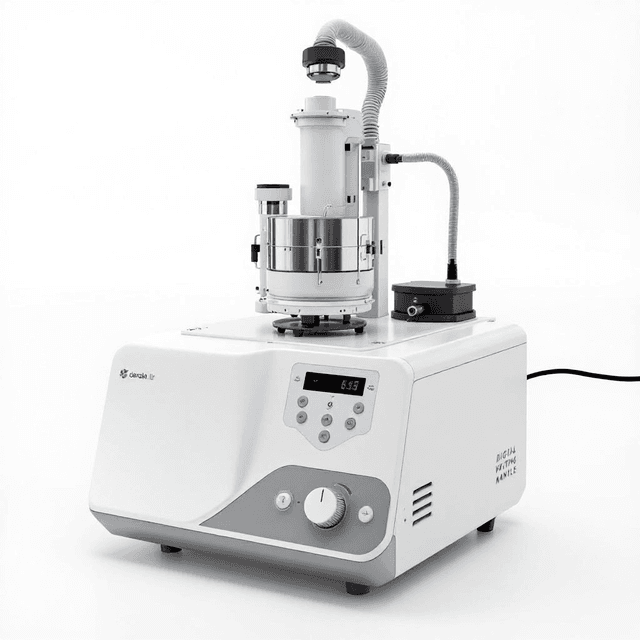
Refrigerated Water Bath Constant Temperature Shaker
Refrigerated orbital shaker with temperature control from -5°C to 100°C and variable speed rotatory mixing (20-300 rpm) for temperature-sensitive biological and chemical applications.

Louise Corscadden, PhD
Director of Science · ConductScience
Ask Louise about Refrigerated Water Bath Constant Temperature Shaker fit, setup, configuration, or quote prep.
Already working with us? Sign in to connect this with My Scientist.
Key Specifications
Full details →- Model fit
- Configured during quote
- SKU family
- BIO-0768
- Shipping box
- 81.0 x 71.5 x 55.0 cm
- Ordering
- Online checkout and quote request available
- Category
- Benchtop Instruments
- Build notes
- Confirm accessories, station layout, and support needs before purchase
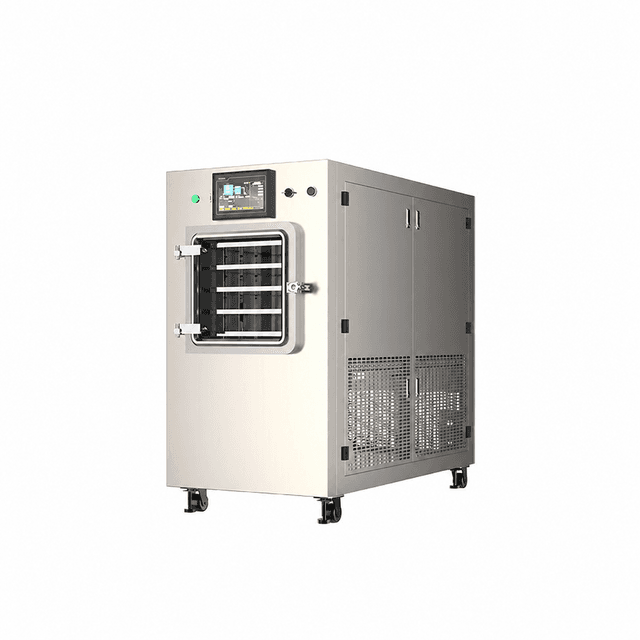
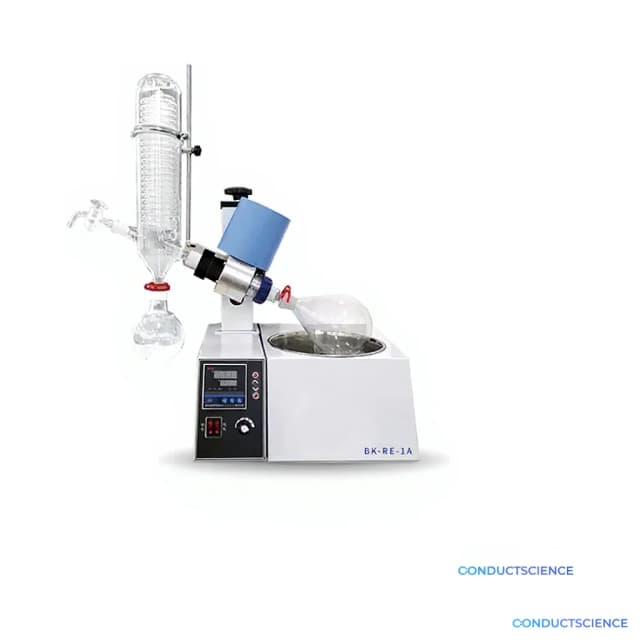
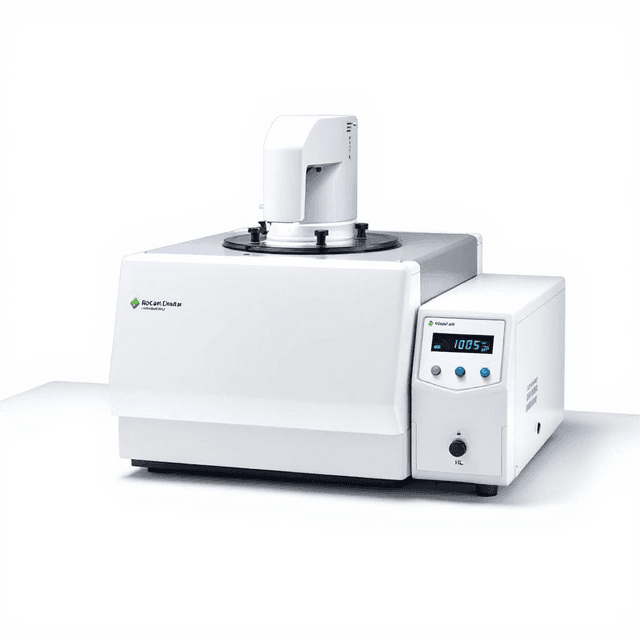
The Refrigerated Water Bath Constant Temperature Shaker provides precise temperature control and orbital mixing for biological samples, cell cultures, and chemical reactions requiring controlled incubation conditions. This benchtop instrument combines refrigeration capability down to -5°C with heating up to 100°C, enabling temperature-sensitive applications across a wide operational range. The rotatory shaking mechanism with 20mm amplitude and variable speed control (20-300 rpm) ensures uniform mixing while maintaining thermal stability within ±0.5% precision.
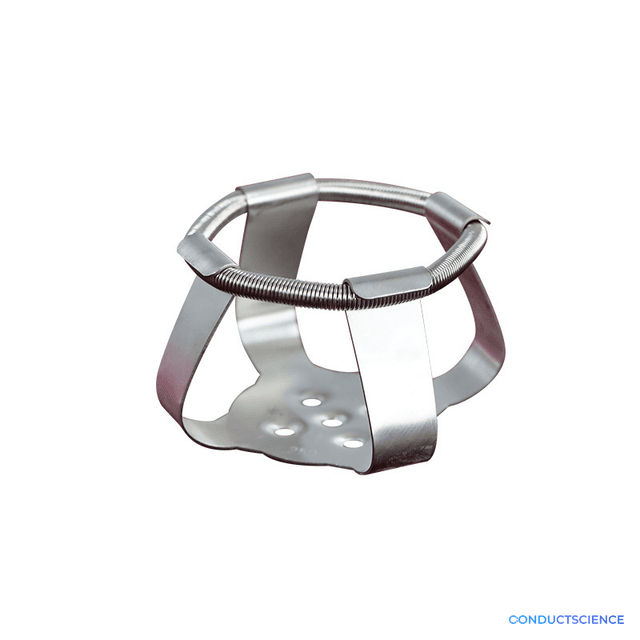
The instrument features a 410×310mm universal spring clip tray capable of accommodating various vessel types up to 20kg total load capacity. LCD display provides real-time monitoring of temperature, speed, and timing parameters, with programmable timing ranges from 1 to 9999 minutes. The refrigeration system enables enzyme assays, protein stability studies, and other temperature-sensitive protocols requiring sub-ambient conditions, while the heating capability supports standard incubation and reaction processes.
How It Works
The system operates through a combination of refrigeration/heating elements and orbital shaking mechanism to provide controlled thermal and mixing conditions. The refrigeration system uses compressor-based cooling to achieve sub-ambient temperatures down to -5°C, while electric heating elements enable temperatures up to 100°C. Temperature sensors provide feedback to maintain thermal stability within ±0.5% of the setpoint through proportional control algorithms.
The orbital shaking mechanism employs a rotatory motion with fixed 20mm amplitude, creating circular movement patterns that promote uniform mixing without excessive shear forces. The variable speed motor control (20-300 rpm) allows optimization of mixing intensity based on sample viscosity and vessel type. The spring clip platform accommodates various container sizes while maintaining secure positioning during operation.
The LCD control interface enables precise programming of temperature, speed, and timing parameters. The timing function (1-9999 minutes) provides automated operation for extended incubation periods, with automatic shutdown upon completion to prevent over-processing of temperature-sensitive samples.
Features & Benefits
Automation Level
- semi-automated
Shaking Amplitude
- 20mm
Shaking Method
- Rotatory shaking
Speed Range
- 20~300rpm
Temp. Range
- -5~100℃
Temp. Precision
- ±0.5%
Timing Range
- 1~9999min
Standard Tray Configuration
- 1pc, universal spring clip
Tray Size
- 410*310mm
Max. Load
- 20kg
Consumption
- 2100W
External Size(W*D*H)
- 715*550*810mm
Brand
- ConductScience
Research Domain
- Analytical Chemistry
- Cell Biology
- Food Science
- Immunology
- Microbiology
- Pharmaceutical QC
Display Type
- LCD
Power/Voltage
- AC220V, 50/60Hz(Standard); AC110V, 50/60Hz(Optional, external transformer)
Weight
- 61kg
Shipping weight
- 61.0 lb
Shipping box
- L: 81.0 cm
- W: 71.5 cm
- H: 55.0 cm
| Feature | This Product | Typical Alternative | Advantage |
|---|---|---|---|
| Temperature Range | -5°C to 100°C with refrigeration capability | Many basic shakers offer ambient +5°C to 80°C without refrigeration | Enables sub-ambient enzyme assays and temperature-sensitive biological processes without external cooling. |
| Platform Capacity | 20kg maximum load on 410×310mm platform | Entry-level models often support 5-10kg with smaller platforms | Accommodates high-throughput applications with multiple large vessels or extensive sample sets. |
| Speed Range | 20-300 rpm variable speed control | Basic models may offer 50-250 rpm with limited control | Provides gentle mixing for delicate cultures at low speeds and vigorous agitation for extractions at higher speeds. |
| Temperature Precision | ±0.5% thermal stability | Standard units typically offer ±1-2°C accuracy | Maintains precise conditions for temperature-sensitive enzymatic reactions and protein stability studies. |
| Control Interface | LCD display with digital programming | Basic models often use analog dials with limited precision | Enables precise parameter documentation and reproducible experimental conditions. |
This instrument combines refrigeration and heating capability with high-capacity orbital shaking in a single benchtop unit. The precise temperature control (±0.5%) and variable speed range (20-300 rpm) provide versatility for diverse applications from delicate cell cultures to robust chemical extractions.
Practical Tips
Verify temperature accuracy monthly using a calibrated thermometer placed in a water-filled vessel on the platform during operation.
Why: Ensures measurement accuracy for temperature-sensitive protocols and maintains traceability for regulated environments.
Clean condenser coils quarterly and ensure adequate ventilation clearance to maintain refrigeration efficiency.
Why: Prevents thermal performance degradation and extends compressor life while maintaining energy efficiency.
Allow 15-20 minutes for thermal equilibration before adding temperature-sensitive samples, especially when transitioning between temperature ranges.
Why: Prevents thermal shock to biological samples and ensures uniform temperature conditions throughout the experiment.
Balance sample distribution across the platform to minimize vibration and ensure uniform shaking motion for all vessels.
Why: Maintains consistent mixing conditions and prevents platform wear while reducing noise during operation.
If temperature overshoots occur, reduce heating rate by programming gradual temperature increases rather than direct setpoint changes.
Why: Thermal overshoot can damage temperature-sensitive samples and reduce temperature control accuracy.
Always secure vessel caps tightly and use appropriate spring clip tension to prevent spillage during orbital motion.
Why: Prevents contamination and damage to the instrument interior, especially important with corrosive or biological samples.
Document platform loading configuration and sample positioning for reproducible experimental conditions.
Why: Platform loading affects heat transfer and mixing uniformity, impacting experimental reproducibility across runs.
Setup Guide
What’s in the Box
- Refrigerated water bath constant temperature shaker (main unit)
- Universal spring clip platform tray
- Power cord
- User manual and operation guide
- Temperature calibration certificate (typical)
- Spare spring clips (typical)
Warranty
ConductScience provides a standard 1-year manufacturer warranty covering parts and labor, with technical support available for operational guidance and troubleshooting assistance.
Compliance
References
Background reading relevant to this product:
What is the temperature stability and uniformity across the platform?
Temperature precision is maintained at ±0.5% of setpoint. For uniformity data across the platform surface, consult product datasheet for thermal mapping specifications.
Can the instrument accommodate different vessel types simultaneously?
Yes, the universal spring clip system accommodates various vessel sizes and types up to the 20kg total platform capacity, allowing mixed vessel configurations.
What is the refrigeration cool-down time from ambient to minimum temperature?
Cool-down specifications depend on ambient conditions and load. Consult product datasheet for thermal performance curves and equilibration times.
How does the orbital shaking compare to linear shaking for cell culture applications?
The 20mm orbital motion provides gentler, more uniform mixing compared to linear shaking, reducing cell stress while maintaining adequate gas exchange and nutrient distribution.
What are the power requirements and electrical specifications?
Standard operation requires AC220V, 50/60Hz with 2100W consumption. AC110V operation is optional with external transformer for North American installations.
Can the timing function be used for multiple sequential programs?
The timer operates for single programs from 1-9999 minutes. For sequential operations, manual restart is required between programmed cycles.
What maintenance is required for the refrigeration system?
Regular maintenance includes condenser cleaning, refrigerant level monitoring, and annual calibration verification. Consult user manual for detailed maintenance schedules.
Have a question about this product?
Have a question? Just ask.
Send it over and we'll email you a personalized answer — no call, no scheduling.
Prefer to talk it through?
Accessories
Enhance your setup with compatible accessories