Semi-Automatic Microtome Series
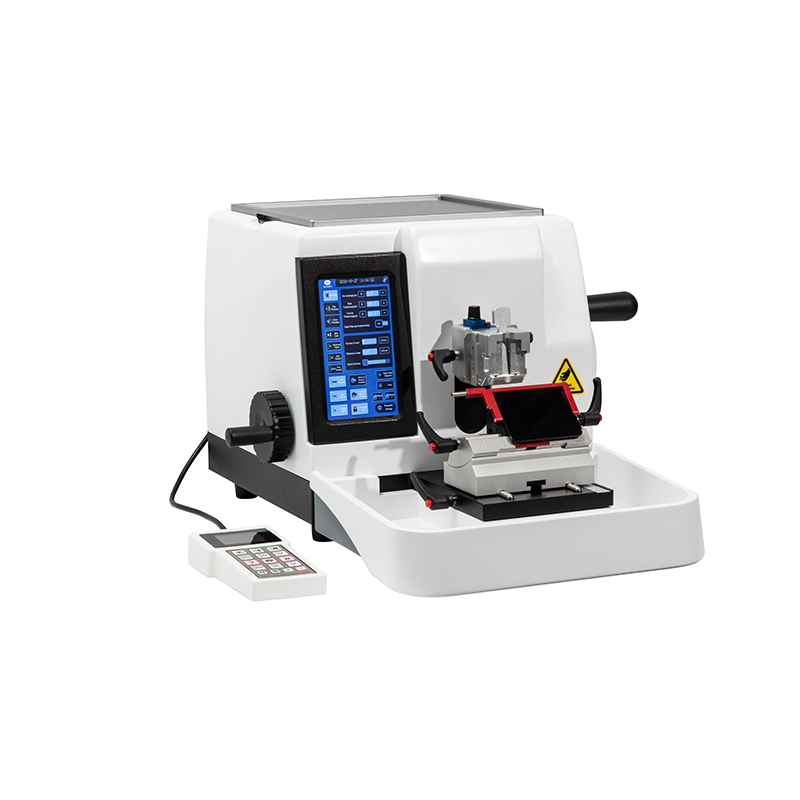
Semi-automatic microtome providing 0.1-99.9 μm section thickness control with digital precision for histopathology and slice electrophysiology applications.
Available models: Standard – RD-485 and PRO Version – RD-485PRO.

Louise Corscadden, PhD
Director of Science · ConductScience
Ask Louise about Semi-Automatic Microtome Series fit, setup, configuration, or quote prep.
Already working with us? Sign in to connect this with My Scientist.
Key Specifications
Full details →- Model fit
- 4976
- SKU family
- RF-RD-485 /RF-RD-485PRO
- Sizing
- 34.0 x 25.0 x 20.0 cm
- Ordering
- Online checkout and quote request available
- Category
- Microtomes
- Build notes
- up to 0.5 microns
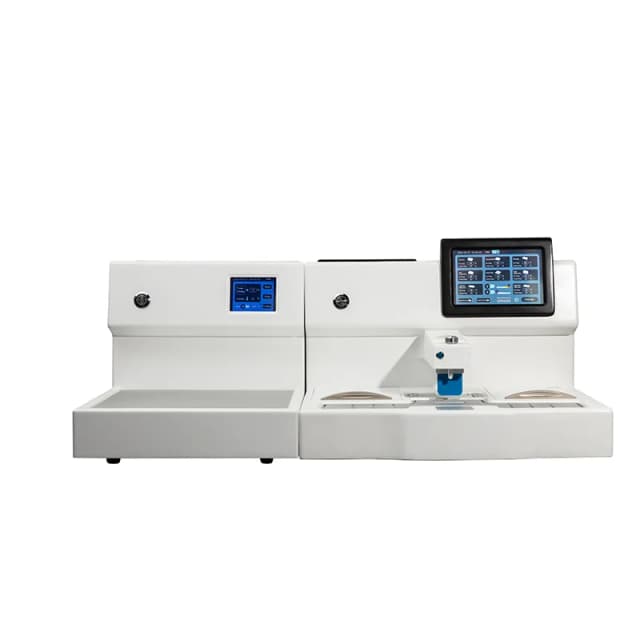
The Semi-Automatic Microtome Series (RF-RD-485/RF-RD-485PRO) provides precision sectioning capabilities for histopathological specimen preparation and slice electrophysiology applications. The system delivers section thickness control from 0.1 to 99.9 μm with 0.1 μm increments, supporting both routine histological processing and specialized research applications requiring consistent tissue sections.
The microtome accommodates specimens up to 60mm × 50mm with 60mm vertical feeding range and full 360° specimen clamp rotation. Variable feed speeds from 0.1 mm/s to 3.5 mm/s enable both rapid specimen positioning and controlled sectioning operations. The system includes specimen retraction capabilities (0-100 μm) and XY orientation adjustment (±15°) for optimal specimen alignment during sectioning procedures.
How It Works
The semi-automatic microtome operates through controlled advancement of the specimen block against a fixed blade using a precision mechanical drive system. The specimen holder advances in predetermined increments while the cutting blade remains stationary, producing sections of uniform thickness through consistent mechanical movement. Section thickness is digitally controlled through stepper motor advancement with 0.1 μm resolution.
The cutting process involves specimen block advancement during the cutting stroke, followed by automatic retraction to prevent blade contact during the return stroke. The retraction distance (0-100 μm) can be adjusted or disabled based on specimen characteristics and sectioning requirements. Variable feed speeds allow rapid specimen positioning at 1-3.5 mm/s followed by controlled sectioning at 0.1-1 mm/s for optimal section quality.
Specimen orientation is maintained through a multi-axis positioning system providing 360° rotation capability and XY adjustment within ±15°. This positioning flexibility enables proper alignment of tissue architecture with the cutting plane, essential for consistent section morphology and optimal downstream processing results.
Features & Benefits
Section Thickness Setting Range
- 0-99.9µm increment: 0.1µm
Trimming Thickness Setting Range
- 0-999µm increment: 0.1µm
Specimen Retraction
- 0-100µm(can close)
Precision And Error
- ±1%
Fast Feed Speed Adjust
- 1mm/s ~3.5mm/s, at any set
Maximum Specimen Size
- 60mmx50mm
Specimen Horizontal Feeding
- 28mm
Specimen Vertical Feeding
- 60mm
Slow Feed Speed Adjust
- 0.1mm/s ~1mm/s, at any set
Specimen Clamp Rotation
- At any angle within 360°
Specimen Orientation System
- XY -15°
Specimen Clamp
- Paraffin block clamp or cassette clamp optional
Blade Holder
- In high or in low profile blade holder optional
Voltage And Frequency
- AC220V±10% 50Hz(standard model);AC110V±10% 60Hz
Accuracy
- 0.1µm slicing accuracy
Display Type
- High-Definition Color Touch Screen
Research Domain
- Cancer Research
- Cell Biology
- Developmental Biology
- Histopathology
- Neuroscience
- Pathology
Weight
- 35KG
Size
- 580mm*490mm*315mm(L*W*H)
Section Thickness Range
- 1µm to 100µm
Section Thickness Range General
- 1-micron to 60 microns
Section Thickness Hard Materials
- up to 0.5 microns
Sample Feed Continuous
- 0.1mm/s to 3.5mm/s
Sample Feed Single Point
- 1µm to 100µm
Horizontal Vertical Adjustment
- 16°
Rotation Adjustment
- 360°
Handwheel Locking Positions Standard
- 2 independent positions
Handwheel Locking Positions Pro
- 3 independent positions
Compatible Specimens
- bone, mineral, teeth, hair, biological specimens, hard materials with synthetic resins
Waste Tray
- wide, removable
Sleep Mode
- configurable automatic
Remote Control
- included
Model Number
- RD-485
Weight
- 6.61 kg
Dimensions
- L: 34.0 mm
- W: 25.0 mm
- H: 20.0 mm
| Feature | This Product | Typical Alternative | Advantage |
|---|---|---|---|
| Section Thickness Control | 0.1-99.9 μm with 0.1 μm increments | Manual systems often provide coarser adjustment increments | Precise thickness control enables consistent section morphology critical for quantitative histological analysis. |
| Specimen Size Capacity | 60mm × 50mm maximum specimen dimensions | Entry-level models often accommodate smaller specimens | Larger specimen capacity reduces need for tissue trimming and enables processing of intact organ sections. |
| Feed Speed Range | 0.1-3.5 mm/s continuously variable | Fixed-speed systems limit operational flexibility | Variable speed control optimizes sectioning quality across different tissue types and research protocols. |
| Specimen Positioning | 360° rotation with XY ±15° orientation | Multi-axis positioning enables optimal tissue alignment for consistent section architecture and morphological analysis. | |
| User Interface | High-definition color touchscreen with remote control | Basic digital displays or mechanical controls | Intuitive interface reduces training time and improves operational efficiency during extended sectioning sessions. |
| Specimen Retraction | Programmable 0-100 μm retraction | Fixed retraction or manual adjustment systems | Customizable retraction prevents specimen damage while accommodating diverse tissue characteristics and sectioning protocols. |
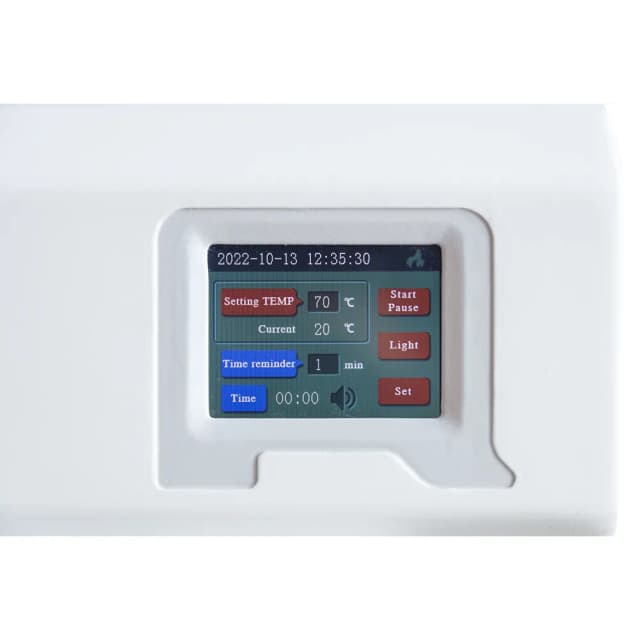
This semi-automatic microtome combines precision digital control with flexible specimen handling capabilities, offering 0.1 μm thickness resolution and comprehensive positioning adjustments. The touchscreen interface and remote operation enhance workflow efficiency while maintaining the sectioning accuracy required for both routine histopathology and specialized research applications.
| Model | SKU | Listed price | Status | Dimensions |
|---|---|---|---|---|
| PRO Version - RD-485PRO | RF-RD-485PRO | $13,990.00 | Available | 34.0 x 25.0 x 20.0 cm |
| Standard - RD-485 | RF-RD-485 | $9,990.00 | Available | 34.0 x 25.0 x 20.0 cm |
Practical Tips
Verify thickness accuracy using calibration standards at multiple points across the 0.1-99.9 μm range to ensure ±1% precision is maintained.
Why: Regular calibration verification prevents systematic errors in section thickness that could affect downstream analysis results.
Clean specimen debris from the cutting area and feed mechanism after each sectioning session to prevent buildup that could affect precision.
Why: Accumulated debris can interfere with mechanical movement and compromise thickness consistency across sequential sections.
Use the rapid feed speed (1-3.5 mm/s) for specimen positioning and slower speeds (0.1-1 mm/s) for actual sectioning operations.
Why: Speed optimization reduces sectioning time while ensuring optimal section quality and minimizing blade wear.
Adjust specimen retraction based on tissue hardness and section thickness requirements, using minimal retraction for soft tissues and increased retraction for harder specimens.
Why: Optimized retraction settings prevent specimen damage while maintaining efficient sectioning workflow.
If sections show thickness variations, verify specimen alignment using the XY orientation controls and check blade condition and positioning.
Why: Poor specimen alignment or blade issues are common causes of inconsistent section thickness that can be corrected through proper adjustment.
Use the remote control feature when sectioning hazardous or infectious specimens to maintain safe working distance from cutting area.
Why: Remote operation reduces exposure risk while maintaining full control over sectioning parameters and specimen handling.
Document section thickness settings, specimen orientation, and feed speeds for each protocol to ensure reproducibility across experiments.
Why: Consistent documentation enables protocol standardization and supports reproducible research results across multiple sectioning sessions.
Setup Guide
What’s in the Box
- Semi-automatic microtome main unit
- High-definition color touchscreen control panel
- Remote control device
- Paraffin block clamp (typical)
- Cassette clamp (typical)
- Blade holder assembly
- Waste collection tray
- Power cord
- User manual and documentation
- Calibration certificate (typical)
Warranty
ConductScience provides a comprehensive 1-year manufacturer warranty covering parts and labor, with technical support for installation, calibration, and operational guidance.
Compliance
What is the minimum achievable section thickness for routine histological applications?
The system provides 0.1 μm minimum increments with a range of 0.1-99.9 μm, supporting both routine histological sections (3-5 μm) and specialized applications requiring thinner or thicker preparations.
How does specimen retraction affect section quality during automated cutting?
Programmable retraction (0-100 μm) prevents blade contact during return stroke, reducing specimen damage and blade dulling while maintaining consistent section thickness across sequential cuts.
What specimen dimensions can be accommodated in the sectioning area?
Maximum specimen size is 60mm × 50mm with 60mm vertical feeding range and 28mm horizontal feeding capacity, suitable for most routine and research histological specimens.
Can the feed speed be adjusted during sectioning operations?
Yes, feed speeds are continuously adjustable from 0.1-1 mm/s for controlled sectioning and 1-3.5 mm/s for rapid positioning, allowing optimization for different tissue types and sectioning requirements.
How is specimen orientation maintained during multi-section protocols?
The system provides 360° rotation capability with XY orientation adjustment (±15°), enabling precise alignment of tissue architecture with the cutting plane for consistent section morphology.
What maintenance procedures are required for sustained precision?
Regular blade replacement, cleaning of specimen debris, and periodic calibration verification maintain ±1% thickness accuracy across the operational range.
Is the system compatible with both paraffin and frozen section protocols?
The microtome is designed for paraffin-embedded specimens with dual clamp compatibility for blocks and cassettes. Consult product datasheet for frozen section applications.
How does the touchscreen interface improve sectioning workflow efficiency?
The high-definition color display provides real-time parameter monitoring and adjustment capabilities, reducing setup time and enabling immediate response to sectioning conditions.
Have a question about this product?
Have a question? Just ask.
Send it over and we'll email you a personalized answer — no call, no scheduling.
Prefer to talk it through?
Accessories
Enhance your setup with compatible accessories