Solid Densimeter
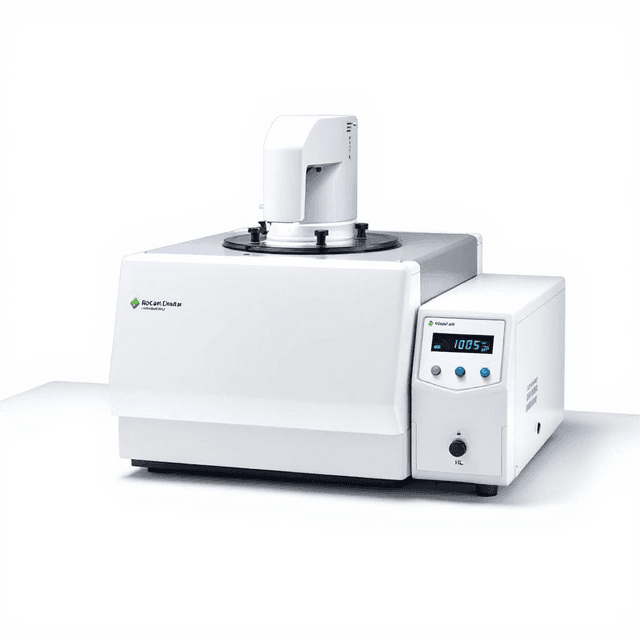
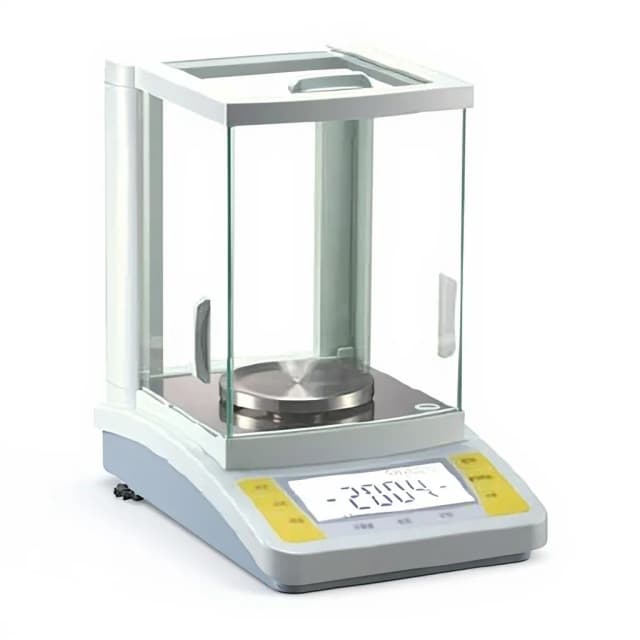
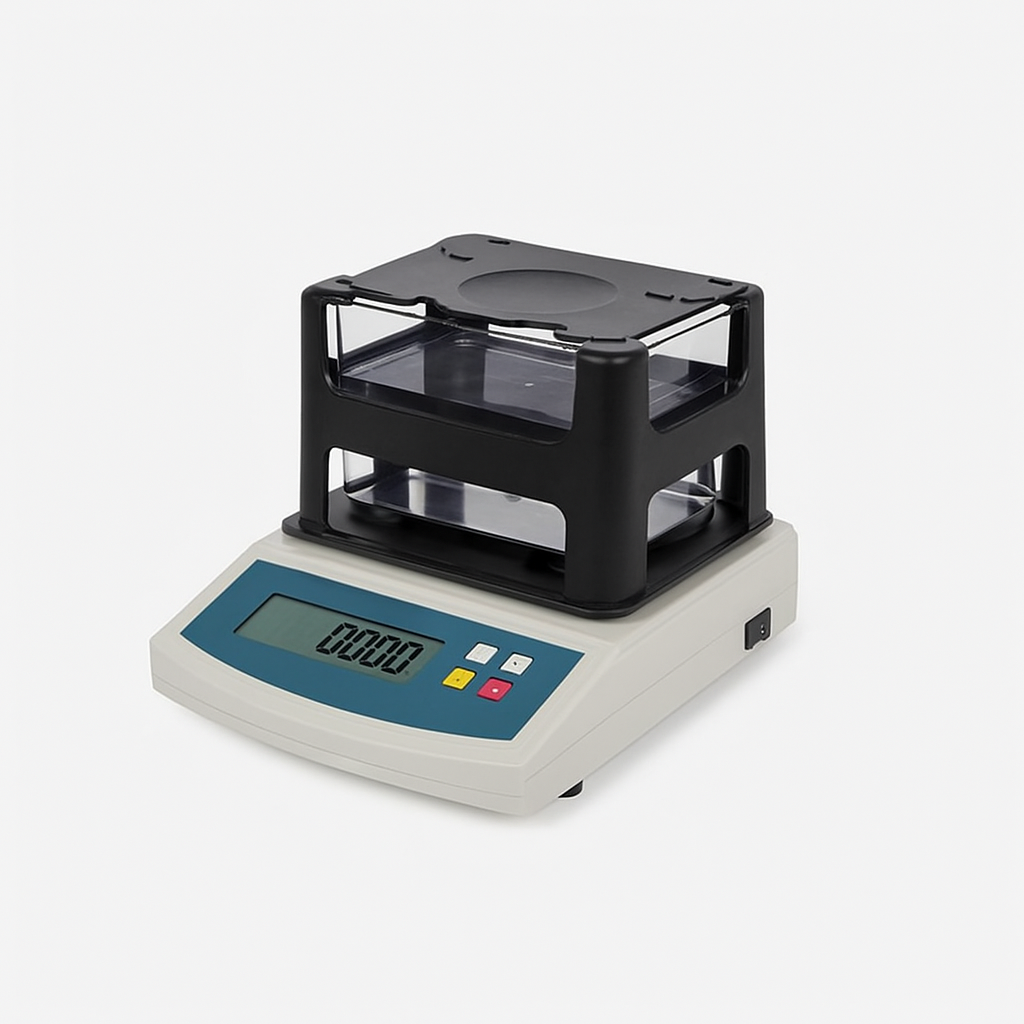
Solid densimeter for measuring density of rubber, plastic, metal alloys, glass, ceramics, minerals, jewelry, and other solid materials.
Uses Archimedes principle; measurement in approximately 5 seconds. RS-232C interface; solution compensation; automatic zero tracking with overload alarm.

Louise Corscadden, PhD
Director of Science · ConductScience
Ask Louise about Solid Densimeter fit, setup, configuration, or quote prep.
Already working with us? Sign in to connect this with My Scientist.
Key Specifications
Full details →- Model fit
- 2 selectable configurations
- SKU family
- BIO-0479
- Shipping box
- 9.3 x 15.3 x 10.7 cm
- Ordering
- Online checkout and quote request available
- Category
- Analytical Instruments
- Build notes
- Confirm accessories, station layout, and support needs before purchase
The BK-DME solid densimeter measures the density of a wide range of solid materials including rubber, plastic, cables, hard alloys, glass, metal, powder, ceramics, fireproofing materials, magnetic materials, minerals, rock, cement, and jewelry. Measurement is based on Archimedes principle and takes approximately 5 seconds. An automatic zero tracking function, buzzer alarm, and overload warning protect the instrument and sample. A solution compensation function allows use with alternative measuring liquids, and the RS-232C interface supports data output.
Technical Specifications
| Parameter | BK-DME300S | BK-DME600S |
|---|---|---|
| Capacity | 0.005–300 g | 0.005–600 g |
| Density Range | 0.001–99.999 g/cm³ | |
| Density Resolution | 0.001 g/cm³ | |
| Measuring Time | ~5 seconds | |
| Principle | Archimedes | |
| Interface | RS-232C | |
| Power Supply | AC 100–240 V, 50/60 Hz | |
| External Dimensions (W×D×H) | 195 × 230 × 197 mm | |
| Net Weight | 1.78 kg | 1.79 kg |
Standard Accessories
Tank, testing board, tweezers, thermometer, 100 g weight, windshield, particle measuring assembly, floating body measuring assembly, power transformer.
Optional Accessories
DE-40 printer.
How It Works
The densimeter operates on Archimedes principle, which states that the buoyant force on a submerged object equals the weight of the displaced fluid. The instrument first weighs the dry sample in air, then suspends the sample in a displacement fluid (typically water or appropriate solvent) and measures the apparent weight. The difference between these measurements represents the buoyant force, which directly relates to the sample volume.
The system calculates density using the formula: Density = (Weight in air × Fluid density) / (Weight in air - Weight in fluid). The specialized unibody measurement frame provides stable sample suspension and precise positioning during the weighing process. The integrated weighing system captures both air and fluid weight measurements within the 5-second measurement cycle.
Temperature compensation and fluid density corrections are applied automatically based on measurement conditions. The rapid measurement time minimizes errors from sample absorption or dissolution, while the wide capacity range accommodates samples from milligram to 300-gram scales with consistent accuracy.
Features & Benefits
Shipping weight
- 1.78 lb
Shipping box
- L: 9.3 cm
- W: 15.3 cm
- H: 10.7 cm
| Feature | This Product | Typical Alternative | Advantage |
|---|---|---|---|
| Measurement Capacity | 0.005-300g range | Entry-level models often limited to smaller sample sizes or narrower weight ranges | Accommodates both small research samples and larger production pieces in single instrument platform. |
| Measurement Time | 5-second measurement cycle | Manual methods require multiple weighing steps and longer operator time | Enables high-throughput sample processing and reduces measurement errors from time-dependent sample changes. |
| Measurement Frame Design | Unibody injection-formed professional frame | Basic models may use simple wire suspension systems | Provides consistent sample positioning and measurement repeatability across different operators and sample types. |
| Power Compatibility | Universal AC 100-240V, 50/60Hz | Some instruments limited to specific voltage requirements | Simplifies international laboratory deployment and eliminates need for power conversion equipment. |
| Documentation Options | Optional DE-40 printer integration | Basic models may lack integrated documentation capabilities | Provides direct measurement record generation for quality control and regulatory documentation requirements. |
The densimeter combines rapid measurement capability with professional-grade frame design and broad sample capacity. The 5-second measurement cycle and universal power compatibility provide practical advantages for laboratory implementation. Optional printer integration supports documentation requirements in regulated environments.
| Model | SKU | Listed price | Status | Shipping box |
|---|---|---|---|---|
| BK-DME600S | BIO-0479 | $1,590.00 | Available | 9.3 x 15.3 x 10.7 cm |
| BK-DME300S | BIO-0479 | $1,490.00 | Available | 9.3 x 15.3 x 10.7 cm |
Practical Tips
Verify calibration using certified density reference standards at the beginning of each measurement session.
Why: Ensures measurement accuracy and identifies any drift in instrument performance.
Clean measurement frame and sample contact surfaces with appropriate solvents after each use to prevent contamination carryover.
Why: Residual material on surfaces can affect subsequent measurement accuracy and instrument longevity.
Allow samples and displacement fluid to reach thermal equilibrium before measurement to minimize temperature-related errors.
Why: Temperature differences cause density variations that can significantly impact measurement precision.
Check for air bubbles adhering to suspended samples as they cause measurement errors by increasing apparent volume.
Why: Trapped air reduces the effective sample volume measured by displacement, leading to erroneously high density calculations.
Record displacement fluid temperature and type with each measurement for accurate density calculations.
Why: Fluid density varies with temperature and composition, affecting the accuracy of Archimedes principle calculations.
Use appropriate displacement fluids for chemical compatibility with sample materials to prevent reactions or dissolution.
Why: Incompatible fluids can damage samples, compromise measurements, or create safety hazards from chemical reactions.
Ensure measurement frame is properly seated and stable before initiating measurement cycles.
Why: Frame misalignment can cause measurement inconsistency and affect the precision of sample positioning.
Keep replacement suspension wires available as they may require periodic replacement due to corrosion or mechanical wear.
Why: Damaged suspension components can introduce measurement errors and compromise sample security during testing.
Setup Guide
What’s in the Box
- Solid densimeter main unit
- Unibody specific gravity measurement frame
- AC power adapter (100-240V)
- Sample suspension wire (typical)
- Measurement beakers (typical)
- User manual and calibration certificate (typical)
- Quick start guide (typical)
Warranty
ConductScience provides comprehensive warranty coverage including 1-year manufacturer warranty against defects and technical support for operational guidance. Extended warranty and calibration service options are available for laboratory quality assurance programs.
Compliance
What displacement fluids are compatible with this densimeter?
Water is the standard displacement fluid for most applications. Alternative fluids like ethanol or specialized solvents may be used for samples that are water-soluble or reactive, provided fluid density is accurately known and entered into the system.
How do I handle samples with surface porosity or air bubbles?
Porous samples should be evacuated or treated to remove trapped air before measurement. Surface wetting agents or vacuum treatment may be required depending on sample characteristics. Consult product datasheet for specific sample preparation protocols.
What calibration standards are recommended for verification?
Use certified density reference standards spanning your expected measurement range. Glass beads, metal reference weights, or certified polymer standards with known densities are suitable for calibration verification.
Can the instrument measure irregularly shaped samples?
Yes, Archimedes principle measurement is independent of sample geometry. The suspension system accommodates irregular shapes provided the sample can be suspended in the displacement fluid and is within the 0.005-300g capacity range.
How does temperature affect measurement accuracy?
Temperature affects both sample density and displacement fluid density. Maintain stable temperature conditions and record fluid temperature for accurate measurements. Thermal equilibration time may be required for temperature-sensitive samples.
What data output formats are available?
Direct measurement display on instrument panel with optional DE-40 printer for hard-copy documentation. Consult product datasheet for additional data logging or computer interface capabilities.
How does this compare to gas pycnometry methods?
Archimedes method using liquid displacement is suitable for most solid samples and provides rapid measurement. Gas pycnometry offers higher precision for very porous materials but requires specialized instrumentation and longer measurement times.
Have a question about this product?
Have a question? Just ask.
Send it over and we'll email you a personalized answer — no call, no scheduling.
Prefer to talk it through?