SPAD-502 Plus Chlorophyll Meter
Measure leaf chlorophyll (SPAD units) non-invasively with ±1.0 SPAD accuracy, 30-reading memory, and 20,000+ measurement battery life.
For field and greenhouse use.

Louise Corscadden, PhD
Director of Science · ConductScience
Ask Louise about SPAD-502 Plus Chlorophyll Meter fit, setup, configuration, or quote prep.
Already working with us? Sign in to connect this with My Scientist.
Key Specifications
Full details →- Model fit
- Configured during quote
- SKU family
- AGR-0032
- Sizing
- Model-specific dimensions confirmed from the selected configuration
- Ordering
- Quote-reviewed before fulfillment
- Category
- Agriculture & Food Science
- Build notes
- Confirm accessories, station layout, and support needs before purchase
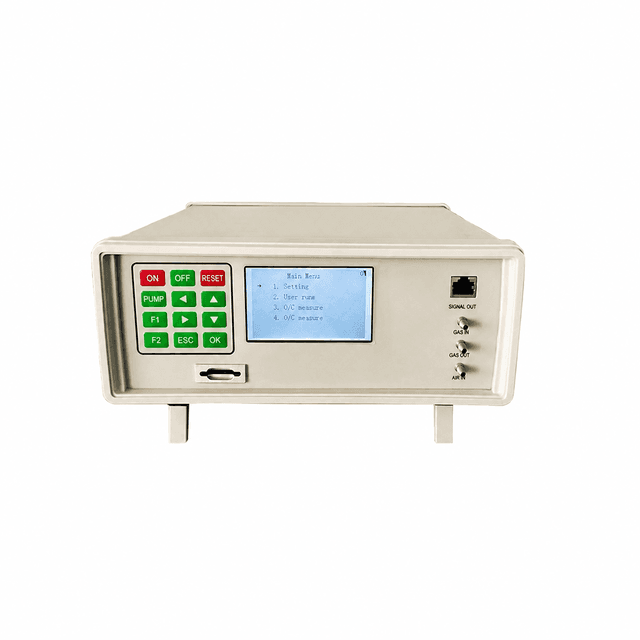
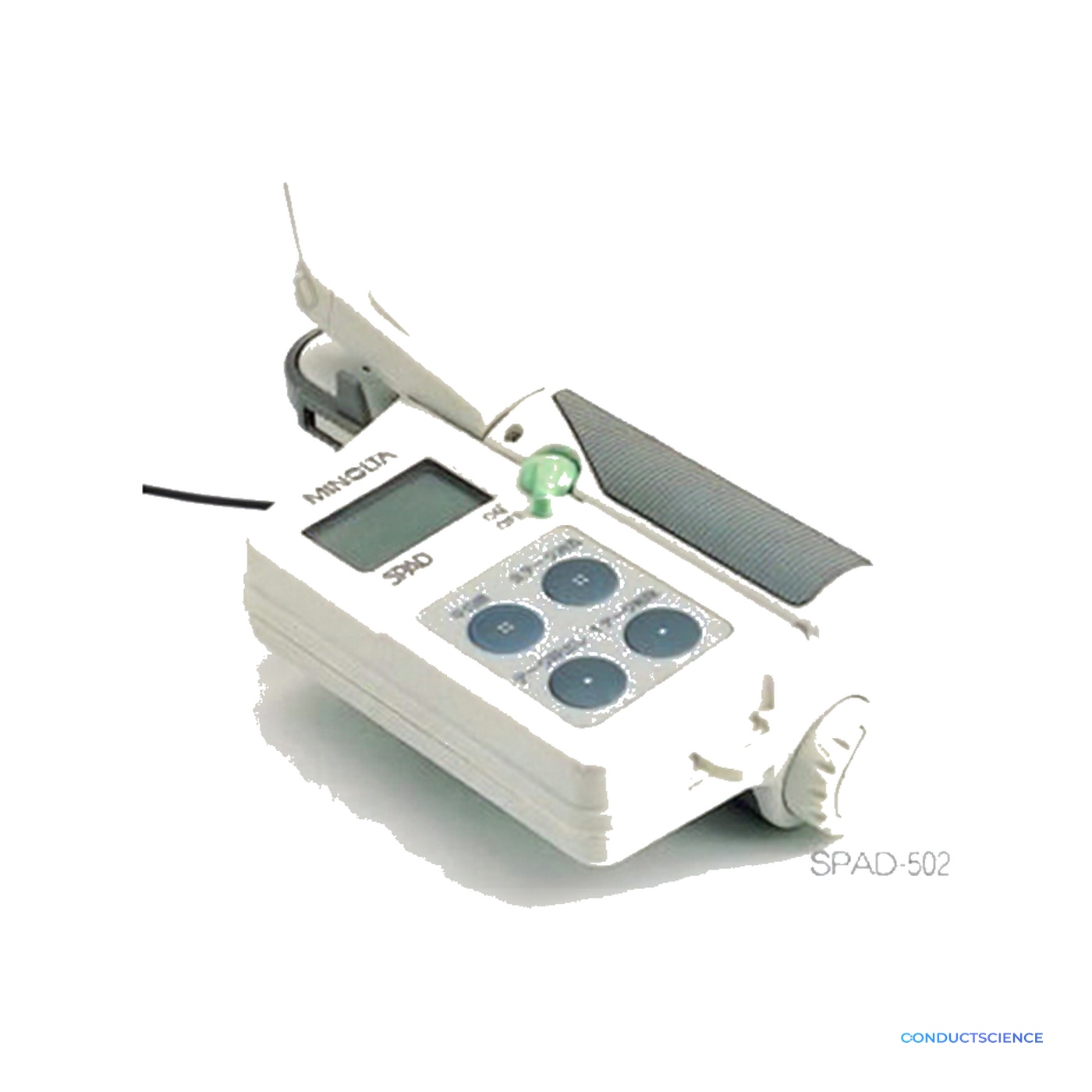
The SPAD 502 Plus Chlorophyll Meter gives researchers, agronomists, and crop scientists a fast, non-invasive way to quantify leaf chlorophyll content—often called "greenness"—directly in the field or greenhouse. By measuring the optical density difference at two wavelengths across a 2 mm × 3 mm leaf area, the instrument reports values on the SPAD scale with four decimal places of resolution, letting you detect subtle shifts in plant nutritional status that are invisible to the naked eye.
Early detection is the core advantage. Because chlorophyll levels correlate closely with leaf nitrogen status, the meter lets you identify deficiency trends or excess-fertilization risk before symptoms develop, supporting more precise fertilizer management and protecting yield potential. Each session stores up to 30 readings, automatically calculates the running average, and displays results as a tendency chart on the LCD—so patterns across a canopy or across time are immediately apparent.
With a two-second test interval, a battery life exceeding 20,000 measurements on two standard AA batteries, and an accuracy of ±1.0 SPAD units (0–50 SPAD range under normal temperature), the meter is built for high-throughput sampling in real working conditions. Onboard alarm and calibration functions round out the feature set. At 255 g, it is light enough for extended field walks without fatigue.
Measuring Mode
- 2-wavelength optical density difference
Measuring Area
- 2 mm × 3 mm
Sensor
- Silicon semiconductor photodiode
Display
- LCD, 4 decimal places with tendency chart
Measuring Range
- -9.9 to 199.9 SPAD units
Memory Capacity
- 30 readings; auto-calculates and displays average
Accuracy
- Within ±1.0 SPAD units (0–50 SPAD, normal temperature)
Repeatability
- Within ±0.3 SPAD units (0–50 SPAD)
Reproducibility
- Within ±0.5 SPAD units (0–50 SPAD)
Test Interval
- 2 seconds
Power Supply
- 2 × AA batteries (1.5 V)
Battery Life
- More than 20,000 measurements
Working Temperature
- 0–50 °C
Additional Functions
- Alarm; calibration
Weight
- 255 g
Dimensions
- 164 × 78 × 49 mm
What does a SPAD reading actually tell me about my plants?
A SPAD value reflects the optical density difference at two wavelengths of light passing through the leaf, which correlates with chlorophyll concentration and, by extension, leaf nitrogen status. Higher SPAD values indicate more chlorophyll (greener, nitrogen-rich tissue); declining values can signal deficiency before any yellowing is visible. The meter measures in SPAD units across a range of -9.9 to 199.9.
How accurate and repeatable are the measurements?
For SPAD values between 0 and 50 under normal temperature, accuracy is within ±1.0 SPAD units, repeatability is within ±0.3 SPAD units, and reproducibility is within ±0.5 SPAD units. These figures allow you to track small, meaningful changes in chlorophyll status across sampling dates or across plots.
How many readings can I store, and how does the memory work?
The meter stores up to 30 readings and automatically calculates and displays their average value. Results are also shown as a tendency chart on the LCD, giving you an immediate visual summary of variability or trends within a sampling set.
What are the power requirements, and how long will the batteries last?
The meter runs on two standard AA (1.5 V) batteries with a rated battery life of more than 20,000 measurements—enough for extensive multi-season field campaigns before you need to replace them.
In what environments can I use this meter?
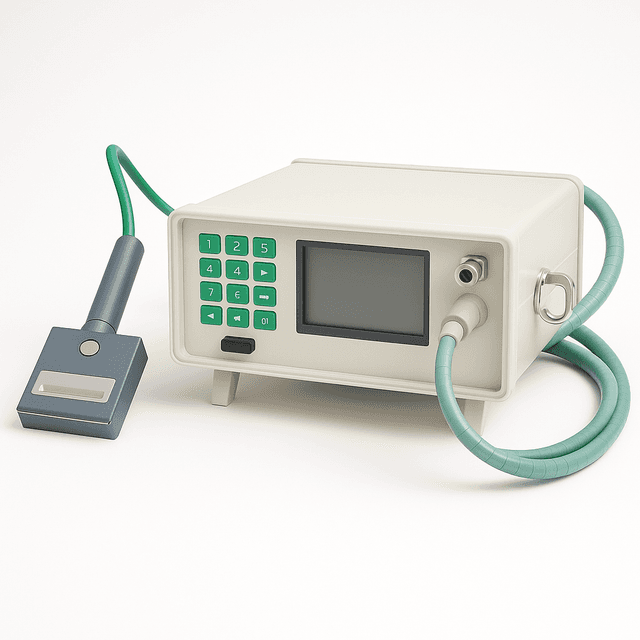
The working temperature range is 0–50 °C, covering typical field and greenhouse conditions across most growing seasons and climates. The non-invasive clip-style measurement (2 mm × 3 mm sensing area) means no leaf tissue is destroyed, so the same leaf can be remeasured over time for longitudinal studies.
Have a question about this product?
Have a question? Just ask.
Send it over and we'll email you a personalized answer — no call, no scheduling.
Prefer to talk it through?
Frequently Bought Together