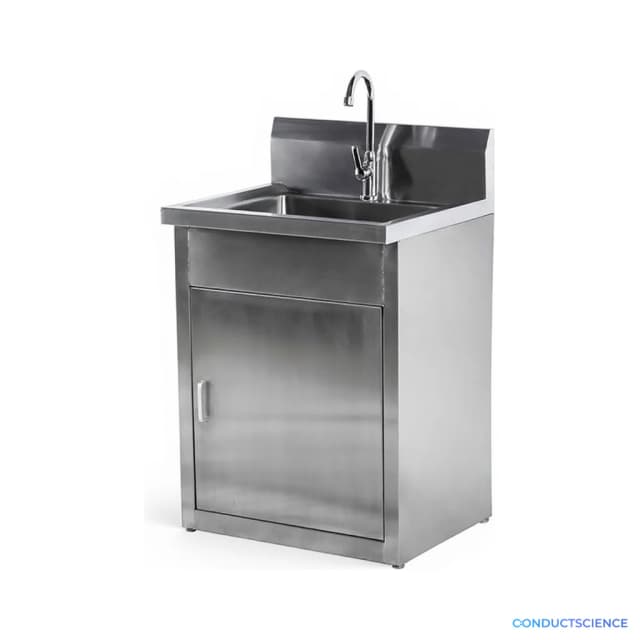
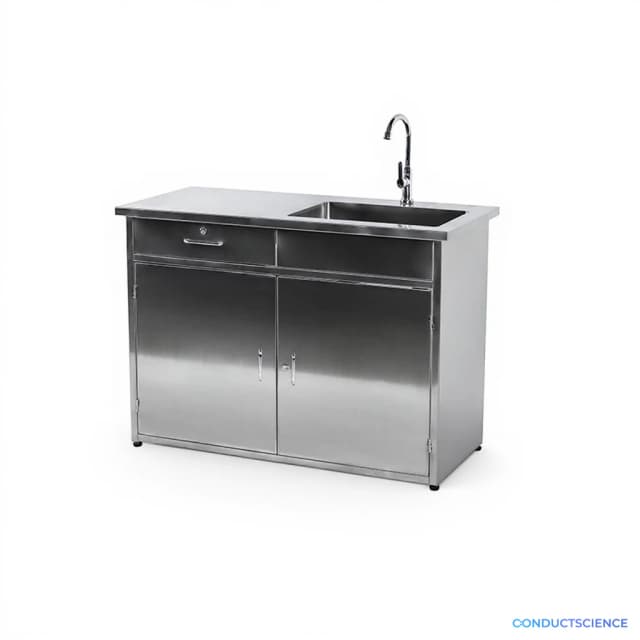
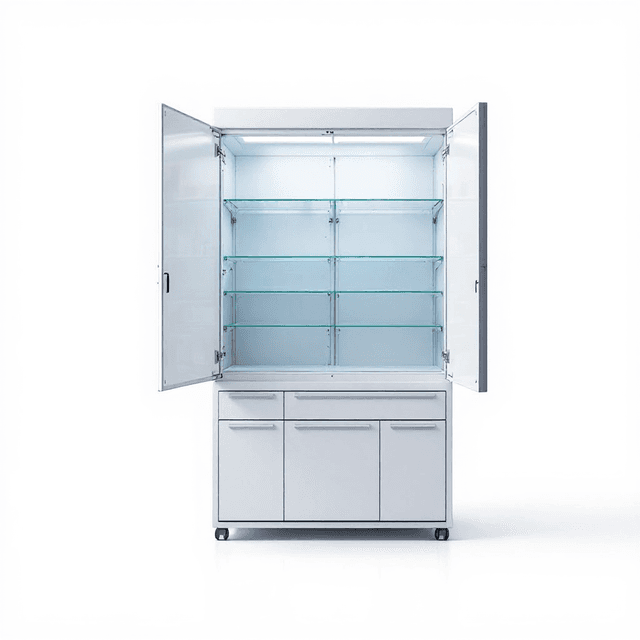
Stainless Steel Two Faucet Sinks For Laboratory
Dual-faucet stainless steel laboratory sink designed for wet work operations, sample preparation, and equipment cleaning in research environments.

Louise Corscadden, PhD
Director of Science · ConductScience
Ask Louise about Stainless Steel Two Faucet Sinks For Laboratory fit, setup, configuration, or quote prep.
Already working with us? Sign in to connect this with My Scientist.
Key Specifications
Full details →- Model fit
- Configured during quote
- SKU family
- RF-0083
- Shipping box
- 78.0 x 70.0 x 73.3 cm
- Ordering
- Online checkout and quote request available
- Category
- Storage & Furniture
- Build notes
- Confirm accessories, station layout, and support needs before purchase
The Stainless Steel Two Faucet Sinks For Laboratory provides essential wet work capabilities for research and analytical environments. This dual-faucet configuration enables simultaneous access to different water supplies or allows concurrent operations by multiple users, optimizing workflow efficiency in shared laboratory spaces.
Constructed from stainless steel, this laboratory sink offers chemical resistance and durability required for routine laboratory operations including sample preparation, equipment cleaning, and waste disposal. The two-faucet design supports protocols requiring separate water sources or dedicated lines for different applications, reducing cross-contamination risks and improving laboratory safety practices.
How It Works
Laboratory sinks provide dedicated wet work areas with controlled water access for research operations. The stainless steel construction resists corrosion from chemical exposure while maintaining surface integrity under repeated cleaning and sterilization cycles. The material's non-porous surface prevents bacterial growth and facilitates decontamination procedures.
The dual-faucet configuration allows independent water supply lines, enabling researchers to connect different water qualities (deionized, distilled, or tap water) to each faucet. This separation prevents cross-contamination between water sources and supports protocols requiring specific water grades for different applications.
Proper drainage design ensures efficient waste removal while preventing backflow contamination. The sink basin geometry facilitates complete drainage and cleaning, supporting laboratory hygiene requirements and preventing residue accumulation that could compromise subsequent experiments.
Features & Benefits
Brand
- ConductScience
Research Domain
- Analytical Chemistry
- Cell Biology
- Clinical Diagnostics
- Environmental Monitoring
- Food Science
- Materials Science
- Microbiology
- Pharmaceutical QC
Shipping weight
- 36.71 lb
Shipping box
- L: 78.0 cm
- W: 70.0 cm
- H: 73.3 cm
| Feature | This Product | Typical Alternative | Advantage |
|---|---|---|---|
| Faucet Configuration | Dual-faucet design with independent water supply connections | Single-faucet models offer basic water access | Enables simultaneous access to different water sources or concurrent user operations |
| Construction Material | Stainless steel construction for chemical resistance | Basic models may use standard materials with limited chemical compatibility | Provides durability and resistance to laboratory chemical exposure |
| Water Source Separation | Independent supply lines prevent cross-contamination between water sources | Single-source designs cannot separate different water grades | Supports contamination control protocols and multiple water quality requirements |
| Laboratory Integration | Designed specifically for laboratory wet work operations | General utility sinks lack laboratory-specific features | Optimized for research workflows and laboratory safety requirements |
This laboratory sink provides dual-faucet capability with stainless steel construction, supporting independent water source connections for contamination control and operational efficiency. The design accommodates laboratory-specific requirements for chemical resistance and wet work operations.
Practical Tips
Connect different water grades to each faucet and label clearly to prevent contamination between processes.
Why: Proper water source management prevents cross-contamination and supports analytical quality control.
Clean the sink daily with laboratory detergent and inspect faucet seals regularly for signs of wear or leakage.
Why: Regular maintenance prevents bacterial growth and ensures reliable water supply for laboratory operations.
Install appropriate emergency eyewash capabilities near the sink location for chemical exposure incidents.
Why: Laboratory safety regulations require accessible emergency equipment for chemical handling areas.
Test water quality from each supply line periodically to verify grade specifications meet experimental requirements.
Why: Water quality verification ensures analytical results are not compromised by supply line contamination.
If drainage becomes slow, inspect for chemical precipitates or debris buildup in the drain assembly.
Why: Laboratory reagents can form deposits that restrict drainage and create sanitation issues.
Document water source specifications and maintenance schedules for laboratory quality assurance records.
Why: Proper documentation supports analytical method validation and regulatory compliance requirements.
Setup Guide
What’s in the Box
- Stainless steel sink basin (typical)
- Two laboratory faucets (typical)
- Drain assembly components (typical)
- Installation hardware (typical)
- User manual and installation guide (typical)
Warranty
ConductScience provides standard manufacturer warranty coverage for materials and workmanship defects. Technical support includes installation guidance and maintenance recommendations for optimal laboratory performance.
Compliance
What water supply pressures are compatible with the faucet assemblies?
Consult product datasheet for specific pressure ratings. Laboratory faucets typically accommodate standard building water pressure ranges with appropriate flow control mechanisms.
Can different water grades be connected to each faucet independently?
Yes, the dual-faucet design allows independent water supply connections, enabling separation of deionized, distilled, or tap water sources to prevent cross-contamination.
What chemical compatibility does the stainless steel construction provide?
Stainless steel offers resistance to most laboratory acids, bases, and organic solvents. Verify compatibility with specific chemicals from material compatibility charts for your applications.
How should the sink be cleaned and maintained?
Use laboratory-grade detergents and avoid abrasive cleaners that could damage the stainless steel surface. Regular cleaning prevents residue buildup and maintains sanitary conditions.
What drainage specifications are required for installation?
Proper drainage requires adequate slope and connection to laboratory waste systems. Consult local plumbing codes and institutional requirements for waste disposal compliance.
Can the sink accommodate large laboratory equipment for cleaning?
Basin dimensions determine equipment compatibility. Consult product specifications for interior dimensions and depth to ensure adequate clearance for your cleaning requirements.
Have a question about this product?
Have a question? Just ask.
Send it over and we'll email you a personalized answer — no call, no scheduling.
Prefer to talk it through?