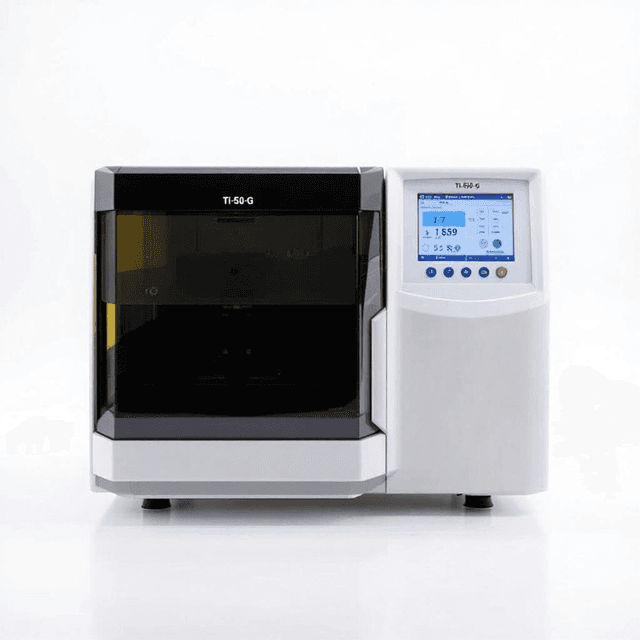
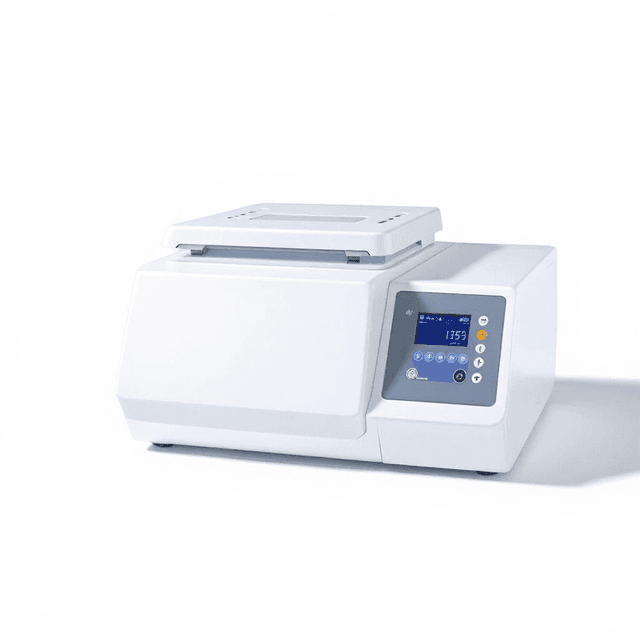
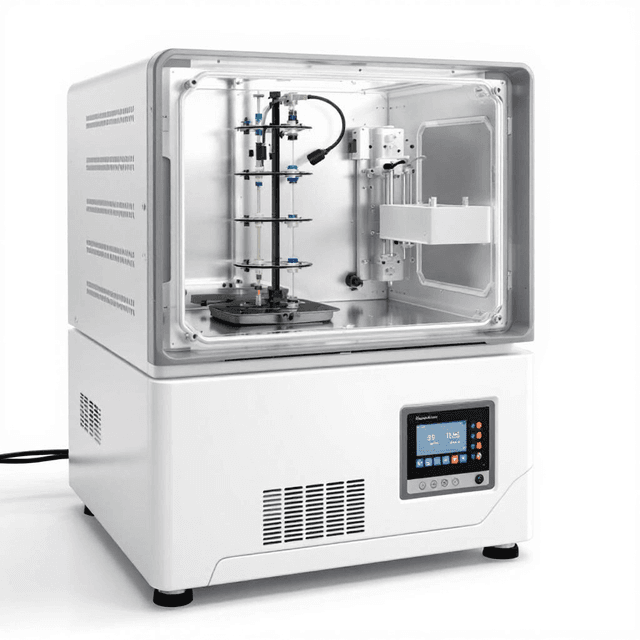
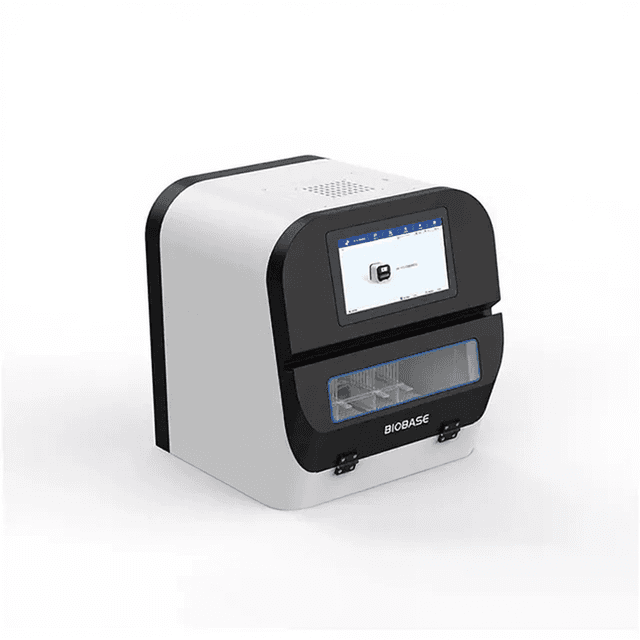
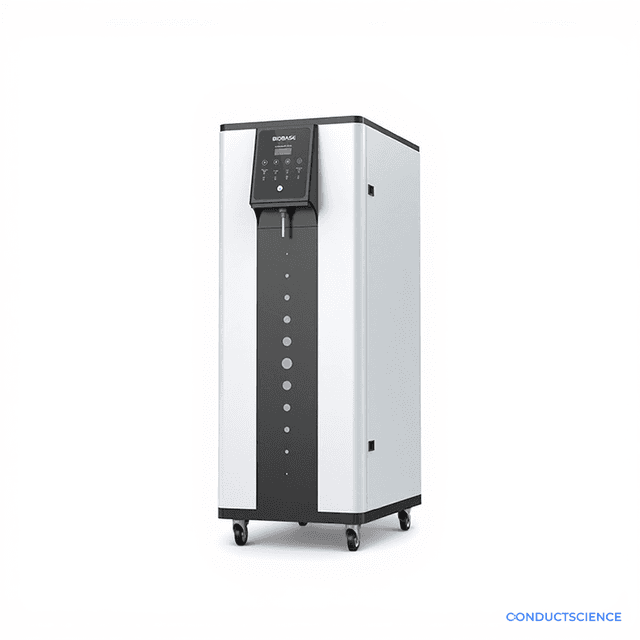
Ti-50 Automatic Potential Titrator
Automated potentiometric titrator with 1/30000 resolution and temperature compensation for precision analytical measurements in research laboratories.

Louise Corscadden, PhD
Director of Science · ConductScience
Ask Louise about Ti-50 Automatic Potential Titrator fit, setup, configuration, or quote prep.
Already working with us? Sign in to connect this with My Scientist.
Key Specifications
Full details →- Model fit
- Configured during quote
- SKU family
- BIO-0448
- Shipping box
- 40.0 x 34.0 x 40.0 cm
- Ordering
- Online checkout and quote request available
- Category
- Benchtop Instruments
- Build notes
- Confirm accessories, station layout, and support needs before purchase
The Ti-50 Automatic Potential Titrator is a precision analytical instrument designed for automated potentiometric titrations in research and quality control laboratories. This benchtop system provides high-resolution measurements with 1/30000 resolution and maintains exceptional stability with ±0.3mV drift over 3 hours, enabling accurate endpoint determination in various analytical procedures.
The instrument incorporates temperature compensation capabilities with 0.1°C resolution and ±0.2°C accuracy, ensuring reliable results across varying laboratory conditions. The compact 340×400×400 mm footprint accommodates standard laboratory benchtops while providing the precision required for critical analytical measurements in pharmaceutical, environmental, and materials science applications.
How It Works
Potentiometric titration operates on the principle of measuring electrode potential changes as a function of titrant volume addition. The Ti-50 system monitors the potential difference between a measuring electrode (typically glass or ion-selective) and a reference electrode as titrant is incrementally added to the sample solution. The instrument's high-resolution measurement system detects subtle potential changes that occur near the equivalence point, where the analyte concentration undergoes rapid change.
The automated burette system delivers precise titrant volumes while continuously monitoring the electrode potential. The 1/30000 resolution enables detection of minute potential shifts, allowing accurate identification of endpoints through first and second derivative analysis. Temperature compensation algorithms account for thermal effects on electrode response and sample chemistry, ensuring consistent results across varying laboratory conditions.
Data acquisition occurs continuously throughout the titration process, generating potential vs. volume curves that reveal equivalence points through inflection analysis. The system's low drift characteristics (±0.3mV over 3 hours) maintain baseline stability essential for detecting weak endpoints and performing sequential titrations.
Features & Benefits
Automation Level
- fully-automated
Burette
- Repeatability
Mechanical Unit
- Range
Measuring Unit
- Resolutions
Fluctuation
- +0.3mV/3h
Tem. Compensation
- Range
Resolutions
- 0.1℃
General
- Power Supply
Brand
- ConductScience
Research Domain
- Analytical Chemistry
- Environmental Monitoring
- Food Science
- Industrial Hygiene
- Materials Science
- Pharmaceutical QC
Accuracy
- +0.2℃
Dimensions
- 340*400*400 mm
Weight
- 10kg
Shipping weight
- 10.0 lb
Shipping box
- L: 40.0 cm
- W: 34.0 cm
- H: 40.0 cm
| Feature | This Product | Typical Alternative | Advantage |
|---|---|---|---|
| Measurement Resolution | 1/30000 resolution | Entry-level systems often provide lower resolution measurements | Enhanced sensitivity enables accurate endpoint detection in challenging analytical matrices with weak or multiple endpoints. |
| Drift Stability | ±0.3mV over 3 hours | Basic titrators may exhibit higher baseline drift | Improved stability reduces measurement uncertainty during extended analytical sequences and multi-point calibrations. |
| Temperature Compensation | 0.1°C resolution, ±0.2°C accuracy | Manual temperature correction or limited compensation range | Automatic thermal correction maintains measurement accuracy without manual intervention across laboratory temperature variations. |
| System Integration | Combined measurement and mechanical units | Separate components requiring individual setup | Unified design simplifies installation and reduces potential connection errors between system components. |
| Footprint Efficiency | 340×400×400 mm compact design | Larger modular systems requiring extended bench space | Space-efficient design accommodates standard laboratory benchtops without compromising analytical performance. |
The Ti-50 combines high-resolution measurement capabilities with integrated temperature compensation and automated operation in a compact benchtop format. The system's stability characteristics and unified design provide reliable analytical performance for routine and specialized titration applications.
Practical Tips
Perform electrode calibration using fresh certified buffer standards at the beginning of each analytical session.
Why: Regular calibration ensures electrode response accuracy and compensates for gradual electrode aging effects.
Clean electrodes thoroughly between different sample types and store in appropriate solutions when not in use.
Why: Proper electrode maintenance prevents contamination carryover and extends electrode operational lifetime.
Allow the system to equilibrate for 30 minutes after power-on before performing critical analytical measurements.
Why: Thermal equilibration ensures measurement stability and reduces drift-related uncertainty in analytical results.
Monitor electrode response time during calibration to identify potential electrode degradation or contamination issues.
Why: Slow or unstable electrode response indicates maintenance requirements before analytical problems affect sample results.
Document ambient temperature and sample preparation conditions for each analytical sequence.
Why: Environmental documentation supports measurement traceability and aids in troubleshooting analytical anomalies.
Ensure adequate ventilation when analyzing samples containing volatile components or corrosive reagents.
Why: Proper ventilation protects both personnel and instrument components from chemical exposure during extended analytical sessions.
Setup Guide
What’s in the Box
- Ti-50 main unit
- Power supply cable
- Electrode mounting hardware (typical)
- Burette assembly (typical)
- User manual and software
- Calibration certificate (typical)
- Sample stirrer assembly (typical)
Warranty
ConductScience provides a one-year manufacturer warranty covering parts and labor, with comprehensive technical support for installation, calibration, and method development assistance.
Compliance
What types of titrations can be performed with this system?
The Ti-50 supports acid-base, redox, and complexometric titrations through potentiometric endpoint detection. The high resolution and stability enable analysis of both strong and weak analyte systems with reliable endpoint determination.
How does temperature compensation affect measurement accuracy?
The integrated temperature compensation system monitors sample temperature with 0.1°C resolution and applies algorithmic corrections to electrode potential readings, accounting for Nernstian temperature effects and maintaining measurement accuracy across laboratory temperature variations.
What electrode types are compatible with this titrator?
The system accommodates standard potentiometric electrodes including glass pH electrodes, ion-selective electrodes, and redox electrodes. Consult product datasheet for specific electrode compatibility and connection requirements.
What is the typical sample volume requirement?
Sample volume requirements depend on electrode geometry and stirring considerations. Consult product datasheet for minimum sample volume specifications and recommended vessel configurations.
How is data output and analysis handled?
The system generates potential vs. volume titration curves with endpoint analysis capabilities. Consult product datasheet for specific data formats, export options, and integration with laboratory information management systems.
What maintenance procedures are required?
Routine maintenance includes electrode cleaning and calibration, burette system verification, and periodic accuracy checks using certified reference materials. Consult user manual for detailed maintenance schedules and procedures.
Can the system handle multiple sequential titrations?
The low drift characteristics (±0.3mV over 3 hours) and automated operation enable sequential titration workflows. Programming capabilities allow method sequences for batch processing applications.
Have a question about this product?
Have a question? Just ask.
Send it over and we'll email you a personalized answer — no call, no scheduling.
Prefer to talk it through?
Frequently Bought Together