Head fixation
Adapters, ear bars, and nose-cone masks for the species you work with.
ConductScience / stereotaxic systems
Manual, digital, automated, GRIN-lens, and large-animal stereotaxic workflows. Choose by species, targeting accuracy, manipulator arms, and the instruments you need to mount before you request a quote.
02 / setup selector
The selector turns species, procedure, precision target, arm count, and mounted instruments into a frame class, accessories, related categories, and quote-ready summary.
03 / equipment pathways
These buyer lanes stay stable as the catalog changes. Individual products can rotate underneath without redesigning the page.
 Quote
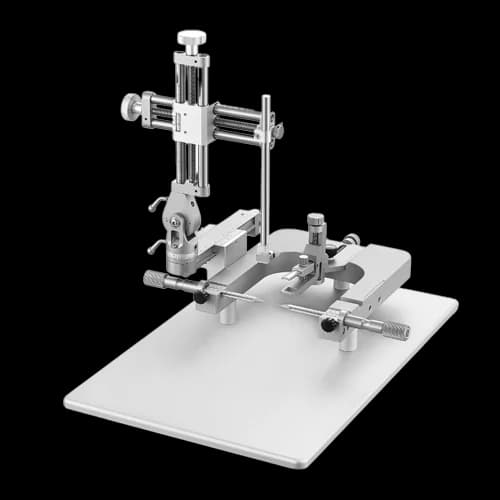
QuoteRoutine rodent targeting and teaching labs.
 $3,851 - $6,606
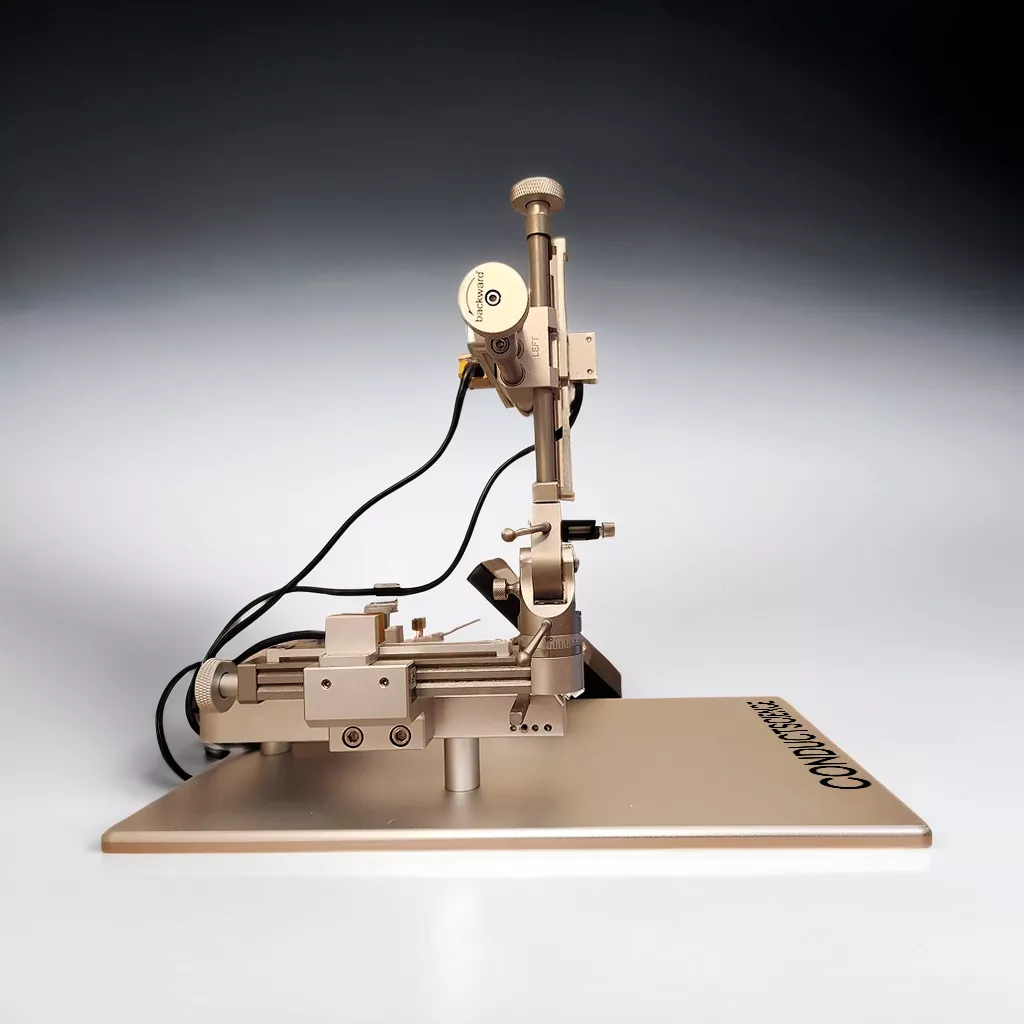
Cleaner coordinate readout and documentation.
 Quote
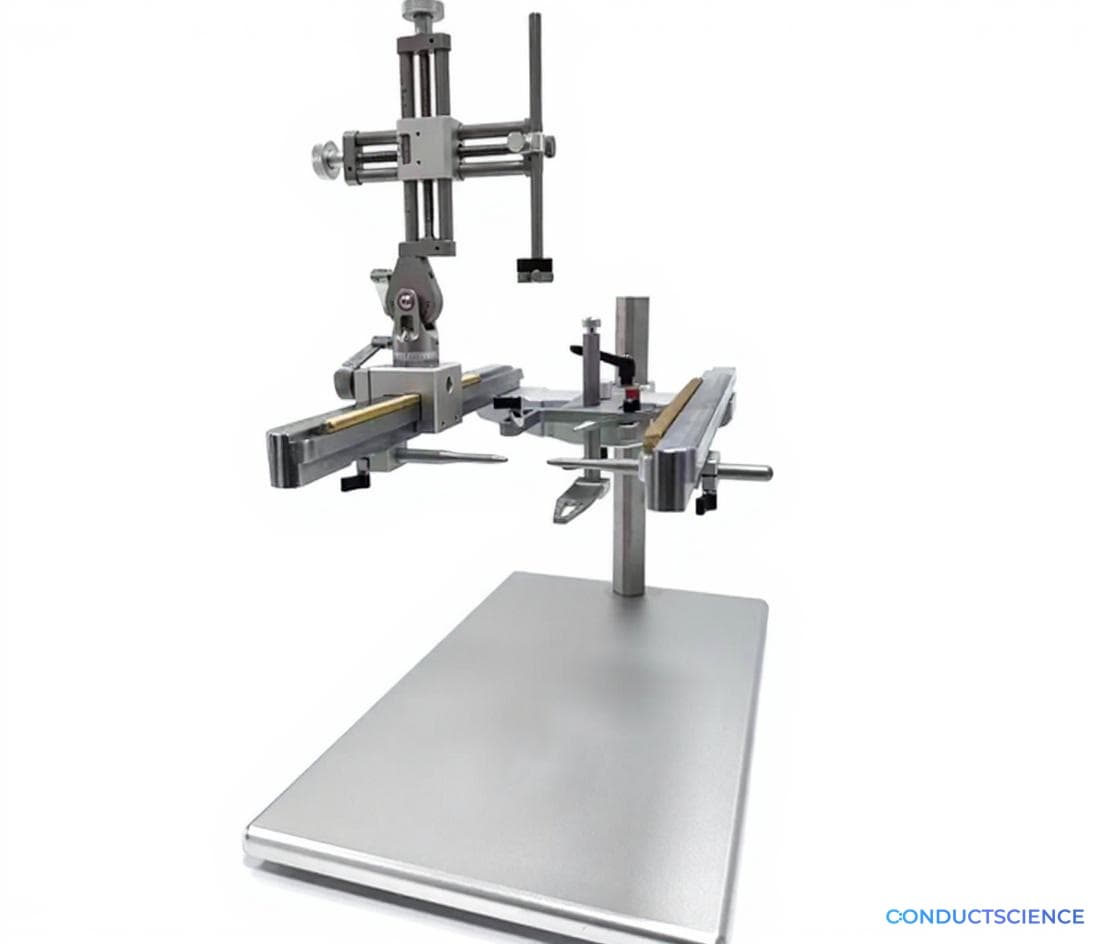
QuoteFlexible access, 180 degree Z-axis rotation, manual or digital build.
 Quote
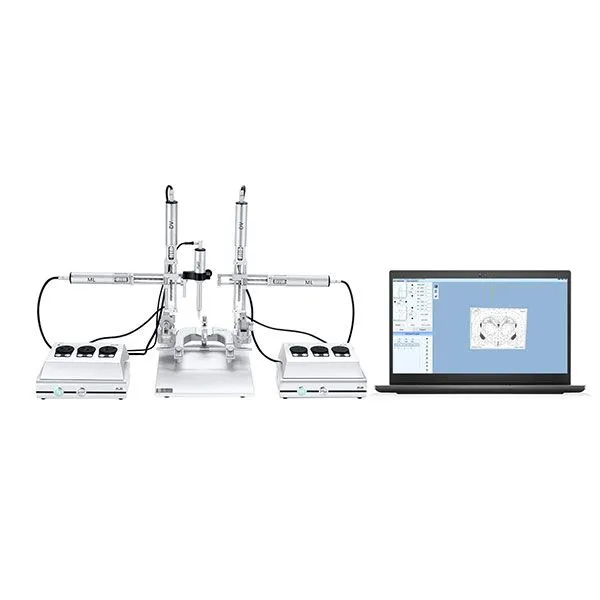
QuoteHigher-end positioning and imaging implant workflows.
 Quote
QuoteCanine, non-human primate, and other large-animal workflows.
04 / frame and accessory builder
Head fixation, manipulator mounting, surgical workflow, injection, anesthesia, and specialized procedure accessories.
Adapters, ear bars, and nose-cone masks for the species you work with.
What you mount to the arm: needles, holders, ferrules, electrodes.
Drill, drill holders, and starter surgery kits.
Push, pump, and dwell hardware that keeps coordinates intact.
Active scavenging and stereotaxic-compatible delivery.
Spinal, TBI/impactor, GRIN-lens, and large-animal extensions.
05 / trajectory planner
The mini planner converts skull thickness, probe length, target depth, and approach angle into entry offset, insertion length, and craniotomy guidance.
Tool / trajectory mini
Use this as a planning aid. Always verify coordinates against the atlas edition and approved protocol.
ConductSurgery
ConductSurgery is the first-party route for protocol-ready planning: subject setup, target tables, trajectory checks, procedure checklists, and a quote-ready equipment bundle.
06 / compare frame classes
Rows are spec-backed and intentionally conservative. New SKUs update the data lane, not the buyer workflow.
| Frame class | Best for | Species | Readout | Arms | Mounted instruments | Quote note |
|---|---|---|---|---|---|---|
| Manual rodent frame | Routine rodent targeting and teaching labs. | Mouse, rat | Vernier 0.1 mm | Single | Syringe, electrode, drill | Specify mouse and/or rat adapters, ear bars, and starter accessories. |
| Digital rodent frame | Cleaner coordinate readout and documentation. | Mouse, rat | Digital 0.01 mm | Single / double | Syringe, electrode, fiber, drill | Specify display preference, bilateral setup, and mounted holders. |
| Advanced 3D system | Flexible access, 180 degree Z-axis rotation, manual or digital build. | Mouse, rat, hamster | Digital 0.01 mm / basic 0.1 mm | Single / double | Syringe, electrode, fiber, GRIN, drill | Confirm digital vs basic build, head-fixing components, and target angle range. |
| Automated and GRIN workflows | Higher-end positioning and imaging implant workflows. | Mouse, rat | Automated 0.01 mm | Single / multi | GRIN, fiber, cannula, electrode | Specify GRIN lens diameter, imaging modality, and multi-site clearance needs. |
| Large-animal locator | Canine, non-human primate, and other large-animal workflows. | Dog, NHP | Digital 0.01 mm | Up to 4 | Electrode, cannula, drill | Specify species, head-frame travel, and arm count. |
07 / connect the workflow
Adjacent ConductScience categories that mount on, run alongside, or pair with stereotaxic frames.
Pumps, syringes, and cannulas for brain injection and chronic delivery.
Browse categoryFerrules, fibers, light sources, and recording rigs that mount onto the frame.
Browse categoryVaporizers, scavenging, and active anesthesia delivery for stereotaxic surgery.
Browse categoryScalpels, forceps, hemostats, and starter kits for cranial procedures.
Browse categoryEEG, ECG, temperature, and respiratory monitoring during and after surgery.
Browse categoryTBI / impactor systems and other established neuroscience research models.
Browse category08 / quote workflow
Include the operating context up front. The sales and science team can return a complete bundle with adapters, holders, training notes, and timelines in a single round trip.