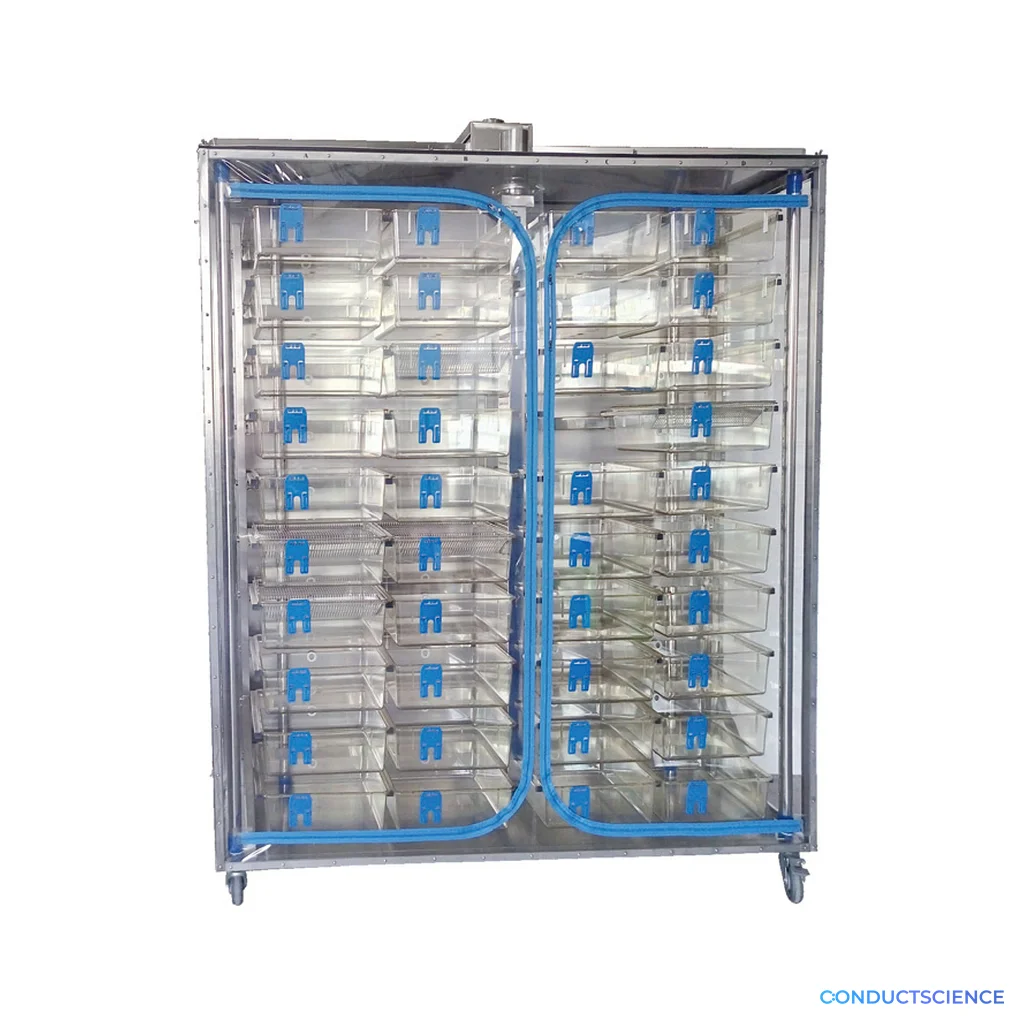
80-Cage Double-Sided IVU Breeding System
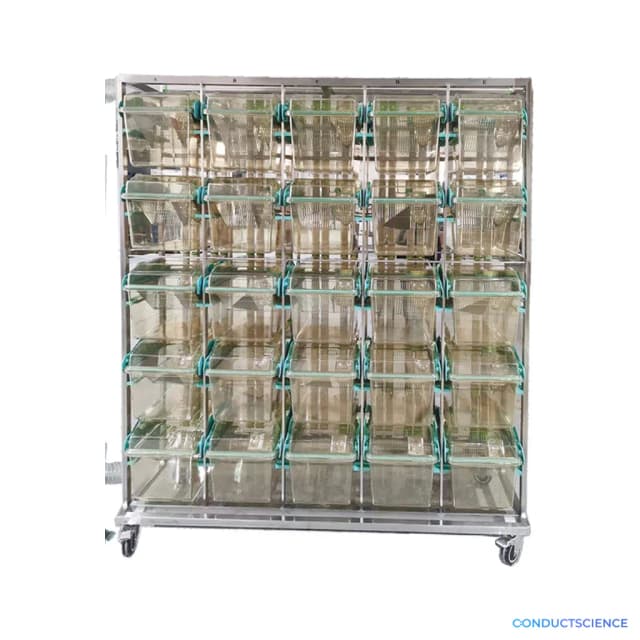
Double-sided IVU micro-barrier housing with 80 larger mouse breeding cages for colony programs that need more capacity while preserving defined observation, records, cage handling, and sanitation.
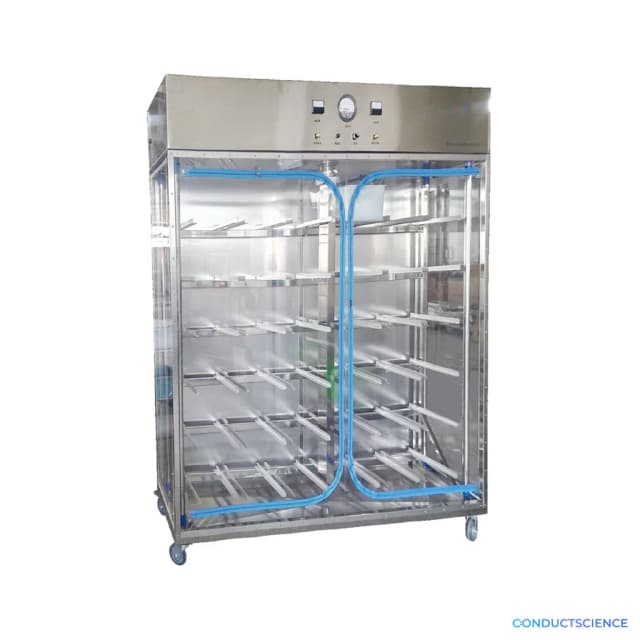
The 1820 × 820 × 2100 mm rack uses 390 × 370 × 130 mm polysulfone cages with centralized supply and exhaust, with two-face access, watering, utilities, and commissioning reviewed together.

Louise Corscadden, PhD
Director of Science · ConductScience
Ask Louise about 80-Cage Double-Sided IVU Breeding System fit, setup, configuration, or quote prep.
Already working with us? Sign in to connect this with My Scientist.
Key Specifications
Full details →- Capacity and layout
- 80 cages · 10 levels × 4 positions × 2 faces · double sided
- Breeding cage dimensions
- 390 × 370 × 130 mm
- Rack dimensions
- 1820 × 820 × 2100 mm
- Cage material
- Polysulfone
- Ventilation
- Centralized supply and exhaust
- Husbandry components
- 250 mL water bottle · plastic record card · PU sealed zipper
Scale mouse breeding capacity without losing the care workflow
This double-sided IVU breeding system places larger mouse cages within a soft-film micro-barrier and distributes them across two working faces. It is intended for approved breeding and colony-maintenance programs that need more cage positions while keeping observation, identification, pairing or separation decisions, feed, water, cage changes, and records practical for animal-care staff. Capacity should be assessed against the full colony workflow.
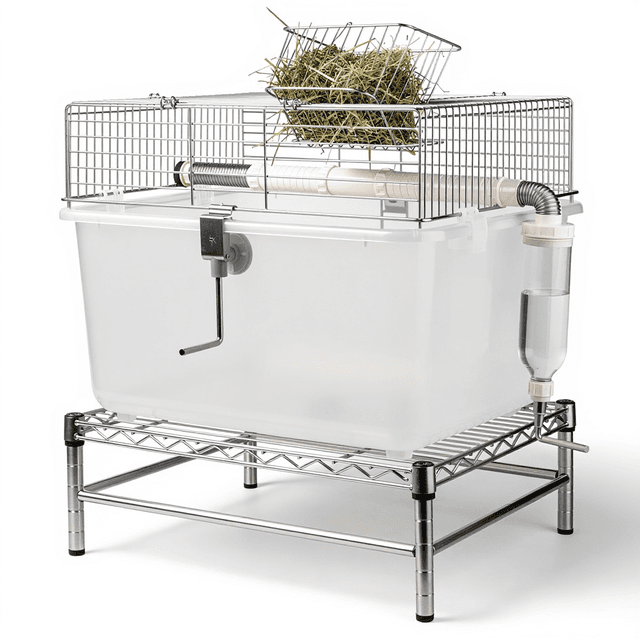
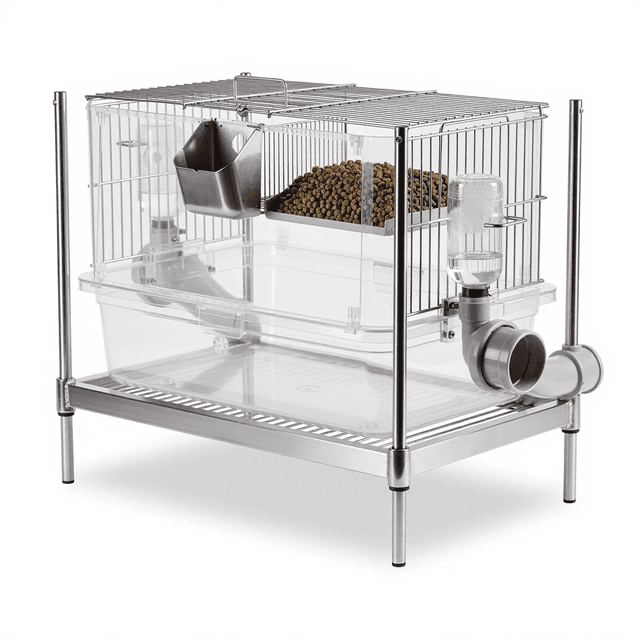
The rack measures 1820 × 820 × 2100 mm and provides 80 cage positions across 10 levels, 4 positions, and 2 faces. Each polysulfone breeding cage measures 390 × 370 × 130 mm. A 250 mL water bottle and plastic record card are documented husbandry components. The system uses a PU sealed zipper, centralized supply and exhaust, and a soft-film boundary. Automatic watering can be configured when it matches the facility and care plan.
The two-sided layout can increase breeding capacity within a compact room zone, but it also requires clear care areas at both faces. Check staff reach, enclosure opening, cage removal, temporary cage support, record access, carts, and clean-to-used material flow on each side. The room plan should protect maintenance and emergency routes while allowing routine care to proceed without congestion.
The operating procedure should define cage identity, breeding and litter records, observation, animal moves, feed and bedding transfer, water checks, sanitation, and backup housing. Barrier procedures should state how the film and zipper are inspected and how deviations are handled. Facilities staff should confirm room air, centralized supply and exhaust, power, controls, alarms, monitoring, automatic watering, heat and noise, and service access.
Share the breeding program, expected cage use, care staffing, observation and record workflow, sanitation plan, water method, room drawing, monitoring needs, and delivery route with ConductScience. The final quote will identify the rack, larger cages, enclosure, air and control package, husbandry components, watering option, installation, commissioning, training, and accessories. This gives the added capacity a clear scientific, care, and facility context.
Features & Benefits
Capacity and layout
- 80 cages · 10 levels × 4 positions × 2 faces · double sided
Breeding cage dimensions
- 390 × 370 × 130 mm
Rack dimensions
- 1820 × 820 × 2100 mm
Cage material
- Polysulfone
Ventilation
- Centralized supply and exhaust
Husbandry components
- 250 mL water bottle · plastic record card · PU sealed zipper
Watering option
- Automatic watering configurable
Setup Guide
What’s in the Box
- Selected double-sided IVU breeding system; rack, breeding cages, enclosure, air package, husbandry components, watering option, and controls confirmed in the quote
How does this differ from the single-sided breeding system?
It places larger breeding cages on two working faces, adding capacity while requiring care and service clearance on both sides.
What should be included in the colony plan?
Include cage use, pairing, litter observation, separation, identification, records, staffing, sanitation, and backup housing.
When should automatic watering be selected?
Select it only when the approved care method and facility water plan support the quoted package and monitoring approach.
Have a question about this product?
Have a question? Just ask.
Send it over and we'll email you a personalized answer — no call, no scheduling.
Prefer to talk it through?