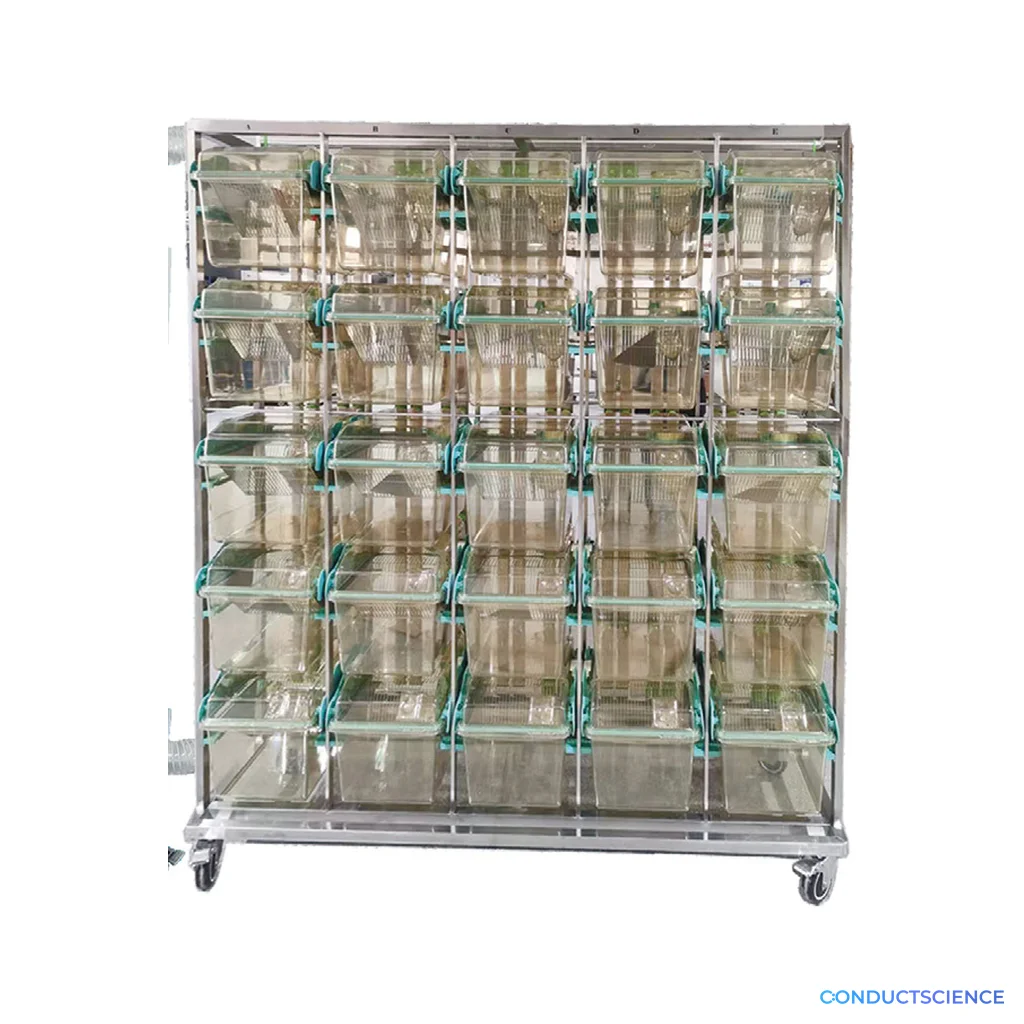
Rat Negative-Pressure Biosafety IVC System
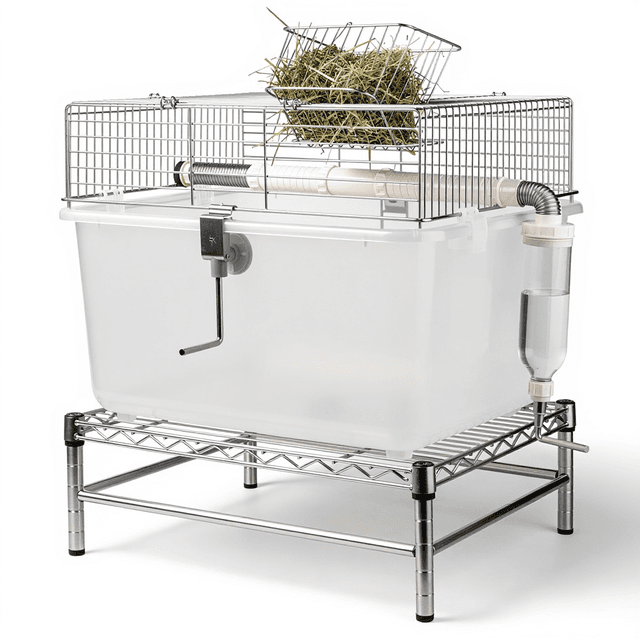
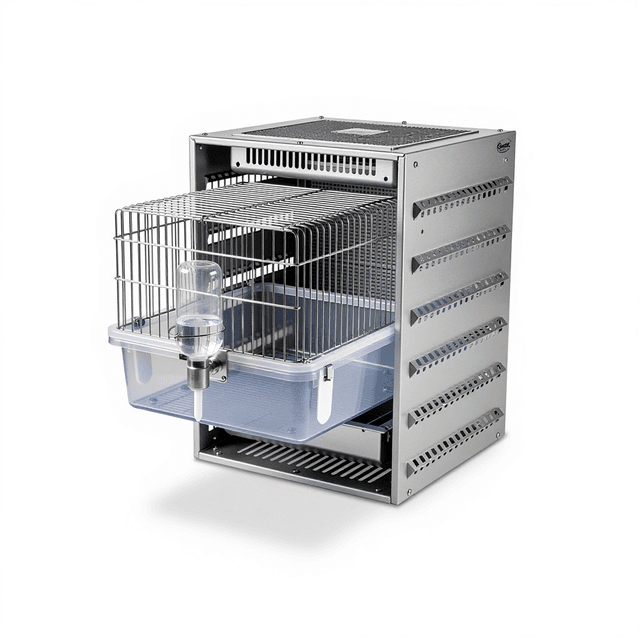
Negative-pressure rat IVC housing with a 461 × 312 × 308 mm cage and dual intake and exhaust ports for controlled cage-level ventilation.
The adjustable -50 to -10 Pa range, four rack layouts from 16 to 30 cages, and documented airflow, cleanliness, noise, and airtightness values give research, care, biosafety, and facility teams a concrete basis for containment planning.

Louise Corscadden, PhD
Director of Science · ConductScience
Ask Louise about Rat Negative-Pressure Biosafety IVC System fit, setup, configuration, or quote prep.
Already working with us? Sign in to connect this with My Scientist.
Key Specifications
Full details →- Cage dimensions
- 461 × 312 × 308 mm
- Cage ports
- Dual intake and exhaust
- Operating pressure
- -50 to -10 Pa · adjustable
- Ventilation performance
- ≥20 air changes/h · 0.05-0.13 m/s · ISO 5 · ≤50 dB(A)
- Cage airtightness
- ≥5 min pressure decay from -100 Pa to 0 Pa
- Rack layouts
- 16 cages · 4 × 4 · 1354 × 550 × 1565 mm, 20 cages · 5 × 4 · 1354 × 550 × 1880 mm, 25 cages · 5 × 5 · 1685 × 550 × 1880 mm, 30 cages · 5 × 6 · 2016 × 550 × 1880 mm
Coordinate rat housing, containment, and daily care
This negative-pressure rat IVC system brings larger rodent cages, controlled airflow, and filtered room integration into one planning decision. It is designed for programs in which containment requirements affect routine observation, cage transfers, sanitation, alarm response, and the way the animal room is serviced. The final configuration should be selected jointly by investigators, animal-care staff, veterinary personnel, biosafety professionals, and facilities teams.
The rat cage measures 461 × 312 × 308 mm and uses dual intake and exhaust ports. Cage pressure is adjustable from -50 to -10 Pa. The catalog records airflow from 0.05 to 0.13 m/s, at least 20 air changes per hour, ISO 5 cleanliness, a settling count of 0, and noise no greater than 50 dB(A). Airtightness is stated as at least 5 minutes for pressure decay from -100 Pa to 0 Pa. These values define the equipment range; the approved protocol and commissioning results determine how it is operated.
Rat studies create practical demands that are different from mouse housing. Cage mass, animal size, observation needs, enrichment, feed and water checks, transfer equipment, and temporary cage support all affect the care workflow. The team should define how cages move from rack to work area, how ports and seals are inspected, when a cage may be opened, and how deviations are documented and managed.
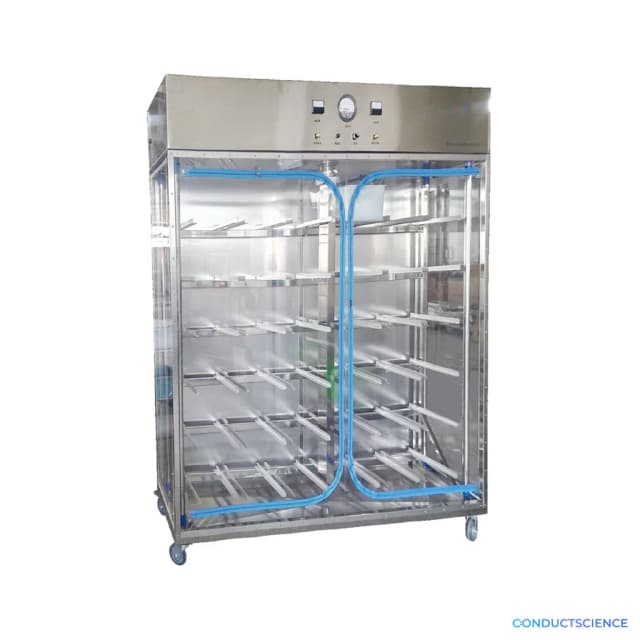
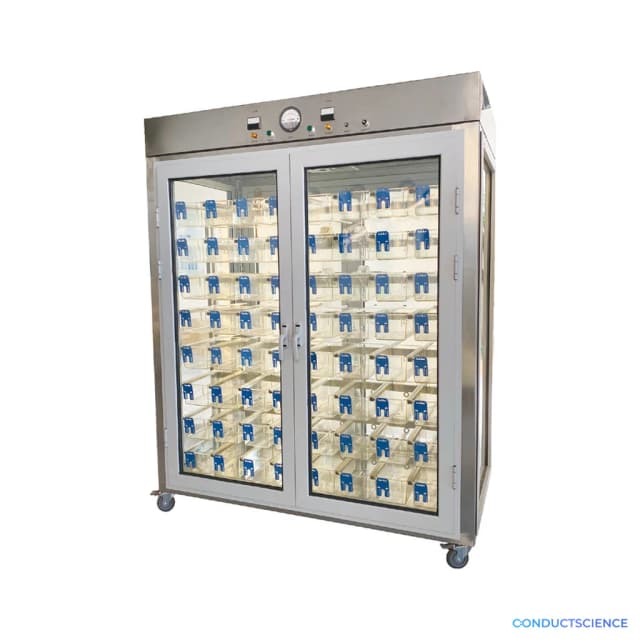
Four rack layouts support 16, 20, 25, or 30 cages. The largest arrangement measures 2016 × 550 × 1880 mm, while the smallest measures 1354 × 550 × 1565 mm. Capacity should follow the approved animal program and room constraints, not simply the maximum number of positions. Review aisle width, staff reach, exhaust capacity, maintenance access, backup housing, and delivery clearances before choosing.
Share the biosafety assessment, rat size and stocking plan, study duration, room drawing, exhaust strategy, cage-change method, sanitation process, alarms, backup plan, and delivery route with ConductScience. The quote will define the chosen rack, cage and port arrangement, ventilation and control package, accessories, installation, testing, training, and commissioning. That record helps the facility operate the system consistently throughout the study.
Features & Benefits
Cage dimensions
- 461 × 312 × 308 mm
Cage ports
- Dual intake and exhaust
Operating pressure
- -50 to -10 Pa · adjustable
Ventilation performance
- ≥20 air changes/h · 0.05-0.13 m/s · ISO 5 · ≤50 dB(A)
Cage airtightness
- ≥5 min pressure decay from -100 Pa to 0 Pa
Rack layouts
- 16 cages · 4 × 4 · 1354 × 550 × 1565 mm
- 20 cages · 5 × 4 · 1354 × 550 × 1880 mm
- 25 cages · 5 × 5 · 1685 × 550 × 1880 mm
- 30 cages · 5 × 6 · 2016 × 550 × 1880 mm
Setup Guide
What’s in the Box
- Selected rat negative-pressure IVC system; cages, rack, ventilation unit, controls, accessories, and commissioning scope confirmed in the quote
Why are dual ports useful for this cage?
They provide defined intake and exhaust connections for the larger rat enclosure within the rack ventilation system.
Can the largest rack be selected by capacity alone?
No. Rat handling, room exhaust, staff reach, aisle space, maintenance, and contingency housing should determine the practical capacity.
What should commissioning include?
Include cage pressure, airflow, airtightness, alarms, controls, exhaust integration, cage handling, and documented response procedures.
Have a question about this product?
Have a question? Just ask.
Send it over and we'll email you a personalized answer — no call, no scheduling.
Prefer to talk it through?