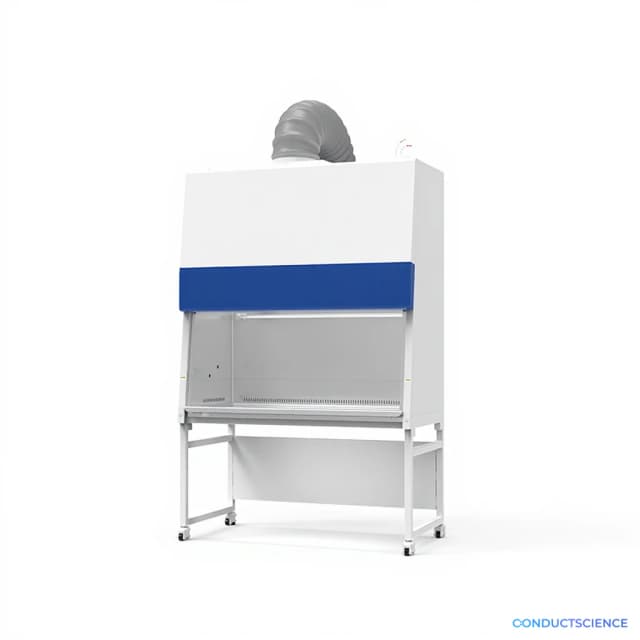
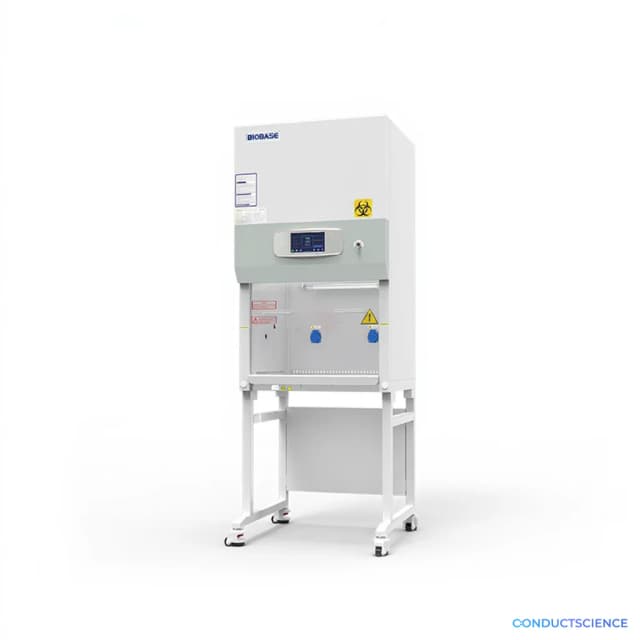
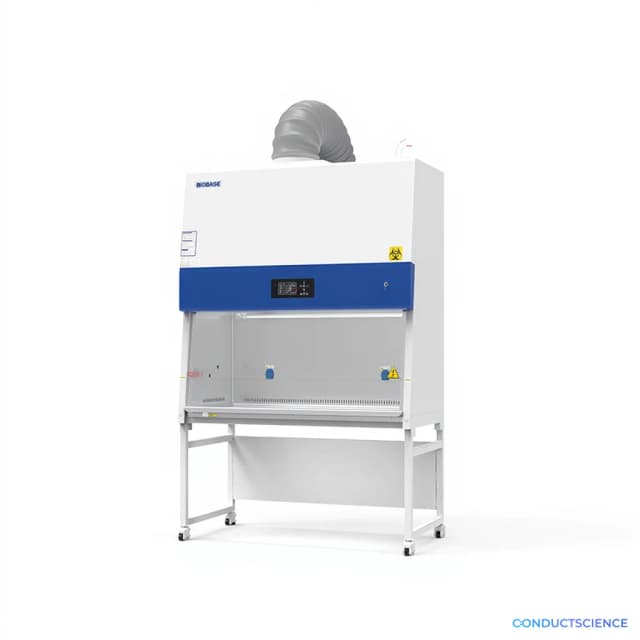
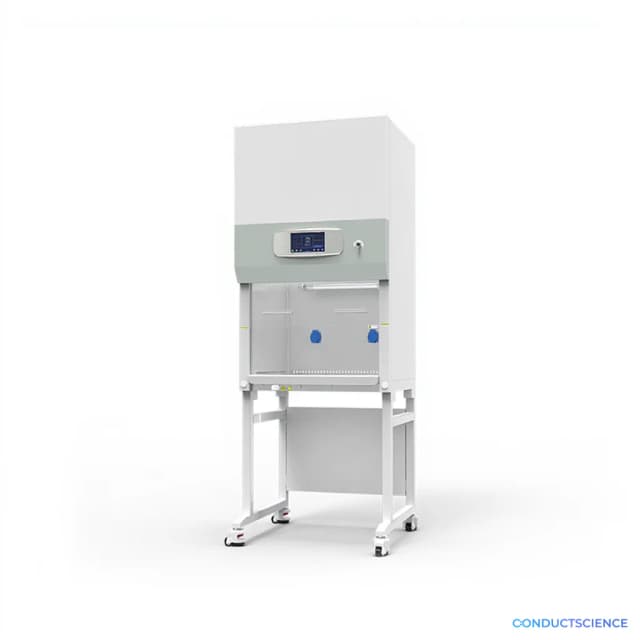
AC Series Class II A2 Biological Safety Cabinet
Class II A2 biological safety cabinet with dual ULPA filtration and motorized front window, providing sterile containment for microbiological research across five work surface sizes.

Louise Corscadden, PhD
Director of Science · ConductScience
Ask Louise about AC Series Class II A2 Biological Safety Cabinet fit, setup, configuration, or quote prep.
Already working with us? Sign in to connect this with My Scientist.
Key Specifications
Full details →- Model fit
- Configured during quote
- SKU family
- BIO-0888
- Shipping box
- 220.0 x 110.0 x 75.5 cm
- Ordering
- Online checkout and quote request available
- Category
- Clean Benches & Fume Hoods
- Build notes
- Confirm accessories, station layout, and support needs before purchase
The AC Series Class II A2 Biological Safety Cabinet provides controlled sterile environment protection for microbiological research and pharmaceutical applications. This cabinet maintains biosafety containment through engineered airflow patterns with 0.53±0.025 m/s inflow velocity and 0.33±0.025 m/s downflow velocity, filtered through dual ULPA filters achieving 99.9995% efficiency at 0.12 micrometers.
Available in five work surface configurations ranging from 940×600 mm to 1800×600 mm internal dimensions, the cabinet accommodates diverse laboratory workflows from small-scale cell culture to large batch processing. The motorized front window features two-layer laminated toughened glass (≥6mm) with anti-UV properties, while integrated filter life indicators provide maintenance scheduling guidance.
How It Works
The Class II A2 biological safety cabinet operates through engineered laminar airflow patterns that provide three levels of protection: operator, product, and environmental. Room air is drawn into the cabinet through the front opening at 0.53±0.025 m/s, creating an inward directional airflow that prevents contaminated air from escaping the work zone. This incoming air mixes with recirculated cabinet air and passes through dual ULPA filters.
Filtered air descends through the work zone at 0.33±0.025 m/s as a laminar downflow curtain, providing product protection by bathing work surfaces in sterile air. Approximately 70% of this air recirculates through the supply ULPA filter, while 30% is exhausted through the exhaust ULPA filter. The dual ULPA filtration system removes 99.9995% of particles ≥0.12 micrometers, including bacteria, viruses, and particulate contaminants.
The motorized front window maintains optimal opening height for proper airflow dynamics while the two-layer laminated toughened glass construction provides impact resistance and UV protection for light-sensitive samples. Filter life indicators monitor ULPA filter loading to ensure maintained performance throughout operational life.
Features & Benefits
Automation Level
- semi-automated
BSC-1300IIA2-X
- BSC-1500IIA2-X
BSC-1800IIA2-X
- BSC-2000IIA2-X
External Size(W*D*H)
- 1100*755*2200mm
1300*755*2200mm
- 1500*755*2200mm
1800*755*2200mm
- 1950*775*2200mm
Internal Size(W*D*H)
- 940*600*660mm
1150*600*660mm
- 1350*600*660mm
1625*600*660mm
- 1800*600*660mm
Tested Opening
- Safety height 200mm(8)
Max Opening
- 480mm
Inflow Velocity
- 0.53±0.025m/s
Downflow Velocity
- 0.33±0.025m/s
ULPA Filter
- Two, 99.9995% efficiency at 0.12μm, filter life indicator
Front Window
- Motorized. Two-layer laminated toughened glass≥6mm. Anti UV
Brand
- ConductScience
Research Domain
- Cancer Research
- Cell Biology
- Clinical Diagnostics
- Immunology
- Microbiology
- Pharmaceutical QC
Shipping weight
- 220.0 lb
Shipping box
- L: 220.0 cm
- W: 110.0 cm
- H: 75.5 cm
| Feature | This Product | Typical Alternative | Advantage |
|---|---|---|---|
| ULPA Filter Efficiency | 99.9995% at 0.12 micrometers | Entry-level models often use HEPA filters with 99.97% efficiency at 0.3 micrometers | Higher filtration efficiency removes smaller viral particles for enhanced biological containment. |
| Work Surface Options | Five internal dimensions from 940×600mm to 1800×600mm | Basic models typically offer 2-3 standard sizes | Greater size selection optimizes laboratory space utilization and workflow accommodation. |
| Window Control System | Motorized front window with precise height control | Manual sash positioning with counterweight systems | Automated positioning maintains consistent airflow performance and reduces operator fatigue. |
| Glass Construction | Two-layer laminated toughened glass ≥6mm with anti-UV properties | Single-layer tempered glass without UV protection | Enhanced safety and protection for light-sensitive biological samples during extended procedures. |
| Airflow Monitoring | Filter life indicators for maintenance scheduling | Manual filter inspection or fixed replacement schedules | Proactive maintenance prevents contamination risk from filter degradation. |
This cabinet combines dual ULPA filtration with motorized window control and multiple work surface configurations. The anti-UV glass construction and integrated monitoring systems support demanding biological research applications requiring consistent containment performance.
Practical Tips
Verify airflow velocities annually using a calibrated anemometer at multiple points across the work opening.
Why: Airflow degradation can compromise containment effectiveness before becoming visually apparent.
Clean work surfaces with 70% ethanol in a back-to-front wiping motion to avoid disturbing airflow patterns.
Why: Proper cleaning technique maintains sterile conditions without creating air turbulence.
Position equipment at least 4 inches from the front grille to maintain optimal inward airflow.
Why: Obstruction of the front air intake can create turbulence that compromises containment.
If airflow seems reduced, check for obstructions in the front intake grille before assuming filter replacement is needed.
Why: Simple blockages can mimic filter loading symptoms and are easily resolved without unnecessary maintenance.
Log filter life indicator readings weekly to track degradation patterns and predict replacement timing.
Why: Trending filter performance helps optimize replacement schedules and prevents unexpected containment failures.
Never block the front opening with equipment or materials during operation.
Why: Airflow disruption can allow contaminated air to escape the cabinet, compromising operator protection.
Allow the cabinet to run for 15 minutes after completing work to purge any residual contaminants.
Why: Continued operation ensures complete air exchange before cabinet shutdown.
Setup Guide
What’s in the Box
- AC Series Class II A2 Biological Safety Cabinet
- Dual ULPA filter set (supply and exhaust)
- Motorized front window assembly
- Power connection cables
- Installation and operation manual
- Performance certification documentation
- Filter life indicator system
- Work surface and interior lighting (typical)
Warranty
ConductScience provides a standard one-year manufacturer warranty covering defects in materials and workmanship, with technical support for installation guidance and operational questions.
Compliance
What is the difference between inflow and downflow velocity specifications?
Inflow velocity (0.53 m/s) draws room air into the cabinet for operator protection, while downflow velocity (0.33 m/s) creates the sterile air curtain over the work surface for product protection.
How do I determine the appropriate cabinet size for my laboratory?
Select based on your largest routine procedure requirements - the 940×600mm internal surface accommodates standard microplate work, while 1800×600mm supports larger equipment or multiple simultaneous operations.
What maintenance is required for the ULPA filters?
Monitor the integrated filter life indicators and replace filters when indicated, typically every 2-3 years depending on usage and environmental conditions.
Can this cabinet be used for both recirculation and ducted exhaust modes?
Configuration depends on your specific model and facility requirements - consult product datasheet for exhaust options and local building codes for ducting requirements.
What is the maximum opening height for equipment access?
The front window extends to a maximum 480mm opening while maintaining containment integrity, though optimal operation occurs at the standard 200mm working height.
How long should the cabinet run before beginning sterile procedures?
Allow minimum 15 minutes equilibration time for airflow stabilization, though some protocols may require longer warm-up periods depending on the application.
What type of decontamination methods are compatible with this cabinet?
Chemical surface decontamination is standard; consult product documentation for compatibility with vapor decontamination methods and UV sterilization options.
Have a question about this product?
Have a question? Just ask.
Send it over and we'll email you a personalized answer — no call, no scheduling.
Prefer to talk it through?
Accessories
Enhance your setup with compatible accessories