Active Cell Sorting PDMS Chip (200 um)
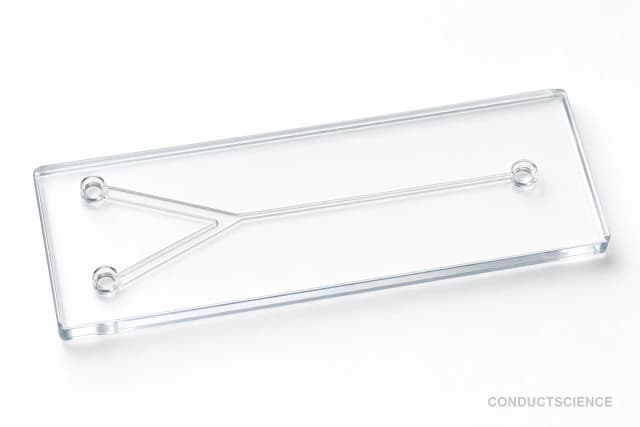
PDMS microfluidic chip with 200 μm channels for active and passive cell sorting, supporting FACS-on-chip and dielectrophoresis applications.
Reusable chip — designed for multiple experimental runs. Compatible with standard microfluidic tubing: steel pins (0.7 mm ID / 1.0 mm OD) and silicone tubing (0.8 mm ID / 1.9 mm OD). Available in bulk packs (5‑, 10‑, and 25‑unit) for lab-scale and consumable workflows.

Louise Corscadden, PhD
Director of Science · ConductScience
Ask Louise about Active Cell Sorting PDMS Chip (200 um) fit, setup, configuration, or quote prep.
Already working with us? Sign in to connect this with My Scientist.
Key Specifications
Full details →- Model fit
- 3 selectable configurations
- SKU family
- WHM-0079
- Shipping box
- 181.8 x 136.3 x 90.9 cm
- Ordering
- Online checkout and quote request available
- Category
- Cell Culture Chips
- Build notes
- Confirm accessories, station layout, and support needs before purchase
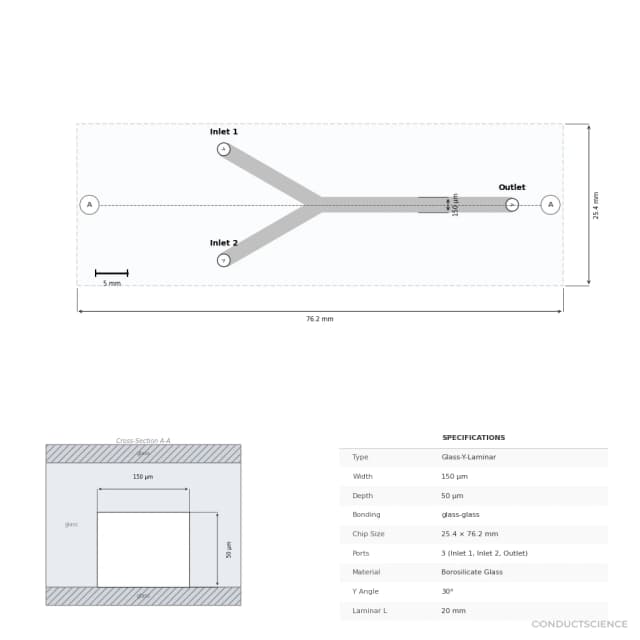
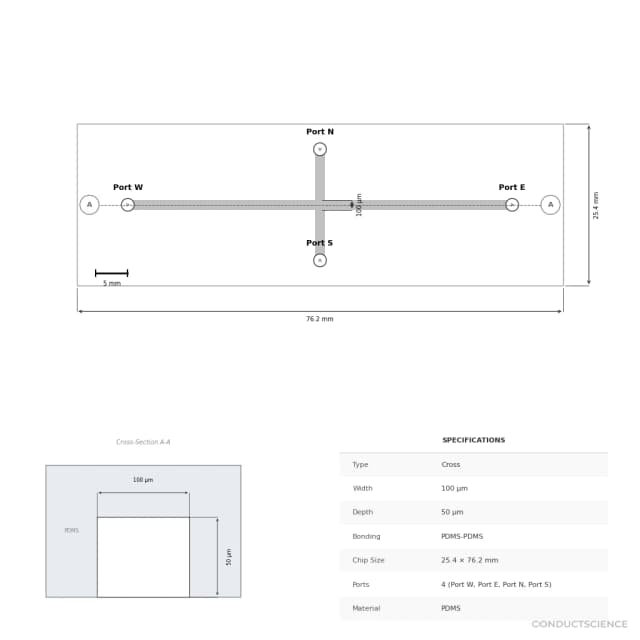
The Active Cell Sorting PDMS Chip (200 μm) is a microfluidic device engineered for precise cell separation and analysis applications. Fabricated from polydimethylsiloxane (PDMS), this chip features 200 x 200 μm channels designed to accommodate single cell manipulation and sorting workflows. The device integrates both passive and active sorting mechanisms, supporting fluorescence-activated cell sorting (FACS) and dielectrophoresis (DEP) techniques for enhanced separation efficiency.
This microfluidic platform enables researchers to perform cell isolation, purification, and analysis at the single-cell level within a controlled chip-based environment. The 200 μm channel dimensions provide optimal balance between cell viability maintenance and precise fluidic control, making it suitable for various cell types commonly used in research applications. The chip design supports integration with standard microscopy and flow cytometry detection systems for real-time monitoring and analysis.
How It Works
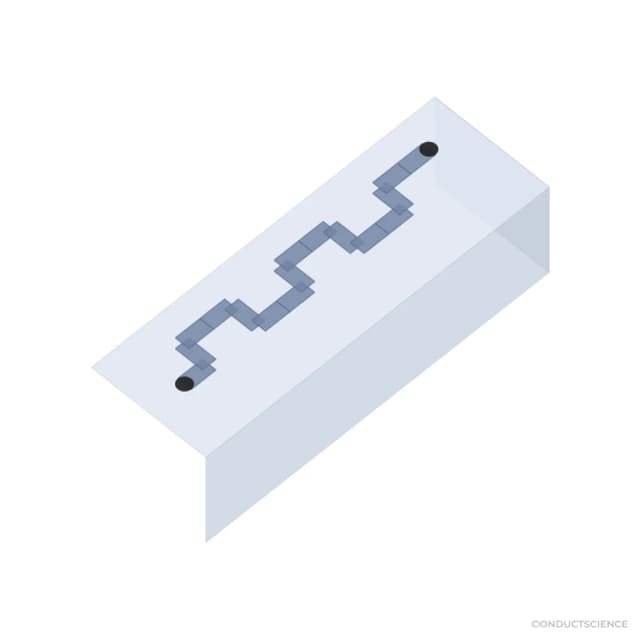
The chip operates through combined passive and active sorting mechanisms within precisely engineered microfluidic channels. Passive sorting relies on hydrodynamic forces and channel geometry to separate cells based on size and deformability. Cells flow through the 200 x 200 μm channels where larger cells experience different flow patterns compared to smaller cells, enabling size-based separation.
Active sorting is achieved through fluorescence-activated cell sorting (FACS) and dielectrophoresis (DEP) techniques. For FACS operation, fluorescently labeled cells are detected by integrated optical systems, triggering precise fluidic switching to direct target cells to collection outlets. DEP sorting utilizes non-uniform electric fields generated by embedded electrodes to manipulate cells based on their dielectric properties, allowing separation based on electrical characteristics rather than size alone.
The PDMS material provides optical transparency for real-time monitoring while maintaining biocompatibility and gas permeability essential for cell viability during sorting processes. The channel dimensions are optimized to minimize shear stress while ensuring reliable single-cell manipulation and high sorting purity.
Features & Benefits
Shipping weight
- 3.3 lb
Shipping box
- L: 181.8 cm
- W: 136.3 cm
- H: 90.9 cm
| Feature | This Product | Typical Alternative | Advantage |
|---|---|---|---|
| Channel Dimensions | 200 x 200 μm channels | Varies by model, often smaller channels around 50-100 μm | Larger channels reduce clogging risk and accommodate diverse cell types while maintaining single-cell resolution |
| Sorting Methods | Both passive and active (FACS + DEP) sorting | Often limited to single sorting mechanism | Multiple sorting approaches provide flexibility to optimize separation for different cell types and applications |
| Material Construction | PDMS fabrication | Glass or silicon substrates common in some devices | PDMS provides superior optical clarity, biocompatibility, and gas permeability for maintaining cell viability |
| Application Scope | Cell sorting and FACS-on-chip applications | Many devices limited to single application type | Versatile platform supports multiple experimental workflows from basic sorting to complex single-cell analysis |
| Integration Capability | Compatible with FACS and DEP systems | Limited integration options with existing equipment | Seamless integration with standard laboratory detection systems reduces setup complexity and equipment requirements |
This microfluidic chip combines the gentleness of passive sorting with the precision of active sorting methods in a single PDMS device. The 200 μm channels accommodate various cell types while the dual sorting capability provides experimental flexibility not found in single-mechanism devices.
| Model | SKU | Listed price | Status | Shipping box |
|---|---|---|---|---|
| 25-Pack | WHM-0079-25PK | Quote | Available | 181.8 x 136.3 x 90.9 cm |
| 10-Pack | WHM-0079-10PK | $1,490.00 | Available | 181.8 x 136.3 x 90.9 cm |
| 5-Pack | WHM-0079-5PK | Quote | Available | 181.8 x 136.3 x 90.9 cm |
Practical Tips
Pre-wet channels with appropriate buffer before introducing cell samples to prevent air bubble formation and ensure consistent flow patterns.
Why: Air bubbles can disrupt sorting performance and cause cell aggregation or loss.
Clean channels immediately after use with PBS followed by deionized water to prevent protein buildup and maintain optical clarity.
Why: Protein deposits can alter channel surface properties and affect cell behavior during subsequent experiments.
Use fluorescent beads of known size to verify sorting performance and optimize flow rate parameters before processing cell samples.
Why: Bead standards provide consistent reference for validating system performance and troubleshooting sorting issues.
Monitor cell viability before and after sorting using trypan blue or live/dead staining to assess process impact on cell health.
Why: Sorting process can stress cells, and viability monitoring ensures downstream experiments use healthy cells.
If cells aggregate in channels, reduce flow rate and check sample preparation for proper single-cell suspension.
Why: Cell aggregates can clog channels and reduce sorting efficiency while compromising single-cell analysis requirements.
Use appropriate containment when processing potentially hazardous cell lines and dispose of chips according to institutional biosafety protocols.
Why: Microfluidic devices may retain cellular material requiring proper decontamination procedures.
Maintain consistent temperature during sorting to prevent thermal effects on cell behavior and dielectrophoretic properties.
Why: Temperature fluctuations can alter cell membrane properties and affect separation based on electrical characteristics.
Setup Guide
What’s in the Box
- Active Cell Sorting PDMS Chip (200 μm)
- User manual with protocols (typical)
- Chip holder or mounting adapter (typical)
- Quality control certificate (typical)
Warranty
ConductScience provides a standard 1-year manufacturer warranty covering defects in materials and workmanship. Technical support is available for setup assistance and protocol optimization.
Compliance
What cell sizes are compatible with the 200 μm channels?
The 200 x 200 μm channels accommodate most mammalian cell types ranging from 10-30 μm diameter, including primary cells, cell lines, and some larger cells like hepatocytes. Consult product datasheet for specific size recommendations.
Can the chip be reused for multiple experiments?
PDMS chips can typically be reused after thorough cleaning and sterilization protocols, though performance may degrade over multiple uses. Single-use is recommended for critical applications to ensure optimal sorting performance.
What detection systems are compatible with this chip?
The chip works with standard fluorescence microscopy systems, flow cytometry detectors, and electrical impedance measurement systems depending on the sorting method employed. Optical transparency supports most fluorescence wavelengths.
How is sorting purity and efficiency determined?
Sorting performance is evaluated by collecting sorted fractions and analyzing using flow cytometry, microscopy, or molecular markers. Purity typically depends on flow rates, cell concentration, and detection parameters.
What sample preparation is required before sorting?
Cells should be single-cell suspended in appropriate buffer, filtered to remove debris, and adjusted to optimal concentration. Viability staining or fluorescent labeling may be required depending on sorting method.
Can this chip handle primary cells and sensitive cell types?
Yes, the low-shear microfluidic environment and PDMS biocompatibility make it suitable for primary cells, stem cells, and other sensitive cell types that may be damaged in conventional sorting systems.
What throughput can be achieved with this system?
Throughput depends on sorting method and required purity but is typically lower than conventional flow cytometry. The advantage is reduced sample volume requirements and gentler cell handling. Consult product datasheet for specific flow rate capabilities.
Have a question about this product?
Have a question? Just ask.
Send it over and we'll email you a personalized answer — no call, no scheduling.
Prefer to talk it through?