1 / 6
Automated Open Field
SKU CS-958347
$3,795.00
IncludesStandard care
Automated behavioral monitoring system for open field exploration testing in mice and rats with real-time tracking and integrated data analysis software.
Scientist guidance

Louise Corscadden, PhD
Director of Science · ConductScience
Ask Louise about Automated Open Field fit, setup, configuration, or quote prep.
Already working with us? Sign in to connect this with My Scientist.
Key Specifications
Full details →- Model fit
- Mouse, Rat
- SKU family
- CS-958347
- Sizing
- Mouse: 40 x 40 x 30 cm (L x W x H); Rat: 60 x 60 x 40 cm (L x W x H)
- Ordering
- Online checkout and quote request available
- Category
- Automated Mazes
- Build notes
- Plexiglass
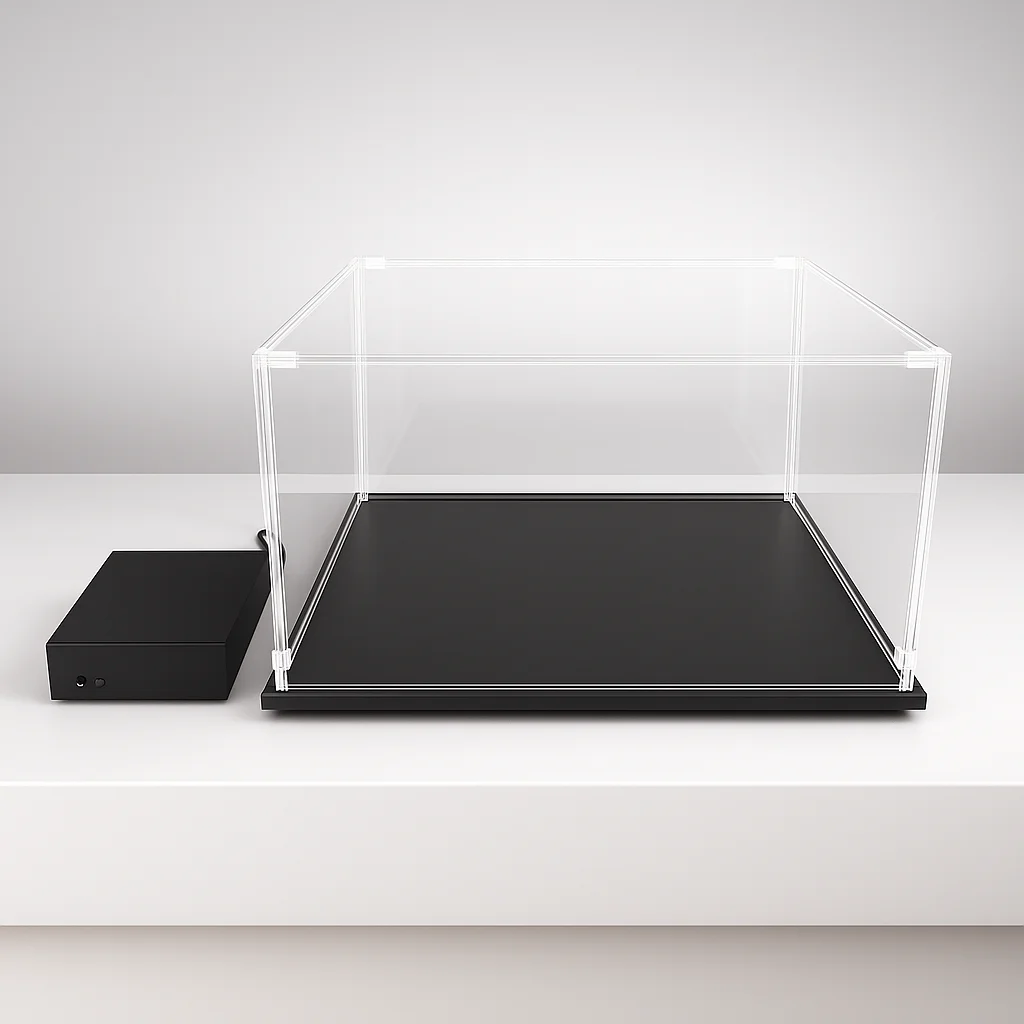
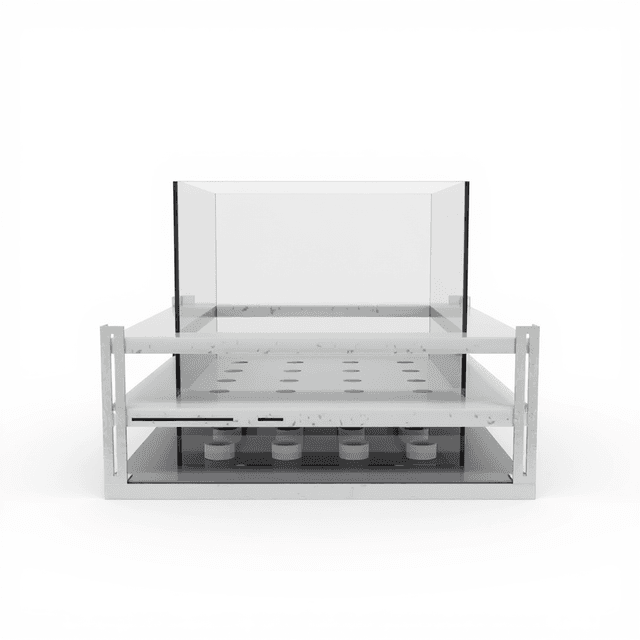
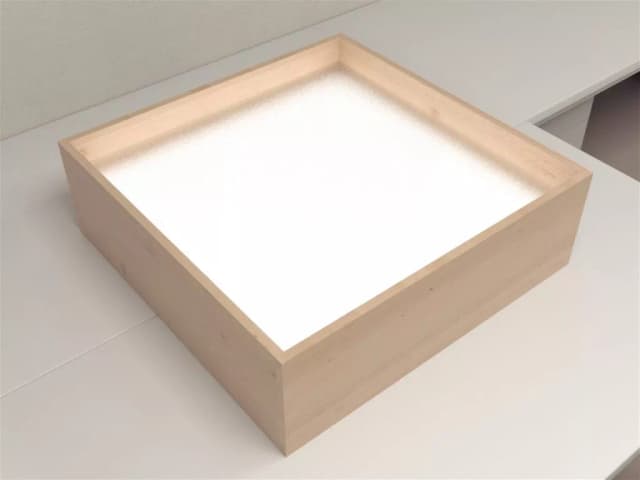
The Automated Open Field system provides real-time behavioral monitoring for mice and rats in exploration and novelty paradigms. This automated apparatus features species-specific arena dimensions with photoarray sensor systems that capture X, Y, and Z coordinate movements throughout experimental sessions. The integrated software records animal location, locomotion patterns, and vertical activity with adjustable time intervals for comprehensive behavioral phenotyping.
The system incorporates 16 evenly spaced floor holes with species-appropriate diameters and adjustable sensor heights for detecting nose-poke behaviors and exploratory interactions. Visual tracking capabilities generate path illustrations and activity maps, enabling researchers to analyze locomotor patterns, zone preferences, and exploratory behaviors in real-time or post-experiment. The plexiglass construction provides clear observation while maintaining standardized environmental conditions for reproducible behavioral assessments.
How It Works
The Automated Open Field system employs photoarray sensors arranged in X, Y, and Z configurations to detect animal movement through infrared beam interruptions. The X and Y sensor frames capture horizontal movement across the arena floor, while the Z frame monitors vertical activity including rearing behaviors and jump events. When an animal moves through the detection grid, beam breaks are registered and converted to coordinate data that is scaled to the physical arena dimensions.
The integrated software processes sensor data in real-time, calculating position coordinates, path trajectories, and activity metrics throughout the experimental session. Movement data is continuously recorded and can be analyzed using adjustable time intervals to examine behavior patterns at different temporal resolutions. The system generates visual representations of animal paths and activity heat maps by plotting coordinate sequences over time.
Floor-mounted holes with adjustable sensors enable detection of exploratory nose-poke behaviors, adding a vertical dimension to standard open field measurements. The combination of horizontal tracking and exploratory interaction monitoring provides comprehensive behavioral profiling for anxiety, locomotion, and exploration studies in rodent research.
Features & Benefits
Species-specific arena dimensions
Provides appropriate exploration space with 40x40 cm for mice and 60x60 cm for rats to ensure standardized behavioral assessments.
Photoarray sensor system with X, Y, Z detection
Captures comprehensive movement data including horizontal locomotion and vertical rearing behaviors for complete behavioral profiling.
Real-time location tracking and path visualization
Enables immediate observation of animal behavior patterns and generates detailed movement maps for analysis.
16 evenly spaced floor holes with adjustable sensors
Monitors exploratory nose-poke behaviors with species-appropriate hole diameters (2 cm for mice, 3 cm for rats).
Integrated data analysis software
Processes movement coordinates automatically and provides tools for customizable time interval analysis and activity zone mapping.
Jump recording with time interval settings
Documents vertical activity events with precise timing for detailed analysis of exploratory and anxiety-related behaviors.
Plexiglass construction
Ensures clear visual observation while providing easy cleaning and maintenance between experimental sessions.
Coordinate scaling to physical dimensions
Converts sensor data to actual distance measurements for quantitative analysis of locomotor activity and path lengths.
Sizes by model
| Measurement | Mouse | Rat |
|---|---|---|
| Size | 40 x 40 x 30 cm (L x W x H) | 60 x 60 x 40 cm (L x W x H) |
- Photoarray sensors
- Y) move sensor frame (labelled X
- Vertical jump senor frame (labelled Z)
Floor Holes
- 16 holes spaced evenly apart
Hole Diameter
- 3 cm for rats, 2 cm for mice
Sensor Height
- adjustable within each hole
Software Included
- yes - for measuring and recording animal location and activity data
Jump Recording
- yes - can record jumps with time interval setting
Behavioral Construct
- Locomotor Activity
- Exploration Behavior
- Anxiety-Related Behavior
- Spatial Preference
- Vertical Activity
- Novelty Response
Automation Level
- fully-automated
Material
- Plexiglass
Dimensions
- 60 cm (rats), 40 cm (mice) x 60 cm (rats), 40 cm (mice) x 40 cm (rats), 30 cm (mice)
Research Domain
- Addiction Research
- Anxiety and Depression
- Behavioral Neuroscience
- Behavioral Pharmacology
- Learning and Memory
- Motor Function
- Neuroscience
Compatible Tracking Software
- ConductVision
Shipping weight
- 6.06 lb
Shipping box
- L: 65.0 cm
- W: 36.0 cm
- H: 27.0 cm
| Feature | This Product | Typical Alternative | Advantage |
|---|---|---|---|
| Detection Method | Photoarray sensors with X, Y, Z coordinate detection | Video-based tracking systems requiring camera setup and image processing | Provides consistent detection independent of lighting conditions and eliminates video processing delays. |
| Arena Size Options | Species-specific dimensions: 40x40 cm (mice) and 60x60 cm (rats) | Fixed arena sizes or modular systems requiring additional components | Optimized dimensions for each species ensure appropriate exploration space without requiring additional equipment. |
| Vertical Activity Detection | Dedicated Z-frame sensors for jump and rearing detection | Limited or no vertical activity monitoring in basic systems | Captures complete behavioral repertoire including anxiety-related vertical exploration behaviors. |
| Exploratory Behavior Monitoring | 16 floor holes with adjustable sensors and species-specific diameters | Open field systems without integrated exploratory features | Combines locomotor tracking with exploratory behavior assessment in a single apparatus. |
| Real-time Data Processing | Integrated software with real-time coordinate tracking and path visualization | Systems requiring separate analysis software or post-processing | Enables immediate behavioral observation and reduces data processing time between experiments. |
| Setup Requirements | Self-contained system with integrated sensors and software | Video systems requiring camera positioning, lighting setup, and calibration | Minimizes setup complexity and reduces potential sources of tracking errors. |
The Automated Open Field system combines photoarray sensor technology with species-specific arena configurations and integrated analysis software. The system provides comprehensive behavioral monitoring including horizontal locomotion, vertical activity, and exploratory behaviors through a self-contained apparatus designed for reliable automated data collection.
| Model | Size | SKU | Listed price | Status | Shipping box |
|---|---|---|---|---|---|
| Mouse | 40 x 40 x 30 cm (L x W x H) | CS-958347 | $3,295.00 | Available | 40 x 40 x 30 cm |
| Rat | 60 x 60 x 40 cm (L x W x H) | CS-958347 | $3,795.00 | Available | 60 x 60 x 40 cm |
Neuroscience
Assessing baseline locomotor activity and exploration patterns in transgenic mouse models to characterize behavioral phenotypes associated with neurological conditions.
Behavioral Pharmacology
Evaluating drug effects on spontaneous locomotion and exploratory behavior by comparing pre- and post-treatment activity patterns in the open field arena.
Anxiety and Depression
Measuring anxiety-related behaviors through analysis of center zone versus periphery exploration patterns and vertical rearing activity in rodent models.
Learning and Memory
Establishing baseline activity levels and exploratory preferences before cognitive testing to control for locomotor confounds in memory assessments.
Addiction Research
Monitoring hyperlocomotion and stereotyped behaviors following psychostimulant administration to assess drug-induced behavioral changes.
Motor Function
Quantifying locomotor deficits and movement abnormalities in disease models through detailed analysis of path patterns and activity distribution.
Practical Tips
Calibration
Perform sensor alignment verification before each experimental session by testing beam detection across all X, Y, and Z frames.
Why: Proper sensor alignment ensures accurate coordinate tracking and prevents data artifacts from misaligned detection beams.
Maintenance
Clean sensor lenses and arena surfaces with appropriate solvents between animals to prevent contamination and maintain detection reliability.
Why: Residual odors can affect animal behavior while debris on sensors can cause false positive detections.
Best Practices
Allow animals a 5-10 minute acclimation period in the arena before beginning data collection to minimize handling stress effects.
Why: Initial stress responses can confound locomotor and exploratory behavior measurements during the early test period.
Data Quality
Monitor real-time tracking display during experiments to identify potential tracking errors or unusual behavior patterns.
Why: Early detection of tracking issues prevents loss of experimental data and enables immediate troubleshooting.
Troubleshooting
If coordinate tracking appears erratic, check for obstructions in sensor beam paths and verify cable connections to the control unit.
Why: Intermittent beam blockages or loose connections can cause tracking discontinuities and inaccurate position data.
Best Practices
Standardize room lighting and minimize external noise sources during testing sessions to reduce environmental variability.
Why: Consistent environmental conditions improve behavioral reproducibility and reduce confounding factors in activity measurements.
Safety
Ensure arena height is appropriate for the test species to prevent escape while allowing normal rearing behaviors.
Why: Adequate containment prevents animal loss while maintaining natural behavioral expression for valid assessments.
Data Quality
Set appropriate time intervals for data analysis based on experimental objectives, using shorter intervals for detailed movement analysis.
Why: Temporal resolution affects the granularity of behavioral pattern detection and statistical power of activity measurements.
Setup Guide
Unpack and Inspect Components
Remove the arena, sensor frames, and software package from shipping materials and verify all components are present and undamaged.
Assemble Arena Structure
Connect the plexiglass panels to form the appropriate arena dimensions (40x40x30 cm for mice or 60x60x40 cm for rats) ensuring secure joints.
Install Sensor Arrays
Mount the X, Y, and Z sensor frames in their designated positions and connect sensor cables to the control unit following the labeling system.
Configure Software Settings
Install the included software and configure arena dimensions, species parameters, and data collection intervals according to experimental requirements.
Calibrate Detection System
Run sensor calibration routines to ensure proper beam alignment and verify coordinate scaling matches physical arena dimensions.
Test System Operation
Perform a test run with a test object to verify tracking accuracy and data recording functions before introducing animals.
Set Environmental Conditions
Position the system in the testing room with appropriate lighting and minimize external disturbances that could affect animal behavior.
What’s in the Box
- Plexiglass arena components for species-specific assembly
- Photoarray sensor frames (X, Y, Z configuration)
- Control unit with sensor connections
- Data analysis software package
- User manual and setup guide
- Calibration tools and alignment fixtures (typical)
- USB interface cable (typical)
- Power adapter (typical)
Warranty
ConductScience provides a standard one-year manufacturer warranty covering defects in materials and workmanship, with technical support for software installation and system calibration. Extended service plans are available for facilities requiring regular maintenance and calibration verification.
Compliance
IACUC Protocol RequirementsSupports standardized behavioral assessments required for institutional animal care protocols in research facilities.
NIH Guidelines for Animal ResearchFacilitates behavioral phenotyping studies conducted under federal funding guidelines for laboratory animal research.
Q
What is the tracking resolution and accuracy of the coordinate system?
A
The system scales sensor coordinates to physical arena dimensions (40x40 cm for mice, 60x60 cm for rats). Consult product datasheet for specific resolution specifications and tracking accuracy metrics.
Q
Can the system simultaneously track multiple animals in the same arena?
A
The standard configuration is designed for single-animal testing. Multi-animal tracking capabilities and software modifications should be verified with technical specifications.
Q
What data formats are exported by the analysis software?
A
The software records coordinate data and activity metrics with adjustable time intervals. Consult product datasheet for specific file formats and data export options.
Q
How frequently does the system sample animal position data?
A
Real-time tracking is provided with user-configurable time intervals for data analysis. Specific sampling rates and temporal resolution should be confirmed from technical documentation.
Q
What maintenance is required for the sensor arrays?
A
Regular cleaning of sensor lenses and verification of beam alignment is recommended. Specific maintenance schedules and calibration procedures are detailed in the user manual.
Q
Can the arena dimensions be modified for different experimental paradigms?
A
The system provides standard mouse (40x40 cm) and rat (60x60 cm) configurations. Custom arena modifications may affect sensor calibration and software compatibility.
Q
How does this compare to video-based tracking systems?
A
Photoarray sensors provide reliable detection independent of lighting conditions and do not require image processing. Video systems offer higher spatial resolution but may be affected by lighting variations and require more computational resources.
Have a question about this product?
Track rodents with ConductVision
ConductVision is our video-tracking software. Record your sessions on video, and it scores standard rodent tests, such as those listed below.
Examples of tests it scores
To check whether ConductVision scores your protocol in this apparatus, ask in your quote request.
Ask a question
Have a question? Just ask.
Send it over and we'll email you a personalized answer — no call, no scheduling.
Personalized email reply
Usually within one business day
Helpful answers published here
Prefer to talk it through?
Accessories
Enhance your setup with compatible accessories

Total: $0.00
Frequently Bought Together
+
+
+
+
Total: $6,315.00


Automated Open Field
$3,795.00
Added to quoteView Quote