Caching Arena Kangaroo Rats
Specialized behavioral arena for studying spatial memory and food-caching behaviors in kangaroo rats and other desert rodents.

Louise Corscadden, PhD
Director of Science · ConductScience
Ask Louise about Caching Arena Kangaroo Rats fit, setup, configuration, or quote prep.
Already working with us? Sign in to connect this with My Scientist.
Key Specifications
Full details →- Model fit
- Rat
- SKU family
- CS-958197
- Shipping box
- 65.0 x 36.0 x 27.0 cm
- Ordering
- Online checkout and quote request available
- Category
- Behavioral Mazes
- Build notes
- Confirm accessories, station layout, and support needs before purchase
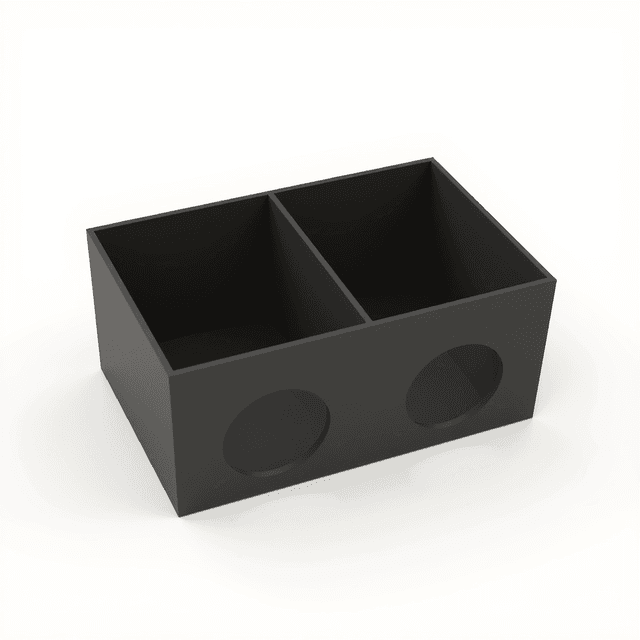
The Caching Arena for Kangaroo Rats is a specialized behavioral apparatus designed to assess spatial memory, food-hoarding behaviors, and foraging strategies in desert rodents. This arena provides a controlled environment for studying the complex caching behaviors that are critical to kangaroo rat survival in arid ecosystems.
The apparatus allows researchers to investigate how these animals locate, retrieve, and redistribute cached food resources under various experimental conditions. The arena facilitates studies of spatial cognition, memory consolidation, and adaptive foraging behaviors that have evolved in response to resource scarcity in desert environments.
How It Works
The caching arena operates on principles of spatial cognition assessment through controlled resource distribution and retrieval tasks. The apparatus provides multiple discrete locations where subjects can cache food items, allowing researchers to map spatial memory formation and recall accuracy.
Behavioral measurements are obtained through direct observation and video analysis of caching patterns, retrieval success rates, and spatial search strategies. The arena design incorporates environmental cues that subjects use for spatial navigation, mimicking the natural landmarks kangaroo rats employ in desert habitats.
Data collection focuses on quantifying cache site preferences, retrieval efficiency, and the temporal dynamics of hoarding behaviors under various experimental manipulations.
Features & Benefits
Behavioral Construct
- Spatial Memory
- Foraging Behavior
- Hoarding Behavior
- Spatial Navigation
Automation Level
- manual
Research Domain
- Behavioral Pharmacology
- Developmental Biology
- Learning and Memory
- Neurodegeneration
- Neuroscience
Species
- Rat
Compatible Tracking Software
- ConductVision
Shipping weight
- 6.06 lb
Shipping box
- L: 65.0 cm
- W: 36.0 cm
- H: 27.0 cm
| Feature | This Product | Typical Alternative | Advantage |
|---|---|---|---|
| Species-Specific Design | Optimized for kangaroo rat behavioral patterns and spatial requirements | Generic rodent behavioral arenas may not accommodate species-specific behaviors | Ensures behavioral measurements reflect natural caching strategies rather than apparatus-imposed constraints |
| Caching Location Configuration | Multiple designated cache sites with standardized spatial arrangement | Basic arenas often lack specialized caching infrastructure | Enables quantitative assessment of spatial memory and cache site preferences |
| Observation Accessibility | Transparent construction allows multi-angle behavioral observation | Opaque chambers may limit visual access for behavioral scoring | Facilitates accurate behavioral quantification and video analysis protocols |
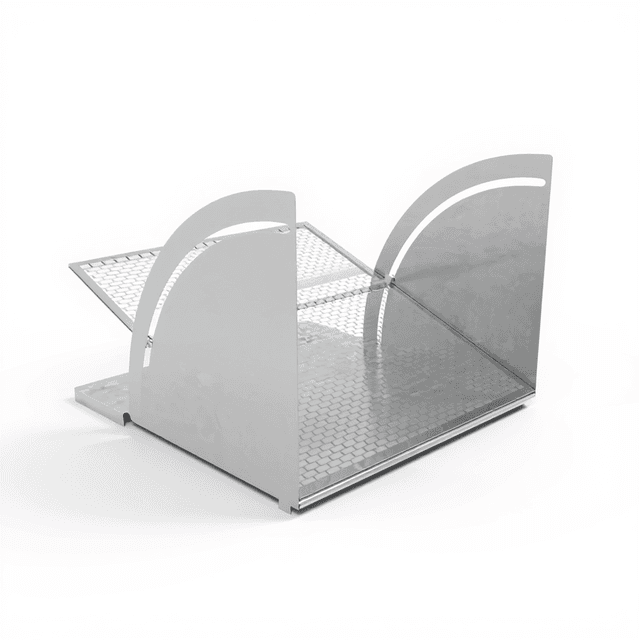
| Substrate Modification | Removable floor inserts enable substrate manipulation | Fixed-floor designs limit environmental modification capabilities | Allows investigation of substrate effects on caching behaviors and digging patterns |
This arena provides specialized infrastructure for kangaroo rat behavioral research with features specifically designed for caching behavior assessment. The apparatus combines species-appropriate dimensions with experimental flexibility for controlled behavioral studies.
Practical Tips
Record baseline caching behavior for each subject before experimental manipulations to establish individual behavioral profiles.
Why: Individual variation in caching strategies can significantly impact experimental interpretation.
Inspect arena joints and connections regularly for wear that could create gaps or instability during testing.
Why: Structural integrity ensures consistent experimental conditions and prevents subject escape.
Use consistent lighting conditions and camera positioning across all experimental sessions for reliable behavioral scoring.
Why: Standardized recording conditions improve inter-session reliability and behavioral quantification accuracy.
Validate spatial cue positioning and cache site accessibility before each experimental block.
Why: Consistent spatial configuration ensures reproducible navigation challenges across subjects.
If subjects show reduced exploration, verify that environmental stressors such as vibrations or novel odors are minimized.
Why: Stress responses can suppress natural foraging behaviors and confound experimental results.
Ensure all arena surfaces are smooth and free of sharp edges that could injure subjects during active behaviors.
Why: Subject welfare is essential for both ethical considerations and valid behavioral data collection.
Setup Guide
What’s in the Box
- Main arena structure (typical)
- Removable floor inserts (typical)
- Spatial cue markers (typical)
- Assembly hardware (typical)
- Setup and protocol guide (typical)
Warranty
ConductScience provides a one-year manufacturer warranty covering structural defects and material failures. Technical support includes protocol consultation and behavioral scoring guidance.
Compliance
What video recording specifications are recommended for accurate behavioral scoring?
High-definition recording at minimum 30 fps is recommended to capture fine motor behaviors during caching. Multiple camera angles may be needed depending on experimental endpoints.
How should the arena be cleaned between subjects to prevent olfactory interference?
Use 70% ethanol followed by thorough drying, or UV sterilization if available. Allow complete odor elimination before introducing the next subject.
What is the recommended acclimatization period before beginning behavioral testing?
Allow 3-5 days of daily arena exposure without experimental manipulation to reduce stress-related behavioral artifacts.
Can this arena be modified for other rodent species?
The design is optimized for kangaroo rat body size and behavioral patterns. Modifications may be needed for other species with different spatial requirements.
What environmental conditions should be maintained during testing?
Maintain consistent temperature (20-24°C), humidity, and lighting conditions throughout the experimental period to minimize environmental confounds.
How many cache sites can be monitored simultaneously?
The number of available cache locations depends on arena configuration. Consult product specifications for maximum recommended cache sites.
Have a question about this product?
Have a question? Just ask.
Send it over and we'll email you a personalized answer — no call, no scheduling.
Prefer to talk it through?