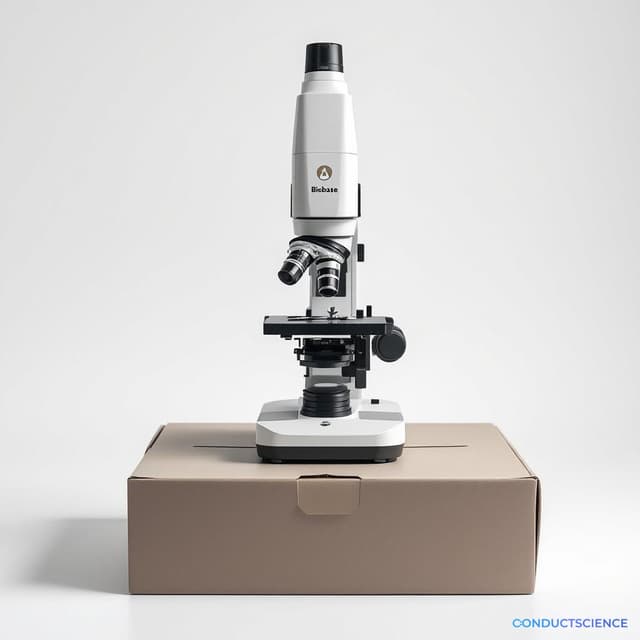
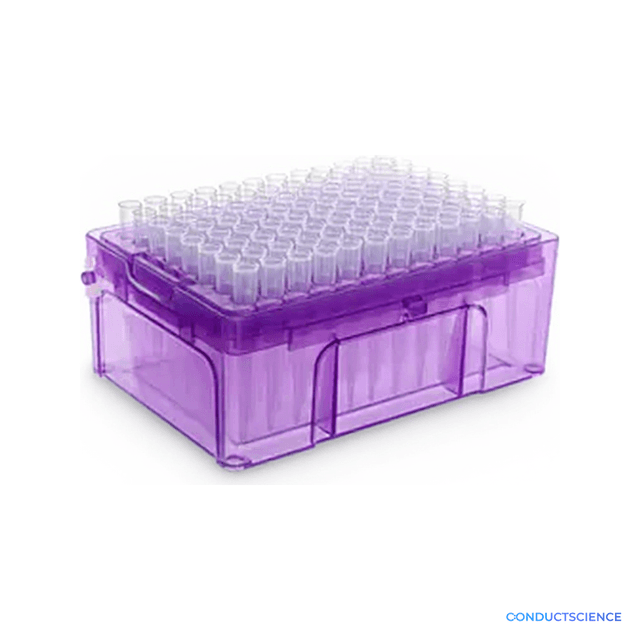
ConductScience Cell Culture Plates, 24-Well, TC-Treated (Case of 10)
$82.00 per unit | 10 units per pack Bulk pricing: Case of 10 at $820.00 ($82.00 per unit)

Louise Corscadden, PhD
Director of Science · ConductScience
Ask Louise about ConductScience Cell Culture Plates, 24-Well, TC-Treated (Case of 10) fit, setup, configuration, or quote prep.
Already working with us? Sign in to connect this with My Scientist.
Key Specifications
Full details →- Model fit
- Configured during quote
- SKU family
- CS-CCP-24W-50
- Shipping box
- 30.0 x 25.0 x 20.0 cm
- Ordering
- Online checkout and quote request available
- Category
- Cell Culture
- Build notes
- Confirm accessories, station layout, and support needs before purchase
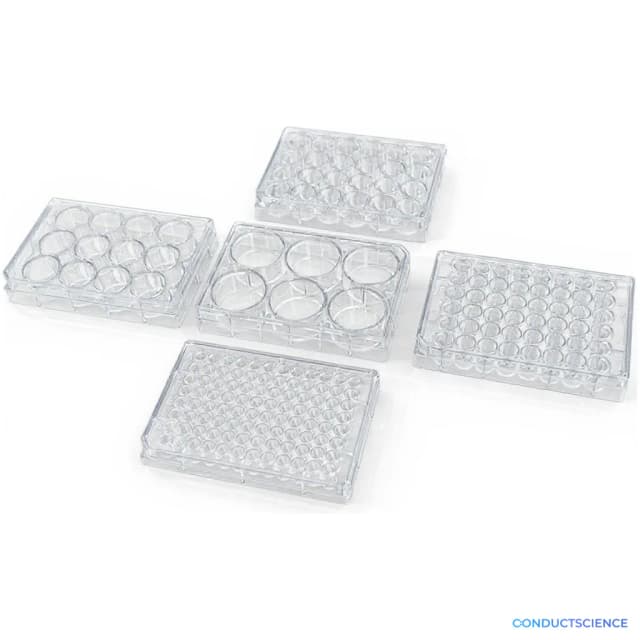
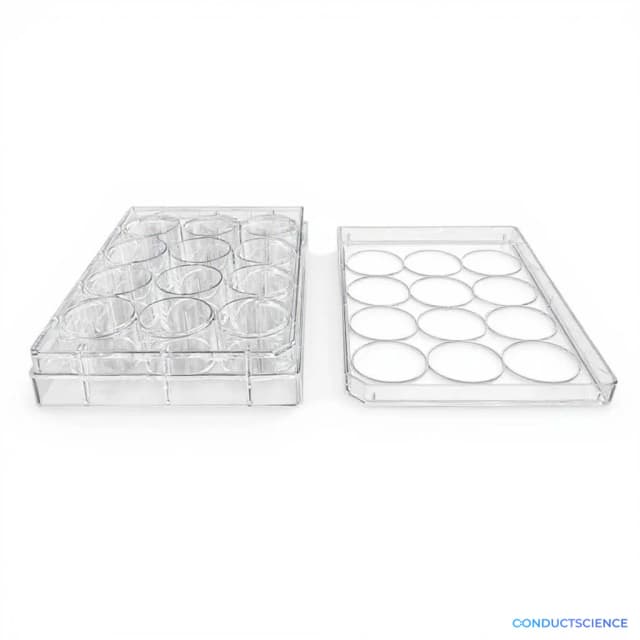
The ConductScience 24-Well TC-Treated Cell Culture Plates provide a sterile, standardized platform for mammalian cell culture applications requiring multiple experimental conditions or replicates. Each plate features 24 individual wells with flat-bottom geometry optimized for consistent cell attachment and growth. The tissue culture (TC) treatment creates a hydrophilic surface with optimal charge characteristics for enhanced cell adhesion across a wide range of cell types.
The low-evaporation lid design minimizes media loss during extended incubation periods while maintaining sterile conditions. The flat-bottom well configuration facilitates uniform cell distribution and enables reliable microscopic observation, making these plates suitable for both routine cell maintenance and quantitative assays requiring consistent optical properties.
How It Works
The tissue culture treatment involves surface modification of the polystyrene plastic through plasma discharge or chemical treatment, creating a hydrophilic surface with appropriate surface energy for cell adhesion. This process introduces oxygen-containing functional groups that enhance the surface's wettability and provide optimal conditions for protein adsorption from serum-containing media.
Cell attachment occurs through integrin-mediated binding to adsorbed proteins such as fibronectin and vitronectin. The flat-bottom well geometry ensures uniform cell distribution and consistent focal plane for microscopic analysis. The low-evaporation lid maintains humidity equilibrium within each well, preventing osmotic stress from media concentration changes during incubation.
Features & Benefits
Automation Level
- manual
Research Domain
- Cancer Research
- Cell Biology
- Developmental Biology
- Immunology
- Pharmaceutical QC
- Toxicology
Shipping weight
- 632.15 lb
Shipping box
- L: 30.0 cm
- W: 25.0 cm
- H: 20.0 cm
| Feature | This Product | Typical Alternative | Advantage |
|---|---|---|---|
| Surface Treatment | TC-treated for enhanced cell adhesion | Some models offer untreated surfaces requiring additional coating steps | Eliminates the need for manual coating procedures and provides consistent attachment properties |
| Well Configuration | 24 flat-bottom wells | Alternative formats include 6, 12, 48, or 96-well configurations | Balances throughput capability with adequate working volume for diverse experimental needs |
| Lid Design | Low-evaporation lid | Standard lids may have higher evaporation rates | Maintains consistent media osmolarity during extended incubation periods |
| Sterility | Individual sterile packaging | Varies by model and manufacturer | Ready-to-use format reduces contamination risk and preparation time |
These plates provide TC-treated surfaces with low-evaporation lids in a convenient 24-well format. The combination of enhanced cell adhesion properties and reduced media loss makes them suitable for routine culture maintenance and screening applications.
Practical Tips
Pre-warm culture media to 37°C before adding to wells to prevent temperature shock to cells.
Why: Temperature shock can affect cell viability and attachment efficiency.
Add media to wells before cell seeding to prevent cells from drying on the plastic surface.
Why: Dry conditions can damage cell membranes and reduce attachment success.
Handle plates by the edges to avoid fingerprints on the bottom that interfere with microscopy.
Why: Optical clarity is essential for accurate cell observation and imaging.
Use consistent pipetting techniques and seeding patterns to minimize well-to-well variability.
Why: Uniform cell distribution ensures reliable quantitative results across experimental conditions.
Work within appropriate biosafety containment levels for your cell types and experimental conditions.
Why: Proper containment prevents cross-contamination and protects laboratory personnel.
If cells appear to detach, verify CO2 levels and pH of media as TC-treated surfaces are sensitive to alkaline conditions.
Why: Alkaline conditions can affect surface charge properties and reduce cell adhesion.
Setup Guide
What’s in the Box
- 24-well cell culture plates (quantity per package varies by lot)
- Individual sterile packaging
- Product documentation and lot information
Warranty
ConductScience provides standard warranty coverage for manufacturing defects. Technical support is available for optimal culture protocols and troubleshooting.
Compliance
What cell types are compatible with the TC treatment?
The TC treatment supports attachment of most adherent mammalian cell types including primary cells, established cell lines, and stem cells. Consult cell-specific protocols for optimal seeding densities.
What is the recommended working volume per well?
Working volumes typically range from 0.5-2.0 mL per well depending on cell density, experimental duration, and media change frequency required for your specific application.
Can these plates be used for immunofluorescence microscopy?
Yes, the flat-bottom design and optical clarity of the plastic enable fluorescence microscopy applications. Verify compatibility with specific fluorophores and mounting media.
How should unused plates be stored?
Store plates in original sterile packaging at room temperature in a dry environment. Avoid temperature extremes and direct sunlight to maintain sterility.
Are the plates compatible with automated liquid handling?
Yes, the standard SBS footprint dimensions make these plates compatible with most automated pipetting and liquid handling systems.
What is the maximum incubation time recommended?
Incubation time depends on experimental requirements and cell type. The low-evaporation lid design supports extended culture periods with minimal media loss.
Have a question about this product?
Have a question? Just ask.
Send it over and we'll email you a personalized answer — no call, no scheduling.
Prefer to talk it through?
Replacement Parts & Consumables
Upgrade Options