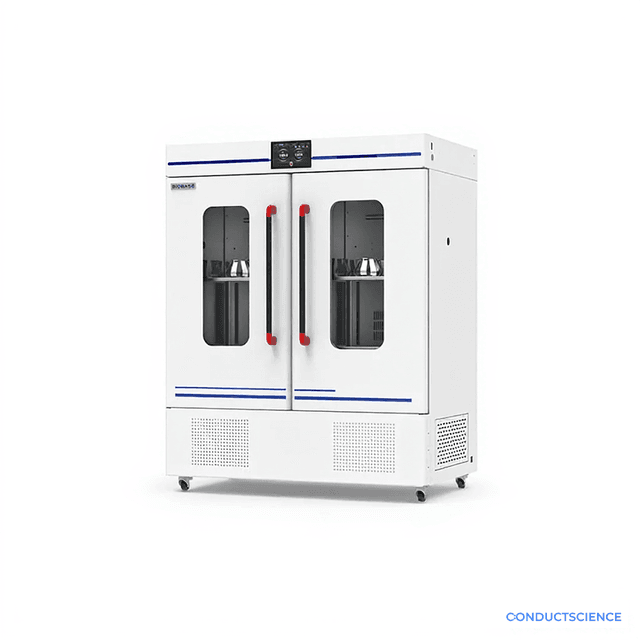
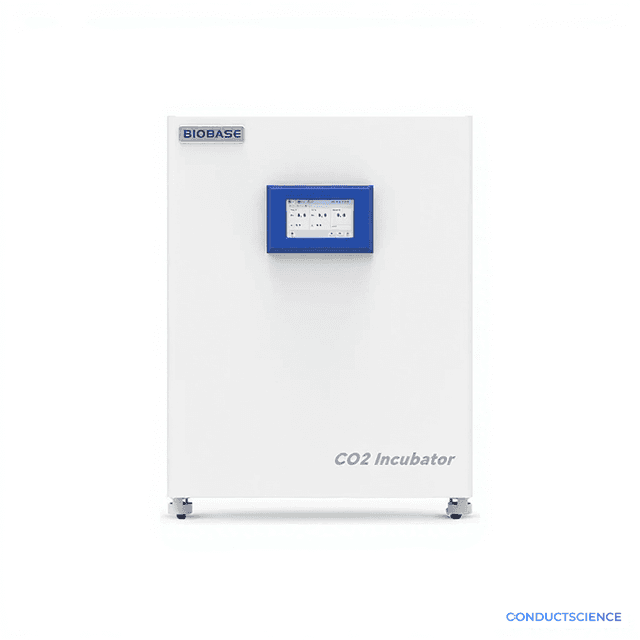
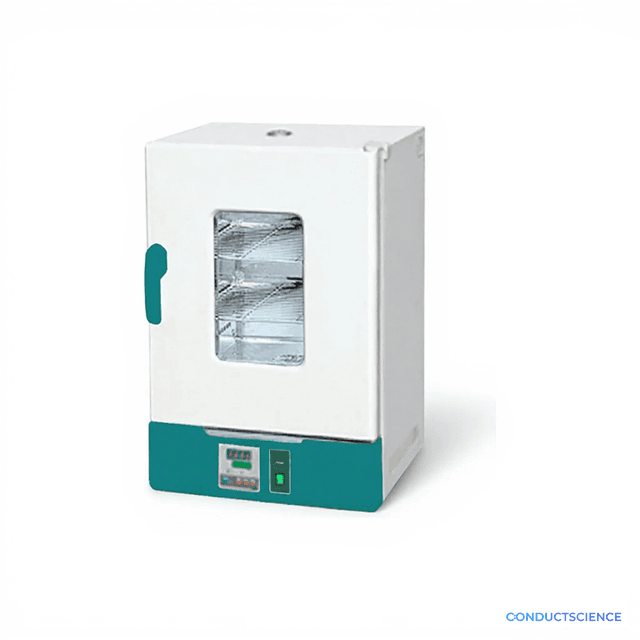
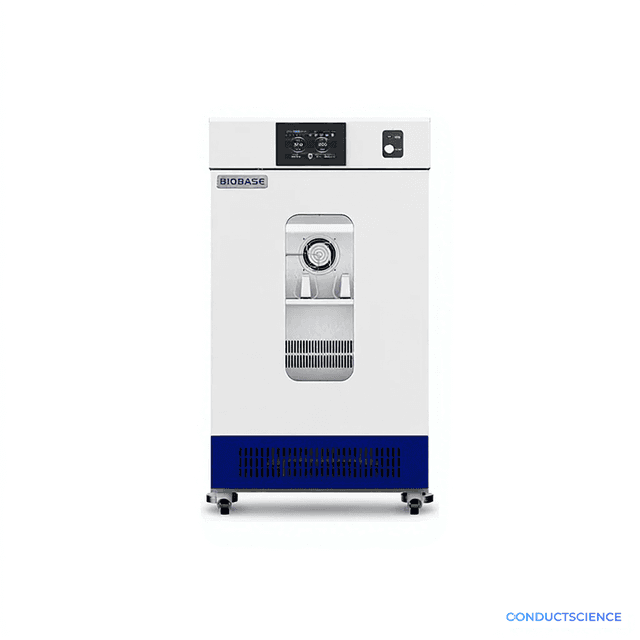
Cooling Incubator 80L 200L 250L 300L 400L
Temperature-controlled incubators with cooling capability from -10°C to 65°C, available in five capacity options from 80L to 400L with precision environmental control for research applications.

Louise Corscadden, PhD
Director of Science · ConductScience
Ask Louise about Cooling Incubator 80L 200L 250L 300L 400L fit, setup, configuration, or quote prep.
Already working with us? Sign in to connect this with My Scientist.
Key Specifications
Full details →- Model fit
- 5 selectable configurations
- SKU family
- BIO-0240
- Shipping box
- 56.0 x 40.0 x 37.0 cm
- Ordering
- Online checkout and quote request available
- Category
- Laboratory Incubators
- Build notes
- Confirm accessories, station layout, and support needs before purchase
The ConductScience Cooling Incubator series provides precise temperature-controlled environments from -10°C to 65°C across five capacity configurations (80L, 200L, 250L, 300L, 400L). These units employ R290 refrigerant cooling systems with LCD display interfaces for accurate environmental control in research applications requiring both heating and cooling capabilities.
The incubators feature dual-mode temperature control with heating fluctuation of ±0.5°C and cooling fluctuation of ±1°C, maintaining temperature uniformity within ±1.5°C at 37°C. Standard configurations include two adjustable shelves and integrated power sockets, with optional connectivity through RS485, RS232, or USB interfaces for data logging and external control systems.
How It Works
The cooling incubator operates through a dual thermal management system combining resistive heating elements with R290 refrigerant-based cooling. Temperature control is achieved via PID algorithms that monitor chamber conditions through integrated sensors and adjust heating or cooling output to maintain setpoint temperatures within the specified range of -10°C to 65°C.
The R290 refrigerant system provides efficient heat removal through vapor compression cycles, while heating elements counteract cooling when higher temperatures are required. Air circulation systems ensure thermal uniformity throughout the chamber volume. The LCD display interface provides real-time monitoring and allows programming of time-temperature profiles up to 9999 minutes duration.
Optional communication interfaces enable integration with laboratory data systems for automated logging and remote monitoring capabilities through RS485, RS232, or USB connections.
Features & Benefits
Shipping weight
- 65.0 lb
Shipping box
- L: 56.0 cm
- W: 40.0 cm
- H: 37.0 cm
| Feature | This Product | Typical Alternative | Advantage |
|---|---|---|---|
| Temperature Range | -10°C to 65°C with dual heating/cooling capability | Many incubators limited to ambient+5°C to 70°C range | Enables experiments requiring precise sub-ambient temperature control without separate cooling equipment |
| Capacity Options | Five configurations from 80L to 400L | Limited capacity selections in cooling incubator category | Allows matching chamber volume to experimental throughput and laboratory space requirements |
| Temperature Control Precision | ±0.5°C heating precision, ±1°C cooling precision | Entry-level models often provide ±2-3°C precision | Supports temperature-sensitive protocols requiring tight environmental control |
| Refrigerant Technology | R290 environmentally-friendly refrigerant | Some units still use higher GWP refrigerants | Reduces environmental impact while maintaining effective cooling performance |
| Connectivity Options | Optional RS485, RS232, USB, and miniprinter interfaces | Basic models offer limited or no digital connectivity | Facilitates data integration with laboratory information systems and automated documentation |
| Internal Power Access | Integrated power socket within chamber | External power connections requiring cable routing | Simplifies setup of auxiliary equipment like shakers or sensors within controlled environment |
This cooling incubator series provides precise dual-mode temperature control across an extended range with multiple capacity options and modern connectivity features. The R290 refrigerant system combines effective cooling performance with environmental responsibility.
| Model | SKU | Listed price | Status | Shipping box |
|---|---|---|---|---|
| BJPX-I-400L | BJPX-I-400L | $3,190.00 | Available | 56.0 x 40.0 x 37.0 cm |
| BJPX-I-300L | BJPX-I-300L | $2,590.00 | Available | 56.0 x 40.0 x 37.0 cm |
| BJPX-I-250L | BJPX-I-250L | $2,390.00 | Available | 56.0 x 40.0 x 37.0 cm |
| BJPX-I-200L | BJPX-I-200L | $2,290.00 | Available | 56.0 x 40.0 x 37.0 cm |
| BJPX-I-80L | BJPX-I-80L | $2,090.00 | Available | 56.0 x 40.0 x 37.0 cm |
Practical Tips
Perform temperature calibration verification at multiple points across your operating range using NIST-traceable reference standards.
Why: Temperature accuracy varies across the control range and calibration ensures measurement confidence for your specific applications.
Clean condenser coils monthly and ensure adequate clearance around ventilation areas for optimal cooling efficiency.
Why: Dust accumulation reduces heat transfer efficiency and forces the refrigeration system to work harder, potentially affecting temperature stability.
Allow chambers to pre-equilibrate for at least 30 minutes at target temperature before loading temperature-sensitive samples.
Why: Thermal equilibration ensures uniform conditions throughout the chamber volume and prevents temperature overshoot when samples are introduced.
Minimize door opening frequency and duration, especially during sub-ambient operation to maintain temperature stability.
Why: Cold air loss during door openings requires additional cooling recovery time and can cause temperature fluctuations affecting sample integrity.
If cooling performance decreases, check ambient room temperature and ensure ventilation areas are unobstructed.
Why: Cooling efficiency depends on heat rejection to the surrounding environment, and high ambient temperatures or blocked airflow reduce performance.
Use the optional digital interfaces for continuous temperature logging rather than relying solely on display readings for critical experiments.
Why: Automated data logging provides complete temperature profiles and documentation for experimental validation and troubleshooting.
Ensure proper electrical grounding and avoid overloading the internal power socket beyond its rated capacity.
Why: Electrical safety prevents equipment damage and ensures reliable operation of both the incubator and any auxiliary equipment.
Schedule annual professional service for refrigerant system inspection and any necessary refrigerant level adjustments.
Why: Professional maintenance ensures optimal cooling performance and extends equipment lifespan while maintaining temperature accuracy.
Setup Guide
What’s in the Box
- Cooling incubator main unit
- Two adjustable shelves
- Internal power socket
- LCD display controller
- Power cable
- User manual and documentation
- Temperature calibration certificate (typical)
Warranty
ConductScience provides a one-year manufacturer warranty covering parts and labor for defects in materials and workmanship. Technical support is available for setup, calibration, and operational guidance throughout the warranty period.
Compliance
What is the temperature recovery time when switching between heating and cooling modes?
Temperature recovery time depends on the temperature differential and chamber loading. Consult product datasheet for specific thermal performance curves and recovery specifications.
Can the unit maintain temperatures below 0°C continuously for extended periods?
Yes, the R290 refrigerant system supports continuous operation down to -10°C. Monitor ambient conditions as external temperature affects cooling efficiency.
What data logging capabilities are available with the optional interfaces?
RS485, RS232, and USB interfaces enable connection to data acquisition systems. Specific data formats and logging software compatibility should be verified based on your laboratory information system requirements.
How does chamber loading affect temperature uniformity?
Temperature uniformity specification of ±1.5°C at 37°C applies under standard loading conditions. Dense sample loading or heat-generating samples may require additional equilibration time and monitoring.
What preventive maintenance is required for the refrigeration system?
Regular cleaning of condenser coils and ventilation areas is recommended. R290 refrigerant systems require minimal maintenance but should be serviced by qualified technicians for any refrigerant-related issues.
Can multiple temperature zones be programmed for different areas within the chamber?
The units provide single-zone temperature control. Multiple setpoints can be programmed sequentially using the timing function, but spatial temperature gradients are not controllable.
What is the power consumption difference between heating and cooling operations?
Power consumption varies significantly between heating and cooling modes and depends on setpoint temperature versus ambient conditions. Consult product specifications for detailed power requirements.
Have a question about this product?
Have a question? Just ask.
Send it over and we'll email you a personalized answer — no call, no scheduling.
Prefer to talk it through?
Accessories
Enhance your setup with compatible accessories
Replacement Parts & Consumables
Upgrade Options