Digital Dough Tensile Resistance Analyzer
Measure wheat flour dough extensibility with electronic force detection, three controlled drive speeds, USB data output, and dust-resistant cabinet design.

Louise Corscadden, PhD
Director of Science · ConductScience
Ask Louise about Digital Dough Tensile Resistance Analyzer fit, setup, configuration, or quote prep.
Already working with us? Sign in to connect this with My Scientist.
Key Specifications
Full details →- Mains Supply
- AC 220 V, 50 Hz
- Motor Power
- 0.020 kW + 0.020 W + 0.020 W
- Sample Weight
- 300 g flour + 6 g salt + distilled water
- Balling Unit Speed
- 83 ± 3 rpm; stops automatically after 20 revolutions
- Dough Roll Speed
- 15 ± 1 rpm
- Stretching Hook Speed
- 14.5 ± 0.5 rpm
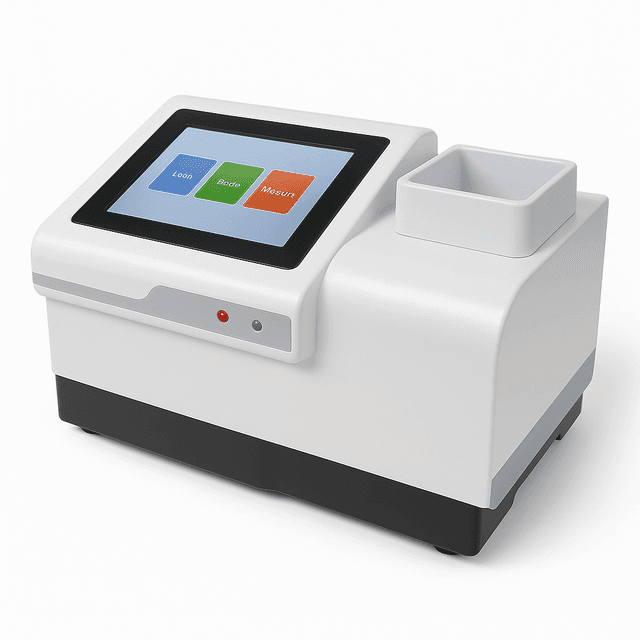
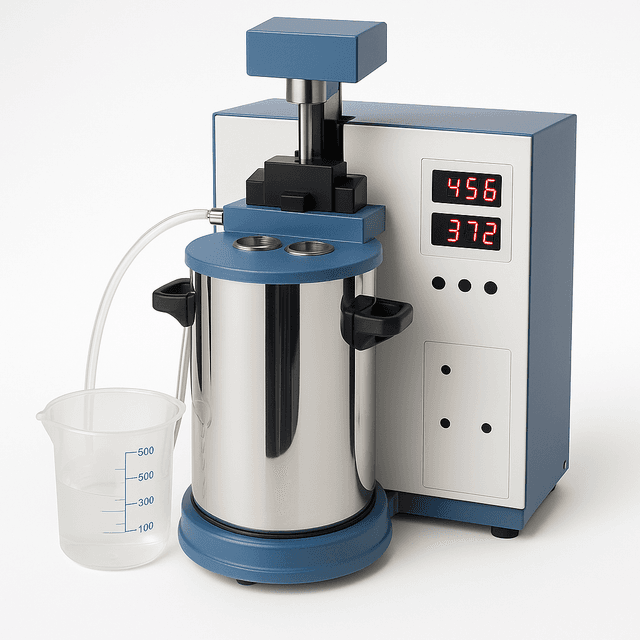
The Digital Dough Tensile Resistance Analyzer measures the tensile resistance of wheat flour dough, generating a force-extension curve that quantifies the physical and rheological properties of the dough sample. These curves directly reflect how a dough will behave during baking, making tensile resistance one of the most meaningful predictors of final bread quality.
The analyzer accepts a precisely prepared dough sample—300 g of flour, 6 g of salt, and distilled water—that is first shaped by the balling unit and then rolled and stretched by dedicated drive systems. Each stage operates at a controlled, independent speed, ensuring reproducible sample geometry and consistent stretch conditions from run to run. Force is measured electronically by a pressure sensor, and a USB-connected computer collects and analyzes the data. Up to 5 tensile curves can be displayed at once for comparison, results are saved in an Access database, and zero calibration and chart start are automatic.
The drawer-type fermentation box runs on spring and oil-damping guide rails, so it opens easily, and the enclosed housing is dustproof and holds heat.
Typical applications include quality-control testing of commercial wheat flours, research into flour blending and formulation, and evaluation of how additives such as improvers or enzymes alter dough extensibility. It suits grain science laboratories, flour mills and cereal food research facilities.
Mains Supply
- AC 220 V, 50 Hz
Motor Power
- 0.020 kW + 0.020 W + 0.020 W
Sample Weight
- 300 g flour + 6 g salt + distilled water
Balling Unit Speed
- 83 ± 3 rpm; stops automatically after 20 revolutions
Dough Roll Speed
- 15 ± 1 rpm
Stretching Hook Speed
- 14.5 ± 0.5 rpm
Force Measurement
- Electronic pressure sensor
PC Interface
- USB
Curve Display
- Up to 5 tensile curves displayed at once
Data Storage
- Results saved in an Access database
Automation
- Automatic zero calibration and automatic chart start
Dimensions (H × W × D, with tray and holder arms)
- 920 × 640 × 950 mm
Weight (approx.)
- 115 kg
What sample does the analyzer require, and how is it prepared?
Each test uses 300 g of flour combined with 6 g of salt and distilled water. The balling unit mixes and shapes the dough at 83 ± 3 rpm before it is passed to the rolling and stretching stages, so sample preparation is built into the instrument's workflow.
How does the instrument control the stretching process?
Three independent drive speeds govern sample handling: the balling unit runs at 83 ± 3 rpm, the dough roll unit at 15 ± 1 rpm, and the stretching hook at 14.5 ± 0.5 rpm. This separation of speeds allows each phase to be precisely controlled and reproduced across tests.
How is force recorded and how do I access the data?
Tensile force is measured electronically throughout the stretch, producing a continuous resistance curve. The analyzer includes a USB port for direct connection to a PC, where the curve data can be viewed, stored, and analyzed using compatible software. Up to 5 tensile curves can be displayed at once for comparison, and results are saved in an Access database.
What power supply does the analyzer need?
The analyzer operates on AC 220 V at 50 Hz. Confirm that your laboratory supply matches these requirements before installation.
How large and heavy is the analyzer, and what should I plan for in terms of bench space?
With the tray and holder arms in place, the instrument measures 920 mm (H) × 640 mm (W) × 950 mm (D) and weighs approximately 115 kg. Plan for a sturdy, level bench or floor stand capable of supporting that load, with clearance on all sides for operation and sample loading.
Have a question about this product?
Have a question? Just ask.
Send it over and we'll email you a personalized answer, with no call or scheduling.
Prefer to talk it through?
Frequently Bought Together