Duck isolators
Positive-pressure isolator system with HEPA H14 filtration for maintaining ducks in controlled research environments, featuring integrated environmental controls and zero bacterial contamination.

Louise Corscadden, PhD
Director of Science · ConductScience
Ask Louise about Duck isolators fit, setup, configuration, or quote prep.
Already working with us? Sign in to connect this with My Scientist.
Key Specifications
Full details →- Model fit
- 1994*712*800mm
- SKU family
- BIO-0077
- Shipping box
- 182.0 x 259.4 x 81.2 cm
- Ordering
- Online checkout and quote request available
- Category
- Isolators
- Build notes
- Confirm accessories, station layout, and support needs before purchase
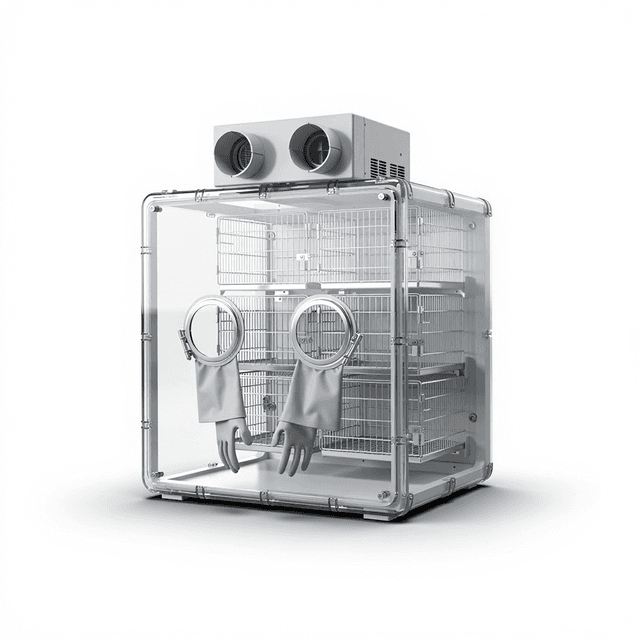
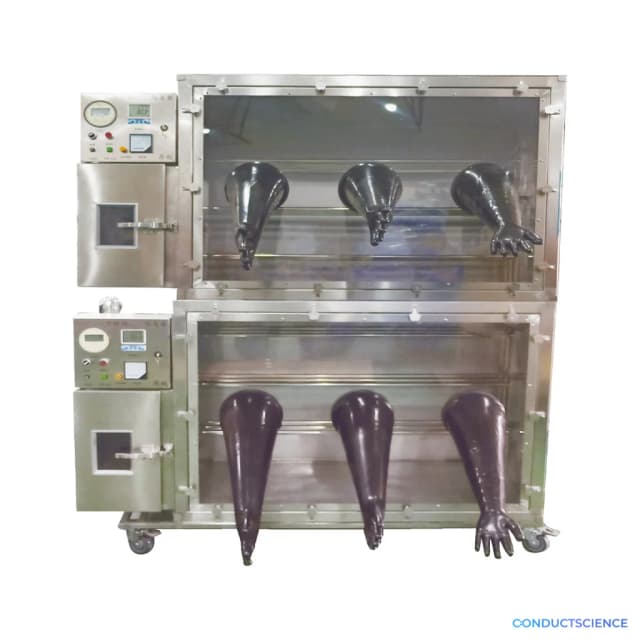
The Duck Isolators (BIO-0077) provide a controlled environment system designed for maintaining ducks in research and breeding facilities. This positive-pressure containment unit features HEPA filtration technology with H14-grade filters, delivering sterile air conditions essential for protecting animals from environmental contaminants and maintaining experimental integrity.
The system incorporates a three-stage filtration process (pre-filter, mid-filter, and HEPA H14) with controlled airflow velocity of 0.1-0.2 m/s within the animal living space, achieving zero falling bacteria counts. The 1994×712×800mm animal activity area accommodates multiple ducks while providing integrated heating, lighting, UV sterilization, and automated feeding/watering systems for comprehensive husbandry management.
How It Works
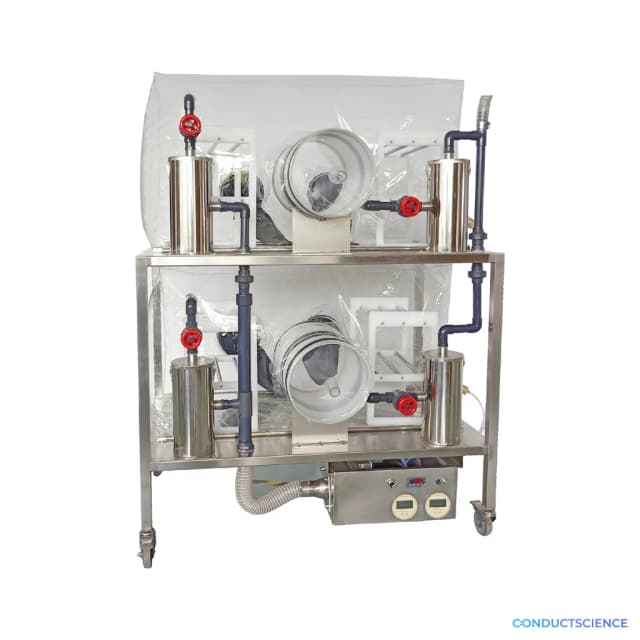
The Duck Isolators operate on positive-pressure containment principles, continuously drawing ambient air through a three-stage filtration cascade before delivery to the animal chamber. The pre-filter removes large particulates, the mid-filter captures smaller debris, and the final HEPA H14 filter eliminates particles ≥0.1 micrometers with 99.995% efficiency, including bacteria, viruses, and fungal spores.
Controlled airflow velocity of 0.1-0.2 m/s within the duck living space ensures adequate ventilation without creating drafts that could stress the animals. The system maintains ≥20 air changes per hour, continuously replacing the chamber atmosphere while preventing backflow of unfiltered air. Integrated environmental controls regulate temperature through heating lamps, provide photoperiod control via lighting systems, and enable UV sterilization cycles for equipment decontamination.
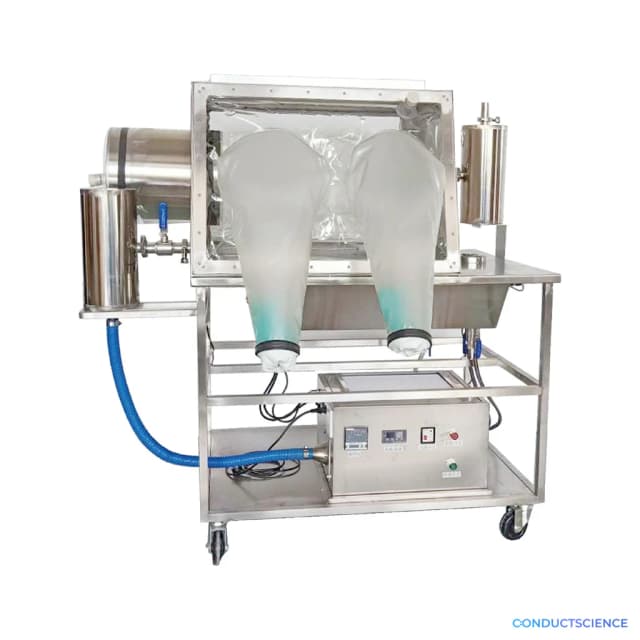
The positive-pressure design creates an outward airflow at any potential breach points, preventing ingress of environmental contaminants while allowing researcher access through integrated glove ports for animal handling and husbandry tasks.
Features & Benefits
Automation Level
- semi-automated
External Size(W*D*H)
- 2594*812*1820mm
Animal Activity Area(W*D*H)
- 1994*712*800mm
Air Exchange Rate
- ≥20 times/h
Airflow Velocity
- 0.1m/s~0.2m/s within the duck living space
Falling Bacteria(numbers/utensil/hour)
- 0
Filter
- Pre-filter, Mid-filter, HEPA(H14) filter
Noise
- ≤70dB(A)
Standard Accessories
- heating lamp, lighting lamp, UV lamp, feeding and drinking system, gloves*10(pairs), temperature and
Consumption
- 700W
Package Size(W*D*H)
- 2845*992*2050mm
Brand
- ConductScience
Research Domain
- Developmental Biology
- Environmental Monitoring
- Food Science
- Immunology
- Microbiology
- Pharmaceutical QC
Species
- Duck
Power/Voltage
- AC220±10%, 50Hz/60Hz(Standard); 110V, 50/60Hz(Optional, external transformer)
Weight
- 423kg
Shipping weight
- 303.0 lb
Shipping box
- L: 182.0 cm
- W: 259.4 cm
- H: 81.2 cm
| Feature | This Product | Typical Alternative | Advantage |
|---|---|---|---|
| Filtration Efficiency | HEPA H14 filter achieving zero falling bacteria counts | Standard models often use H13 filters or basic ventilation systems | Superior pathogen exclusion critical for immunocompromised animal studies and sterile research protocols |
| Air Exchange Rate | ≥20 air changes per hour with controlled 0.1-0.2 m/s velocity | Entry-level systems provide 10-15 air changes with less precise airflow control | Enhanced atmospheric renewal prevents accumulation of metabolic byproducts while minimizing animal stress |
| Environmental Integration | Integrated heating, lighting, UV sterilization, and automated feeding systems | Basic isolators require separate environmental control equipment | Comprehensive husbandry management within sterile containment reduces system complexity and contamination risks |
| Animal Activity Space | 1994×712×800mm dedicated animal area within sterile environment | Smaller containment systems limit animal movement and natural behaviors | Adequate space for multiple adults supports behavioral research while maintaining containment integrity |
| Noise Control | ≤70dB(A) operation during continuous filtration and environmental control | High-airflow systems often generate 80-90dB noise levels | Reduced acoustic stress preserves normal animal behavior and physiological responses during studies |
This isolator system combines HEPA H14 filtration with integrated environmental controls to provide comprehensive sterile housing for duck research. The large animal activity area and automated systems support extended studies while maintaining zero bacterial contamination through positive-pressure containment technology.
Practical Tips
Verify airflow velocity measurements at multiple points within the animal activity area using a calibrated anemometer to ensure uniform 0.1-0.2 m/s distribution.
Why: Consistent airflow prevents dead zones where contaminants could accumulate while avoiding drafts that stress animals.
Monitor differential pressure across each filter stage and maintain replacement logs to track filter performance degradation over time.
Why: Systematic filter monitoring prevents unexpected filtration failures that could compromise experimental sterility.
Run UV sterilization cycles during periods when animals are not present, following manufacturer guidelines for exposure duration and intensity.
Why: UV sterilization eliminates residual contamination on surfaces without exposing animals to potentially harmful radiation.
If noise levels exceed 70dB(A), check for filter clogging or fan bearing wear that could indicate maintenance requirements.
Why: Excessive noise indicates system stress that could lead to equipment failure and compromise environmental control.
Document temperature, humidity, and airflow parameters daily to establish baseline environmental conditions for experimental protocols.
Why: Environmental variability can affect animal physiology and experimental reproducibility in research studies.
Ensure proper grounding of all electrical components, especially UV lamps and heating elements, before system operation.
Why: Electrical safety prevents equipment damage and personnel hazards in wet environments typical of animal facilities.
Clean and sanitize feeding and watering systems weekly using compatible disinfectants that won't damage system components.
Why: Regular sanitization prevents biofilm formation and bacterial growth in automated delivery systems.
Allow 30-minute stabilization period after any system maintenance before introducing animals to ensure environmental parameters return to specifications.
Why: System equilibration prevents exposure of animals to transient environmental fluctuations that could affect research outcomes.
Setup Guide
What’s in the Box
- Duck isolator main unit
- Heating lamp system
- Lighting lamp system
- UV sterilization lamp
- Automated feeding and drinking system
- 10 pairs of access gloves
- Temperature monitoring equipment
- Pre-filter, mid-filter, and HEPA H14 filters
- Power cord and electrical connections
- Installation and operation manual (typical)
- Filter replacement guide (typical)
Warranty
ConductScience provides a standard one-year manufacturer warranty covering defects in materials and workmanship, with technical support for installation, calibration, and operational guidance.
Compliance
References
Background reading relevant to this product:
What is the maximum number of adult ducks that can be housed in this isolator?
The 1994×712×800mm animal activity area can accommodate multiple adult ducks, though exact capacity depends on duck breed, size, and institutional animal welfare guidelines. Consult your IACUC protocols for specific density requirements.
How frequently do the HEPA H14 filters require replacement?
Filter replacement frequency depends on usage intensity and environmental conditions, typically ranging from 6-18 months for HEPA filters. Monitor differential pressure across filters and replace when efficiency drops below specifications.
Can the environmental controls be programmed for specific photoperiod cycles?
The integrated lighting system allows for photoperiod control, though specific programming capabilities should be confirmed with the control system documentation for automated timing functions.
What type of access is available for animal handling and husbandry procedures?
The system includes glove ports for sterile access during routine husbandry, with 10 pairs of gloves included. Larger procedures may require temporary breach protocols with subsequent re-sterilization cycles.
How is the zero bacterial count validated and monitored?
The system achieves zero falling bacteria counts through HEPA H14 filtration, though ongoing validation requires periodic air sampling using settle plates or active air sampling devices per your facility's protocols.
What power requirements and electrical connections are needed?
Standard AC220V ±10%, 50Hz/60Hz power supply with 700W consumption, with optional 110V configuration available using external transformer for different regional power standards.
How does this compare to standard animal caging systems for contamination control?
Unlike conventional caging, this isolator provides positive-pressure HEPA-filtered environment with documented zero bacterial counts, essential for gnotobiotic studies or immunocompromised animal research requiring sterile conditions.
Have a question about this product?
Have a question? Just ask.
Send it over and we'll email you a personalized answer — no call, no scheduling.
Prefer to talk it through?