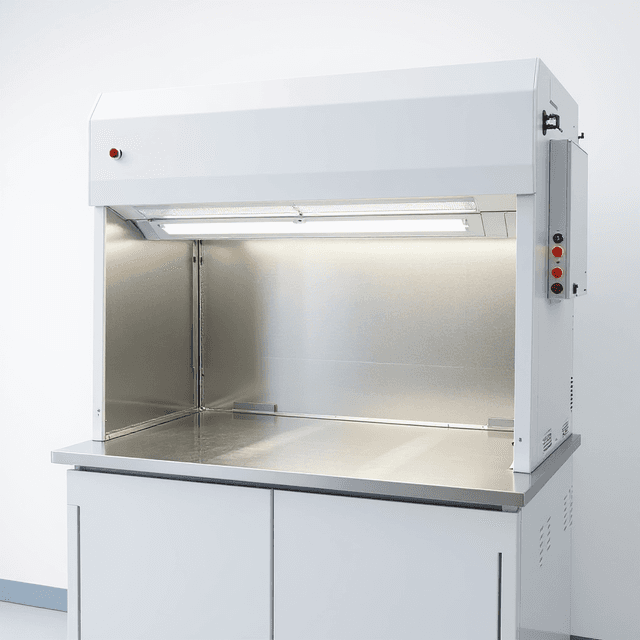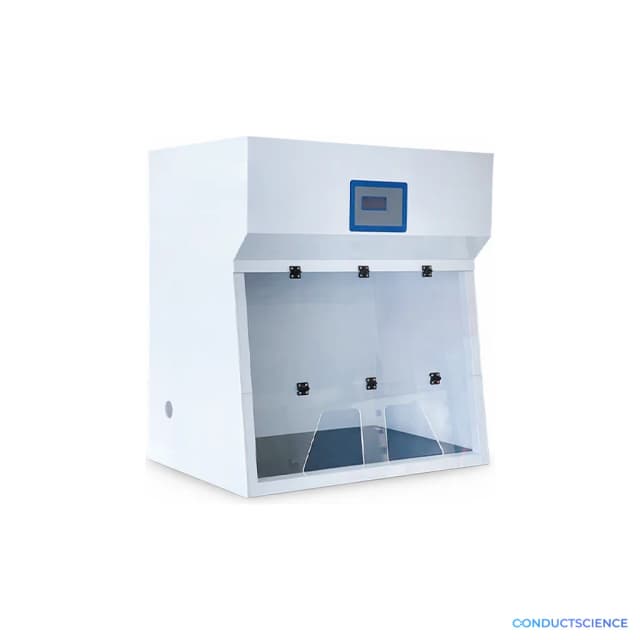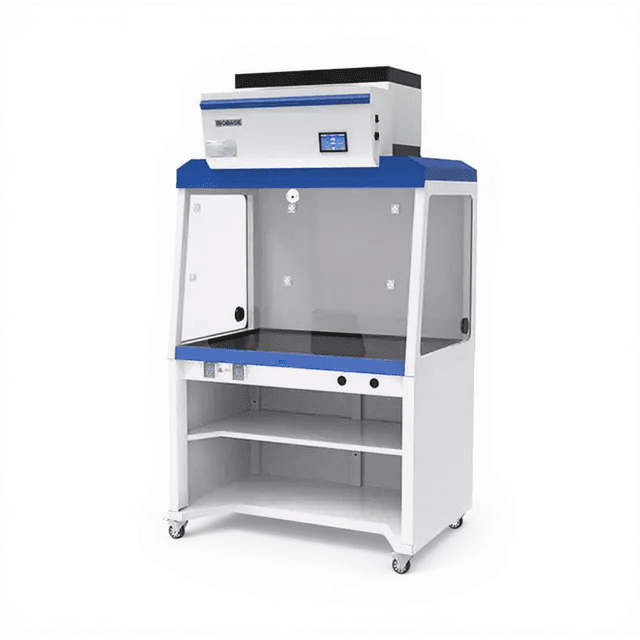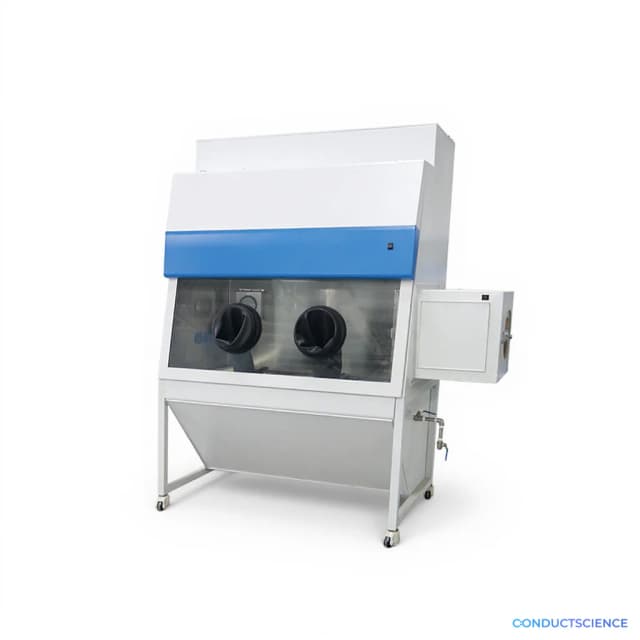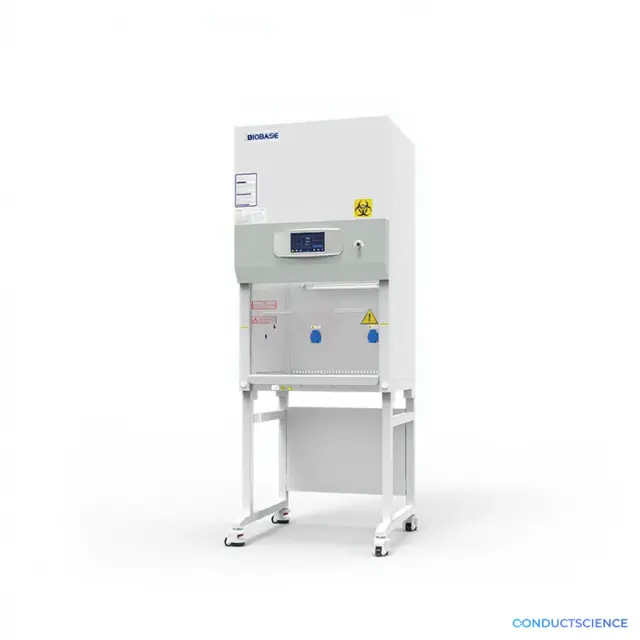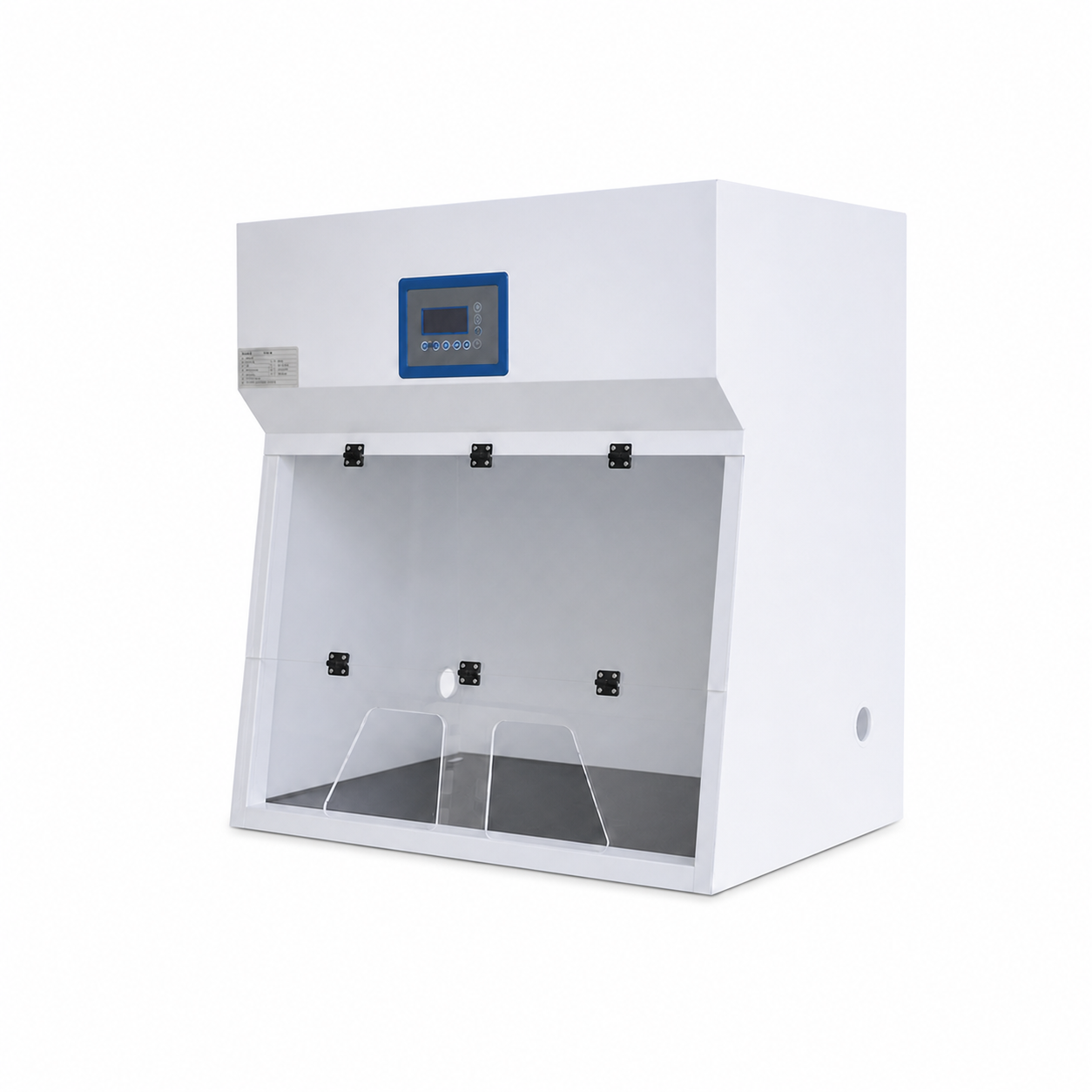
Ductless PP Fume Hood FH1000(PD) FH1500(PD)
Ductless polypropylene fume hood with built-in centrifugal blower, active carbon filtration, and 230 m³/h airflow volume for chemical vapor containment in laboratory environments.

Louise Corscadden, PhD
Director of Science · ConductScience
Ask Louise about Ductless PP Fume Hood FH1000(PD) FH1500(PD) fit, setup, configuration, or quote prep.
Already working with us? Sign in to connect this with My Scientist.
Key Specifications
Full details →- Model fit
- 2 selectable configurations
- SKU family
- BIO-0062
- Shipping box
- 110.0 x 100.0 x 70.0 cm
- Ordering
- Online checkout and quote request available
- Category
- Clean Benches & Fume Hoods
- Build notes
- Confirm accessories, station layout, and support needs before purchase
Ductless PP Fume Hood FH-PD
Professional laboratory fume hood designed for safe work with hazardous chemicals and vapors. Features vertical laminar airflow with HEPA filtration and comprehensive operator protection in compliance with laboratory safety standards.
Key Features:
- Vertical laminar airflow design
- HEPA filtration system
- Multiple size configurations
- Durable construction materials
- Safety monitoring systems
- Operator-friendly controls
How It Works
The fume hood operates on the principle of negative pressure containment and filtration. The built-in centrifugal blower creates airflow from the laboratory environment into the hood workspace, drawing chemical vapors and particulates away from the operator. Air enters through the front opening at velocities between 0.3-0.8 m/s, ensuring effective capture of contaminants generated within the workspace.
Contaminated air passes through dual active carbon filters that adsorb organic vapors and chemical contaminants through physical and chemical adsorption processes. The activated carbon provides a large surface area for vapor molecule interaction, effectively removing volatile organic compounds from the airstream. After filtration, cleaned air is recirculated back into the laboratory through the blower system at 230 m³/h flow rate.
The polypropylene construction provides chemical resistance to acids, bases, and organic solvents commonly used in laboratory procedures. The ductless design eliminates the need for external ventilation connections, allowing flexible placement within laboratory spaces while maintaining containment effectiveness through the internal filtration system.
Features & Benefits
Shipping weight
- 85.0 lb
Shipping box
- L: 110.0 cm
- W: 100.0 cm
- H: 70.0 cm
| Feature | This Product | Typical Alternative | Advantage |
|---|---|---|---|
| Airflow Volume | 230 m³/h with built-in centrifugal blower | Entry-level models often provide lower airflow rates | Higher airflow ensures more effective capture of chemical vapors during analytical procedures. |
| Construction Material | Polypropylene chemical-resistant construction | Steel construction common in many models | Better resistance to acids, bases, and organic solvents extends service life in corrosive environments. |
| Face Velocity Control | Variable 0.3-0.8 m/s face velocity range | Fixed face velocity in basic models | Adjustable containment performance optimizes energy efficiency while maintaining safety for different procedures. |
| Illumination System | 15W LED providing ≥400 lx illumination | Fluorescent lighting common in older designs | LED technology provides better light quality and longer service life with lower heat generation. |
| Noise Level | ≤65 dB(A) operation | Higher noise levels in many comparable units | Quieter operation reduces fatigue during extended analytical procedures. |
| Optional Accessories | Water tap, gas tap, sink, UV lamp, HEPA filter options | Limited accessory options in basic models | Customizable configuration supports diverse laboratory workflow requirements. |
This ductless fume hood offers polypropylene chemical resistance, variable face velocity control, and comprehensive optional accessories for flexible laboratory integration. The built-in centrifugal blower and dual carbon filtration provide effective containment without external ductwork requirements.
| Model | SKU | Listed price | Status | Shipping box |
|---|---|---|---|---|
| FH1500(PD) | FH1500PD | $4,279.99 | Available | 110.0 x 100.0 x 70.0 cm |
| FH1000(PD) | FH1000PD | $3,779.99 | Available | 110.0 x 100.0 x 70.0 cm |
Practical Tips
Verify face velocity measurements across the entire sash opening using a calibrated anemometer at multiple points.
Why: Ensures uniform containment performance across the workspace entrance.
Replace active carbon filters when breakthrough detection indicates saturation or according to manufacturer schedule.
Why: Saturated filters lose adsorption capacity and compromise vapor containment effectiveness.
Keep the sash at minimum opening height consistent with procedure requirements to optimize containment.
Why: Lower sash positions maintain higher face velocities and improve capture efficiency.
Use appropriate respiratory protection when changing filters or performing maintenance procedures.
Why: Contaminated filters may release accumulated vapors during handling and replacement.
Document filter change dates and chemical usage to establish appropriate replacement schedules.
Why: Usage tracking helps optimize maintenance intervals and prevents filter breakthrough.
Check for proper filter installation and sealing if airflow measurements decrease below specifications.
Why: Improperly seated filters create bypass pathways that reduce containment effectiveness.
Allow the blower system to run for several minutes before beginning procedures to establish stable airflow patterns.
Why: Steady-state airflow conditions ensure consistent vapor capture performance.
Clean the interior surfaces regularly with compatible solvents to prevent chemical buildup.
Why: Accumulated residues can interfere with airflow patterns and create contamination sources.
Setup Guide
What’s in the Box
- Fume hood main unit
- Active carbon filters (2 units)
- Power cord
- Installation hardware
- User manual and safety instructions
- Filter replacement guide (typical)
Warranty
ConductScience provides a standard one-year manufacturer warranty covering defects in materials and workmanship, with technical support available for installation guidance and operational questions.
Compliance
References
Background reading relevant to this product:
What types of chemicals can be safely used with the active carbon filtration system?
The active carbon filters effectively remove most organic vapors and volatile compounds. Consult the filter specifications for specific chemical compatibility. Highly corrosive acids or bases may require additional containment measures.
How often should the active carbon filters be replaced?
Filter replacement frequency depends on usage intensity and chemical types. Monitor filter saturation indicators if available, or establish replacement schedules based on breakthrough testing for your specific applications.
Can the unit be connected to external exhaust systems?
This is a ductless recirculating system designed for internal filtration. External exhaust connection would require consultation with the manufacturer regarding airflow balance and system modifications.
What is the maximum weight capacity for equipment inside the hood?
Consult product datasheet for specific weight limits. The workspace dimensions of 980×606×688 mm accommodate standard analytical equipment, but weight distribution should be considered for optimal airflow.
How do I verify the face velocity meets containment requirements?
Use calibrated airflow measurement instruments such as thermal anemometers or smoke tube visualization to verify the 0.3-0.8 m/s face velocity specification across the sash opening.
Is HEPA filtration necessary for my applications?
HEPA filtration is optional and recommended for applications involving fine particulates or biological materials. The standard active carbon filters primarily target vapor containment.
What maintenance procedures are required for optimal performance?
Regular filter replacement, periodic airflow verification, LED lamp inspection, and blower system cleaning according to manufacturer maintenance schedules ensure consistent containment performance.
Have a question about this product?
Have a question? Just ask.
Send it over and we'll email you a personalized answer — no call, no scheduling.
Prefer to talk it through?