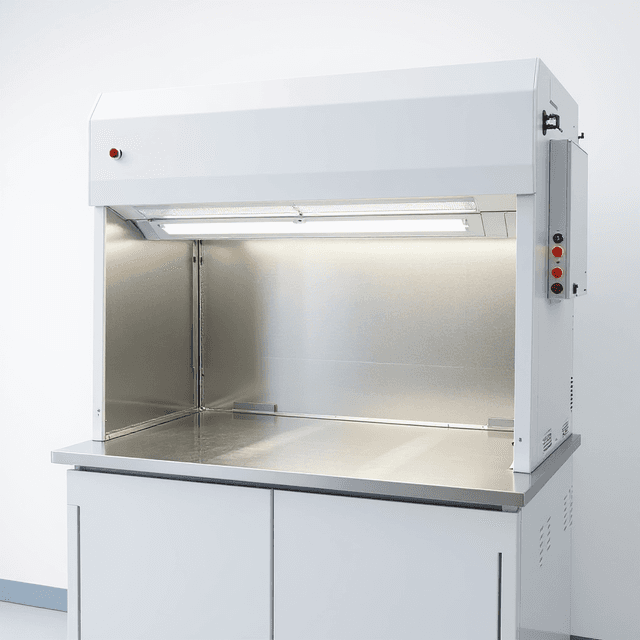
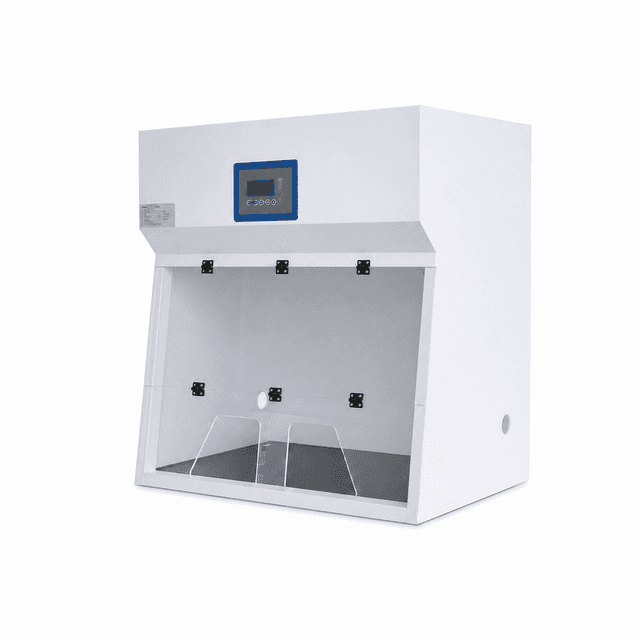
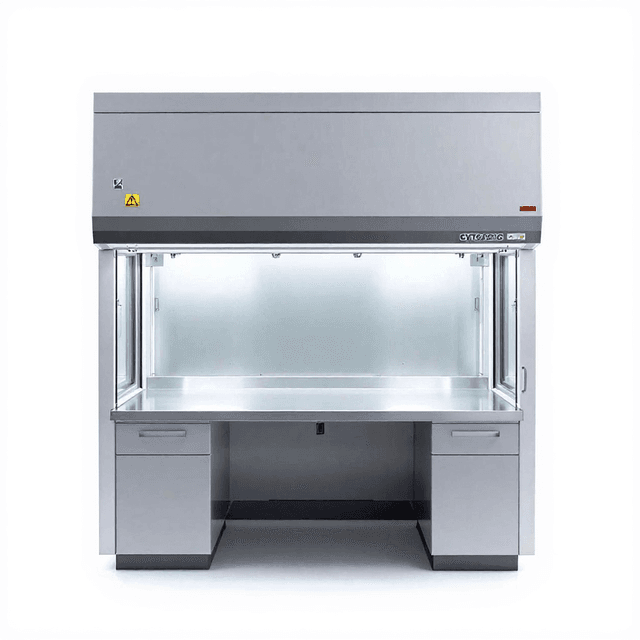
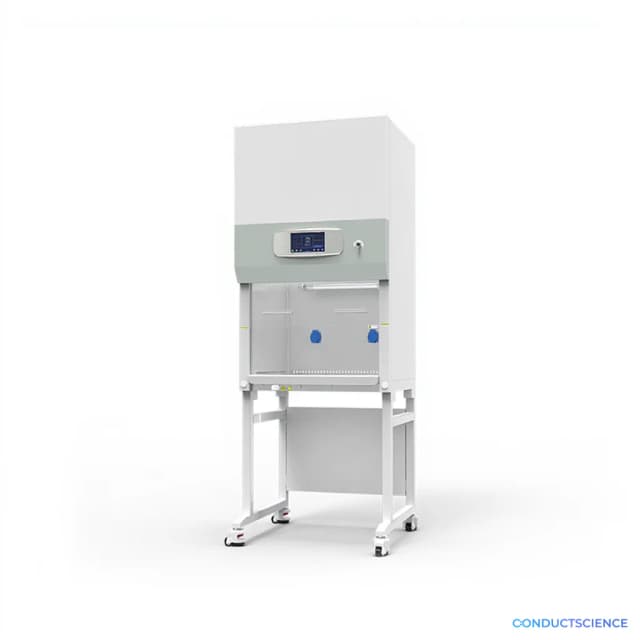
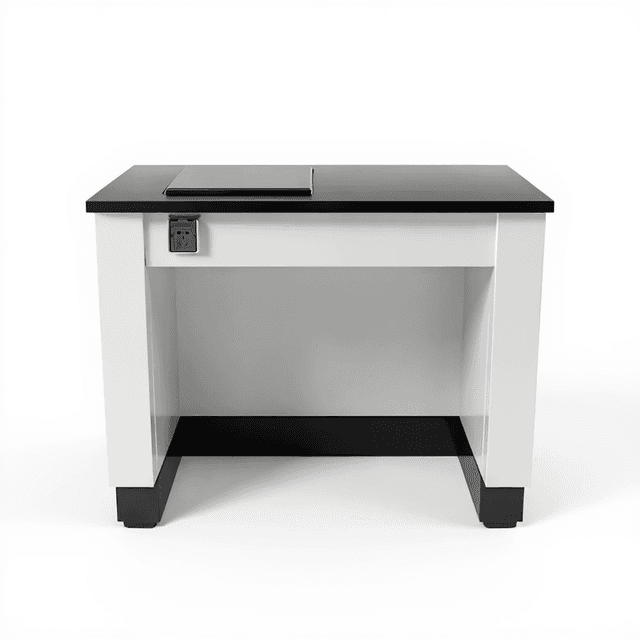
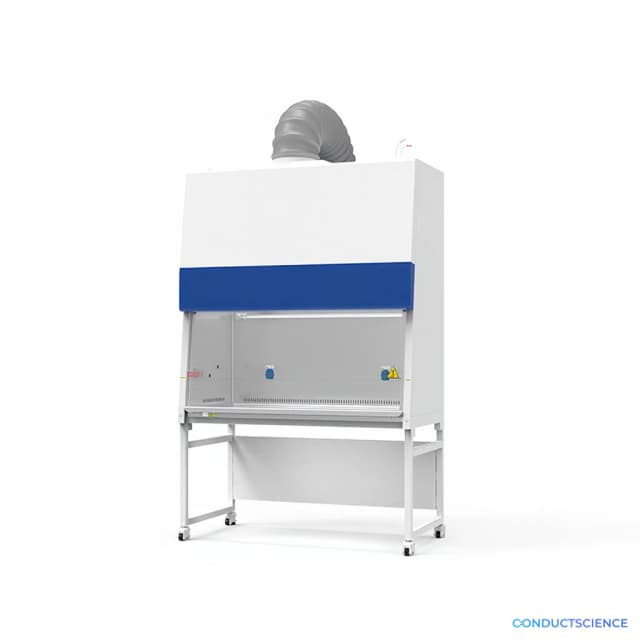
Ductless PP Fume Hood FH700(PD)
Ductless polypropylene fume hood with dual active carbon filtration system for chemical vapor containment in laboratory environments.

Louise Corscadden, PhD
Director of Science · ConductScience
Ask Louise about Ductless PP Fume Hood FH700(PD) fit, setup, configuration, or quote prep.
Already working with us? Sign in to connect this with My Scientist.
Key Specifications
Full details →- Model fit
- Configured during quote
- SKU family
- BIO-0063
- Shipping box
- 110.0 x 70.0 x 70.0 cm
- Ordering
- Online checkout and quote request available
- Category
- Clean Benches & Fume Hoods
- Build notes
- Confirm accessories, station layout, and support needs before purchase
Ductless PP Fume Hood FH700-PD
Professional laboratory fume hood designed for safe work with hazardous chemicals and vapors. Features vertical laminar airflow with HEPA filtration and comprehensive operator protection in compliance with laboratory safety standards.
Key Features:
- Vertical laminar airflow design
- HEPA filtration system
- Multiple size configurations
- Durable construction materials
- Safety monitoring systems
- Operator-friendly controls
How It Works
The FH700(PD) operates on the principle of air recirculation through adsorptive filtration. The built-in centrifugal blower creates negative pressure within the work chamber, drawing air containing chemical vapors through the sash opening. This contaminated airstream passes through dual active carbon filters where volatile organic compounds are adsorbed onto the carbon matrix through physical and chemical attraction mechanisms.
The carbon filtration system relies on the large surface area of activated carbon to trap organic molecules through van der Waals forces and micropore entrapment. The filtered air is then recirculated back into the laboratory environment, maintaining containment of chemical vapors while preserving conditioned laboratory air. The system maintains face velocities between 0.3-0.8 m/s to ensure adequate capture efficiency while preventing excessive turbulence that could compromise containment.
Features & Benefits
Automation Level
- manual
External Size
- 700*700*1100mm
Internal Size
- 680*606*688mm
Max Opening
- 640mm
Airflow Volume
- 230m³/h
Air Velocity
- 0.3~0.8m/s
Noise
- ≤65dB(A)
LED Lamp
- 15W
Illumination
- ≥400lx
Blower
- Built-in centrifugal blower
Consumption
- 150W
Standard Accessory
- Active carbon filter*2
Optional Accessory
- Water tap, Gas tap, Water sink, Base stand, UV lamp, HEPA filter
Brand
- ConductScience
Research Domain
- Analytical Chemistry
- Environmental Monitoring
- Food Science
- Materials Science
- Microbiology
- Pharmaceutical QC
Power/Voltage
- 220V, 50/60Hz
Weight
- 67kg
Shipping weight
- 67.0 lb
Shipping box
- L: 110.0 cm
- W: 70.0 cm
- H: 70.0 cm
| Feature | This Product | Typical Alternative | Advantage |
|---|---|---|---|
| Internal Work Volume | 680×606×688mm (0.28 cubic meters) | Entry-level models often provide smaller work chambers with limited depth | Larger work volume accommodates standard laboratory glassware and multiple simultaneous procedures. |
| Airflow Capacity | 230 m³/h with built-in centrifugal blower | Basic units may offer lower airflow rates or require external blowers | Higher airflow ensures effective vapor capture and containment across the full sash opening. |
| Filtration System | Dual active carbon filters with HEPA option | Single filter configurations are common in budget models | Dual filtration provides redundancy and extended operational life between maintenance intervals. |
| Illumination | 15W LED providing ≥400lx uniform lighting | Fluorescent lighting or lower-output LED systems | LED technology offers energy efficiency and consistent illumination for detailed analytical work. |
| Noise Level | ≤65dB(A) operation | Many units operate at higher noise levels affecting lab environment | Quiet operation maintains conducive working conditions for concentration-intensive procedures. |
| Construction Material | Polypropylene construction with chemical resistance | Steel or other materials may have limited chemical compatibility | PP construction provides superior resistance to organic solvents and easy decontamination. |
The FH700(PD) combines substantial work volume with energy-efficient operation and dual filtration redundancy. The polypropylene construction and integrated LED illumination system support extended operation in analytical chemistry environments requiring consistent vapor containment.
Practical Tips
Verify face velocity measurements quarterly using a calibrated anemometer at multiple points across the sash opening.
Why: Face velocity uniformity ensures consistent containment performance and identifies developing airflow issues before they compromise safety.
Replace active carbon filters based on chemical loading rather than fixed time intervals, monitoring for breakthrough using appropriate detection methods.
Why: Chemical-specific replacement scheduling optimizes filter utilization while maintaining containment effectiveness.
Keep the sash opening at the minimum height necessary for the procedure to maintain optimal face velocity and containment.
Why: Lower sash positions improve capture efficiency and reduce the volume of air requiring filtration.
Perform smoke visualization tests after filter changes to verify proper airflow patterns and containment boundaries.
Why: Visual confirmation ensures proper installation and identifies airflow disruptions that could compromise vapor containment.
Document chemical usage and filter replacement dates to establish site-specific maintenance schedules and track containment performance.
Why: Usage records enable optimization of filter replacement intervals and provide documentation for safety audits.
If face velocity decreases unexpectedly, check for filter loading, sash obstruction, or blower performance issues before continuing chemical work.
Why: Reduced face velocity indicates compromised containment that could expose personnel to chemical vapors.
Allow the unit to operate for several minutes before and after chemical procedures to ensure complete vapor clearance.
Why: Pre- and post-operation purging removes residual vapors and maintains clean air conditions for subsequent work.
Clean the work surface and interior regularly with appropriate solvents to prevent chemical accumulation and cross-contamination.
Why: Regular cleaning maintains chemical compatibility and prevents buildup of residues that could interfere with analytical procedures.
Setup Guide
What’s in the Box
- FH700(PD) ductless fume hood main unit
- Active carbon filters (2 units)
- Power cord
- User manual and installation guide
- Filter replacement indicators (typical)
- Assembly hardware (typical)
Warranty
ConductScience provides a standard one-year manufacturer warranty covering defects in materials and workmanship, with technical support for installation and operational guidance.
Compliance
References
Background reading relevant to this product:
What types of chemicals are effectively contained by the active carbon filtration system?
The dual active carbon filters effectively contain most organic solvents, volatile organic compounds, and light organic vapors. However, inorganic acids, bases, and highly polar compounds require specialized filtration - consult the chemical compatibility guide for specific compounds.
How often should the active carbon filters be replaced?
Filter replacement frequency depends on chemical loading and usage patterns. Typical replacement intervals range from 6-12 months for moderate organic solvent use. Monitor for breakthrough using appropriate detection methods or follow a time-based replacement schedule based on your chemical usage.
Can this unit handle perchloric acid or other highly oxidizing chemicals?
No, this unit is not designed for perchloric acid or strong oxidizers that could react with the carbon filters. Such applications require specialized ducted fume hoods with wash-down capabilities and perchloric-acid-rated construction materials.
What face velocity should be maintained for optimal containment?
Maintain face velocities between 0.3-0.8 m/s as specified. Lower velocities may compromise containment while higher velocities can create turbulence. Regular calibration with an anemometer ensures proper performance across the sash opening.
Is the unit suitable for work with carcinogenic or highly toxic compounds?
While the unit provides containment for many organic compounds, work with carcinogenic or highly toxic materials should be evaluated case-by-case. Consider ducted fume hoods with higher face velocities and specialized monitoring for Category 1 carcinogens or highly toxic substances.
Can optional accessories be retrofitted to an existing unit?
Yes, optional accessories including water tap, gas tap, water sink, base stand, UV lamp, and HEPA filter can typically be added to existing installations. Consult installation requirements for each accessory to ensure compatibility.
How does this compare to ducted fume hood systems?
Ductless systems offer installation flexibility and energy efficiency by recirculating conditioned air, but are limited to compatible chemicals and require regular filter maintenance. Ducted systems provide broader chemical compatibility and higher containment levels but require building ventilation infrastructure.
What maintenance is required beyond filter replacement?
Routine maintenance includes cleaning the work surface and interior, inspecting the blower and motor, verifying face velocity measurements, and checking sash operation. Annual professional inspection is recommended for containment verification and preventive maintenance.
Have a question about this product?
Have a question? Just ask.
Send it over and we'll email you a personalized answer — no call, no scheduling.
Prefer to talk it through?