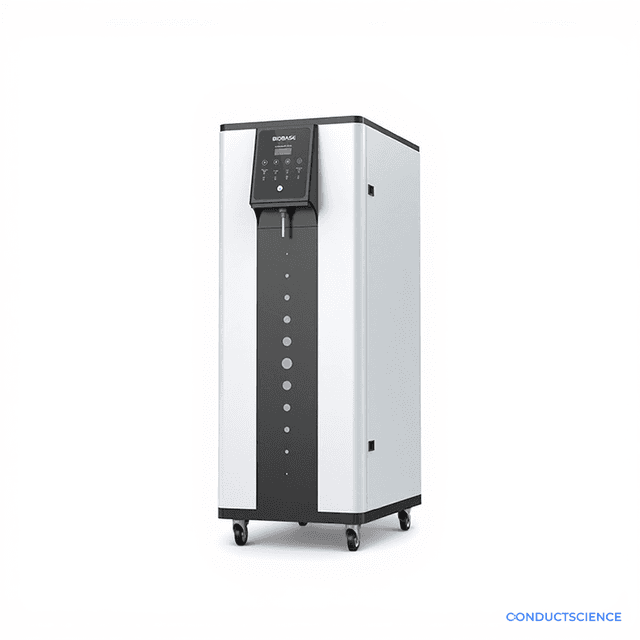
Electronic&Digital Heating Mantles
Digital heating mantles with precise temperature control up to 380°C, accommodating flask capacities from 100 mL to 20 L for synthetic chemistry and extraction procedures.

Louise Corscadden, PhD
Director of Science · ConductScience
Ask Louise about Electronic&Digital Heating Mantles fit, setup, configuration, or quote prep.
Already working with us? Sign in to connect this with My Scientist.
Key Specifications
Full details →- Model fit
- Configured during quote
- SKU family
- BIO-0686
- Shipping box
- 16.5 x 22.0 x 19.5 cm
- Ordering
- Online checkout and quote request available
- Category
- Benchtop Instruments
- Build notes
- Confirm accessories, station layout, and support needs before purchase
Electronic & Digital Heating Mantles provide precise, controlled heating for laboratory glassware in synthetic chemistry, extraction procedures, and analytical sample preparation. These mantles feature digital temperature control with continuous operation capability, accommodating round-bottom flasks from 100 mL to 20 L capacity. The hemispherical design ensures uniform heat distribution while maintaining direct contact with glassware surfaces.
Digital control systems enable precise temperature regulation up to 380°C with variable power consumption scaling from 100W to 2500W depending on capacity. The units operate on standard laboratory power (AC220/110V ±10%, 50/60Hz) and feature continuous duty cycles for extended procedures. Internal dimensions accommodate standard glassware sizes with φ70×40mm starting configuration.
How It Works
Heating mantles operate through resistive heating elements embedded within an insulated hemispherical housing that conforms to round-bottom flask geometry. Electric current passes through resistance wires, generating thermal energy that is conducted directly to the glassware surface through intimate contact. The hemispherical design distributes heat uniformly around the flask bottom and lower sides, eliminating hot spots that could cause thermal stress or uneven heating.
Digital temperature controllers monitor thermal conditions via integrated sensors and modulate power delivery to maintain setpoint temperatures. Feedback control systems compare actual temperatures with programmed values, adjusting electrical input to compensate for thermal losses and maintain stable conditions. Variable power consumption allows the heating elements to match thermal demand across different flask sizes and reaction requirements.
The continuous operation capability enables extended procedures without thermal cycling, while the digital interface provides precise temperature programming for complex heating profiles. Internal dimensions scale proportionally with capacity, ensuring proper heat transfer regardless of flask size.
Features & Benefits
Automation Level
- semi-automated
Capacity(ml)
- 100
250
- 500
1000
- 2000
3000
- 5000
10000
- 20000
Max. Temp.
- 380°C
Working Time
- Continuous
Consumption
- 100W
180W
- 250W
300W
- 500W
600W
- 1000W
1500W
- 2500W
Internal Size(mm)
- φ70*40
Brand
- ConductScience
Research Domain
- Analytical Chemistry
- Environmental Monitoring
- Food Science
- Materials Science
- Microbiology
- Pharmaceutical QC
Power/Voltage
- AC220/110V±10%, 50/60Hz
Shipping weight
- 1.7 lb
Shipping box
- L: 16.5 cm
- W: 22.0 cm
- H: 19.5 cm
| Feature | This Product | Typical Alternative | Advantage |
|---|---|---|---|
| Temperature Range | Up to 380°C maximum operating temperature | Entry-level models often limited to 250-300°C maximum | Higher temperature capability enables more demanding synthetic chemistry and extraction procedures requiring elevated thermal conditions |
| Capacity Range | 100 mL to 20 L flask accommodation | Basic models typically cover narrower ranges or require separate units | Single product line covers micro-scale to preparative-scale procedures without requiring multiple heating systems |
| Power Scaling | Variable consumption from 100W to 2500W | Fixed power ratings often oversized for smaller applications | Proportional power delivery optimizes energy efficiency and heating rates across different flask sizes |
| Voltage Compatibility | Dual voltage operation (AC220/110V ±10%) | Single voltage units require power conversion equipment | Universal laboratory compatibility eliminates voltage conversion requirements for international installations |
| Operation Mode | Continuous duty cycle capability | Intermittent operation limits for thermal protection | Extended procedures and overnight reactions proceed without thermal cycling interruptions |
This heating mantle series provides comprehensive temperature control up to 380°C with scalable capacity accommodation from 100 mL to 20 L flasks. The combination of digital control precision, continuous operation capability, and proportional power scaling offers versatile solutions for diverse laboratory heating requirements across multiple analytical disciplines.
Practical Tips
Verify temperature accuracy using calibrated thermocouples placed in thermal contact with the flask bottom before critical procedures.
Why: Controller accuracy can drift over time and thermal gradients may exist between sensor location and flask contents
Clean heating surfaces regularly with appropriate solvents and inspect for residue buildup that could cause hot spots.
Why: Contamination reduces heat transfer efficiency and can create localized overheating conditions
Allow gradual temperature increases for thick-walled glassware to prevent thermal stress cracking.
Why: Rapid heating can create thermal gradients across glass thickness leading to mechanical failure
Use appropriate insulation and ventilation when operating at maximum temperature (380°C) to prevent operator exposure.
Why: High surface temperatures pose burn hazards and require proper laboratory safety protocols
Document heating rates and temperature profiles for reproducible analytical procedures.
Why: Thermal history affects reaction kinetics and extraction efficiency in quantitative procedures
Check flask-to-mantle contact if heating appears uneven or inefficient.
Why: Poor surface contact reduces heat transfer and can cause temperature non-uniformity
Match mantle capacity closely to flask size rather than oversizing for optimal heat transfer efficiency.
Why: Properly sized mantles provide better thermal coupling and more uniform heating patterns
Setup Guide
What’s in the Box
- Electronic heating mantle with digital controller
- Power cord appropriate for regional electrical standards
- User manual with temperature programming instructions
- Safety guidelines and operating procedures (typical)
- Warranty documentation (typical)
Warranty
ConductScience provides comprehensive warranty coverage including parts, labor, and technical support for optimal equipment performance. Standard coverage includes manufacturer warranty with access to technical service representatives for operational guidance.
Compliance
What is the temperature accuracy and stability of the digital control system?
Temperature accuracy and stability specifications should be consulted in the product datasheet. The digital controller provides setpoint programming up to 380°C maximum with feedback control for temperature maintenance.
How do I select the appropriate capacity and power rating for my application?
Match flask volume to mantle capacity (100 mL to 20 L range available) and consider heating rate requirements. Power consumption scales from 100W to 2500W proportionally with capacity for optimal thermal performance.
Can the heating mantle accommodate non-standard or custom glassware shapes?
The hemispherical design is optimized for standard round-bottom flasks. Custom or irregular glassware may have reduced heating efficiency due to incomplete surface contact with the heating element.
What maintenance procedures are required for optimal performance?
Regular cleaning of heating surfaces and inspection of electrical connections ensure consistent performance. Avoid spillage into the heating cavity and verify temperature controller calibration periodically.
Is the unit compatible with magnetic stirring systems?
Compatibility with magnetic stirring depends on heating mantle design specifics. Consult product documentation for magnetic field interference considerations when using concurrent stirring systems.
How does power consumption vary with temperature setpoint and flask size?
Power consumption increases with temperature differential and flask capacity. Larger mantles require higher wattage for equivalent heating rates, with consumption ranging from 100W to 2500W across the capacity range.
What safety features are incorporated for high-temperature operation?
Safety features should be verified in product specifications. Standard safety considerations include temperature limiting, electrical isolation, and thermal protection for safe operation up to 380°C maximum.
Have a question about this product?
Have a question? Just ask.
Send it over and we'll email you a personalized answer — no call, no scheduling.
Prefer to talk it through?