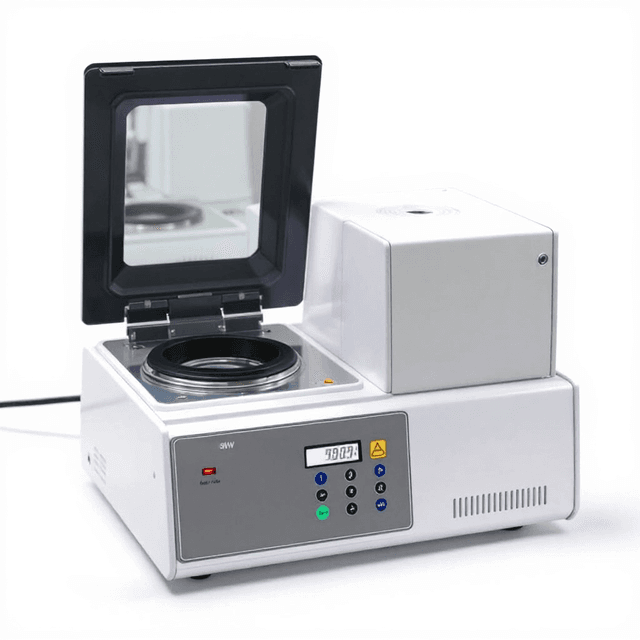
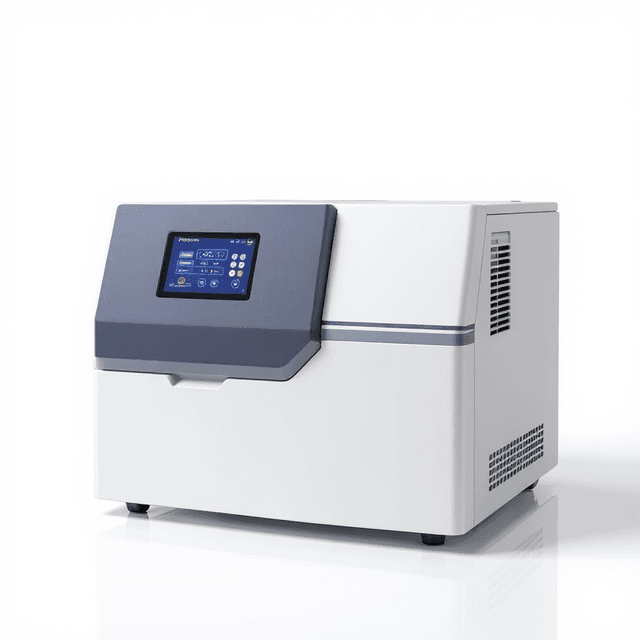
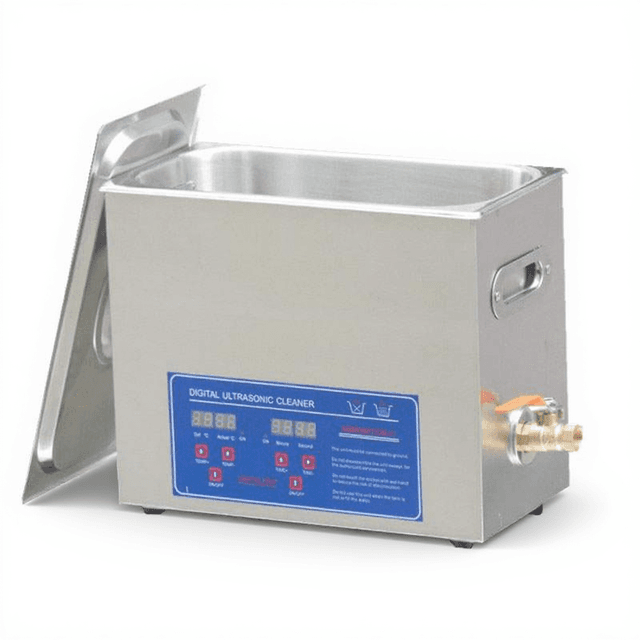
Electronic&Digital Magnetic Stirring Heating Mantles HME-IIB/HME-IIIB
Digital magnetic stirring heating mantles with temperature control from RT+20°C to 250°C and stirring speeds up to 1600 rpm for laboratory heating and mixing applications.

Louise Corscadden, PhD
Director of Science · ConductScience
Ask Louise about Electronic&Digital Magnetic Stirring Heating Mantles HME-IIB/HME-IIIB fit, setup, configuration, or quote prep.
Already working with us? Sign in to connect this with My Scientist.
Key Specifications
Full details →- Model fit
- Configured during quote
- SKU family
- BIO-0687
- Shipping box
- 42.0 x 43.6 x 38.0 cm
- Ordering
- Online checkout and quote request available
- Category
- Benchtop Instruments
- Build notes
- Confirm accessories, station layout, and support needs before purchase
The Electronic & Digital Magnetic Stirring Heating Mantles HME-IIB/HME-IIIB provide precise temperature control and magnetic stirring for laboratory heating applications. These benchtop units combine heating elements with magnetic stirring capability, offering temperature control from RT+20°C to 250°C with maximum heating capacity up to 450°C. The integrated digital controls enable researchers to maintain consistent heating and mixing conditions for chemical reactions, sample preparation, and analytical procedures.
Available in multiple capacity configurations from 50ml to 10,000ml, these heating mantles accommodate diverse laboratory vessel sizes. The continuous operation capability and variable stirring speed up to 1600 rpm support extended experimental protocols requiring sustained heating and agitation. Digital temperature control eliminates the guesswork associated with analog heating systems, providing reproducible thermal conditions essential for quantitative analyses and standardized procedures.
How It Works
The heating mantles operate through resistive heating elements embedded within the mantle fabric, providing uniform heat distribution around laboratory vessels. Digital temperature controllers monitor and regulate heating power output based on feedback from temperature sensors, maintaining precise thermal conditions. The heating elements can deliver power ranging from 0.08 kW to 0.6 kW depending on capacity requirements.
Magnetic stirring functionality utilizes a rotating magnetic field generated by a motor-driven magnet assembly beneath the heating surface. This magnetic field couples with magnetic stir bars placed within the vessel, creating rotational motion for sample mixing. The variable speed control (0-1600 rpm) allows adjustment of stirring intensity to match viscosity and mixing requirements of different solutions.
The integrated digital control system coordinates both heating and stirring functions, enabling simultaneous temperature control and mechanical agitation. Temperature feedback loops ensure thermal stability while magnetic coupling provides consistent mixing action throughout the heating process.
Features & Benefits
Automation Level
- semi-automated
Capacity(ml)
- 50
100
- 250
500
- 1000
2000
- 3000
5000
- 10000
Max. Temp
- 450℃
Temp Control
- RT+20~250℃
Speed/RPM
- 0~1600rpm
Working Time
- Continuous
Motor Power(kW)
- 0.01
Heating Power(kW)
- 0.08
0.1
- 0.15
0.25
- 0.35
0.45
- 0.6
Brand
- ConductScience
Research Domain
- Analytical Chemistry
- Environmental Monitoring
- Food Science
- Materials Science
- Microbiology
- Pharmaceutical QC
Shipping weight
- 29.98 lb
Shipping box
- L: 42.0 cm
- W: 43.6 cm
- H: 38.0 cm
| Feature | This Product | Typical Alternative | Advantage |
|---|---|---|---|
| Temperature Control Range | RT+20°C to 250°C with maximum 450°C capability | Basic models often limited to 200°C maximum | Extended temperature range accommodates high-temperature applications and provides thermal headroom for rapid heating. |
| Stirring Speed Range | Variable control from 0 to 1600 rpm | Entry-level units often limited to 1000-1200 rpm maximum | Higher speed capability enables effective mixing of viscous solutions and rapid homogenization when required. |
| Capacity Options | Eight capacity sizes from 50ml to 10,000ml | Limited size selection with fewer capacity options | Comprehensive range supports diverse experimental scales from analytical to preparative work. |
| Operation Duration | Continuous operation capability | Some models have duty cycle limitations requiring cooling periods | Uninterrupted operation supports extended protocols and long-duration heating requirements. |
| Control Interface | Digital temperature and speed control | Analog controls with dial adjustment | Digital precision enables reproducible parameter settings and eliminates interpolation errors from analog readouts. |
This heating mantle series provides comprehensive capacity options with extended temperature range and continuous operation capability. The combination of digital controls, high-speed stirring, and multiple size configurations addresses diverse laboratory heating and mixing requirements in a single product line.
Practical Tips
Verify temperature accuracy using an independent calibrated thermometer in the vessel before critical temperature-dependent procedures.
Why: Ensures thermal accuracy for quantitative analyses and validates proper sensor function.
Clean heating surfaces regularly with appropriate solvents and inspect for chemical residue that could affect heat transfer.
Why: Maintains efficient heat transfer and prevents cross-contamination between different samples or reactions.
Allow 5-10 minutes for thermal equilibration after reaching set temperature before adding temperature-sensitive reagents.
Why: Ensures uniform temperature distribution throughout the vessel and heating system for consistent experimental conditions.
Use appropriate personal protective equipment including heat-resistant gloves when handling vessels at elevated temperatures.
Why: Prevents thermal burns and ensures safe handling of hot glassware during experimental procedures.
If stirring becomes irregular, check stir bar condition and magnetic coupling by testing with known-good stir bars.
Why: Worn or damaged stir bars can cause erratic mixing and compromise experimental reproducibility.
Record both set and actual temperatures when documenting experimental conditions for accurate protocol reproduction.
Why: Temperature variations can affect reaction rates and analytical results, making accurate documentation essential for reproducibility.
Match vessel size to heating mantle capacity specifications to ensure efficient heat transfer and prevent overheating.
Why: Proper size matching optimizes thermal performance and prevents hot spots that could damage vessels or affect results.
Setup Guide
What’s in the Box
- Electronic magnetic stirring heating mantle unit (typical)
- Power cord (typical)
- User manual and operating instructions (typical)
- Temperature probe or sensor (typical)
- Magnetic stir bars, assorted sizes (typical)
Warranty
ConductScience provides a standard one-year manufacturer warranty covering defects in materials and workmanship, with technical support for operational questions and troubleshooting assistance.
Compliance
What temperature accuracy can I expect across the control range?
Temperature control operates from RT+20°C to 250°C with digital feedback control. Consult product datasheet for specific accuracy specifications and calibration requirements.
Can I use this with round-bottom flasks and other non-flat vessels?
The heating mantle design accommodates various vessel geometries within the specified capacity range. Ensure proper vessel contact with heating surface for efficient heat transfer.
How do I select the appropriate capacity model for my applications?
Choose based on your typical vessel volumes, with options ranging from 50ml to 10,000ml. Consider both current needs and potential scale-up requirements.
What maintenance is required for the magnetic stirring mechanism?
Clean the stirring surface regularly and inspect magnetic stir bars for wear. Check for proper magnetic coupling and smooth rotation during operation.
Can I run multiple heating mantles simultaneously on the same circuit?
Calculate total power draw based on heating power specifications (0.08-0.6 kW per unit) to ensure circuit capacity. Consult electrical requirements before multiple unit operation.
How does this compare to traditional heating plates?
Heating mantles provide more uniform heat distribution around vessel surfaces compared to bottom-only heating plates, reducing hot spots and improving thermal uniformity.
What safety features are included for overtemperature protection?
Consult product datasheet for specific safety systems and overtemperature protection mechanisms included with the digital control system.
Have a question about this product?
Have a question? Just ask.
Send it over and we'll email you a personalized answer — no call, no scheduling.
Prefer to talk it through?